The Sound of a System Failing
You can usually tell a manager is in terminal decline not by the results on the pitch, but by the noise off it. When national team managers start taking public shots at a club coach's tactical setup, the dressing room is already lost. The insulation that protects a functioning squad has completely eroded.
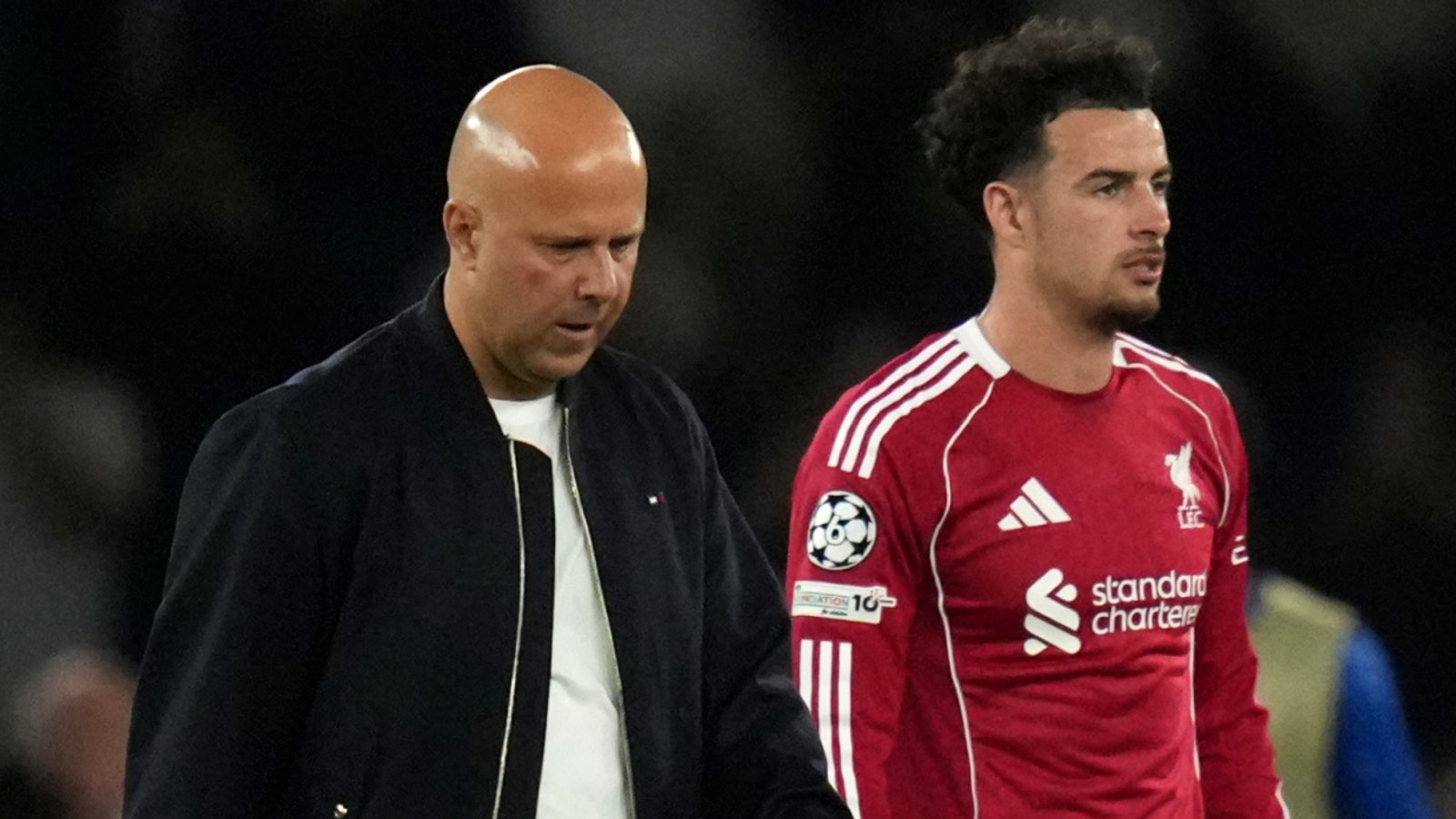
That is exactly where Arne Slot finds himself in late March 2026. Liverpool are looking disconnected during matches and entirely fractured between them. The structural issues that were masked during Slot's initial honeymoon period at Anfield have now become impossible to ignore, manifesting in both poor individual performances and a baffling transfer strategy.
Hungary manager Marco Rossi's recent comments weren't just standard international break bluster designed to protect his own player. As Football365 reported, Rossi aimed a very specific, tactical dig at how Dominik Szoboszlai is being deployed. It echoed what anyone watching the wide tactical feed has known for months: Liverpool are actively diminishing their most dynamic ball-carrier through rigid, uncompromising instructions.
The Neutering of Dominik Szoboszlai
Under Jurgen Klopp, the right-sided number eight role was a hybrid engine room. It demanded pressing intensity, but allowed for significant rotational freedom. Under Slot, that same position has become a tactical straitjacket.
Look at the underlying numbers of Szoboszlai's progression since he arrived in the Premier League. During his final season at RB Leipzig, he averaged 5.2 progressive carries per 90 minutes. He was receiving the ball in the half-spaces, usually on the half-turn, and driving at retreating defensive lines. This season under Slot, that number has plummeted to just 2.1 per 90.
Instead of being the transition trigger, Szoboszlai is frequently asked to receive the ball with his back to goal. Slot pushes him incredibly high into the right channel while Mohamed Salah is instructed to tuck inside. It completely neutralises the Hungarian's best asset: his ball-striking on the run.
Rossi sees it. The Anfield crowd sees it. The data reflects it with brutal clarity. Szoboszlai's shot-creating actions from open play have dropped by exactly 46% compared to his peak Bundesliga metrics. He looks confused on the pitch, constantly checking his shoulder to ensure he is maintaining Slot's rigid positional grid rather than attacking the available space.
When a manager prioritises positional discipline over a player's natural instincts to this severe degree, you lose the spontaneous moments that break down deep defensive blocks. Liverpool's expected goals (xG) from sustained possession sequences has flatlined as a direct result.
The Winger Crisis and the Ghost of Chiesa
If the midfield structure is stubbornly rigid, the wide areas are entirely dysfunctional. The situation with Federico Chiesa is perhaps the most damning indictment of Slot's squad management over his tenure.
Brought in during the summer of 2024 to provide elite rotation and eventual succession planning for an ageing forward line, the Italian has instead become an incredibly expensive ghost. Over two full seasons, he has been overwhelmingly restricted to late substitute appearances. As the Mirror noted recently, Slot himself has admitted the player's deep unhappiness with the situation.
The fundamental question remains: why sign a chaotic, high-volume dribbler if your system demands total control and touch-line hugging discipline? Chiesa averages 6.4 attempted take-ons per 90 across his career in Italy. Slot's system explicitly discourages isolation dribbling in the middle third, preferring rapid ball circulation and overlapping runs.
It is a massive clash of styles that points to a disconnect between the recruitment department and the dugout. Chiesa is a transition monster who thrives when the game becomes stretched. Slot demands that the game is never stretched. Consequently, Chiesa sits on the bench while Liverpool endlessly recycle possession in a predictable U-shape around the penalty area.
Market Reactions to Tactical Stubbornness
This tactical rigidity explains the panicked, desperate movements in the recent transfer market. Liverpool are reportedly scouring Europe for wide reinforcements, but the market knows they are vulnerable and reacting accordingly.
They have now suffered a fourth consecutive knockback in their pursuit of a top-tier winger. The situation has become so bleak that, as TeamTalk revealed, they have been flatly told to forget a record-shattering raid on PSG. When you publicly fail to integrate a player of Chiesa's calibre, elite targets take notice.
Top tier attackers talk to each other. Agents look at the underlying numbers. Why would a premium winger move to Anfield to play in a system that stifles individual expression and demands robotic positional adherence? Liverpool's inability to integrate what they already have is actively destroying their ability to recruit what they need.
The Full-Back Dilemma
You cannot discuss Liverpool's structural flaws without examining the flanks. The shifting demands placed on the full-backs have fundamentally altered the team's attacking geometry. For years, the team's creative burden fell squarely on the shoulders of the wide defenders. Slot attempted to invert that approach — moving the creative hub centrally — but failed to provide the necessary framework.
Take the crossing statistics. At their peak, Liverpool averaged 18.5 open-play crosses per game, utilizing sweeping diagonal switches to isolate defenders. This season, that number has crashed to 11.2. The full-backs are instructed to tuck inside and form a defensive blockade during sustained possession, theoretically preventing the counter-attacks that plagued them in the past.
But the data shows this cautious approach isn't working. By asking natural wide players to operate as auxiliary defensive midfielders, Slot has robbed the team of its natural width without actually improving central solidity. Opposing teams simply pack the middle of the pitch, knowing Liverpool lack the overlapping threats to punish them on the outside.
This directly impacts players like Chiesa. When he does make it onto the pitch, he finds himself constantly double-teamed because the opposition full-back isn't worried about an overlapping run dragging him out of position. The entire attacking structure is congested, slow, and devastatingly predictable.
The Shadow of Xabi Alonso
Nature abhors a vacuum, and modern football abhors a manager failing to optimise a squad built for major honours. The noise surrounding Xabi Alonso is no longer just hopeful fan fiction drummed up on social media; it is becoming an active, destabilising distraction for the current regime.
Reports are escalating rapidly as the season approaches the crucial April period. The claim from a prominent news source that an Alonso move to Merseyside is "ON" and that Slot has been given a specific timeline for his departure, detailed by TeamTalk, completely undermines whatever remaining authority the Dutchman has in the dressing room.
From a tactical perspective, the contrast couldn't be starker. Bayer Leverkusen's 3-4-2-1 under Alonso was built on fluid interchanging of positions and aggressive central overloads — exactly the kind of dynamic movement Szoboszlai thrives on. Alonso's system uses narrow wing-backs and twin number tens who crash the box. It is an environment where a player like Chiesa might actually find joy, allowed to operate closer to the striker rather than isolated on the chalk.
The Pressing Disconnect
The most alarming statistical drop-off under Slot hasn't been in possession, but out of it. Liverpool's PPDA (Passes Allowed Per Defensive Action) has drifted from an elite 8.3 under Klopp's final season to a distinctly average 11.4 this year.
Liverpool's buildup shape under Slot usually settles into a 3-2-5 in possession. In theory, this pins the opposition back into their own third. In practice, without the aggressive counter-pressing triggers of the previous era, it leaves them badly exposed to central transitions when the ball is turned over.
Opponents have figured out the pressing trap. They bypass the initial block by targeting the space behind the advancing full-backs. Because Szoboszlai is stationed so high and wide, the remaining double pivot is routinely overrun by runners from deep. The average distance between Liverpool's defensive line and their midfield pivot has increased by nearly four yards this season.
That four-yard gap is where games are lost. It is where loose balls drop uncontested. It is where opposition number tens find time to turn and slide passes through the channels.
A Regression to the Mean
Arne Slot was brought in to provide a calm evolution, ensuring Liverpool remained at the bleeding edge of modern European tactics. Instead, he has engineered a severe regression in key individuals and broken the very mechanics that made the team feared.
When your high-profile midfielder is being publicly defended by his national coach, your marquee winger hasn't started consecutive league games in two years, and the ghost of a former club legend is actively haunting the boardroom, the tactical setup is no longer the solution to the problem.
It is the core reason for the failure. The numbers do not lie, and right now, they are screaming that Liverpool need a hard reset before the damage to this squad's peak years becomes permanent.
Read Next
- Ben White just gave England 90 minutes of pure tactical chaos
- Bristol City's desperate Roy Hodgson gamble defies logic and time
- Andy Robertson is leaning on Scotland to fuel his Liverpool run-in
- Ipswich are drowning in boardroom noise just when they need points most
- 🇮🇹 Italy at the 2026 World Cup — Full Coverage Hub