A Fire of Their Own Making
Portman Road should be a fortress right now. We are deep into late March. The weather is turning, the games are running out, and every single point is worth its weight in blood. Ipswich Town are fighting for their lives, and the singular focus of the entire organization should be on what happens between the white lines.
Instead, the club spent this week fighting a completely avoidable fire of their own making.
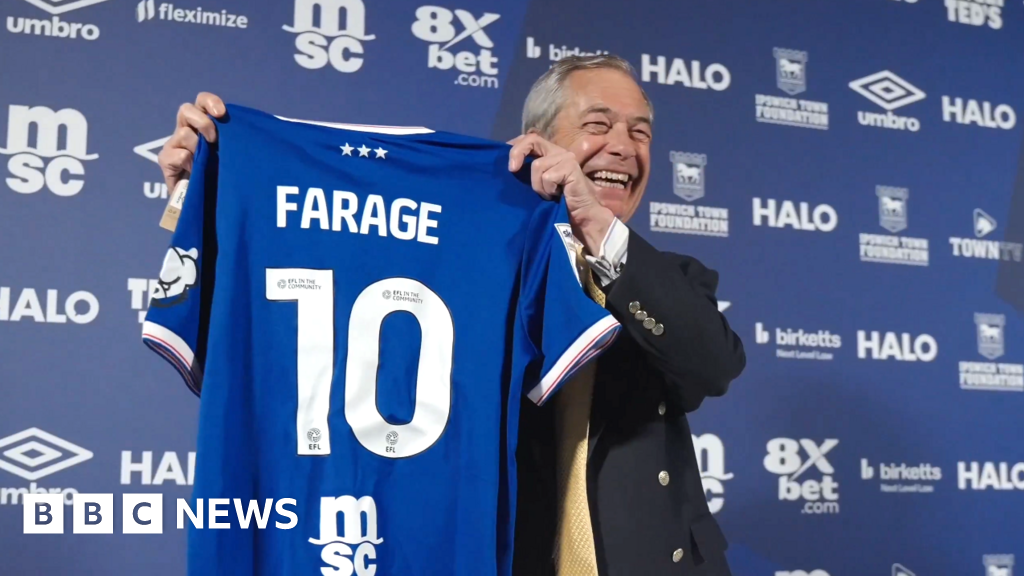
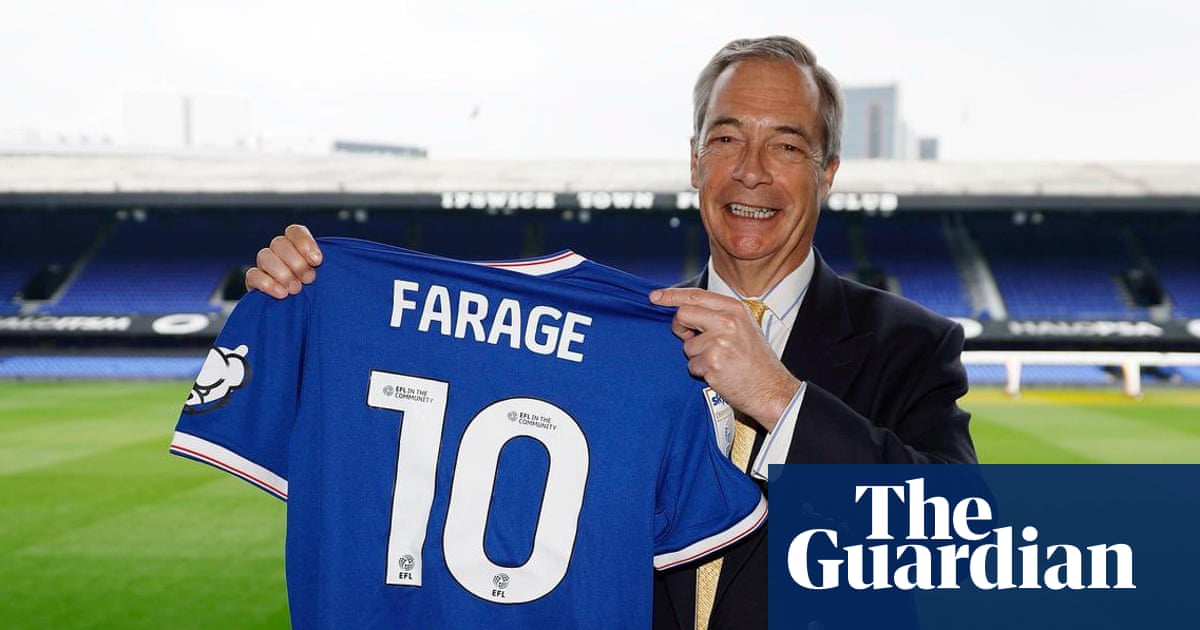
The visit of Nigel Farage on Monday triggered an immediate and furious backlash from the fanbase. It was a spectacular misread of the room by the hierarchy. Mark Ashton, the chief executive, was forced into a groveling public apology, admitting the stunt caused "any hurt, pain or distress" to the supporters.
He went even further, noting that "staff are hurting" after what he politely called a "difficult week". You can read the full breakdown of the boardroom mess via The Guardian, but the bottom line is simple. This is the exact opposite of the unified front a struggling club needs. The boardroom has fundamentally failed Kieran McKenna and his coaching staff this week. They have introduced a massive, toxic distraction right before one of the most important home fixtures of the campaign.
Shielding the Squad
McKenna now faces an impossible task. He has to shield his squad from this circus. And the timing couldn't be worse, because Sean Dyche is bringing his Everton side to town this weekend.
Dyche doesn't care about your PR disasters. He cares about second balls, wide free-kicks, and making the middle third of the pitch completely unplayable.
This is a clash of two entirely different footballing ideologies. McKenna wants to control the ball, bait the press, and create overloads in wide areas. Dyche wants to bypass the press entirely, win the physical duel, and capitalize on defensive mistakes.
For Ipswich, this isn't just a test of their tactics. It is a severe test of their concentration. When the crowd is already agitated before kickoff, the players will feel it. The margin for error shrinks to zero.
Tactical Breakdown: The Wide Overloads
Ipswich’s attacking output relies heavily on the left flank. Leif Davis operates less as a traditional left-back and more as a wide playmaker. When Ipswich build from the back, goalkeeper Arijanet Muric acts essentially as a third center-half. This allows the center-backs to split wide, while Davis pushes incredibly high, practically standing on the left winger's toes.
Everton know this. Their scouting department is meticulous. Dyche will instruct Dwight McNeil to track back relentlessly, but the real trap will be set centrally by Tim Iroegbunam and Abdoulaye Doucoure. They will let Ipswich have the ball in their own defensive third. They will wait patiently for the pass to go out wide to Davis, and then they will snap the trap shut, utilizing the touchline as an extra defender.
To counter this, Sam Morsy has to have a flawless game. He is the metronome of this Ipswich side. If Morsy gets caught on the ball facing his own goal, Everton will punish them instantly. McKenna needs his midfield to play quick, one-touch progressive passes to bypass that mid-block.
Omari Hutchinson has to drop into the half-spaces, receive on the half-turn, and drive at the Everton backline. If Hutchinson gets isolated, Ipswich’s attack will grind to a halt.
When Ipswich lose the ball in these advanced positions, the transition defense is alarming. Because Muric plays so far out of his goal and Davis is essentially a left winger, the remaining defenders have to execute a flawless lateral shift. Axel Tuanzebe or Ben Johnson on the right side are forced to tuck in and form a makeshift back three alongside Jacob Greaves and Luke Woolfenden. It is a highly complex rotation that leaves gaping holes in the right channel.
Everton will exploit this mercilessly. When they win the ball, they won't look to build through the thirds. Jordan Pickford will immediately look for a long, diagonal switch into that vacant space, targeting McNeil or Jack Harrison in transition. Ipswich’s pressing triggers have to be spot-on. If Conor Chaplin and Liam Delap fail to cut off the passing lanes immediately after losing possession, Everton will tear right through that unorganized defensive line.
The Glaring Structural Flaw
Here is where the match will likely be decided, and it is my biggest criticism of McKenna’s tenure. Ipswich have struggled horribly defending dead-ball situations all season. They lack the raw aerial dominance required to comfortably deal with inswinging deliveries.
Everton, meanwhile, treat corners like penalty kicks. Jarrad Branthwaite and James Tarkowski attacking a McNeil delivery is a terrifying prospect for any defense, let alone one devoid of confidence. Ipswich have conceded 16 goals from set pieces across all competitions this year. That is a glaring, persistent structural flaw that McKenna has failed to fix.
Muric has to command his box better. Too often, he stays rooted to his line when a cross loops into the six-yard box. Greaves will be tasked with marking Dominic Calvert-Lewin, which is a miserable afternoon for any center-back. Calvert-Lewin might not be scoring at a prolific rate, but his ability to pin a defender and win the first contact is elite.
If Everton get a free-kick within forty yards of the goal, expect them to load the box and test Muric's nerve.
Breaking the Low Block
When Ipswich actually get into the final third, they will face an Everton defense that refuses to be stretched. Dyche’s setup shapes into two compact banks of four. There is virtually no space between the lines.
Delap is going to have to run the channels tirelessly. If he just tries to post up against Tarkowski, he will lose that physical battle nine times out of ten. Delap needs to pull the center-backs out of position by making darting runs into the channels, creating gaps for Hutchinson and Chaplin to exploit through the middle.
The problem for Ipswich recently has been a severe lack of cutting edge. They create decent approach play, but the final ball is lacking. The crosses from Davis are often aimless, hitting the first man at the near post.
They need to be cutbacks. Everton defend the penalty spot brilliantly, but they can be highly vulnerable to late runners arriving at the edge of the box. Morsy and Massimo Luongo need to take those shots from distance when they present themselves.
On the right wing, Wes Burns has to use his raw pace to keep Vitalii Mykolenko honest. If Burns doesn't threaten in behind, Everton will simply shift their entire defensive block toward Davis on the left, suffocating Ipswich's primary creative outlet.
The Mental Battle
This brings us back to the mood around the club. Portman Road needs to be intimidating for the opposition. The crowd needs to be hostile toward Everton, not deeply frustrated with their own hierarchy. Mark Ashton's massive unforced error has poisoned the well at the worst possible time.
If Everton score early, the atmosphere could turn toxic immediately. The fans are already on edge, and the goodwill that got them promoted only stretches so far when top-flight survival is on the line.
McKenna has performed miracles to build this squad into a competitive unit, but he cannot control the noise in the stands. His players have to show immense psychological resilience. They have to ignore the banners, the murmurs, and the inevitable tension if a pass goes astray in the opening ten minutes.
The Final Verdict
I just don't see Ipswich keeping a clean sheet here. The defensive frailties are too obvious, the set-piece vulnerability is too severe, and Everton are entirely too pragmatic to ignore those weaknesses. But Ipswich at home usually find a way to make things chaotic, and chaos often leads to goals.
Expect Everton to take the lead through a messy, scrambled set-piece goal right before halftime. The crowd will get nervous and frustrated. Ipswich will dominate possession in the second half, throwing caution to the wind, pushing Davis even higher.
Eventually, Hutchinson will produce a moment of individual brilliance—a dropped shoulder and a curled effort into the far corner—to level it late on.
It will be a frantic 1-1 draw. A point that doesn't really help Ipswich pull away from the drop zone, leaving the dark cloud of this week's boardroom mess firmly in place. The fans deserve better leadership off the pitch, but on the pitch, they will have to settle for a gritty stalemate.