The end of an empire on the south coast
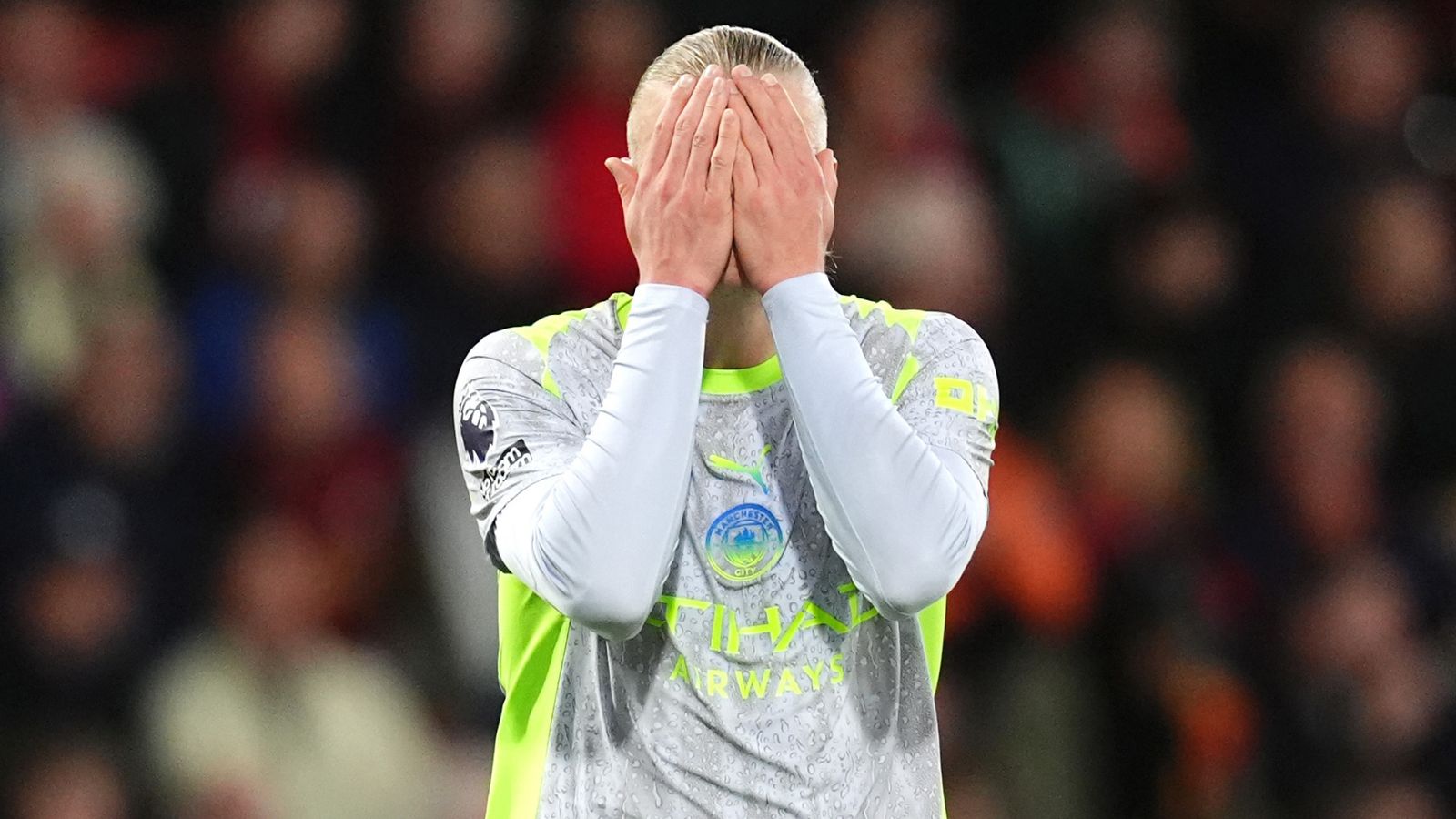
Nobody expects an empire to fall on a damp afternoon in Dorset. Yet, as the final whistle blew on a 1-1 draw at the Vitality Stadium, Manchester City's title defense officially evaporated. The math is settled. Arsenal are the Premier League champions.
This was supposed to go down to the wire. Manchester City needed three points to drag the title race into the final day of the season. It would have been a fitting, cinematic conclusion to Pep Guardiola's final campaign in charge.
Pep Guardiola's side have missed the chance to take the title race to the final day of what will be his final season in charge.
Instead of a grand finale, they folded. The warning signs have been flashing for months. City have looked exhausted, lethargic, and tactically rigid. The precision that defined Guardiola's reign has been replaced by a slow, predictable horseshoe passing pattern around the penalty box. They dominated possession against Bournemouth but lacked the killer instinct that Arsenal have demonstrated week after week.
The tactical collapse of Manchester City
If you watch the tape from the Bournemouth match, the structural decay is obvious. City's rest defense, long the secret weapon of their dominance, was essentially nonexistent.
Guardiola built his dynasty on winning the ball back within seconds of losing it. Against Bournemouth, the pressing triggers were completely misaligned. Erling Haaland would initiate a press, but the midfield line would sit five yards too deep. That gap in the center of the pitch allowed Bournemouth to easily bypass the first line of pressure.
City finished the match completely neutered, repeatedly settling for low-percentage crosses from the half-spaces. When you are reduced to hoping a loose ball falls kindly in the crowded penalty area, your tactical plan has failed.
Teams across the league have figured this out. You don't need a deep, passive defensive block to survive against this version of Manchester City. You just need brave central midfielders who can turn under pressure and hit the channels before the defensive midfield can recover.
The blueprint to beat City
Let’s break down exactly how Bournemouth pulled this off, because it’s the exact blueprint the rest of the league has slowly adopted. They didn't just sit in a rigid formation and pray for a lucky counter-attack. That is the old way of playing City, and it usually ends with a heavy defeat and twenty percent possession.
Instead, the wingers stepped high onto City's center-backs during the build-up. They forced the ball wide, completely cutting off the central passing lanes. When City managed to force the ball into the midfield, Bournemouth’s double pivot jumped aggressively. They didn't care about leaving space behind them. They banked on the fact that City’s forwards lack the raw pace to punish a high defensive line.
This is the fundamental difference between this season's City and the City of three years ago. Without wingers like Leroy Sané or Raheem Sterling, City lack the threat of immediate verticality. You can press them high because you don't fear the ball over the top. Haaland is a devastating finisher, but he is a physical focal point, not a channel-running speedster who stretches defenses horizontally.
Bournemouth exploited this brilliantly. They won the ball in the middle third and immediately drove at City’s disjointed backline. The draw was fully deserved. In fact, if Bournemouth's final ball had been sharper in the closing stages, they would have walked away with all three points. City were hanging on by a thread.
Arsenal's relentless machine
Contrast City's sluggishness with Arsenal's terrifying efficiency. As the Daily Mirror's match report correctly noted, City have absolutely no excuses, stating clearly that the "brilliant" Gunners deserve to lift the trophy.
Mikel Arteta has effectively reverse-engineered Guardiola's blueprint and improved upon its defensive flaws. We spent the last three years talking about Arsenal's attacking rotations. We highlighted Bukayo Saka's ability to beat his man and Martin Odegaard's vision. But this title was won entirely off the ball.
Arsenal boast the most robust out-of-possession structure in European football. When they lose the ball high up the pitch, the counter-press is ferocious. If that initial wave is broken, they drop into a suffocating 4-4-2 mid-block. The distances between their defensive and midfield lines rarely exceed ten yards. There is simply no space for opponents to operate centrally.
They have strangled teams methodically. There is a cold, calculated ruthlessness to how Arsenal manage game states. Once they take a lead, they don't chase chaotic transitions. They kill the game entirely.
Arsenal's evolution in possession
While City have regressed into a slow possession machine, Arsenal have added new layers to their build-up play. You can trace this evolution back to the winter months. Arteta realized that teams were over-committing to stop Saka on the right wing.
The solution was elegant. Arsenal started shifting their entire build-up structure to the left. They use Declan Rice and Gabriel Martinelli to overload the left flank, drawing the opposition block across the pitch. Once the defense shifts, they execute rapid switches of play to Saka, isolating him against a stranded full-back.
It sounds simple, but the execution requires flawless technique. The switch has to be perfectly weighted, allowing the winger to receive the ball on the half-turn without breaking stride. When you pair that attacking unpredictability with their elite defensive structure, you get a championship team. They can beat you with slow, methodical possession, or they can slice you open with a devastating three-pass transition.
The glaring flaw in the champions
I cannot write a complete analysis without pointing out the massive risk Arteta took this season. Yes, Arsenal are champions. But the squad management has been bordering on negligent.
Look at the minutes logged by their core spine. William Saliba, Declan Rice, and Gabriel Magalhaes have been run into the ground. There were games in April where the physical toll was glaringly obvious. Rice, in particular, looked heavy-legged during defensive transitions on multiple occasions.
Arteta simply does not trust his bench. In high-stakes matches, the substitutions arrive far too late. He rides his starting eleven until the wheels threaten to fall off.
Winning the league with a core group of thirteen trusted players is a magnificent achievement. Trying to replicate it next season without a massive summer rebuild is biological suicide. If Arsenal do not significantly upgrade their depth in midfield and defense, the physical drop-off next year will be severe. You cannot play high-intensity pressing football for fifty games a season without heavy rotation.
Pep's quiet exit
The reality of Sunday's final matchweek is sinking in. Guardiola will manage his final Premier League game for Manchester City in a dead rubber. There are zero stakes.
He leaves behind a legacy that changed English football forever. He normalized playing out from the back. He introduced inverted fullbacks to the masses. He demanded technical perfection from goalkeepers. The entire tactical baseline of the Premier League shifted because of his arrival.
Yet, his final season will be remembered for the engine finally burning out. The frantic energy on the touchline was replaced by a resigned posture. The players stopped executing the complex patterns with the same blistering speed. It is a quiet, anti-climactic exit for a manager who is used to dropping confetti from the sky.
Previewing the coronation
This brings us to Sunday at the Emirates. Arsenal are hosting their final fixture with the pressure completely off. The stadium will be in full party mode hours before kickoff.
Do not expect Arteta to treat this like a testimonial match. He is obsessive. He will demand a clean sheet. I expect Arsenal to dominate the ball from the first whistle, pinning the opposition back and relentlessly attacking the wide areas.
Look for Odegaard to drift into the right half-space, dragging defenders out of position before slipping passes through the lines. It is a pattern we have seen fifty times this season, and no one has found a reliable way to stop it.
The tempo might drop in the second half as the inevitable substitutions start rolling in, allowing the fringe players to get their applause. The tactical discipline will naturally loosen. But the result is not in doubt.
The Final Call
Arsenal will come out firing to put an exclamation point on the season. The tactical setup will remain unchanged. They will utilize the aggressive high press, the inverted fullbacks creating a box midfield, and the relentless attacking overloads.
The away side will likely sit deep and attempt to spoil the party, but they simply do not have the defensive structure to withstand ninety minutes of elite pressure. Once the first goal goes in, the floodgates will open.
I am predicting an absolute rout. Arsenal will dictate the rhythm, score early, and turn the second half into a glorified training exercise. The Guardiola era is officially over. The Arteta era has reached its summit.
Arsenal 4-0 on the day. The perfect finish for a team that has truly mastered the art of control.