The Clinical Cost of Ending a 22-Year Drought
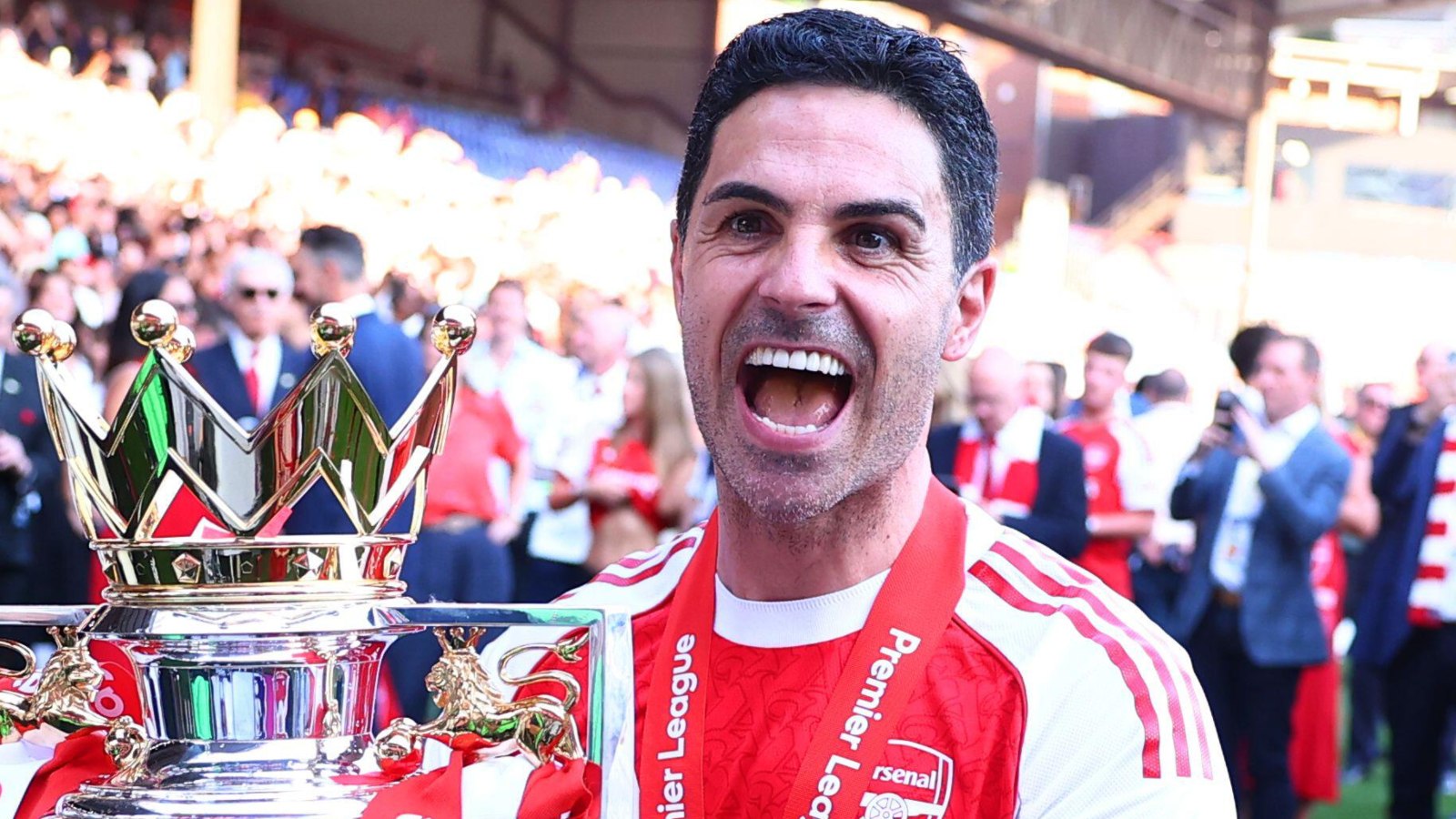
Arsenal are Premier League champions. Mikel Arteta has delivered the title to north London for the first time in 22 years. Declan Rice recently shared his honest admission regarding the grueling race against Manchester City.
Behind the celebrations and the confetti, a stark medical reality is unfolding. As a fitness and medical analyst, looking at Rice's workload this season reveals a highly dangerous physiological profile. He has not sustained a catastrophic acute injury, but he is suffering from severe systemic exhaustion.
In modern sports medicine, cumulative load fatigue is treated with the same severity as a Grade 2 muscle tear. The sheer volume of minutes required to unseat Manchester City has pushed Rice into the red zone. The human body has an absolute physiological ceiling.
Arsenal's medical team managed to keep him functioning just beneath that ceiling for ten months. Now, the bill comes due. The expected timeline for a full biological reset is typically six weeks. Unfortunately, the calendar does not care about physiology.
The FIFA World Cup kicks off on June 11, exactly 20 days from today. This leaves the England national team medical staff with an incredibly complex clinical puzzle. They inherit an athlete whose central nervous system is deeply fatigued.
When a player logs this many high-intensity minutes, proprioception degrades. The neuromuscular signaling between the brain and the lower extremities slows down by fractions of a second. That microscopic delay is exactly when non-contact anterior cruciate ligament injuries occur. The risk profile right now is exceptionally high.
Biomechanical Breakdown and the Single Pivot
To understand the danger Rice is currently in, we must examine the biomechanics of his role under Arteta. Playing as the primary defensive anchor in a possession-dominant side forces a unique movement profile. Rice is not just running in straight lines.
He is engaging in hundreds of multi-directional, reactive sprints per match. Every time Arsenal lost possession, Rice was tasked with shutting down the transition. This is not a role that allows for pacing or active rest during the 90 minutes. This requires violent eccentric muscle contractions.
When sprinting to close down an opponent, the muscles in the posterior chain—specifically the hamstrings and the gluteal complex—must act as brakes. They elongate while under massive tension. The patellar tendon also absorbs tremendous sheer force during these sudden deceleration phases.
Doing this repeatedly causes micro-trauma to the muscle fibers. In a normal schedule, a player gets 72 to 96 hours to repair this damage through protein synthesis and active recovery. In a title race against Manchester City, that recovery window shrinks dramatically.
Arteta relied on Rice entirely, pushing his physiology to the absolute brink. The medical data from similar workloads paints a grim picture. We saw a nearly identical physiological profile with Fabinho during Liverpool’s peak years.
He was relentlessly deployed to cover ground and break up play. The cumulative toll eventually caused his physical output to collapse. Arsenal’s lack of a reliable rotational option for Rice is a glaring strategic failure. Arteta refused to rest his star signing.
While it ended a 22-year wait for a league title, it demonstrated a reckless disregard for long-term player welfare. It is a fundamental flaw in their squad building that simply cannot be ignored.
The 20-Day Rehabilitation Protocol
With exactly 20 days until the World Cup, the recovery timeline must be executed flawlessly. There is zero margin for error. The typical protocol for a player exhibiting this level of systemic fatigue is broken into three distinct phases.
Phase One covers days one through seven. This is the absolute off-loading period. Rice must be entirely removed from weight-bearing impact activities. Running on grass is strictly prohibited during this window.
The medical staff will likely utilize daily hyperbaric oxygen therapy to accelerate cellular repair. Cryotherapy and targeted soft-tissue mobilization will be used to flush localized inflammation in the knee and ankle joints. During this week, his creatine kinase levels—a primary biomarker for muscle damage—must be closely monitored.
If those levels do not drop to a baseline state, any subsequent training will risk severe injury. The medical team is essentially fighting a battle against time and biology.
Phase Two encompasses days eight through fourteen. This is the controlled reloading phase. The England physios will reintroduce kinetic chain movements. The focus must be on isometric strength rather than explosive power.
Hamstring loading via Nordic curls and core stabilization work will take precedence over ball work. The acute-to-chronic workload ratio becomes the most important metric here. The sports scientists will monitor every single stride he takes using GPS tracking vests.
A sudden spike in running volume during international camp has historically been the exact moment when overplayed stars suffer hamstring avulsions.
Phase Three is the final six days before the kickoff. This is the match sharpness window. Rice will reintegrate into full tactical training, but his total distance covered must be heavily capped.
The coaching staff must be medically directed to pull him from training drills the moment his velocity metrics drop. A drop in top speed is the earliest indicator that the central nervous system is failing to recruit fast-twitch muscle fibers.
Historical Parallels and Strategic Ramifications
We have seen this specific medical scenario play out repeatedly on the global stage. The most tragic modern example is Pedri’s 2021 campaign with Barcelona and the Spanish national team. The young midfielder was driven into the ground, playing more than 70 matches in a calendar year.
He went straight from a grueling club season into the European Championships and then the Olympics. His body completely broke down, leading to years of chronic soft-tissue injuries.
Arsenal and the English national team are flirting with the exact same disaster. The broader impact on the industry is a dangerous normalization of physiological abuse. When a club wins the Premier League by pushing a player to the absolute edge, other clubs take note.
The precedent set by this 22-year drought-ending season is that load management can be abandoned if the trophy is big enough. Medical professionals across the league are constantly fighting an uphill battle against managers who prioritize the next three points over the next three years of a player's career.
For England, the strategic implications are terrifying. Their entire tactical structure relies on Rice anchoring the midfield. If he breaks down during the group stages, the defensive stability vanishes. The World Cup format is unforgiving.
Seven matches in four weeks is a physical gauntlet. Asking a player who has just survived a ten-month war of attrition against Manchester City to run that gauntlet is medically unsound. The heat and travel demands of the tournament will only exacerbate his underlying fatigue.
Hydration strategies and sleep tracking will become just as important as tactical preparations. The success of Arsenal's season cannot shield them from medical criticism. They won the title, but the north London club has delivered a highly compromised athlete to the national team.
The next 20 days will determine whether Rice can survive the World Cup, or if the price of Arsenal’s triumph will be paid on the international stage. The margin for error is gone.
Read Next
- Arsenal's 22-year drought is dead and Declan Rice is the undisputed king
- The medical miracles and reckless gambles behind Arsenal's title win
- Jurrien Timber faces uphill battle for Champions League final
- Bukayo Saka survived the machine to become a Premier League champion
- 🏴 England World Cup 2026 — Three Lions Hub
- ⭐ UCL 2026 — Champions League Quarter-Finals Hub