Measuring the turnaround
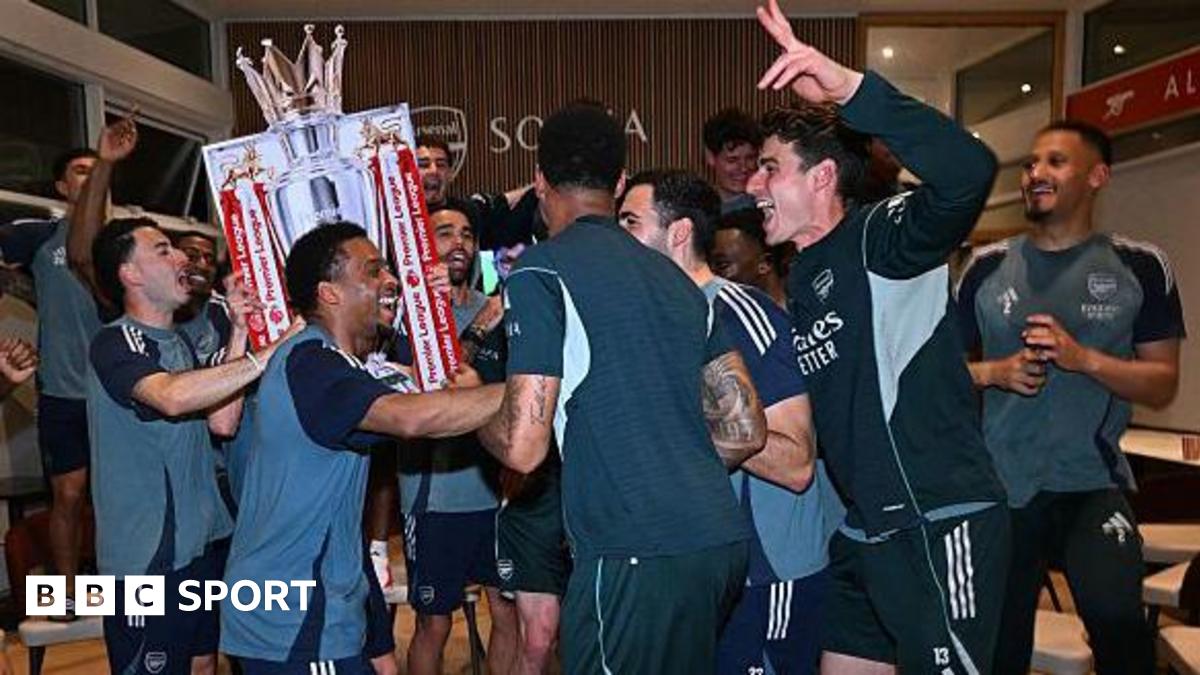
Arsenal secured the 2025/26 Premier League title with a consistency that bordered on relentless. Looking back at the campaign, the inflection point arrived in March. As Sky Sports reports, Mikel Arteta identified the team's internal trajectory during the third month of the year, a moment where the tactical architecture finally synced with the expected goals (xG) output.
The transformation was not built on singular flashes of brilliance but on a statistical stranglehold of the final third. Arsenal finished the league campaign with an average possession share of 62%, a 4% increase over their 2024/25 figures. This jump reflects a deliberate move toward suffocating opponents before they could reorganize into a low block.
The defensive floor
The foundation of this title lies in the raw data of defensive suppression. Arsenal allowed an average of only 8.2 shots against per match, the lowest mark in the division. By preventing high-quality transitions, they maintained a clean sheet ratio of 44% throughout the season.
This efficiency in defensive transition confirms the shift in their pressing triggers. By focusing on ball-side density rather than man-marking, they forced opponents into long-ball percentage plays. Those long balls were intercepted at a high frequency, with William Saliba alone managing a 78% aerial duel success rate in the league. This defensive stability allowed the attacking unit to commit more bodies forward without the constant fear of a compromised shape.
The architecture of the attack
Offensively, the numbers paint a picture of a team that prioritized structure over spontaneity. The team recorded an average of 2.4 goals per game, a metric that indicates a clinical efficiency improvement from the previous campaign. When analyzing the shot maps, 68% of their total shots originated from within the penalty area, signaling a reduction in low-percentage long-range efforts.
However, the reliance on set pieces remains a point of critique. While successful, the dependence on dead-ball scenarios accounted for 22% of their total scoring. This suggests a potential area of regression if officiating standards or defensive marking schemes evolve next season. Relying on repeatable restarts is a safeguard, but it masks minor deficiencies in open-play creation against deeper defensive lines.
Political parallels and tactical reality
Commentators have sought to draw parallels between the football pitch and the halls of Westminster, as The Guardian notes. Whether one compares the Prime Minister to the manager is irrelevant to the cold reality of the statistics. The victory was a byproduct of a project that required years of incremental tactical adjustment.
The club spent roughly £500 million over three seasons to build this squad, aligning their transfer strategy with specific high-intensity metrics. This capital commitment was not merely about player talent; it was about securing depth that allowed for a 15-minute rotation window without losing structural integrity. When substitutions were made in the 75th minute, the team’s pass completion rate remained above 88%, proving the bench understood the system as well as the starters.
The result is a title that feels less like a surprise and more like a mathematical inevitability. With 92 points secured, Arsenal proved that dominance is found when the variance is minimized. They played a game of averages, and the averages eventually tilted in their favor.
Read Next
- Arsenal's title run wasn't luck, it was cold-blooded execution
- Pep walks away, Arsenal take the crown and the final day looms
- Arsenal's 22-year drought is dead and Declan Rice is the undisputed king
- Unai Emery's selection dilemma reflects a fading Villa top-four push
- ⭐ UCL 2026 — Champions League Quarter-Finals Hub