
How Mikel Arteta broke Man City's dominance to win the Premier League
The Climax on the South Coast
The 2025/26 Premier League title was not sealed with a dramatic stoppage-time winner at the Emirates. It was finalized 100 miles away. Manchester City arrived at the Vitality Stadium needing a victory to push the title race to the final day. They walked away with a 1-1 draw. Pep Guardiola's machine finally stalled.
This was the precise scenario Arsenal fans had prayed for. City usually dominate possession, pin the opposition back, and find a late cut-back to win. Not this time. Andoni Iraola set up a resilient mid-block. Bournemouth clogged the half-spaces and refused to break structure. They allowed City’s center-backs to have the ball on the halfway line but violently contested every pass into the midfield pockets.
The pressing triggers were obvious. Whenever Mateo Kovacic turned his back to play out, a Bournemouth midfielder was instantly on his ankles. The resulting draw was entirely deserved. City racked up possession statistics, but the high-danger chances were remarkably even. Guardiola was seen frantically gesturing on the touchline by the 70th minute. He threw on attacking substitutes, altering the shape to a chaotic front five.
Bournemouth held firm. Their low block in the final ten minutes was a masterclass in disciplined spacing. Center-backs cleared crosses, midfielders tracked late runners, and the crowd roared at every defensive action. The irony of the afternoon centered on Eli Junior Kroupi. The Bournemouth attacker was a constant thorn in City's rest-defence. His transition carries relieved pressure when City squeezed the pitch. He directly contributed to the result that mathematically eliminated the reigning champions.
Wenger's Final Directive
When Arsene Wenger departed in 2018, he left a specific instruction in his final programme notes. As The Daily Mail recently recalled, Wenger wrote a clear message for his eventual permanent successor:
"Move the club forward with your own ideas."
It took a while for someone to actually listen. Unai Emery tried to compromise. He attempted to blend Wenger's attacking freedom with a rigid pragmatism. It failed. When Mikel Arteta arrived, he brought a ruthless, unsentimental vision. He cleared out the slackers.
It was a painful process. Arsenal had to pay players to leave. The squad was full of bloated contracts and misaligned attitudes. Pierre-Emerick Aubameyang was shipped out for reporting late. Mesut Özil was frozen out. Arteta drew a hard line on non-negotiables. You pressed, you tracked back, or you sat in the stands.
The cultural rot within the walls of London Colney was severe. Arteta inherited a dressing room fractured by cliques and defined by a lack of accountability. Information leaked to the press weekly. Training ground intensity was entirely optional.
Arteta tore it down to the studs. He demanded a physical and mental commitment that broke several senior players. He fined players for being a minute late to meetings. He benched stars for disciplinary infractions, regardless of the fixture schedule. It cost Arsenal points in the short term. They suffered humiliating defeats while fielding inexperienced academy graduates. But Arteta was operating on a different timeline. He was excising a losing mentality.
The Tactical Evolution
The foundation of this title win is undeniably the defense. Specifically, the partnership between Gabriel Magalhães and William Saliba. Saliba's development is the ultimate vindication of Arteta's long game.
For three years, fans demanded Saliba be integrated into the first team. Instead, Arteta sent him on consecutive loans to Saint-Étienne, Nice, and Marseille. Critics accused the manager of alienating a generational talent. The reality was entirely different. Arteta knew exactly what he was building.
Saliba needed thousands of senior minutes to iron out the rash decision-making inherent in young center-backs. By the time he returned to London, he was hardened. He understood spatial awareness. He could defend one-on-one in wide channels, allowing Ben White to invert into midfield or overlap down the right flank.
Then came the midfield engine. If Saliba was the foundation, Declan Rice was the upgrade that pushed them past City. Getting Rice to reject Guardiola and choose Arteta was a masterstroke of recruitment. Arteta reportedly used a highly specific tactical pitch. He didn't just sell the prestige of the club. He mapped out exactly how Rice would function as the lone pivot, dictating the tempo and covering transitions.
Rice replaced Thomas Partey's vertical passing with elite ground coverage and duel-winning physicality. At West Ham, Rice was tasked with protecting a low block. At Arsenal, he was asked to police the center circle while the rest of the team camped in the opposition half. He executed it flawlessly. He turned transition threats into sustained Arsenal attacks within seconds.
The Flaws in the Machine
Yet, for all the celebration, this Arsenal side is not without significant flaws. Arteta's rigid adherence to his starting eleven bordered on negligence down the final stretch of the season.
Bukayo Saka played entirely too many minutes. By late April, the winger was visibly exhausted. He started taking heavy touches and failing to track opposition full-backs with his usual intensity. Arteta's refusal to trust Reiss Nelson or heavily rotate in domestic cup competitions nearly derailed the league campaign.
Arsenal limped across the finish line offensively. Over the final five matches, their non-penalty xG dropped significantly. They relied far too heavily on set-piece goals to mask a stagnant open-play attack. The draw at Bournemouth saved them from having to win a high-pressure shootout on the final day.
If City had pushed them to the brink, it is highly questionable whether Arsenal's fatigued forwards had enough left in the tank to respond. You do not win a title perfectly. But Arteta must address this depth issue if he intends to defend the crown. Relying on a 13-man core for a grueling 10-month season is statistically unsustainable.
Looking to the Future
True elite clubs do not celebrate a title by standing still. They immediately look for the next market inefficiency. Arsenal are already doing exactly that.
Sky Sports reports that Arsenal are targeting Bournemouth's Kroupi. The very player who disrupted City's defense and helped seal the title is now on Edu's shopping list. This is how you build a dynasty. You identify the profiles that hurt your rivals and integrate them into your own system.
Kroupi offers the exact profile Arsenal lack out wide. He is a chaotic, unpredictable dribbler who can isolate defenders in transition. Bournemouth used Kroupi brilliantly in that decisive fixture. Iraola recognized that City's inverted full-backs leave massive space in the wide defensive channels. Kroupi was stationed high and wide, instructed to isolate City's isolated center-backs the moment Bournemouth won the ball.
Bringing Kroupi into the fold would directly address the Saka fatigue issue. It shows a front office operating with clinical precision. They are not waiting for the parade to end before plotting the defense of the trophy.
Reconnecting the Match-Going Fan
The tactical shifts are fascinating, but the atmospheric shift at the Emirates is equally important. For the later Wenger years and the entirety of the Emery era, the stadium was toxic.
It was a library when things were going well, and a cauldron of frustration when they were not. Arteta recognized that a possession-based system requires patience from the stands. If the crowd groans every time a center-back recycles possession, the players panic.
He actively campaigned to rebuild the connection with the fanbase. The introduction of the 'North London Forever' anthem before kickoff wasn't just a marketing gimmick. It was a deliberate psychological anchor. It unified the stadium.
When Arsenal went behind in matches this season, the crowd did not turn on the players. They turned up the volume. That environmental change is worth several points over a 38-game season.
The Wider Implications
Guardiola will inevitably respond to this defeat. Manchester City have infinite resources and a bruised ego. They will reload in the summer transfer window.
But Arsenal have proven that the City monopoly can be broken with intelligent squad building and unyielding tactical discipline. They did not simply outspend City. They outplanned them. The integration of young talent mixed with peak-age acquisitions created a perfectly balanced squad age profile.
The Key Tactical Drivers
Arsenal's success was built on several non-negotiable tactical pillars established over the past six seasons:
- Defensive Solidity: Saliba and Gabriel forming an impenetrable central block, allowing aggressive high lines.
- Midfield Dominance: Rice operating as a one-man transition destroyer, sweeping up loose balls.
- Set-Piece Efficiency: Nicolas Jover's routines turning corners into guaranteed goal-scoring opportunities.
- Positional Fluidity: Kai Havertz dropping deep to drag center-backs out, creating space for Gabriel Martinelli and Saka.
Six years is an eternity in modern football. Managers are routinely sacked after six bad weeks. The Arsenal board held their nerve through an eighth-place finish. They backed Arteta when the analytics suggested the underlying process was sound, even when the results were inconsistent. They absorbed the ridicule.
Now, they hold the Premier League trophy. The project is officially complete. The era of Arsenal as the soft touch of the top six is dead. They are champions, forged through patience, tactical rigidity, and a timely assist from the south coast.
Fisher-Price Little People Collector U.S. Soccer Special Edition Set For Sports Fans, 2 Figures
The cutest way to show your U.S. Soccer pride before the big kickoff.
Frequently Asked Questions
How did Arsenal mathematically win the 2025/26 Premier League title?
What tactical setup did Bournemouth use to stop Manchester City?
Which Bournemouth player caused problems for Manchester City's defense?
What advice did Arsene Wenger leave for future Arsenal managers?
How did Mikel Arteta change the culture in the Arsenal dressing room?
More Coverage
Top 10: The Defining Moments of the 2025/26 English Football Season
3 hours ago
Crystal Palace's unlikely European title exposes the modern speed gap
11 hours agoThe World Cup knockout bracket is a total minefield
1 day, 5 hours agoThe World Cup bracket is a house of cards waiting to collapse
1 day, 5 hours agoThe World Cup knockout stage is a tactical disaster waiting to happen
1 day, 5 hours agoBrazil's Path to 2026 Glory Is Riddled With Traps
1 day, 5 hours agoMore Analysis
Mikel Arteta built a machine, then won the league at a barbecue
1 week, 1 day ago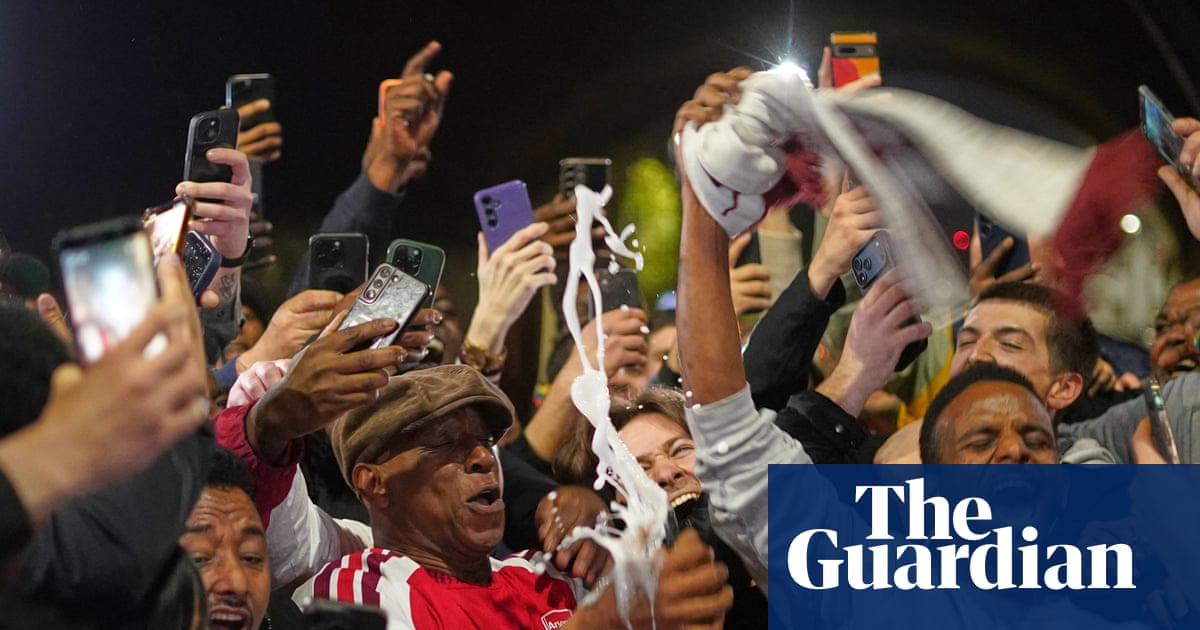
Arsenal win the Premier League: Six years, a billion pounds, and total relief
1 week, 2 days ago
Arsenal finally killed the 22-year ghost by embracing absolute boredom
1 week, 2 days ago
Arsenal's title run wasn't luck, it was cold-blooded execution
1 week ago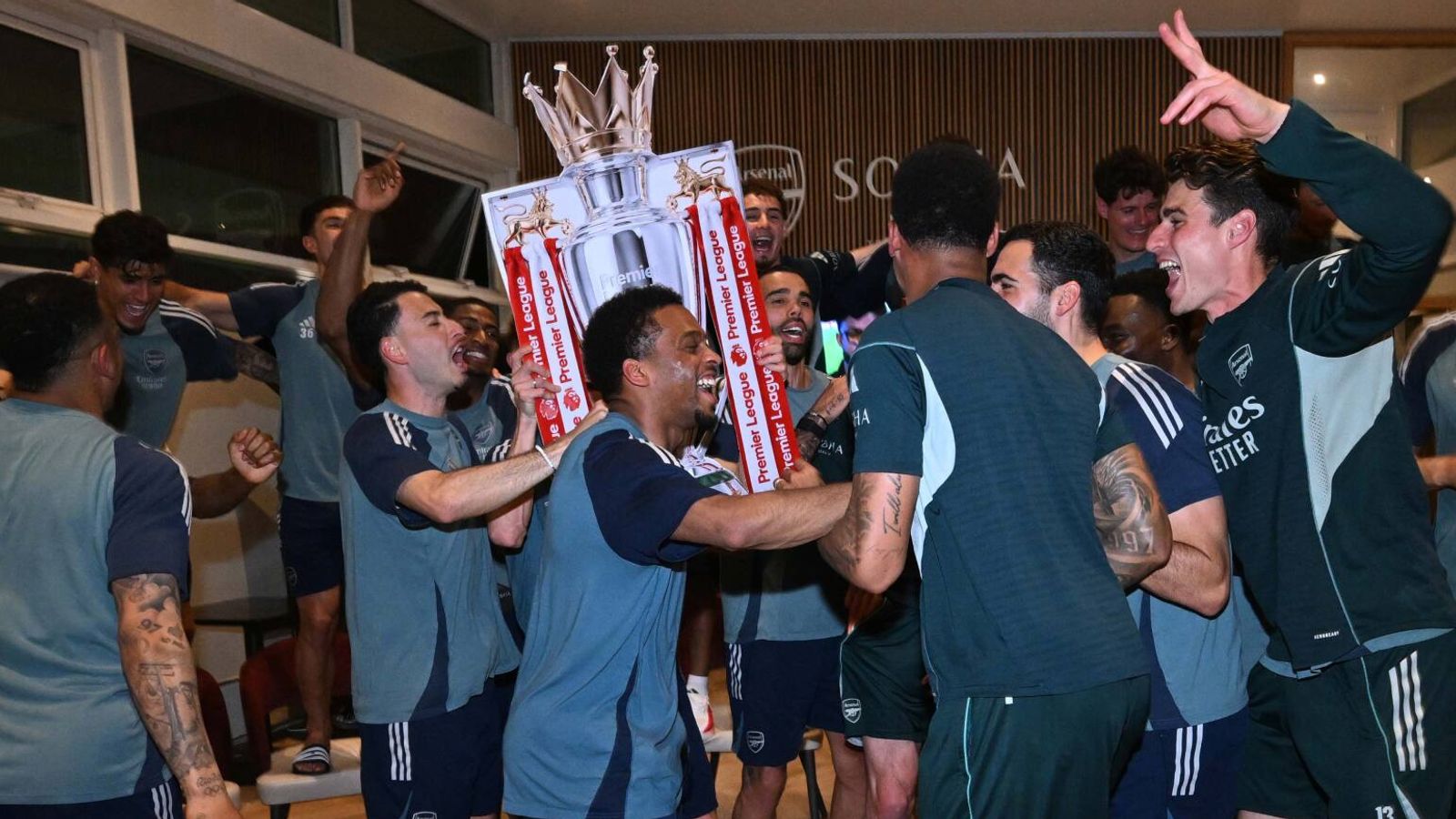
How Mikel Arteta destroyed the Arsenal banter era to win the league
1 week, 1 day ago