
Barrow's five-manager circus ends in the only logical outcome

The Anatomy of League Two Panic
Spurs catch all the flak for being English football's premier soap opera. It is an easy narrative to sell to the masses. But true chaos does not exist in the upper echelons of the Premier League, where structural safety nets and immense wage bills provide a floor to how far you can fall. True chaos is what has unfolded at Holker Street this season. Barrow have been relegated from League Two, and they achieved this grim milestone by churning through an absurd number of head coaches.
Think about the simple arithmetic behind that decision-making process. In a standard 46-game League Two campaign, a five-manager rotation gives each man in the dugout roughly nine matches to implement a philosophy, assess a broken squad, and arrest a catastrophic slide. It is an impossible tactical environment. You cannot build automated passing networks in nine games. You certainly cannot fix a broken defensive transition structure when the voice giving the instructions keeps changing before the ink on their contract is dry.
After five managers during the season, 'Kings of chaos' Barrow have been relegated from League Two.
The BBC aptly dubbed them the kings of chaos as May arrived, completely overshadowing whatever minor crisis is currently unfolding in North London. But this is not just an administrative failure. It is a fundamental misunderstanding of how football matches are won in the lower divisions. You do not survive a League Two relegation scrap through sudden bursts of tactical inspiration. You survive through deeply ingrained repetition and a stable defensive block.
Tactical Whiplash in the Lower Divisions
When you change the tactical framework five times between August and May, the cognitive load on the players becomes completely overwhelming. Imagine being a center-back in this broken system. In September, you are instructed to drop deep, absorb pressure in a low block, and clear your lines. By November, a new manager arrives demanding a high line and aggressive offside traps. By February, you are playing in a back three, asked to step into midfield and break lines with progressive passes.
The inevitable result of this tactical whiplash is hesitation. Football at this level is decided in fractions of a second. If a defender has to consciously think about whether his current manager wants him to track the runner into the channel or hold the rigid zonal shape, he is already a second too late. The opposition striker is gone. Barrow's defensive metrics plummeted not simply because they lacked talent on the pitch, but because the defensive unit had zero institutional memory to fall back on when placed under pressure.
The Frankenstein Squad Profile
We have to look at the squad profile, which quickly morphed into a Frankenstein's monster of conflicting tactical ideologies. The recruitment strategy over the summer was likely tailored to the first manager's specific demands. Perhaps he wanted traditional wingers to hit the byline and deliver driven crosses to a physical target man inside the penalty area.
Six weeks later, he is sacked. Manager number two arrives with a completely different vision. He prefers inverted wingers cutting inside and a false nine dropping into midfield to link play. Suddenly, the traditional wide men are benched or forced to play unfamiliar roles that expose their weaknesses. Then manager three steps in, ripping up the playbook entirely to implement a narrow diamond midfield. The squad becomes severely bloated with specialist players who only fit one of the five systems attempted over the doomed campaign.
You end up with a midfield operating on completely different wavelengths. One central midfielder is looking for a third-man run that the current manager has never drilled into the team, while his partner is holding a conservative pivot position demanded by the previous regime. The spacing on the pitch is entirely atrocious. Gaps appear between the lines because the pressing triggers are entirely disjointed from front to back.
When Pressing Triggers Disintegrate
Pressing is not about running hard or showing desire. It is about highly coordinated movement. If the striker initiates a press on the opposing center-back, the attacking midfielder must immediately close the nearest passing lane, and the defensive midfielder must step up to compress the space. This requires hours of repetitive drilling on the training ground. When the voice taking those sessions changes five times, the press becomes a massive liability.
Opposing teams quickly realized that beating Barrow simply required bypassing the first disjointed wave of pressure. Once that initial, disorganized press was beaten, the midfield would instantly fracture. The lack of cohesion meant opponents could easily isolate Barrow's defenders in one-on-one situations. It is a tactical suicide note written over the course of nine months.
When you operate a high block, the distance between the center-backs and the central midfielders cannot exceed 15 yards. If the current manager demands a high line but the midfield is instructed by the previous regime's lingering influence to sit deep, you create a massive tactical void in the center of the pitch. Opposing number tens thrive in these exact pockets. They receive the ball on the half-turn with miles of space, turning a simple transition into a fatal counter-attack.
The Illusion of the New Manager Bounce
The myth of the new manager bounce is pervasive in modern football. Boards desperately believe that a fresh voice will instantly galvanize a struggling dressing room and produce results. And sometimes, there is a short-term bump in energy levels. But raw energy without structural foundation is entirely useless against well-drilled opposition in this division.
By the time the fourth and fifth managers arrived at the club, the dressing room was likely entirely numb to tactical instruction. Player morale is a fragile thing. When you see your colleagues dropped for no clear reason, functional systems abandoned overnight, and backroom staff cleared out repeatedly, basic survival instincts kick in. Players retreat into their shells. They stop taking necessary risks on the ball.
A team playing without confidence and without a coherent system defaults to the lowest common denominator: aimless long balls and defensive panic. Barrow's possession statistics undoubtedly nose-dived as the season dragged grimly into the spring. The midfield was bypassed entirely not out of a tactical directive, but out of sheer desperation to get the ball away from their own penalty area.
A Boardroom Autopsy
This relegation is a glaring indictment of the boardroom operations. The executives at Holker Street must take the absolute brunt of the criticism. Sacking a manager is an admission of failure by the people who hired him. Sacking four in a single season is gross professional negligence. It shows a complete lack of a long-term vision or an overarching sporting project.
If there was a director of football in place during this circus, their position is surely untenable today. The entire point of a modern sporting structure is to ensure continuity even when the head coach inevitably changes. The squad should be built to a specific, unwavering identity. The next manager should be hired exclusively because his data profile fits that identity. Barrow operated in the exact opposite manner, throwing darts at a board and praying one would miraculously stick.
You cannot firefight your way to safety when you keep firing the person holding the hose. The structural damage was done long before the mathematical reality set in. The moment they hired their third manager before Christmas, the writing was permanently on the wall.
Looking ahead to life in the National League, the cleanup operation is going to be massive. The club has to strip the squad down to its absolute bare studs. They need to aggressively identify which players belong to which failed regime and clear the decks over the summer. More importantly, the ownership group needs to decide what kind of football club they actually want to be when August rolls around.
They cannot afford to bring this chaotic energy into non-league football. The National League is an incredibly difficult division to escape from. It is remarkably physical, it is relentless, and it brutally exposes teams lacking structural integrity. If Barrow attempt to shortcut their way back to the EFL without establishing a clear tactical foundation, they will continue to sink.
The comparison to Tottenham Hotspur is a fun headline for the BBC, but it heavily flatters Barrow's decision-makers. Spurs' chaos is a byproduct of high-profile ego clashes and stylistic mismatches at the elite level. Barrow's chaos is a pure product of fundamental operational incompetence.
There is absolutely nothing romantic about this kind of failure. It is exhausting for the supporters who travel away, confusing for the players on the training pitch, and ultimately destructive to the club's long-term health. The title of kings of chaos is not a badge of honor. It is a grim epitaph for a season that was doomed by the very people employed to protect it.
Tactical stability is the ultimate currency in the Football League. You look at the teams that gain promotion from League Two, and they all share one common trait: everyone on the pitch knows exactly what their job is in all four phases of play. They have highly automated patterns of play. They have a settled starting eleven.
Barrow had none of that. They were a miserable weekly experiment gone wrong. You could watch them on a Tuesday night and see a team trying to play out from the back, only to watch them the following Saturday under a new manager resorting to rudimentary route-one football. It is impossible to generate attacking momentum when the board is constantly pulling the handbrake.
Even minor tactical details suffered heavily under this churn. Set-piece routines require deep familiarity and timing. If the delivery changes, the runs have to change. Barrow's attacking output from corners and free-kicks likely diminished rapidly as the season progressed, simply because they never had enough time to practice a single routine before the manager was shown the door.
Defensively, set-pieces become a complete nightmare under these conditions. Zonal marking requires implicit trust in the man standing next to you. Man-marking requires intense concentration and clear, unwavering assignments. When the system flips back and forth every month, you get players caught in no-man's land, marking space instead of players, conceding the cheap goals that ultimately define tight relegation battles.
The final autopsy of this season will not require advanced analytics or deep data dives. The raw arithmetic tells the entire story. Five managers. One miserable relegation. It is a strictly linear equation. The board aggressively attempted to outsmart the division with constant adjustments and ended up entirely outsmarting themselves.
As the dust settles on this campaign, the focus must shift entirely to stability. The next appointment cannot be a reactionary firefighter. It must be a manager willing to sign a long-term contract, with a clear mandate to clear out the bloated squad and build a single, coherent tactical identity from scratch.
Until that happens, Barrow will remain a bleak cautionary tale. They are the definitive proof that you cannot hack football. You cannot panic your way to 50 points. The game rewards structure, repetition, and extreme clarity. By treating the manager's office like a revolving door, Barrow guaranteed they would have none of the three.
Read Next
Amazon Fire TV Stick 4K streaming device
Watch every Premier League and World Cup match in stunning 4K.
More Coverage

Michael Skubala takes the hot seat at Ashton Gate
2 hours ago
World Sevens brings high-octane chaos before the World Cup fever hits
2 hours ago
Why Manchester United’s pursuit of Ederson makes tactical sense
10 hours ago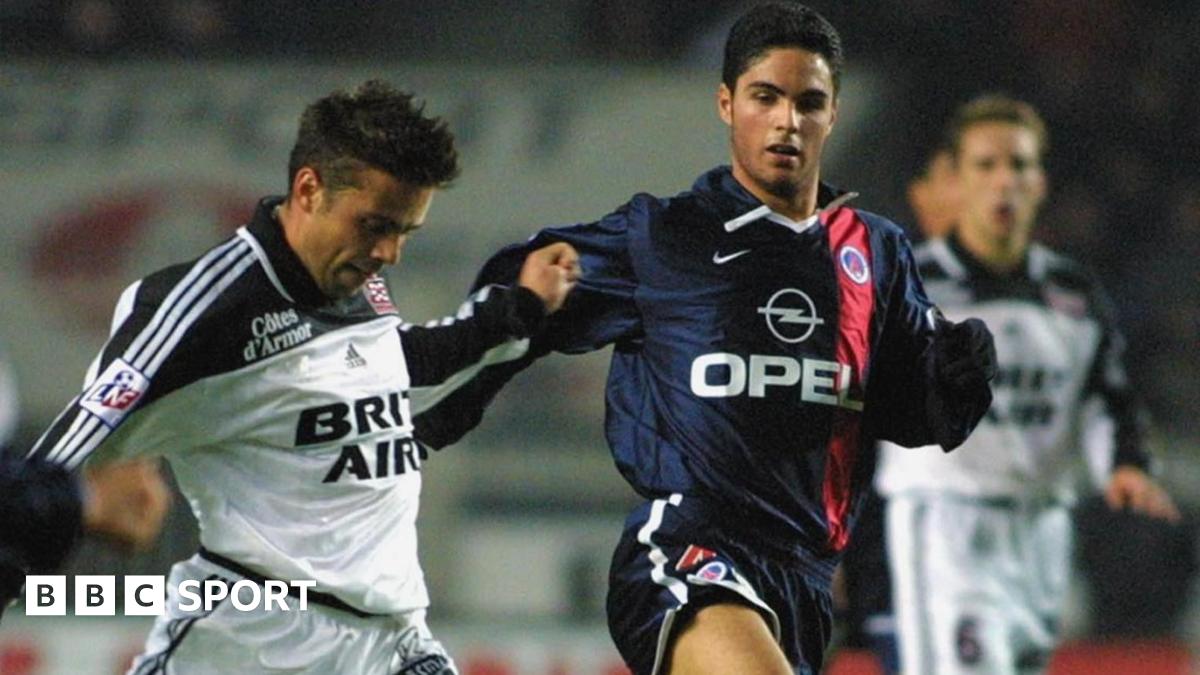
Arsenal must reconcile their tactical past with this final hurdle
12 hours ago
Manchester United are sleepwalking into another summer of uncertainty
14 hours agoHow a weird PSG loan turned Mikel Arteta into a manager
18 hours agoMore Analysis
Barrow is making the Premier League look like a boring corporate retreat
1 month, 4 weeks ago
Burnley sack Scott Parker because the vibes finally ran out
4 weeks, 1 day ago
Wrexham's collapse shows why the EFL final day is pure chaos
3 weeks, 6 days ago
Leicester's administrative collapse is a masterclass in mismanagement
1 month, 1 week agoLeicester's administrative collapse is a masterclass in mismanagement
1 month ago