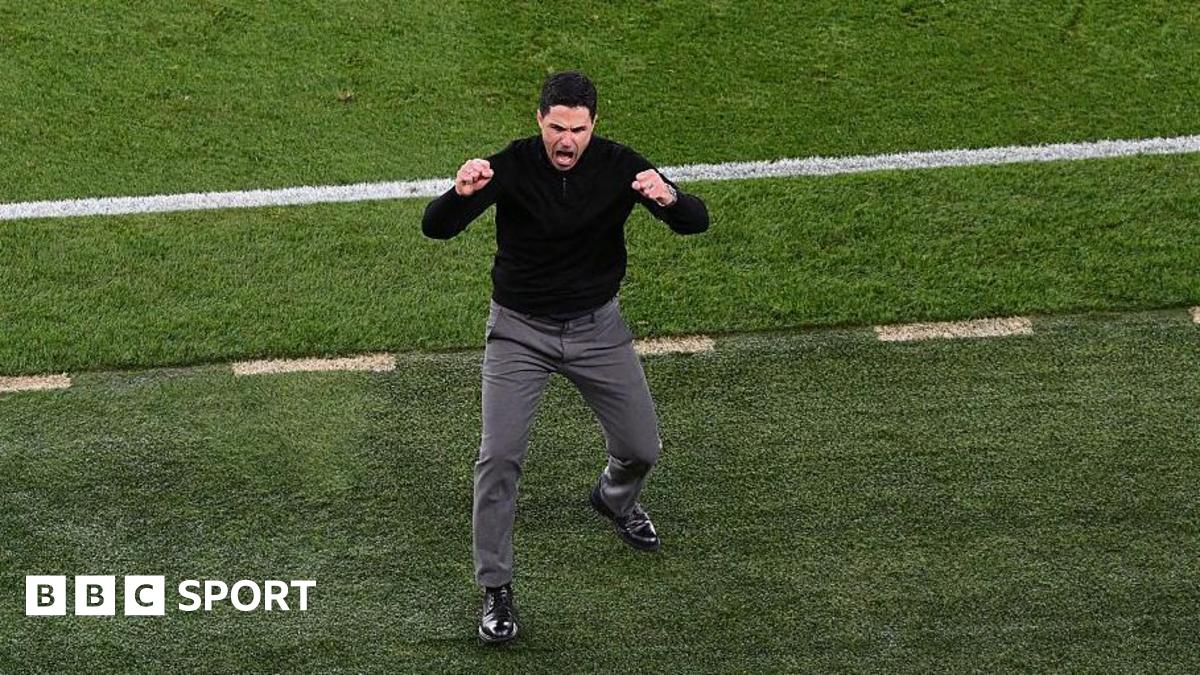
The Parisian education of Mikel Arteta
Before Mikel Arteta was stalking the touchline at the Emirates like a soccer-obsessed mime, he was just an eighteen-year-old kid in Paris. Back in 2001, he rocked up at a club that was effectively a chaotic fever dream. PSG was a different animal then, a glamorous mess that somehow housed the most talented playmaker on the planet in Ronaldinho.
Arteta didn't walk into a golden generation. He walked into a locker room where guys were looking at this skinny Spanish kid and thinking they had accidentally signed a ball boy. They didn't see a future tactician; they saw a teenager who looked like he should be studying for finals rather than holding down a defensive midfield spot. Yet, that loan spell from Barcelona is where the seed of his current obsession was planted.
The formative influence of Heinze and Pochettino
You want to know why Arteta is so intense, why he stares at players like he is trying to drain their soul? Look at his roommates and mentors in Paris. Gabriel Heinze wasn't just a teammate; he was a literal big brother who treated the pitch like a war zone. When your daily influence is a man who plays football like he is auditioning for a role as a mercenary, you stop worrying about being pretty.
Then there was Mauricio Pochettino. Before he was the guy with the most stressed-out forehead in the Premier League, he was the daddy of the PSG defense. Pochettino didn't just teach Arteta about positioning; he showed him how to govern 100 yards of grass. Being around those two sharks taught Arteta that talent is noise, but structure is oxygen.
The doubters were wrong
Let's address the elephant in the stadium. His teammates at PSG were skeptical. They saw the kid from the academy and wondered why he was getting the minutes. It is the classic locker room story: if you don’t have the pedigree, you have to kill them with work rate. Arteta did exactly that by anchoring the middle of a, frankly, gritty defensive unit.
For an eighteen-year-old to hold a team together when the manager, Luis Fernandez, is doing whatever the hell he was doing, that takes guts. It is why we saw Arsenal struggle against PSG in the recent Budapest clash — they know his playbook because he basically spent his youth studying the chaos that team generates. He didn't just survive; he watched, he learned, and he realized he wanted to control the board, not just be a piece on it.
The ghost of Ronaldinho's locker room
Imagine being nineteen, sitting in a locker room, and your roommate is Ronaldinho. The guy was essentially a video game cheat code brought to life in human form. Watching him go out and do things that defied physics surely broke Arteta’s brain in a way that made him crave discipline. He saw the genius, but he also saw the fleeting nature of it when the surrounding structure is made of wet tissue paper.
That is the duality of the Arteta experience. He loves the flair, but he demands the rigidity of a Champions League final standard. He knows that if you let the players drift, you end up like those PSG sides that had all the glitz and not a damn bit of efficiency.
The price of the tactical masterclass
Is he flawless? Of course not. Sometimes he looks like he is going to have an aneurysm over a throw-in. The man refuses to make substitutions until the clock hits the 72nd minute for reasons passing understanding. His need for total control sometimes chokes the life out of a game that is supposed to be about letting the players play.
If you look at the current squad compared to that PSG side, you can see the obsession. He is building the machine that he wished he had when he was eighteen. He is trying to create a defense that is immovable, using the lessons he learned from Pochettino’s guidance all those years ago. It is a calculated, often annoying, but undoubtedly brilliant way to manage.
If Arsenal ends up lifting the trophy, do not thank the tactics board. Thank the fact that a teenage Arteta got shoved into the fire by Heinze and Pochettino. He learned that football is a game of inches, and if you aren't fighting for every single one, you’re just wasting everyone's time. He didn't just want to participate; he wanted to be the architect, and after that loan spell, he never looked back.
Read Next
- Arsenal are finally at the summit but the PSG final is pure anxiety
- Arsenal face PSG in the Champions League final with history on the line
- Arsenal face defensive uncertainty as Timber recovery hits final hurdle
- Arsenal need more than Havertz's history to unlock PSG
- ⚽ Ligue 1 2025-26 — PSG, Monaco & the Title Race Hub
- ⭐ UCL 2026 — Champions League Quarter-Finals Hub