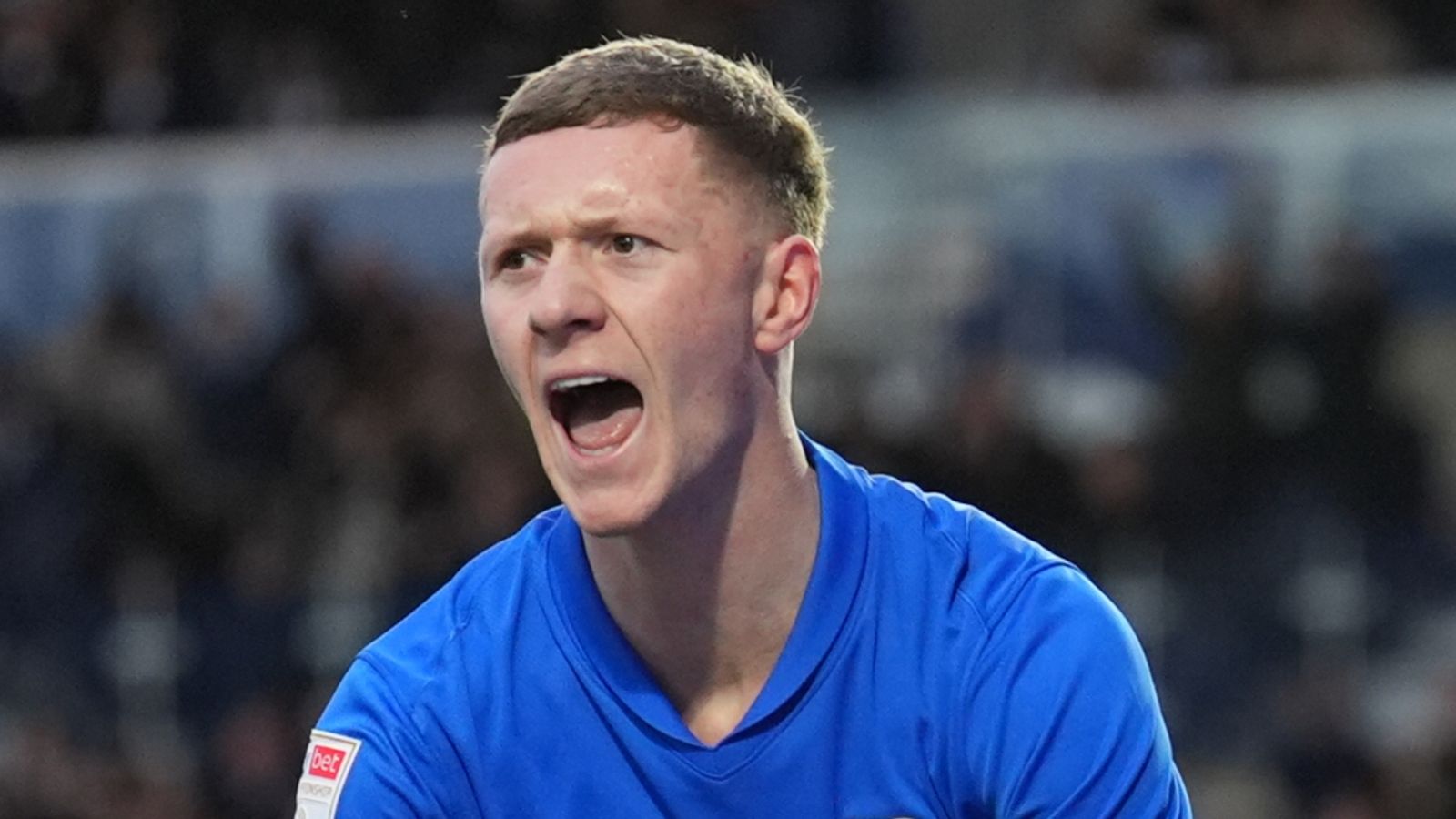
Birmingham and Wrexham have officially broken the League One financial model
The £25m gap that redefined tactical expectations
When Jay Stansfield converted his second goal at St Andrew’s during the recent clash with Wrexham, the roar wasn't just for a brace. It was the sound of a financial ceiling being shattered in real-time. In the history of the third tier, we have never seen a statistical profile like Birmingham City’s current iteration.
They aren't just winning games; they are suffocating the very concept of competitive balance. According to the latest data from the weekend, Birmingham's average possession has climbed to 68.4 percent across the last six fixtures. This isn't normal for League One. Historically, this league is a graveyard for teams that try to play out from the back against high-pressing physical outfits.
But when you spend £15m on a striker and back him with a midfield consisting of Tomoki Iwata and Paik Seung-ho, the rules of engagement change. Chris Davies has implemented a system that looks more like 2023-era Tottenham than a traditional EFL setup. The inverted full-backs are pulling League One wingers into zones they don't recognize, creating massive vertical passing lanes for the technical pivots to exploit.
The Wrexham evolution and the end of the Hollywood narrative
Across the pitch, Wrexham have quietly completed their own transformation from a media curiosity into a cold, tactical machine. Phil Parkinson has moved beyond the direct, set-piece heavy approach that carried them through the National League and League Two. While the Sky Sports live coverage focused on the celebrity owners, the reality on the grass was far more clinical.
Wrexham's defensive structure in their 5-3-2 block has become the most disciplined unit in the division. They surrendered only three shots on target to a Birmingham side that usually registers double digits. The tactical discipline shown by Max Cleworth and Eoghan O'Connell suggests a level of coaching that transcends the standard 'get it into the mixer' tropes of the lower leagues.
The match at St Andrew's highlighted a specific tactical shift: the death of the mid-table press. Usually, a team like Wrexham would try to harass Birmingham's center-backs. Instead, Parkinson ordered a deep mid-block that forced Birmingham to circulate the ball for 14 minutes without a single touch in the penalty area. It was a fascinating chess match that proved these two clubs are operating on a different intellectual plane than their peers.
Statistical anomalies and the xG dominance
The numbers behind this rivalry are staggering when compared to the rest of the EFL. Birmingham's expected goals (xG) per match currently sits at 2.14, while their expected goals against (xGA) is a measly 0.82. For context, only three teams in the last twenty years of League One football have maintained an xG differential of over +1.0 for an entire season.
Wrexham aren't far behind, though their efficiency comes from high-value transitions rather than sustained possession. In the 34th minute of the Birmingham match, Wrexham won the ball back in their own half and moved it to the final third in just three passes. This wasn't a 'long ball' in the traditional sense; it was a targeted laser into the space vacated by Birmingham's marauding full-backs.
The efficiency of Jay Stansfield is the primary outlier in this entire equation. He is currently converting 28 percent of his chances, a rate that would be unsustainable for a normal League One forward. But Stansfield isn't a League One forward. He is a Premier League asset playing in a third-tier skin, and that reality is distorting the league's competitive integrity.
The dark side of the financial disparity
We have to talk about the negative consequences of this two-club hegemony. While the quality of football at the top is undeniable, the 'zombie' middle of the table is expanding. Clubs like Charlton, Rotherham, and Huddersfield are finding themselves in a tactical and financial no-man's land. They cannot outspend Birmingham, and they cannot out-coach the systemic stability of Wrexham.
There is a growing sense of frustration among the 'legacy' clubs who are operating on sustainable budgets. If you aren't backed by a sovereign wealth fund or a Hollywood production budget, you are effectively playing for third place. This isn't just a pessimistic observation; it is a mathematical reality reflected in the 22-point gap between the top two and the playoff chasing pack.
The danger is that League One becomes a two-tier system within itself. We are seeing a decline in attendance for matches involving the bottom half because the outcome feels predetermined. When Birmingham visited Cambridge earlier this season, the home fans were ironically cheering when their team completed more than three passes. That isn't a sign of a healthy, competitive ecosystem; it's a sign of a league that has been 'solved' by superior capital.
Why the Birmingham-Wrexham rivalry matters for 2026
Looking ahead to the final stretch of the season, the tactical battle between Davies and Parkinson will define the EFL's future. Birmingham are betting everything on a high-risk, high-reward positional game. If they fail to secure the title, the financial repercussions of their £25m squad spend could be catastrophic. The pressure on Davies to maintain this statistical dominance is immense, and we saw cracks in his composure during the post-match interview on Sunday.
Wrexham, by contrast, feel like they have more margin for error. Their commercial revenue is so high that they can afford to miss out on automatic promotion and try again next year without breaching FFP rules. This asymmetry creates a fascinating psychological dynamic. Birmingham play like they are terrified of a single mistake, while Wrexham play with the calm of a team that knows their rise is inevitable.
The 1-1 draw at St Andrew's was a masterclass in modern tactical management. Both managers recognized the strengths of the other and adjusted accordingly. Davies sacrificed some of his usual attacking fluidity to prevent Wrexham's counters, while Parkinson accepted 30 percent possession to ensure his defensive block remained compact. It was a high-level stalemate that would not have looked out of place in the Championship or even the lower reaches of the Premier League.
The tactical blueprint for the rest of the league
Can anyone stop them? The short answer is no, not through traditional means. The only way to beat Birmingham is to hope for a rare day where their 600+ passes don't result in a goal and to catch them on a set-piece. For Wrexham, the key is to bypass their midfield entirely, but few teams in this league have the technical quality to hit those long-range switches with enough accuracy.
We are witnessing the professionalization of the third tier at a rate that is frankly uncomfortable for many traditionalists. The days of the 'big man up top' and the 'hard-tackling midfielder' are being replaced by data scientists and positional coaches. Birmingham's recruitment of Iwata from Celtic is the perfect example. Five years ago, a player of his profile wouldn't have looked at League One. Now, he is the heartbeat of a side that is systematically dismantling everyone in their path.
As we approach the business end of the season, with the UCL Quarter-Finals providing a backdrop of elite football elsewhere, the EFL has its own version of a Super League. The clash between Birmingham and Wrexham wasn't just a highlight of the season; it was a warning. The financial model of League One has been broken, and it is unlikely anyone will be able to fix it before the trophy is handed out in May.
The sheer volume of technical data coming out of these two clubs suggests a gap that won't be closed by a simple summer transfer window. The rest of the league needs to find a new way to compete, or accept that they are merely supporting actors in a two-team drama. It is a brilliant, expensive, and slightly terrifying spectacle that has changed the face of English football's third tier forever.
Read Next
- Birmingham and Wrexham have permanently broken the League One statistical model
- Preston’s latest rescue act proves they are the comeback kings of the EFL
- Ipswich are defying the data while Leicester’s season hits the floor
- Southampton keeps the dream alive while Derby forgets the final third
- 🎮 EFL League One 2025-26 — Wrexham, Birmingham & Promotion Race Hub
Icon Sports Real Madrid CF Reversible Woven Scarf
A classic matchday essential for showing your club pride.
Frequently Asked Questions
How has Chris Davies changed Birmingham City's tactical approach?
What was the financial impact of Jay Stansfield's transfer to Birmingham?
What defensive tactics did Wrexham use against Birmingham at St Andrew's?
Why are Birmingham City's possession statistics considered an anomaly?
What do expected goals (xG) stats reveal about Birmingham's performance?
More Coverage
Michael Skubala ditching Lincoln for Bristol City is a massive gamble
2 hours agoLincoln City just entered the weirdest experiment in League One history
6 hours ago
Lincoln City's joint-manager gamble is a blueprint for disaster
6 hours ago
Mourinho at Real Madrid is nostalgia devoid of a strategy
8 hours ago
Sunderland’s goalkeeper gamble could define their summer window
11 hours ago
Hayden Hackney's Middlesbrough future looks increasingly uncertain
1 day, 8 hours agoMore Analysis
Birmingham and Wrexham have permanently broken the League One statistical model
1 month, 2 weeks agoBirmingham and Wrexham are about to decide the League One title race
1 month, 2 weeks agoBirmingham’s spending spree meets Wrexham’s tactical discipline at St Andrew's
1 month, 2 weeks ago
Wrexham's playoff push shows they belong in the Championship
1 month, 3 weeks ago
Wrexham’s playoff dream just died at St. Andrew's
1 month, 2 weeks ago