The weight of a twenty-year ghost
We are exactly fifty days away from the 2026 World Cup kickoff in North America. For Italy, the countdown is not just about physical preparation or tactical tweaking. It is an unavoidable confrontation with their own fading history.
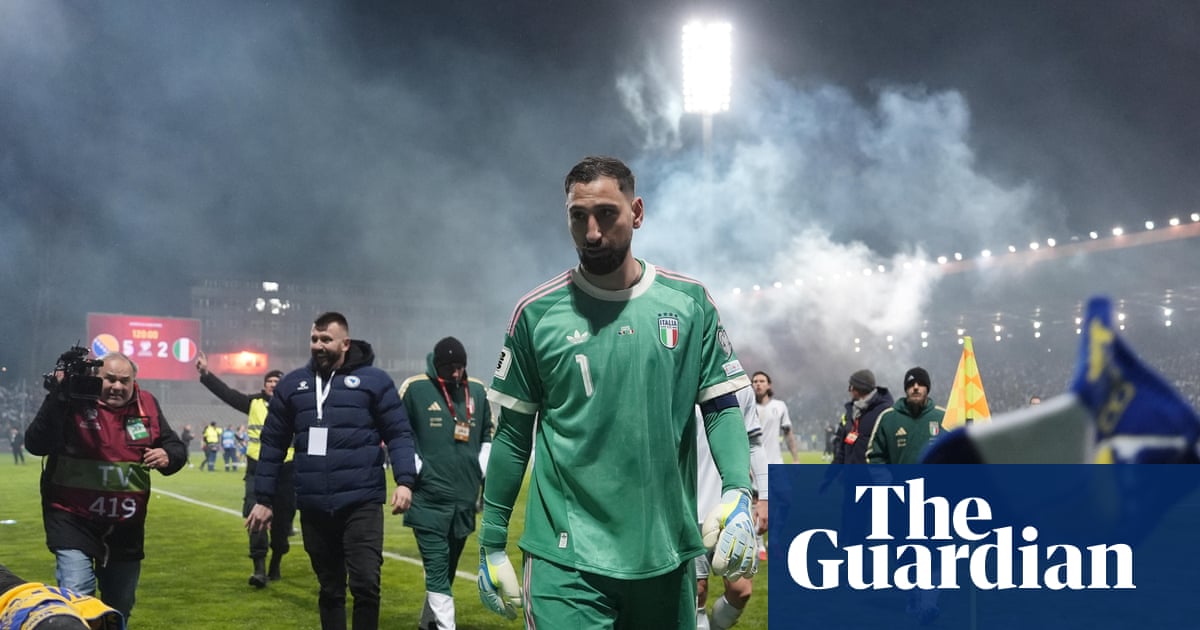
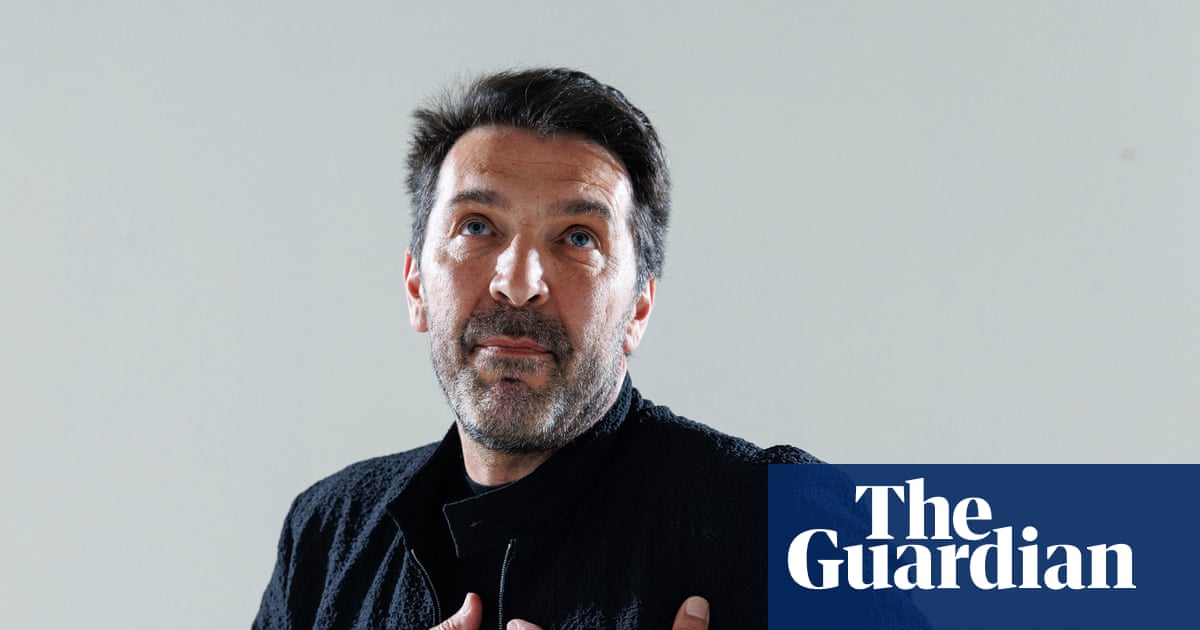
Gianluigi Buffon recently opened up to The Guardian, offering a stark, unvarnished reminder of what the Azzurri used to be. His reflections are raw, almost startling in their honesty.
"I tear the gloves off my hands and my bare knuckles, reddened and soaked with sweat, shine in the neon light,"
Buffon wrote, describing the visceral, physical reality of his playing days. That level of intensity, that sheer force of will, feels entirely missing from the current iteration of the Italian national team. Luciano Spalletti has spent the last year trying to reverse the decline of Italian football, a decline Buffon himself acknowledged as a grim reality in the same interview.
The manager is caught in an impossible ideological bind. He is torn between honoring the defensive grit of the past and implementing the expansive, possession-heavy style that won Napoli a Scudetto. It is a tactical compromise that often leaves Italy looking hopelessly disjointed.
Tactical fragility in the center of the park
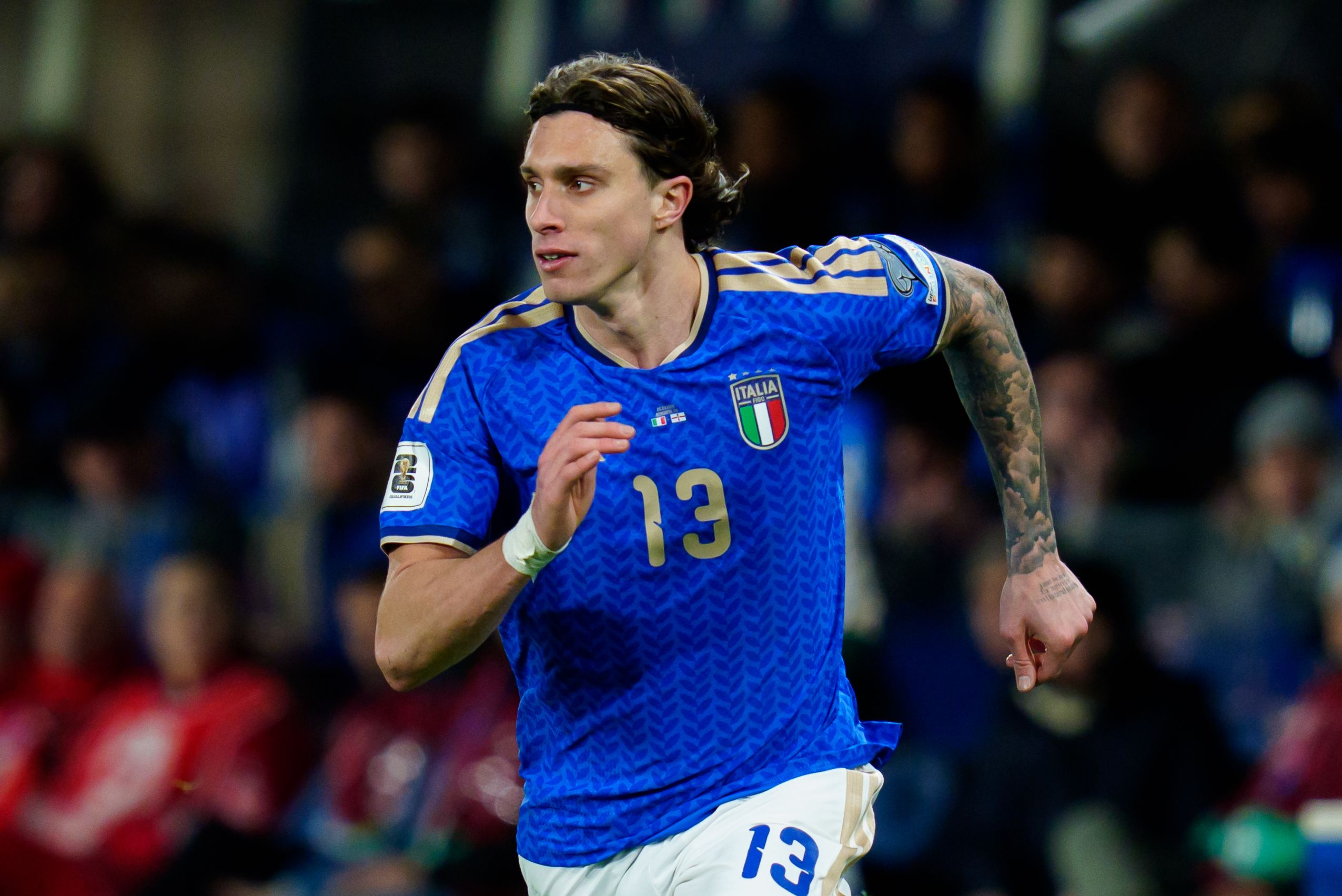
Let's look at the actual mechanics of this Italy side, removing the romanticism of the blue shirt. Spalletti has leaned heavily on a 3-4-2-1 shape recently, primarily to mask the glaring lack of a dominant, traditional number nine. The entire system relies on Nicolo Barella and Sandro Tonali operating in a demanding double pivot.
When it functions as intended, Barella dictates the tempo. He drops deep to receive from the center-backs, spinning away from his marker before driving the ball forward into the half-spaces. When it fails—which happens frequently against high-pressing, athletic teams—the midfield is bypassed entirely, leaving the defense exposed.
Opponents have figured out the trigger. By pressing Italy's wing-backs, Federico Dimarco and Giovanni Di Lorenzo, they force the ball into congested central traps. Once Barella is suffocated by a double-team, Italy's progression completely stalls.
They resort to hopeful, low-percentage long balls toward Mateo Retegui or Gianluca Scamacca. Neither striker possesses the elite hold-up play necessary to make that strategy viable against top-tier center-backs. This is where the criticism of Spalletti must be sharp and unsparing: his refusal to adapt his build-up shape is stubborn and self-defeating.
If you lack a physical target man, you cannot repeatedly ask your center-backs to hit fifty-yard diagonals under intense pressure.
The ghost of Berlin and the illusion of invincibility
Buffon's interview also touched on the defining moment of the 2006 World Cup final. He admitted he blames himself for Zinedine Zidane's infamous red card, a fascinating admission that strips away some of the mythology of that night in Berlin. But it was another quote that stood out as an indictment of the modern squad.
"You have a perception that you are unbeatable, almost omnipotent,"
Buffon noted about the mindset of that legendary 2006 era. Omnipotent is the exact opposite of how anyone would describe the 2026 squad. They are fragile, both structurally and psychologically.
They concede early goals with alarming regularity, often looking panicked in the opening twenty minutes of hostile away fixtures. Gianluigi Donnarumma remains a brilliant, instinctive shot-stopper, but his distribution with his feet continues to invite unnecessary pressure. Against aggressive pressing sides like Germany or Spain, Donnarumma's hesitations in possession are a glaring, unfixable weakness.
He simply does not have the aura Buffon carried. When Buffon commanded his box, the defense settled into a comfortable rhythm. When Donnarumma has the ball at his feet, the entire stadium holds its collective breath, waiting for an error.
A defensive line caught in painful transition
The transition away from the Giorgio Chiellini and Leonardo Bonucci era has been incredibly painful to watch. Alessandro Bastoni is now the undisputed leader of the back three. Bastoni is exceptional on the ball, arguably one of the best passing defenders in Europe.
His overlapping runs from the left center-back position are a key attacking weapon for Spalletti, creating overloads that Dimarco can exploit. However, his pure defensive instincts in a low block are deeply suspect. He is often caught ball-watching when crosses arrive from the right flank, losing his marker in the blind spot.
Alongside him, Francesco Acerbi is aging out of relevance at the highest international level. Giorgio Scalvini is immensely talented but still prone to the positional errors and rash tackles of youth. This backline simply cannot absorb pressure for ninety minutes the way previous generations did.
They must defend by keeping the ball, which brings us right back to the glaring midfield issues. It is a cyclical, frustrating problem. The defense needs the midfield to control possession, but the midfield lacks the structural integrity to bypass a coordinated high press, which in turn leaves the defense brutally exposed.
The gaping attacking void
We need to talk about the final third, because it is an absolute mess. Federico Chiesa is the only player in the entire squad capable of breaking a defensive line through sheer individual brilliance. His pace, directness, and willingness to shoot early are essential to any Italian success.
But Chiesa has struggled with fitness and consistency since his major knee injury. When he is neutralized, or when he is forced to drop too deep to receive the ball, Italy's attack devolves into slow, predictable circulation around the perimeter of the penalty area. They generate shockingly few high-quality chances against set defenses.
The expected goals (xG) data from their recent qualifying campaign paints a bleak, undeniable picture. They consistently underperform their shot volume, settling for low-probability efforts from outside the box because they lack the intricate passing to penetrate the eighteen-yard box. You cannot win a World Cup relying on thirty-yard screamers and set-piece headers.
You need ugly tap-ins. You need coordinated cut-backs from the byline. You need drilled attacking patterns that function even under intense fatigue. Spalletti has entirely failed to install those patterns.
The movements of the front three are completely disjointed, relying far too heavily on individual instinct rather than practiced automatisms.
The trauma of absence
We cannot ignore the psychological baggage this squad carries across the Atlantic. Missing both the 2018 and 2022 World Cups is a trauma that defines this generation of Italian players. The pressure from the domestic press is already suffocating, and the tournament is still fifty days away.
Every misplaced pass in a friendly is analyzed as a symptom of a deeper national crisis. Buffon's generation thrived under pressure; they used scandals and criticism as fuel. This current group shrinks under it.
When they went behind against England at Wembley during the qualifiers, the physical drop-off was immediate. Heads dropped, the pressing became disjointed, and the belief evaporated entirely. Spalletti has to play psychologist as much as tactician, but you cannot instill mental fortitude in a three-week training camp.
The structural decline of a footballing superpower
Buffon's comments about the overall decline of Italian football should terrify the FIGC. Serie A is no longer the tactical laboratory it once was in the 1990s and early 2000s. The developmental pathways for young Italian talent are fundamentally broken.
Top domestic clubs consistently prefer to import cheap foreign talent rather than trust their own academy products in high-stakes matches. The direct result is a national team starved of elite, Champions League-tested depth. Look at the bench.
When injuries strike the starting eleven, the drop-off in quality is incredibly steep. If Barella tweaks a hamstring, Italy goes from a dark horse to an average European side in an instant. This is not a temporary dip in form or a stroke of bad luck.
It is a massive structural failure of the entire Italian footballing apparatus. The 2026 squad is merely a byproduct of that failure. They are a collection of good, solid professionals, sprinkled with a few very good ones, but entirely lacking the true world-class difference-makers that define tournament winners.
What to watch for in the group stage
Italy will face a massive psychological hurdle early in the tournament. The expanded 48-team format theoretically makes group stage survival easier on paper. But this is Italy.
They specialize in making the group stage painfully difficult, often drawing against inferior opposition out of sheer tactical complacency. Watch exactly how Spalletti manages his midfield rotation in the oppressive North American summer heat. Barella simply cannot play every single minute of every match.
If Manuel Locatelli or Bryan Cristante are forced into a starting role against a dynamic, highly athletic opponent, Italy will be heavily overrun in transition. The defensive half-spaces—the zones between the wing-backs and the outside center-backs—are another vulnerable area.
Opposing wingers will target those specific channels relentlessly. If Bastoni and Scalvini are repeatedly dragged out wide to cover, the center of the penalty area becomes frighteningly vacant. Watch how Donnarumma handles the inevitable aerial bombardment when teams realize Italy cannot stop crosses at the source.
The final verdict
Fifty days from now, the romanticism will fade and the harsh reality will set in. This Italy team does not have the defensive solidity to grind out ugly 1-0 victories against elite opposition. They absolutely do not have the attacking firepower to win wide-open shootouts.
They will likely navigate the group stage through sheer muscle memory, tactical pragmatism, and a favorable draw. But the knockout rounds will be a brutal awakening. Once they encounter a team with a modern, cohesive pressing structure—think Germany, England, or a well-drilled South American side—the tactical cracks will widen into unbridgeable chasms.
My prediction is firm and unambiguous. Italy will crash out in the Round of 16. Spalletti's disjointed system will be completely exposed.
The glaring lack of a center forward will prove fatal in a tight match, and the post-mortem back in Rome will be vicious and swift. Buffon was right to look back at 2006 with a complex mix of intense pride and lingering regret.
Those days of perceived omnipotence are long, long gone. They have been replaced by a harsh, unforgiving reality that this Italian squad is simply ill-equipped to handle.
Read Next
- Thomas Tuchel has 51 days to cure England's tactical paralysis
- Nico O'Reilly will start for Tuchel at the World Cup
- Mo Touré is the breakout star nobody saw coming
- Liam Rosenior is dancing on the edge of the Chelsea abyss
- 🏆 World Cup 2026 — Full Coverage Hub
- 🇮🇹 Italy at the 2026 World Cup — Full Coverage Hub