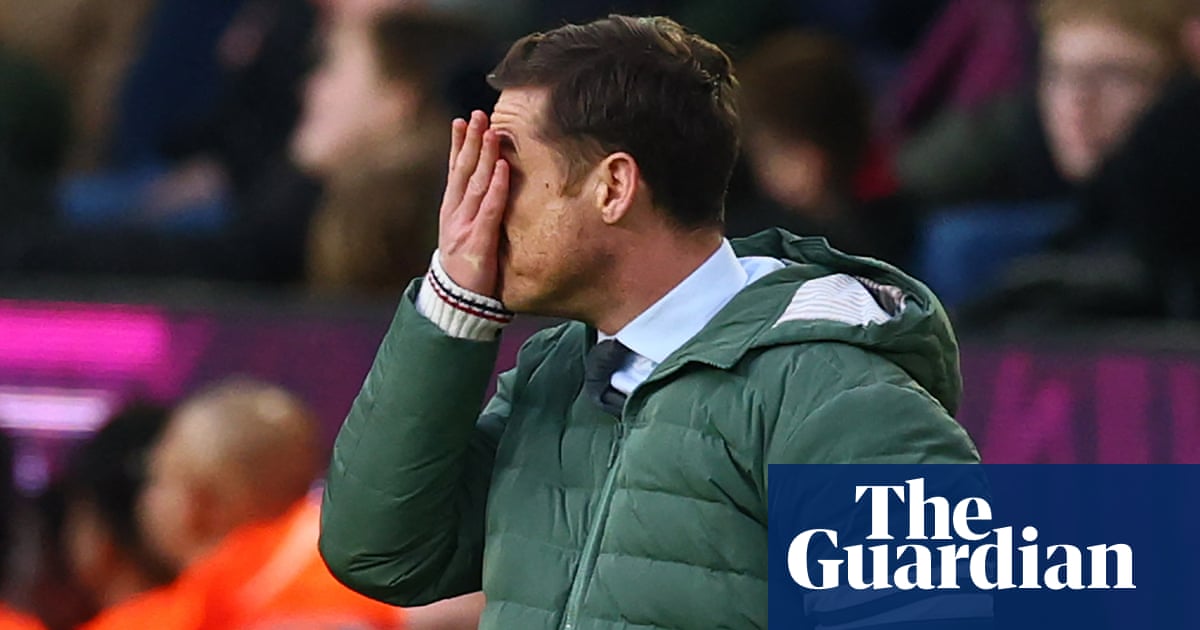
The weight of Turf Moor's survival battle
Burnley manager Scott Parker has offered a rare, candid glimpse into the mental tax of a club fighting for Premier League status. Speaking to media ahead of the final stretch of the 2025/26 campaign, Parker conceded that the threat of relegation has been a persistent presence for months. The Clarets are currently mired at the bottom of the table, struggling to find the consistency required to overhaul the points deficit before the season concludes in May.
Parker’s tenure at Turf Moor has been anything but smooth. Since transitioning to the dugout, he has dealt with a roster that has often looked overmatched by top-flight intensity. While the pressure to produce results is standard for any Premier League boss, Parker’s comments yesterday suggest the constant proximity to the drop zone has eroded the focus required for tactical development. The club has effectively been in crisis management mode since early winter.
The reality of the points gap
Burnley’s statistical output paints a bleak picture that confirms Parker’s concerns. With only a handful of games remaining, the math for survival is increasingly complex. The team has leaked goals at an alarming rate, failing to keep a clean sheet against top-half opposition in their last five attempts. As recent reporting from Sky Sports notes, the reliance on mid-season loan arrivals has not yielded the immediate defensive stability the front office envisioned at the start of the year.
Parker noted that while the players remain committed in training, the psychological pressure of the league table produces a feedback loop of negative results. He pointed to the inability to close out matches, noting that missed opportunities in the final fifteen minutes have cost the club at least 9 points during the second half of the season alone. These are not merely dropped points; they are the margin between a potential survival bid and the reality of an imminent return to the Championship.
Tactical stagnation and leadership questions
The manager’s interview was notably devoid of the usual platitudes regarding 'taking it one match at a time.' Instead, Parker focused on the internal struggles of the squad. He highlighted a lack of leadership in critical moments, noting that when the team falls behind, the tactical plan often unravels entirely rather than adapting to the flow of the game.
The threat of falling out of this division has weighed heavily on the group for months now, which is natural when you are fighting for your lives every single weekend.
This admission serves as a worrying signal for the board. If the players are carrying the burden of potential relegation as a crushing weight rather than a motivating factor, motivation becomes a challenge for the training ground staff. Parker’s public acknowledgment of this emotional fatigue suggests that the locker room may have lost the necessary belief to pull off a 'great escape' in the final three weeks of the season.
A grim outlook for next season
Burnley fans are rightfully asking whether Parker remains the man to lead a rebuild if the inevitable relegation occurs. History in the Premier League proves that managers who openly discuss the 'weight' of the campaign are often the same ones who oversee a team's collapse. His comments reflect a man who is observing a decline rather than actively directing its reversal.
The critique here lies in the recruitment strategy that Parker originally endorsed. By failing to secure proven, high-intensity veterans in the winter window, the club left itself vulnerable to these exact failures. The reliance on younger players to navigate a relegation scrap was a gamble that has failed to pay dividends. Now, the club faces a summer of uncertainty where they must decide whether to refresh the managerial position or hope a lower tier provides the reset button the squad so clearly requires.
Ultimately, the post-match discourse confirmed what watching the highlights every weekend has shown: a team lacking identity. Parker knows it, the fans know it, and the table confirms it. With the schedule entering its final act, the window to correct these structural deficiencies has firmly closed. The conversation is no longer about tactical tweaks; it has turned into a desperate countdown to the final whistle of the campaign.