The Anatomy of a Late Heist
Daniel Farke stood on the touchline at Elland Road on Sunday, watching his side execute a tactical plan that felt entirely removed from the chaotic energy this stadium usually demands. When Dominic Calvert-Lewin nodded home in the 96th minute to secure a 1-0 win over Brighton, the resulting explosion of noise felt like a release of pure, unadulterated tension. But to view that goal as a mere stroke of late luck would be to fundamentally misunderstand what Farke has built in West Yorkshire.
Leeds United are no longer the heavy-metal, erratic machine of seasons past. They are structured and patient. As reports universally highlighted after the final whistle, the defensive application was immense.
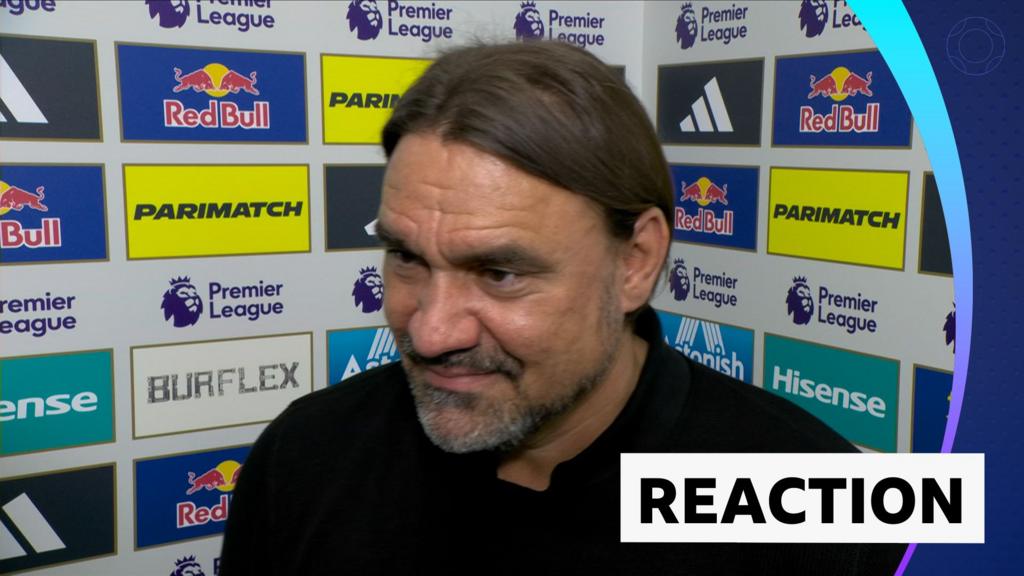
Daniel Farke says his side earned themselves a "hard-fought win," as Dominic Calvert-Lewin's 96th minute goal gives Leeds United a 1-0 victory over Brighton.
They restricted a technically gifted Brighton side to sterile possession, forcing them into wide, low-value crossing zones. This wasn't a smash-and-grab. It was a calculated strangulation.
As Leeds prepare for their final, decisive fixture of the season, this performance serves as the perfect case study. If you want to understand how they will approach next weekend's defining clash, you have to look at the mechanics of how they dismantled Brighton's build-up play and dragged them into a war of attrition.
The Calvert-Lewin Paradox
There was widespread skepticism when Leeds secured Dominic Calvert-Lewin. Critics pointed to his injury record during his Everton years and a perceived decline in mobility. What they missed was the specific tactical requirement Farke had identified.
Leeds didn't need a pure poacher. They needed a reference point. Farke uses his imposing forward not just as a traditional target man, but as a pressure-release valve.
When a high press squeezes the midfield pairing, the out-ball is directed toward Calvert-Lewin. He pins the opposition center-back, allowing the inverted wingers to make underlapping runs into the half-spaces. It is a rudimentary tactic, but one that is devastatingly effective when executed with precision.
It's not always pretty football. The sequence leading to Sunday's winning goal began with sheer persistence rather than intricate interplay. But the execution was ruthless.
Farke has stripped away the idealism that often plagued previous Leeds iterations, replacing it with a pragmatic, almost cynical edge. They don't care about dominating the ball anymore. They care about manipulating space and waiting for the opposition to blink.
Where the Farke System Fails
Yet, for all the praise heaped upon this newfound defensive solidity, there are glaring structural flaws. Farke's reliance on Calvert-Lewin as the sole focal point makes Leeds dangerously predictable in transition. When the striker is isolated, the entire system stutters, and the midfield often looks devoid of progressive ideas.
In the opening forty-five minutes against Brighton, Leeds struggled to connect the midfield to the attack. The double pivot operated too deep, creating a massive void in zone 14. Brighton easily bypassed the initial press because the distances between Leeds' attacking quartet were simply too large.
It is a recurring theme under Farke. When the initial press fails, the team retreats into a passive block that invites unbearable pressure. This is the glaring vulnerability heading into the weekend.
A smarter opponent won't allow Calvert-Lewin to dominate the first ball so comfortably. If the opposition center-backs opt to drop off rather than engage him in physical duels, Leeds' primary mechanism for progressing the ball evaporates into thin air. Farke has yet to prove he has a reliable Plan B when the physical battle is neutralized.
The Brighton Perspective
It is worth taking a moment to examine Brighton’s role in this drama. The Seagulls arrived in Yorkshire with a clear intent to dictate the tempo. For large portions of the match, they succeeded.
They built from the back with their trademark fluidity, baiting the Leeds press before slicing through the first line of defense with sharp, vertical passes. However, Brighton's inability to convert dominance into high-quality chances is a recurring flaw. They monopolized the ball but rarely penetrated the penalty area with conviction.
Farke recognized this lack of cutting edge. He allowed Brighton to play in front of his defensive line, correctly gambling that they lacked the physicality to break down a condensed penalty box. This tactical standoff is what made the manager's post-match assessment so accurate.
It was a chess match where one player stubbornly refused to engage, waiting patiently for the opponent to overextend. Brighton pushed higher and higher, leaving acres of space in transition. When the decisive 96th minute arrived, they were finally caught out by the very directness they had spent ninety minutes trying to neutralize.
The Evolution of Elland Road
To truly appreciate what Farke is attempting, you must understand the ghosts he is fighting. Marcelo Bielsa conditioned this city to expect football played at a breathless, self-destructive pace. Every match was a track meet.
The defensive line pushed aggressively to the halfway line, and man-to-man marking meant the pitch was a series of frantic, isolated duels. Farke has systematically dismantled that philosophy. He has implemented a zonal system that prioritizes shape over aggression.
It is a jarring transition for a fanbase addicted to adrenaline. When Leeds drop into a mid-block and allow the opposition center-backs free possession, the tension in the stadium becomes suffocating. But the Bielsa era ended in exhaustion and defensive collapse.
Farke is attempting to build something sustainable. He understands that surviving the grueling reality of the Premier League requires the ability to suffer. You cannot press relentlessly for ten months without breaking down.
Calvert-Lewin's late winner is the ultimate vindication of this pragmatic shift. It proved that you don't need to dominate the shot count to secure three points.
Looking Ahead: A Clash of Styles
The stakes for the upcoming weekend could not be higher. Leeds approach their final match knowing that this pragmatic blueprint must be executed flawlessly. They cannot afford the sluggish start that nearly cost them against Brighton.
The opposition will undoubtedly review the tape of the first half at Elland Road. They will see a Leeds team that can be suffocated if you cut off the passing lanes to the central striker. Farke must devise a secondary strategy.
He needs to find a way to generate progressive carries from the midfield, rather than relying entirely on long, direct distribution to bypass the press. Farke's tactical demands for the weekend are brutally simple:
- Maintain a rigid defensive shape in the middle third.
- Force the opposition into wide, low-percentage crossing areas.
- Find Calvert-Lewin early and aggressively in transition.
The midfield pivot has been disciplined but undeniably unimaginative in recent weeks. They excel at screening the back four, sweeping up loose balls, and maintaining a rigid defensive shape. However, their extreme reluctance to carry the ball forward places an immense burden on the wide players to create artificial overloads.
If Leeds are to secure a positive result next weekend, this midfield unit must step up and take calculated risks. They need to show genuine bravery in possession, breaking lines with incisive forward passing rather than constantly settling for safe, lateral recycling. Farke has shown he can organize a resilient defense, but now he must prove he can orchestrate an attack that doesn't rely solely on a late physical mismatch.
The Final Verdict
Farke has engineered a team that thrives on tension. They are comfortable suffering without the ball, knowing that a single moment of precision can alter the trajectory of their season. But living on the edge of the blade is a dangerous long-term strategy.
My prediction for the weekend? Leeds will set up exactly the same way. They will absorb pressure, frustrate the crowd, and look to steal it late.
Whether they can replicate the Brighton heist is the defining question. I suspect they will fall just short. The reliance on Calvert-Lewin is a blunt instrument, and against a team prepared for it, blunt instruments rarely cut deep.
They will likely grind out a tense 1-1 draw. It will be ugly, it will be stressful, and it will be exactly what Farke expected.
Read Next
- Calvert-Lewin's late winner proves Farke's Leeds are built to survive
- Brighton are ready to expose the fatal flaw in the Leeds machine
- Sunderland's chaotic comeback machine faces a brutal reality check
- Adam Wharton's rare goal hides a glaring tactical problem for Crystal Palace
- 🏟 EFL Championship 2025-26 — Promotion Race & Play-Off Final Hub