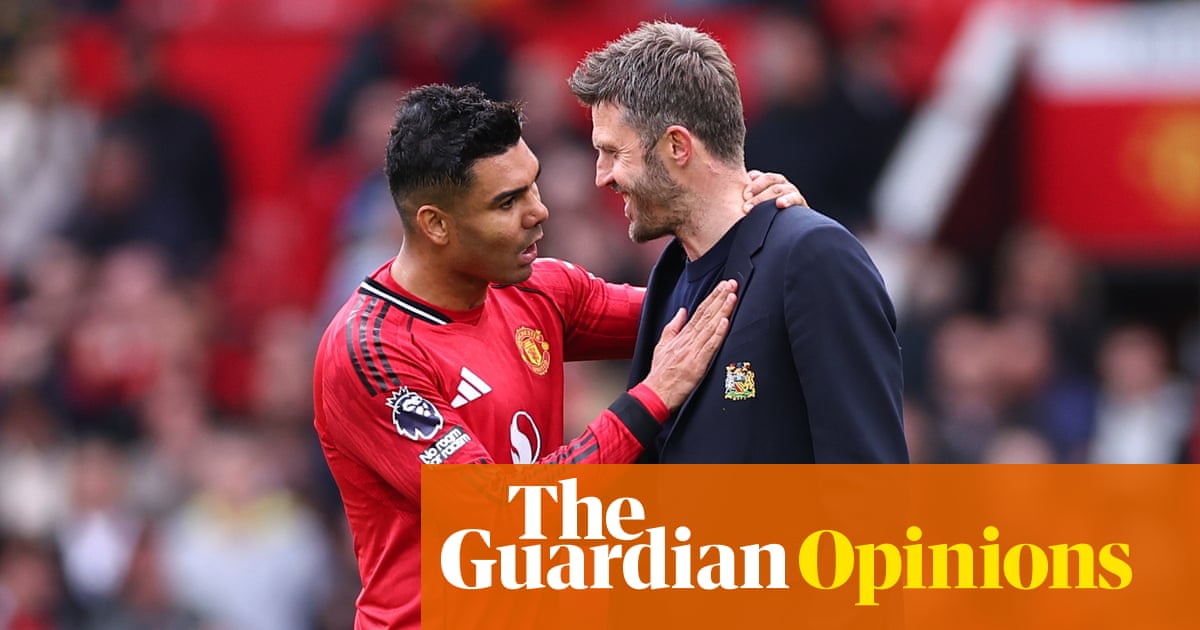
Carrick has earned the United job — Enrique is a massive risk
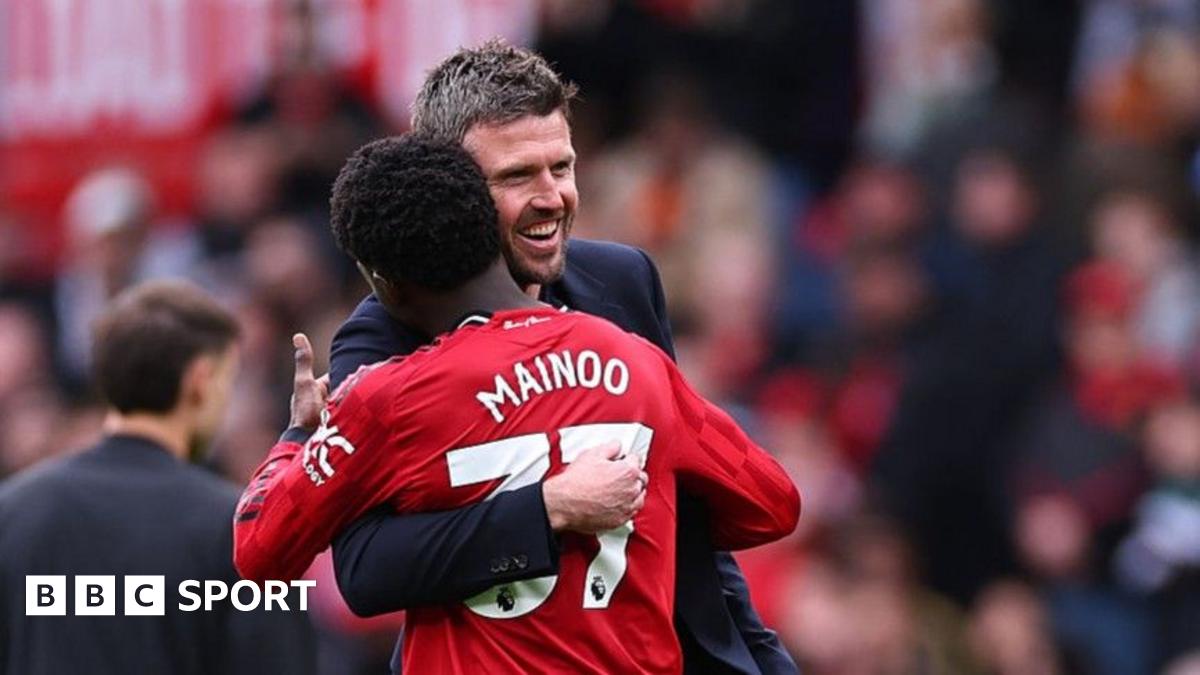
The undeniable reality at Old Trafford
Michael Carrick has done exactly what was asked of him. When he stepped into the Old Trafford dugout as interim manager, the brief was simple but daunting: stop the bleeding and secure Champions League football. He has delivered on that mandate with room to spare. As we sit here in early May 2026, Manchester United are mathematically assured of a top-four finish. The chaos that defined the early months of the campaign has been replaced by a quiet, ruthless efficiency. Yet, the INEOS hierarchy is reportedly still scanning the horizon. The silence from the boardroom is deafening, leaving the fanbase in a state of suspended animation.
You have to ask why the hesitation exists. The debate was perfectly encapsulated by Simon Stone of the BBC this week:
"Unless Manchester United appoint Luis Enrique, it is hard to think of an acceptable alternative to giving Michael Carrick the job on a permanent basis."
Frankly, even if Enrique is willing to take the job, ignoring the man already in the seat feels like a massive misstep. United have spent the better part of a decade chasing big-name managers with rigid philosophies, only to watch those projects implode under the unique weight of Old Trafford. Carrick represents a necessary departure from that exhausting cycle of boom and bust.
To understand why Carrick deserves the permanent role, you have to look at what he actually changed on the pitch. The previous regime left a tactical void in the middle of the park. Matches resembled basketball games, defined by frantic transitions and gaping holes between the defence and the forward line. United were consistently bypassed in central areas, forcing the centre-backs into desperate, last-ditch interventions. It was a structural nightmare that left the team entirely devoid of control and constantly vulnerable to even average counter-attacking sides.
Fixing the midfield geometry
Carrick immediately diagnosed the structural flaw. He did not attempt to implement a wildly complex positional play system overnight. Instead, he tightened the distances across the entire pitch. He dropped the defensive line slightly deeper to compact the space in his own half, and he instructed his central midfielders to stagger their positioning rather than operating in a flat, easily bypassed pair. It sounds like basic coaching, but the consistent application of those basics had been missing for months. Suddenly, the midfield had a clear shape out of possession.
The results were visible within weeks. Opponents who previously found joy driving through the centre of Old Trafford suddenly ran into an organised block of red shirts. United stopped conceding high-quality chances on the break. The defensive metrics stabilised rapidly. By dropping the wingers five yards deeper out of possession, Carrick ensured that the full-backs were rarely isolated in two-on-one situations. He protected the defensive line by cutting off the passing lanes into the half-spaces, forcing teams to play wide and deliver low-percentage crosses into the box.
It is not always scintillating football, but it is winning football. Carrick prioritised control over chaos. He recognised that a squad bereft of confidence needed a solid foundation before it could be asked to execute intricate attacking patterns. As a former elite deep-lying playmaker, he understands the geometry of the midfield better than most managers currently operating in the Premier League. He knows that control is not just about hoarding possession; it is about dictating where the ball is played and denying the opposition access to dangerous central zones.
He has also revitalised key individuals simply by simplifying their roles. Instead of asking his defensive midfielders to act as deep-lying playmakers, ball-winners, and box-to-box runners simultaneously, he has clearly defined their responsibilities. One player sits and screens the defence, while the other is given license to press higher up the pitch. This staggered approach ensures that United always have a safety net in transition, severely limiting the opposition's ability to counter-attack through the middle.
The Luis Enrique dilemma
This brings us to the alternative. The persistent links to Luis Enrique highlight a dangerous temptation within the United boardroom. Enrique is undeniably a brilliant manager with a glittering CV. His work at Barcelona, the Spanish national team, and Paris Saint-Germain speaks for itself. He demands total control of the ball, intricate buildup structures originating from the goalkeeper, and relentless high pressing across the entire front line. He is a dogmatic disciple of positional play who refuses to compromise his core beliefs regardless of the opposition.
But is this Manchester United squad ready for that exact brand of football? Implementing Enrique's system takes time, immense patience, and usually a massive turnover of playing staff. You are asking a group of players who have spent years playing reactive, transition-based football to suddenly become a well-oiled possession machine. The technical demands are entirely different. Enrique requires centre-backs who can break lines with passes under severe pressure and a midfield capable of rotating seamlessly in tight spaces.
We have seen this movie before at Old Trafford. A high-profile manager arrives with a rigid philosophy, the squad struggles to adapt, the results crater, and the pressure becomes unbearable. Enrique's approach could easily clash with the existing personnel. He does not compromise. If you cannot execute his specific passing circuits, you sit on the bench. It is a ruthless approach that works brilliantly when the recruitment perfectly matches the manager's vision. United's recent recruitment history does not inspire any confidence in their ability to execute that alignment.
Look at Enrique's time in Paris. He eventually imposed his will, but it required sidelining massive egos and reshaping the entire tactical identity of the club. At United, the media scrutiny is magnified tenfold. If Enrique attempts to sideline fan favourites because they do not fit his precise possession model, the backlash will be immediate. The Old Trafford crowd demands verticality and speed. Enrique prefers methodical ball circulation. That stylistic clash could easily turn toxic if the results are not immediately perfect.
United do not need another toxic clash of styles.
The cost of another transition year
Appointing Enrique means accepting a transition year. It means sacrificing immediate competitiveness for long-term philosophical alignment. That might be a pill the board is willing to swallow, but it is a massive gamble in a Premier League era that punishes slow starts relentlessly. Dropping points in August and September leaves you entirely out of the title race by Halloween. A transition season at United often spirals into a crisis season before the new manager even has time to install his tactical framework.
Carrick has already bypassed the transition phase. He knows the players intimately, he understands the unique pressure of the club, and most importantly, he knows the standards required to survive. The dressing room has visibly responded to his calm, understated authority. There are no dramatic press conference outbursts. There is no public scapegoating of individual players after a poor performance. Carrick deflects the pressure, absorbs the criticism, and keeps the internal focus strictly on the next match.
That emotional intelligence cannot be overstated. Managing Manchester United is as much a political job as it is a tactical one. The manager is the face of a global sporting institution, forced to answer for everything from ownership structures to transfer market failures. Carrick has navigated this minefield with immense dignity. He projects a sense of control that has been sorely lacking on the touchline in recent years. He does not feed the media circus; he actively starves it.
Flaws in the pragmatic blueprint
Of course, the Carrick interim spell has not been flawless. His in-game management can occasionally feel reactive rather than proactive. There have been periods where United looked entirely toothless in the final third, struggling to break down deep, organised defences. When Plan A fails, the tactical adjustments from the bench are sometimes sluggish. He often waits until the final ten minutes of a match to alter the attacking structure, long after it becomes apparent that the initial setup is completely blunt.
He leans heavily on a small core of trusted players, which risks burning them out during the relentless winter schedule. The attacking patterns can look slightly uninspired, relying heavily on individual brilliance rather than cohesive, rehearsed movements. These are legitimate criticisms. Carrick is a young manager still refining his craft. He does not have the encyclopedic tactical variations of a Pep Guardiola or the aggressive interventionist instincts of a Mikel Arteta.
When United are tasked with breaking down a low block, the limitations of Carrick's pragmatic approach become glaringly apparent. The ball circulation often becomes slow and predictable, moving from side to side without penetrating the opposition's defensive lines. The central midfielders frequently look reluctant to make aggressive, line-breaking runs, preferring to maintain the structural integrity of the team over taking attacking risks. It is a conservative mindset that guarantees defensive solidity but occasionally stifles attacking flair.
The danger of overthinking the solution
But demanding tactical perfection in an interim manager is a fool's errand. The question is not whether Carrick is the perfect finished article; it is whether he is the right manager for this specific moment in Manchester United's turbulent history. He has earned the right to build his own squad and conduct his own pre-season. He has navigated a turbulent period and delivered the Champions League qualification that felt deeply unlikely just a few months ago. He has restored a baseline level of competence to a team that looked entirely broken.
Football clubs often fall into the trap of fetishising the unknown. The grass always looks greener when a glamorous European manager is available on the market. The promise of a radical tactical revolution is intoxicating to owners and fans alike. But sometimes, the solution is already sitting in the dugout, quietly getting the job done without the fanfare. United have tried the radical revolution path repeatedly. It has consistently ended in tears and massive severance packages.
The cycle has to break somewhere.
The INEOS hierarchy faces a defining decision in the coming weeks. They can chase the allure of Luis Enrique and willingly enter another cycle of tactical upheaval, squad restructuring, and intense media scrutiny. Or they can reward the man who stepped into the breach, stabilised the club, and delivered tangible, undeniable results. Carrick has proven he can organise a defence, unify a fractured dressing room, and win massive football matches under intense pressure.
If they ignore what Carrick has built over these past few months, they are not just disrespecting him. They are fundamentally misunderstanding what their own team needs to succeed. The squad desperately needs continuity. The players need a manager who understands their strengths rather than one who will force them into a rigid tactical straitjacket. The board needs to stop looking at the alternatives and hand Michael Carrick the keys on a permanent basis. He has earned it on the pitch, where it actually matters.
adidas Adult Tiro Club Shin Guards
Classic, low-profile protection for Sunday league warriors.
Frequently Asked Questions
What was Michael Carrick's objective as interim manager?
Who is being linked to the Manchester United managerial job?
How did Carrick improve Manchester United's midfield geometry?
What defensive changes did Carrick implement at Old Trafford?
Why are critics advocating for Carrick to get the permanent role?
More Coverage

Why England must fear Panama's disciplined low block
3 hours ago
Anthony Gordon to Barcelona marks a high-stakes gamble
4 hours ago
Arsenal vs PSG: Why tactical rigidity will determine the European champion
4 hours ago
Arsenal's 104 million gamble on Julian Alvarez is pure chaos
4 hours ago
Top 10: The Definitive Arsenal Moments of the 2025/26 Season
5 hours agoLincoln City just entered the weirdest experiment in League One history
6 hours agoMore Analysis
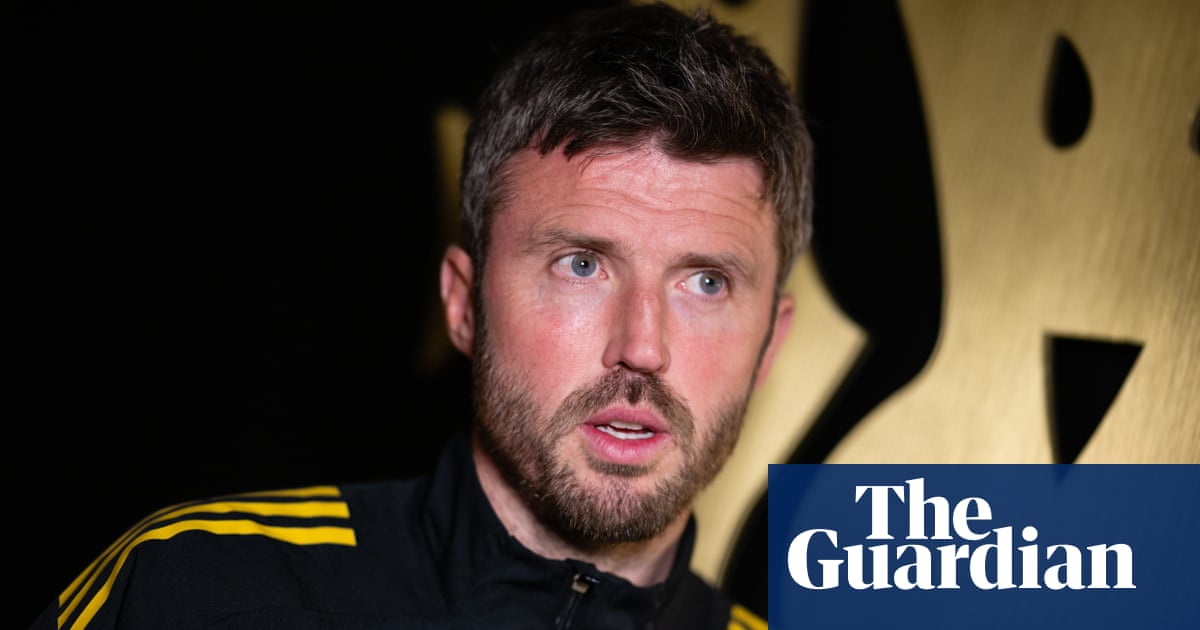
Michael Carrick has brought quiet to Old Trafford but the board remains unconvinced
1 month, 1 week ago
Michael Carrick is Manchester United's most dangerous gamble
3 weeks, 1 day ago
Tactics over talk: Why Michael Carrick must get the Man United job
2 months ago
Michael Carrick is forcing Manchester United's hand
3 weeks, 4 days ago
Michael Carrick’s United audition: The tactical shift behind the resurgence
1 month ago