A victory that asked more questions than it answered
Celtic are level on points with Hearts at the top of the table. That is the raw, undeniable fact following their labored win over Hibernian. But the league table is a blunt instrument. It tells you nothing about the structural issues that made breaking down a 10-man team look like a monumental chore.
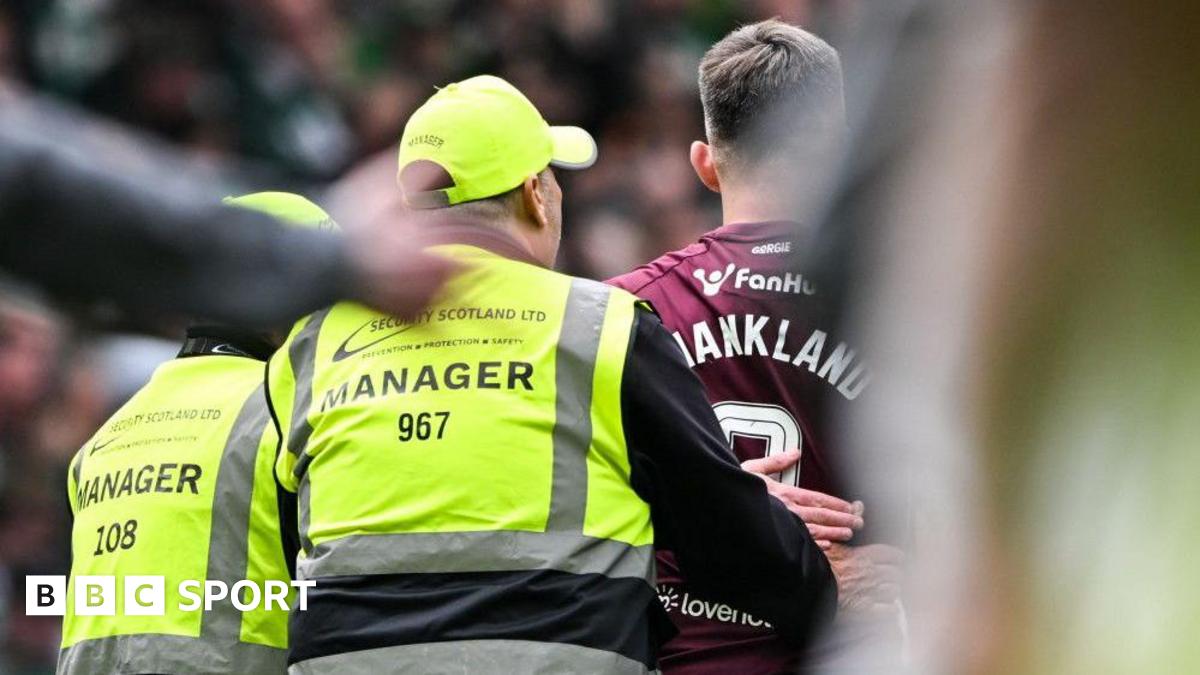
When the red card was produced at Easter Road, the expectation was a deluge. Instead, we got a trickle. Celtic dominated possession, hovering around the 78% mark in the second half, but their circulation was painfully slow. The ball moved in a predictable U-shape around the Hibs penalty area.
There was no penetration, no third-man runs to break the lines, and an alarming reliance on crosses from deep areas. This is the tactical reality Celtic bring into the final stretch of the season. They have ground out results through individual quality, but the underlying metrics paint a fragile picture. Their expected goals from open play have dipped noticeably over the last month.
The predictable U-shape of possession
Watch Celtic against a low block right now and the patterns become apparent within ten minutes. The center-backs split, the holding midfielder drops in to form a back three, and the full-backs push high. It is standard positional play. The setup itself is not the issue.
The problem arises in the half-spaces. Celtic's advanced eights are staying too static. Rather than making dynamic movements out to the flanks to create overloads, they are getting pinned behind the opposition midfield line. This forces the wingers to receive the ball isolated on the touchline, usually facing two defenders.
Against Hibs, this meant an endless series of recycled passes. The center-back passes to the full-back, who passes to the winger, who plays it back to the holding midfielder. Rinse and repeat. It is sterile domination.
Hearts pose a completely different threat
If Celtic try to play this methodical game against Hearts, they will be punished. Hearts have evolved into one of the most effective transitional teams in the league. They do not sit in a passive block waiting to be dismantled.
Their defensive shape is aggressive. They utilize a mid-block that springs into a high press on specific triggers. Usually, this trigger is a backward pass to the center-back or a slow, looping ball out to the full-back. When that happens, the trap snaps shut.
Hearts compress the space brilliantly. The distance between their defensive line and their forward line is often less than 25 yards. This makes playing through the center extremely risky. If Celtic's holding midfielder receives the ball facing his own goal, he will have two Hearts players suffocating him immediately.
The pressing triggers that define the matchup
This upcoming clash will be decided in the first phase of Celtic's build-up. Celtic want to play out from the back. Hearts want them to try. The tactical tension is entirely built around this initial confrontation.
Look at the way Hearts set up their pressing traps. Their wingers tuck inside slightly, blocking the passing lanes to the central midfielders. They want to force the ball wide to the full-backs. The moment the ball travels laterally, the nearest Hearts player sprints to engage, using the touchline as an extra defender.
If Celtic cannot solve this problem, they will be forced into playing long balls. And given Hearts' aerial dominance in the center of defense, that is exactly what the Edinburgh side wants. The battle is clear. Can Celtic's central midfielders drop deep enough, quickly enough, to offer an out-ball before the trap closes?
Midfield stagnation and the missing third man
The core issue for Celtic right now is a lack of rotational movement in midfield. Under previous iterations of this team, there was a fluidity. If the winger dropped deep, the full-back overlapped, and the central midfielder made a darting run into the box. It was automated chaos.
Now, the structure feels rigid. Players are sticking rigidly to their zones. While this offers defensive solidity in transition, it kills attacking unpredictability. Against a disciplined defensive unit, you cannot simply stand in your designated spot and expect a gap to appear.
You have to move the opposition. You have to force a defender to make a decision. Celtic are not asking these questions frequently enough. They are relying on their wingers to beat their man in isolation, which is a low-percentage strategy.
The isolation of the wide players
Another symptom of Celtic's slow ball circulation is the brutal isolation of their wide men. In an optimal system, the winger receives the ball with the full-back overlapping or a midfielder making an underlapping run. This creates a momentary two-on-one, forcing the opposition defender to commit.
Recently, when a Celtic winger receives the ball, he is standing still, facing a set defender. The overlapping run arrives three seconds too late. The central support is non-existent. The winger is essentially being asked to beat his man from a standing start, time after time. It is a grueling, inefficient way to create chances.
Hibs exploited this by aggressively doubling up on the flanks. The moment the ball went wide, the nearest central midfielder shuttled over to support the full-back. Celtic lacked the quick passing combinations to play through this double-team. Against Hearts, this strategy of isolation will be completely smothered.
Exploiting the blind side
The one area where Hearts have shown vulnerability is defending crosses from the byline. When the ball is pulled back from the touchline, their central midfielders are often slow to track runners arriving late on the edge of the box. This is the space Celtic must target.
This is where Celtic's full-backs must be braver. Instead of just delivering early crosses from deep, they need to drive towards the goal line. By doing so, they force the Hearts defensive line to drop deeper, opening up the cut-back zone.
Celtic's number eights have to recognize this space. If they time their runs correctly, arriving just as the ball is pulled back, they will find themselves completely unmarked 15 yards from goal. It requires coordination and timing, but it is the most consistent way to break down this Hearts defense.
The glaring flaw in Celtic's transition defense
It is not just in possession where Celtic have issues. Their rest-defense — the structural setup when they have the ball, designed to prevent counter-attacks — has been sloppy.
Because their full-backs push so high, they are heavily reliant on their holding midfielder and their center-backs to sweep up loose balls. However, the spacing between these three players is often too wide. If the opposition wins the ball and immediately plays a vertical pass, there are massive gaps to exploit in the channels.
Against Hibs, even with ten men, there were moments where a single direct pass bypassed six Celtic players. Hearts have the pace and the precision to punish those structural lapses. Their center-forward excels at peeling into the channels, drawing a center-back out of position, and creating space for runners from midfield.
Set-piece vulnerabilities and fine margins
When open-play creativity stalls, title-chasing teams rely on set-pieces to break deadlocks. Unfortunately for Celtic, their attacking set-pieces have been predictably poor. Corners are consistently floated into the penalty spot, hanging in the air just long enough for the opposition goalkeeper to claim them or a center-half to clear.
There are no near-post flick-ons, no complex blocking routines, and no quick short corners to change the angle of delivery. It feels entirely improvised. In contrast, Hearts treat set-pieces as a legitimate attacking weapon. They crowd the six-yard box, they use subtle blocks to free up their best headers of the ball, and their delivery is whipped with pace.
In a tight match where chances are at a premium, a single corner can decide the outcome. If Celtic cannot find a way to generate higher quality chances from dead-ball situations, they are handing a significant advantage to a team that excels at defending them.
The psychological weight of the run-in
Tactics only dictate the shape of the game; the psychological state of the players dictates the intensity. Moving level with Hearts should be a moment of triumph for Celtic, but the mood around the club feels tense.
The expectation at Celtic Park is total dominance. Scraping past a depleted Hibs side does not alleviate the pressure. Every misplaced pass is met with groans. Every slow build-up is met with frustration. The players look weighed down by the necessity of winning.
Hearts, conversely, are playing with the freedom of a team that knows they have already exceeded expectations. They are organized, they are aggressive, and they have absolutely nothing to lose. That makes them incredibly dangerous.
What to watch for in the opening twenty minutes
The first twenty minutes will tell us everything. Will Celtic come out with the intensity required to disrupt Hearts' shape? Or will they settle into that slow, U-shaped possession that plagued them against Hibs?
Watch the positioning of Celtic's holding midfielder. If he is dropping between the center-backs to dictate play, Celtic are going to struggle. It means Hearts have successfully blocked the central passing lanes. If, however, he is receiving the ball on the half-turn ahead of the center-backs, it means Celtic are breaking the first line of the press.
Also, keep an eye on the distance between Hearts' lines. If their defense starts to drop too deep out of fear of the space in behind, Celtic will have joy circulating the ball outside the box. If Hearts remain compact, forcing the game into a congested 30-yard band in the middle of the pitch, the advantage shifts to the away side.
The Prediction
Celtic have the superior individual talent. There is no debating that. But football is a structural game, and right now, Hearts have the superior structure. The Edinburgh side knows exactly what they are doing in every phase of play.
Celtic will dominate possession, as they always do. They will likely hover around 65% of the ball. But possession without penetration is just defending with the ball. Hearts will be disciplined, they will absorb the pressure, and they will wait for the inevitable misplaced pass in the final third.
The gap in Celtic's rest-defense is too glaring to ignore. Hearts have the transitional speed to exploit those channels left vacant by the advancing full-backs. It will be a tight, frustrating game for the home crowd, defined by a single counter-attack.
Celtic 0-1 Hearts.
Read Next
- Celtic's title nerves are showing as Hibs go down to ten again
- SPFL's Old Firm ruling is a hollow victory for Scottish football
- Rangers warn SPFL of a concerning precedent after Celtic ticket ruling
- Hearts might actually break the Old Firm and the Scottish title race is pure chaos
- ⚽ Scottish Premiership 2025-26 — Celtic vs Rangers Hub