The anatomy of a title chase
Manchester City’s late-season form is terrifying in its predictability. You know exactly what they are going to do, and you know exactly when they are going to do it. The passes get sharper. The positional rotations tighten up. Pep Guardiola stops experimenting with inverted fullbacks as midfielders and reverts to a ruthless, suffocating shape.
And right now, Arsenal are in the crosshairs. Again.
We are approaching the final day of the season, and the psychological warfare has already leaked out of the dressing rooms and into the press conferences. Arsenal have led the race for months, grinding out results with a stubborn defensive block that William Saliba and Gabriel Magalhães have turned into an art form.
But the gap is virtually nonexistent. The breathing room is gone. City have spent the last six weeks hunting them down, chipping away at the points deficit with the methodical precision of a demolition crew. They do not panic. They do not rush. They simply apply a steady, increasing pressure until the structural integrity of their rivals begins to fail.
This isn't a new phenomenon. We watched it happen to Liverpool in 2019 and 2022. We watched it happen to Arsenal last season. The mental toll of knowing that any dropped point is fatal changes how a team plays. Passes that were instinctive in October become labored in May. Players take an extra touch. The ball moves slower.
"Keeping them on their toes"
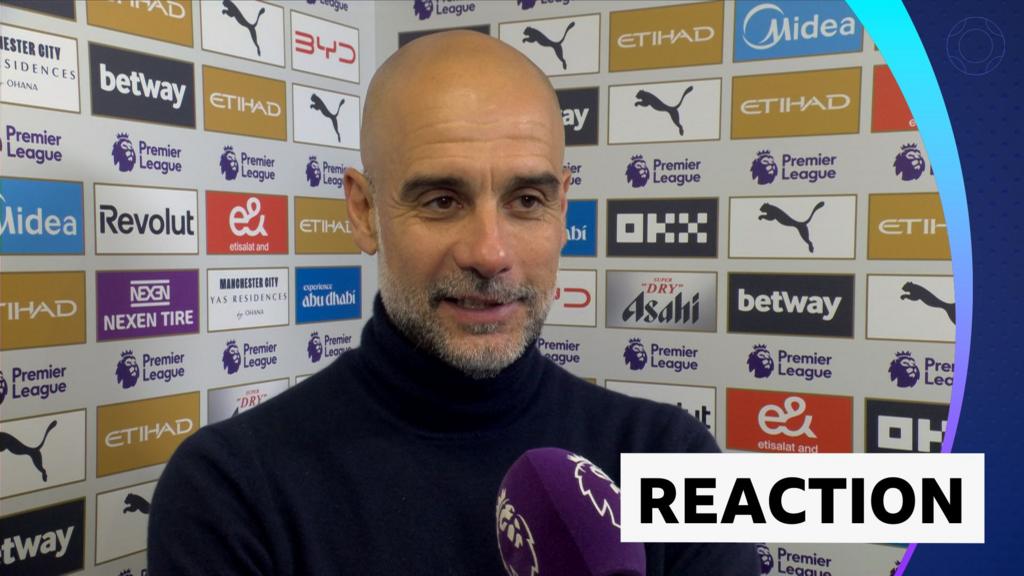
Phil Foden didn't mince words this week. Speaking to Sky Sports, the Manchester City playmaker laid bare the dynamic of the current title race. The quote was simple, but the intent was clear.
"We're keeping Arsenal on their toes, anything can happen on the final day."
That isn't just generic player speak. That is a targeted message. Foden knows exactly how heavy the shirt feels when you are top of the table in May and you hear the footsteps of the defending champions behind you.
Tactically, Foden has been the primary beneficiary of City's recent shift in build-up play. With Kevin De Bruyne often heavily marked or drifting wide to escape the midfield pivot, Foden has found joy operating in the right half-spaces. He isn't just taking shots; he's initiating the high-tempo passing sequences that drag opposition center-backs out of position.
Guardiola has essentially given Foden the keys to the attacking transition. When Rodri breaks up play in the middle third, his first look is immediately for the England international. Foden's ability to receive the ball on the half-turn, bypassing the initial press with a single touch, breaks open defensive structures before they have time to reset.
Arsenal, meanwhile, have shown signs of heavy legs. Mikel Arteta’s reliance on a core group of fourteen players is finally taking its toll. Bukayo Saka looks exhausted, often isolated against double-teams, and Martin Ødegaard’s pressing intensity has noticeably dropped off after the 70th minute in recent fixtures.
The middle third chokehold
If you want to understand why Manchester City always pull this off, stop watching the ball and start watching Rodri. The Spanish midfielder is the metronome, the enforcer, and the tactical fail-safe all rolled into one.
Arsenal's midfield trio of Declan Rice, Ødegaard, and Thomas Partey have been excellent, but Rodri operates on a different frequency. He dictates the geometry of the pitch. When City need to slow the game down and drain the oxygen from the stadium, Rodri plays simple, five-yard passes that keep the opposition running. When they need to break a low block, he steps up and fires a 25-yard pass through the lines to find Foden or De Bruyne on the half-turn.
The contrast between City's midfield control and Arsenal's reliance on wide overloads is striking. Arsenal attack down the flanks, isolating Saka and Gabriel Martinelli against fullbacks. It is effective, but it requires a massive physical exertion from the wingers to constantly beat their man.
City, conversely, attack the spaces between the defenders. They use the width to stretch the backline, but the fatal blow almost always comes through the center. Erling Haaland occupies the center-backs, dragging them deep, which opens up the zone just outside the penalty area for late runners.
This is where Arsenal have occasionally shown cracks. In their desperate attempts to protect the penalty box, their midfielders drop too deep, leaving space at the edge of the area. It cost them against Bayern Munich in the Champions League earlier this year, and it is exactly the kind of structural flaw that Guardiola will target.
Arteta knows this. The problem is fixing it without exposing Saliba and Gabriel to isolated situations against Haaland. Push the midfield up to deny Rodri space, and you leave Haaland one-on-one with your center-backs. Drop the midfield deep to protect the box, and you give De Bruyne and Foden time to pick their passes.
The tactical battleground
When the final day kicks off, expect Arsenal to try and control the tempo early. They cannot afford to get into a chaotic transition game. Arteta will likely instruct Rice to drop deeper, almost acting as a third center-back in possession, to ensure they aren't caught out by quick counter-pressing.
But this conservative approach is a double-edged sword. By dropping deeper to protect the backline, Arsenal invite pressure. And inviting pressure from Manchester City is like leaving your front door open in a bad neighborhood. You are entirely dependent on their inability to execute, which is a terrible bet to make.
City will look to overload the flanks. Bernardo Silva and Jack Grealish will pin the fullbacks deep, creating pockets of space centrally for Foden and Rodri to exploit. It’s a pattern we’ve seen countless times, yet teams consistently fail to disrupt it because the execution is flawless. The ball moves faster than the defensive shift.
However, City are not invincible. If there is a fatal flaw in Guardiola’s current setup, it is their vulnerability to quick switches of play during defensive transitions. When City push eight men forward into the final third, a single, accurate diagonal ball over the top of Kyle Walker can expose acres of space. Aston Villa proved this a few weeks ago, catching City out of shape on the counter. The problem is, you need exceptional precision to pull it off, and you have to survive the initial wave of City’s counter-press.
Arsenal have the personnel to hit those passes. Jorginho can spray the ball under pressure. The question is whether Martinelli has the energy left to make those explosive runs behind the high line for a full ninety minutes. He has looked uncharacteristically blunt in recent weeks, frequently taking the safe backward pass rather than driving at his fullback.
The burden of expectation
The pressure is entirely asymmetrical. Manchester City expect to win. They have built an entire institutional culture around delivering on the final day of the season. They have done it against Liverpool. They have done it against Manchester United. It is muscle memory.
For Arsenal, this is a defining test of character. The ghosts of past collapses linger around the Emirates. They have proven they can defend. They have proven they can score. Now, they have to prove they can survive the psychological furnace of a title race against the most relentless team in European football.
Foden's comment about keeping Arsenal on their toes is the reality of the situation. Arsenal cannot afford a single mistake. A misplaced pass, a missed clearance, a split-second lapse in concentration—City will punish it.
Arsenal's defensive solidity is their greatest asset. They boast the lowest xG conceded in the league this year. But defending deep against City requires absolute perfection. You have to block the passing lanes, track the runners, and win the second balls. For ninety agonizing minutes.
The final verdict
This race has felt destined to go down to the wire since January. Arsenal have been brilliant, defying expectations and showing a resilience that was absent in previous campaigns. Their defensive pairing of Saliba and Gabriel has been the bedrock of their title charge, nullifying some of the most potent attacks in the division.
But the margins at this level are brutal. You can play a near-perfect season and still fall short because Manchester City simply refuse to blink. They process the game differently in May. The anxiety that cripples other teams seems to focus them. They strip away the emotion and treat the remaining fixtures as a math problem.
Foden is the embodiment of this ruthlessness. He doesn't look like a player feeling the weight of a title race. He looks like a player enjoying the kill.
Arsenal will fight. They will likely take an early lead in their fixture, setting up a nerve-shredding afternoon for the fans listening to radios in the stands. But I expect City to remain calm, execute their game plan, and grind down their opponents with suffocating possession.
Mikel Arteta has built a fantastic team, one that will challenge for honors for years to come. But they are up against an empire. And empires rarely fall quietly.
Prediction: Manchester City to secure the title on the final day. Arsenal will do their part, winning their final match, but City will relentlessly dismantle their opposition to finish top of the table by a single point.
Read Next
- Phil Foden is dragging Man City back into the title race
- Pep Guardiola is already playing mind games with Crystal Palace and Arsenal
- Man City's clinical win over Palace leaves Arsenal with no room for error
- Phil Foden just ended the Premier League title race with one flick of his boot
- ⭐ UCL 2026 — Champions League Quarter-Finals Hub