The gamble that kept the season alive
It is the time of the year when managers usually tighten the circle of trust. The air gets thin. Legs get heavy. The margin for error vanishes entirely.
Most elite coaches respond to this pressure by leaning heavily on their undroppables. They run their primary starting XI into the ground simply because the alternative feels entirely too risky to stomach.
Pep Guardiola, however, has never operated on standard managerial logic. Facing a must-win scenario to keep Manchester City's title hopes breathing, he walked to the roulette wheel and shoved his chips into the center.
He shuffled the deck. He deployed what amounted to a heavily rotated side—understudies tasked with keeping the machine running under immense strain. They delivered a ruthless 3-0 victory over Crystal Palace at the Etihad.
As Jack Gaughan noted from the press box, the gamble successfully nudged the Premier League title race down to the final week of the season. It was exactly the scenario City would have gladly signed up for months ago.
Yet, by choosing to heavily rotate in such a high-stakes fixture, Guardiola has introduced a fascinating tactical dilemma right at the finish line. The result was perfect, but the methodology demands intense scrutiny as we look ahead to the decider.
The anatomy of a managerial risk
To fully understand the weight of Guardiola's decision, you have to look at the psychological toll of a modern Premier League title race. Every dropped point is treated like a fatal wound. Going into the Palace match, the tension around the blue side of Manchester was incredibly heavy.
City needed a flawless performance. The conventional wisdom dictated playing the strongest possible XI, securing the early goal, and then managing the minutes. Instead, Guardiola trusted the fringes of his squad.
It is a terrifying way to manage a football club, but it speaks to the obsessive drilling that happens behind closed doors at the Etihad Campus. The tactical framework is so rigid, and so well understood by everyone on the payroll, that the individual parts can theoretically be swapped out without the engine stalling.
But theory and reality often clash on a wet pitch in May. The understudies had to prove they could execute the positional play principles under the suffocating pressure of a title race. They succeeded, eventually.
The final scoreline looks deeply comfortable on paper. It suggests a relaxed afternoon in east Manchester. But the reality of playing rotated squads in high-stakes matches is rarely that clean, which brings us to the man who ultimately dragged this rotated side over the finish line.
The Foden masterclass and the England question
At the center of this tactical headache is Phil Foden. The playmaker was the undisputed architect of the victory, logging two brilliant assists and reminding everyone in the stadium why he demands the ball in massive moments.
Foden didn't just play well; he dictated the absolute tempo of the contest. Operating primarily in the right half-spaces, he constantly exploited the gap between Palace's defensive lines. He turned his marker with an aggression that City desperately needed.
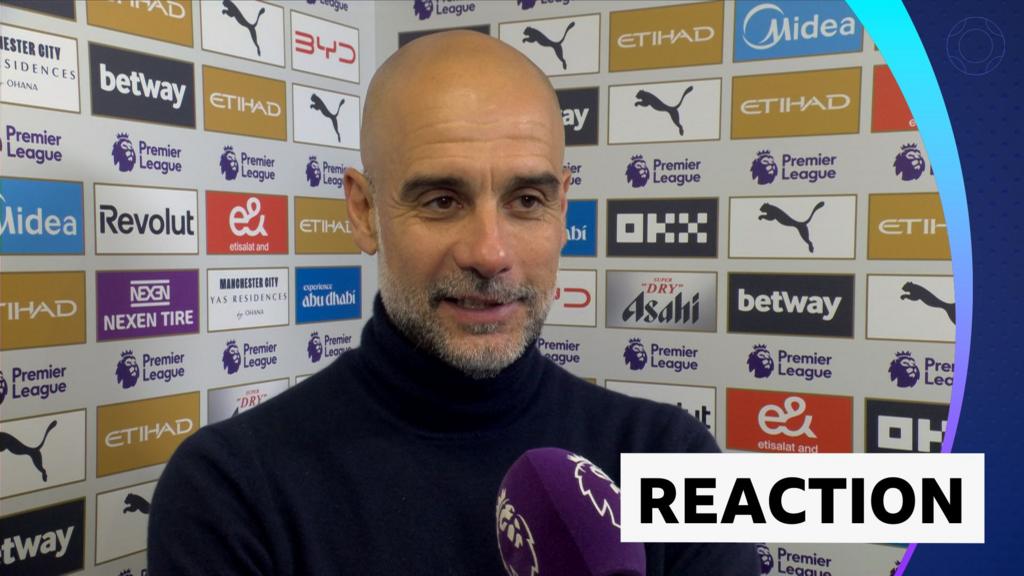
Guardiola was absolutely glowing in the aftermath. His post-match assessment to the BBC was perfectly concise:
Manchester City manager Pep Guardiola says he is "beyond happy" with Phil Foden's performance after the midfielder bagged two assists.
That was the definitive review of Foden's output, and the praise is entirely justified. Foden's assists were masterclasses in delayed gratification and spatial awareness.
He holds the ball just a fraction of a second longer than the defensive line expects, drawing a center-half out of shape before slipping a devastating pass through the resulting gap. This performance was far more than just a means to secure three points for his club.
It was a loud, undeniably flashy statement aimed squarely at the national team setup. Foden is making a fierce, late surge for a prominent England call-up. With the international fixtures looming large, timing is everything.
He is peaking at the exact right moment, demonstrating an ability to carry a team when the primary stars are rested. His close control, his low center of gravity, and his ruthless final ball make him an impossible problem for exhausted defenders to solve late in the season.
The flaw in the rotation machine
However, we need to be strictly honest about the mechanics of this victory over Palace. The final scoreline is a flattering mask. For long stretches, particularly in the opening phases at the Etihad, City looked disjointed.
The understudies lacked the telepathic passing rhythms that usually define Guardiola's best, most fluid sides. The attacking transitions were occasionally sluggish, and the pressing triggers were visibly misaligned.
This is the inherent, unavoidable danger of Guardiola's rotation policy. When you swap out essential cogs in a finely tuned system, the spatial relationships suffer. Players take an extra touch to settle the ball. The passing angles close a second faster.
The gamble worked against Crystal Palace because the opposition eventually collapsed under the sheer, exhausting weight of chasing City's possession. But against a more clinical opponent on the final day, those moments of hesitation could be absolutely fatal.
You simply cannot afford to start slowly, misplace simple passes in the build-up, and offer transition opportunities when the entire season rests on a single ninety-minute window. It is a vulnerability that better teams will relentlessly target.
The final day crucible
Now, the focus shifts entirely to the final weekend. The Etihad will be a cauldron of shredded nerves. We have seen this exact, agonizing scenario play out before.
Think back to the desperate tension of the QPR match in 2012, or the furious, chaotic comeback against Aston Villa in 2022. City fans know all too well that final-day fixtures rarely follow any sort of logical tactical script.
Emotion usually hijacks the tactics board by the twentieth minute. Guardiola has to get this starting lineup perfectly right. He rested key legs against Palace, which theoretically means his primary stars will be completely fresh for the decider.
But dropping Foden after a two-assist masterclass feels incredibly harsh, and perhaps even counterproductive to the team's attacking rhythm. The midfield balance will be the defining factor of the afternoon.
Does the manager play an extra conservative midfielder to guard against the counter-attack, or does he flood the final third and try to kill the game before halftime? The tactical blueprint suggests City will attempt to strangle the life out of the game early.
Look for them to heavily overload the wide areas, using inverted fullbacks to create a dense numerical advantage in the center of the pitch. If they can pin the opposition deep in their own penalty area, the passing lanes will eventually present themselves.
Prediction: Do not bet against the machine
City have been in this exact pressure cooker too many times to completely panic now. Guardiola's massive gamble against Palace proved that his squad depth remains unmatched across European football.
While the opening stages of the final match might be incredibly tense and error-prone, the sheer quality of their attacking rotations should eventually break the resistance. Expect a deeply nervy first half, followed by a relentless, suffocating second-half blitz to secure the trophy.
Prediction: Manchester City 2-0. Foden to feature prominently off the bench, killing off the game with a final assist in the 82nd minute.
Read Next