De Zerbi inherits a tactical migraine at Spurs
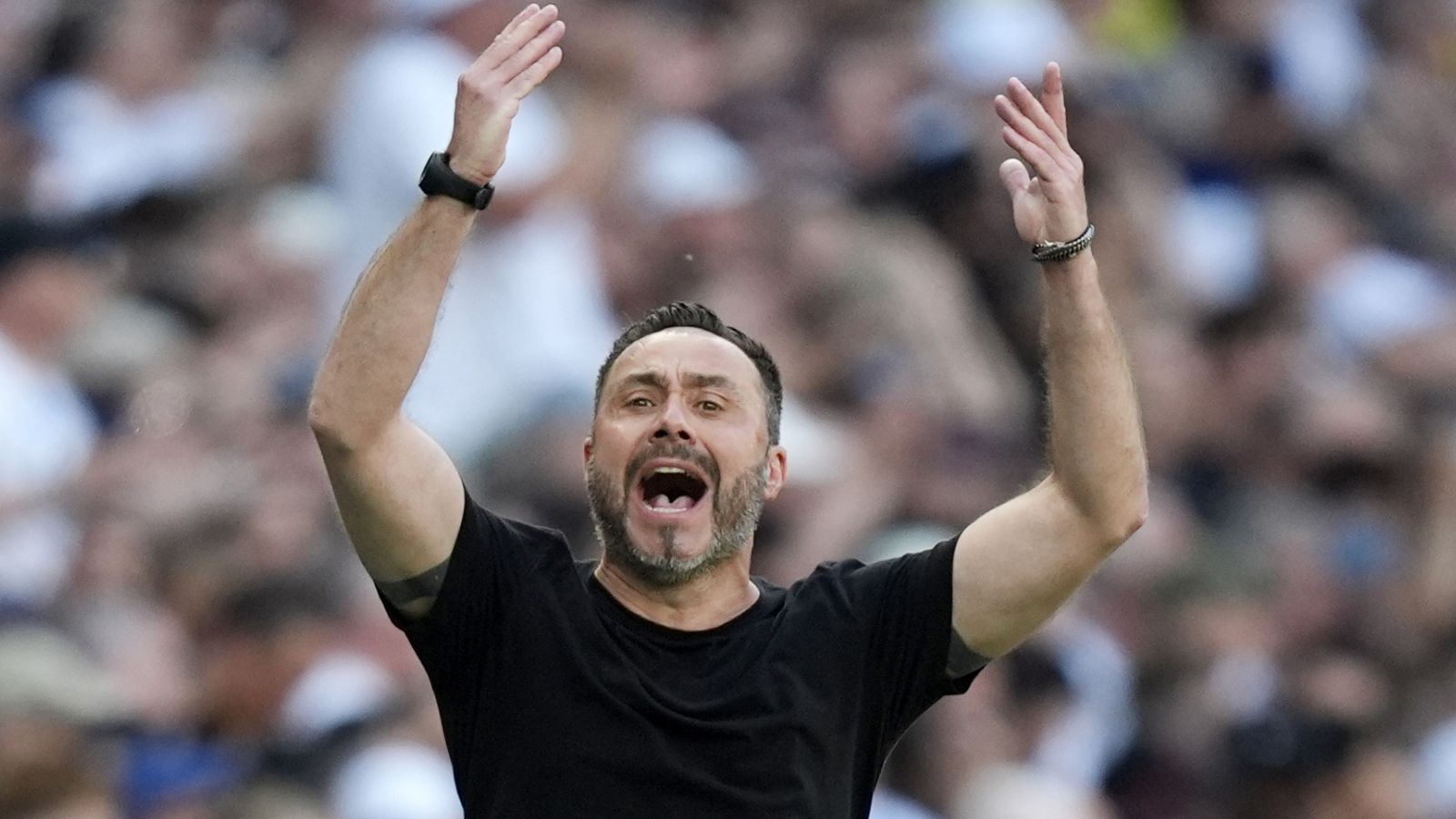
The De Zerbi mandate in North London
Roberto De Zerbi has never been a manager for the faint of heart, but his arrival at Tottenham Hotspur presents a specific kind of tactical tension. Walking into the training ground following the club's recent upheaval, the Italian faces a squad conditioned by heavy-legged transitional play. His objective is clear: shift the high-pressing, structured build-up that defined his time at Brighton into a side that has historically struggled with composure under pressure.
We can see the structural shifts already. In his opening sessions, De Zerbi is demanding that full-backs invert earlier, creating numerical superiority in the central channels. This is not merely about possession; it is about manipulating the defensive block to force gaps behind the pivot. As Sky Sports has noted, the early markers of this transition are promising, but the personnel fit remains a glaring question mark.
The defensive instability
If De Zerbi wants to replicate his best defensive setups, he needs his center-backs to act as primary playmakers. At Brighton, Lewis Dunk was the launchpad, splitting passes through the lines with surgical precision. At Tottenham, the transition phase currently sees too many lateral passes that fail to break the opponent's first line of engagement. This static movement results in turnovers during the transition from defense to midfield, leaving isolated full-backs vulnerable to the counter.
The data suggests that Spurs are still operating at a low efficiency in the middle third compared to the league’s top four. Their pass completion rate in central areas hover around 82 percent, which is acceptable but insufficient for a team aspiring to dominate high-possession games against elite presses. When the opposition turns the screw, Tottenham’s hesitation to play through the middle often forcing them to bypass the press with risky long balls to isolated forwards.
The personnel bottleneck
The core issue here is the lack of a true holding midfielder capable of dictating tempo while simultaneously acting as a defensive screen. De Zerbi’s system relies on the "exit pass"—a quick, horizontal ball to a midfielder who has turned the pressing wave into a liability. Watching their most recent training drills, the disconnect is visible. When the defensive line pushes up to compress the space, the midfield gap often stretches beyond 25 yards, inviting chaos.
It is not a surprise that the club is looking for reinforcements. Relying on players to adapt their entire spatial awareness in a matter of weeks is optimistic, to put it mildly. There is a palpable danger that if the team fails to secure a ball-playing anchor before the window closes, the defensive line will be left exposed by opponents who know exactly how to exploit the high line.
A tactical gamble on sustainability
De Zerbi’s refusal to sacrifice his principles is his greatest asset and his biggest liability. Many managers come to big clubs and settle for a hybrid, compromise-heavy system to appease the locker room or protect the goal difference. He seems intent on doing the opposite. He is stripping the current framework down to its base components and rebuilding with the intent of forcing total structural compliance.
The risk is obvious. If he pushes too hard, too fast, he risks alienating experienced players who have spent their careers playing to the touchline rather than through the center. However, if he succeeds, he creates a side that can dictate the flow of the game rather than react to the opponent’s momentum. The next few weeks will tell us whether this transition is a genuine evolution or a case of tactical overreach.
One critical observation remains: the physical toll of this philosophy in the Premier League, especially during a season containing the upcoming international summer fixtures, requires an incredibly deep rotation. If the starters are burning out by the 60th minute, De Zerbi will need his bench to maintain the same pressing intensity he demands from the starting eleven. Without that, he is effectively coaching a team that plays exclusively on the front foot for an hour before collapsing under the weight of its own defensive structure.
Amazon Fire TV Stick 4K Max
The ultimate streaming companion for catching every Premier League and World Cup
Frequently Asked Questions
What tactical changes is De Zerbi implementing at Tottenham?
Why does De Zerbi want center-backs to act as primary playmakers?
How is Tottenham's current midfield failing De Zerbi's system?
What is the primary cause of Tottenham's defensive instability?
What is the risk of De Zerbi's current tactical approach?
More Coverage

Top 10: The Definitive Ranking of Footballing Champions
44 minutes ago
Arsenal must turn that £200m budget into a title-winning reality
3 hours ago
Liverpool chasing Ousmane Diomande as Slot eyes defensive reinforcements
3 hours ago
Matheus Fernandes is the tactical reset Manchester United desperately need
4 hours agoUSA vs Paraguay: A defensive disaster disguised as a lead
5 hours agoCanada’s lack of clinical edge is becoming a real tournament headache
6 hours agoMore Analysis
De Zerbi at Spurs is a tactical gamble with a massive PR headache
2 months, 1 week ago
Roberto De Zerbi is the wrong fit for Tottenham's tactical mess
2 months ago
Roberto De Zerbi’s Spurs experiment is already hitting a wall
2 months ago
De Zerbi's Tottenham arrival is already a PR nightmare
2 months, 1 week ago
De Zerbi needs immediate answers at Tottenham
2 months, 1 week ago