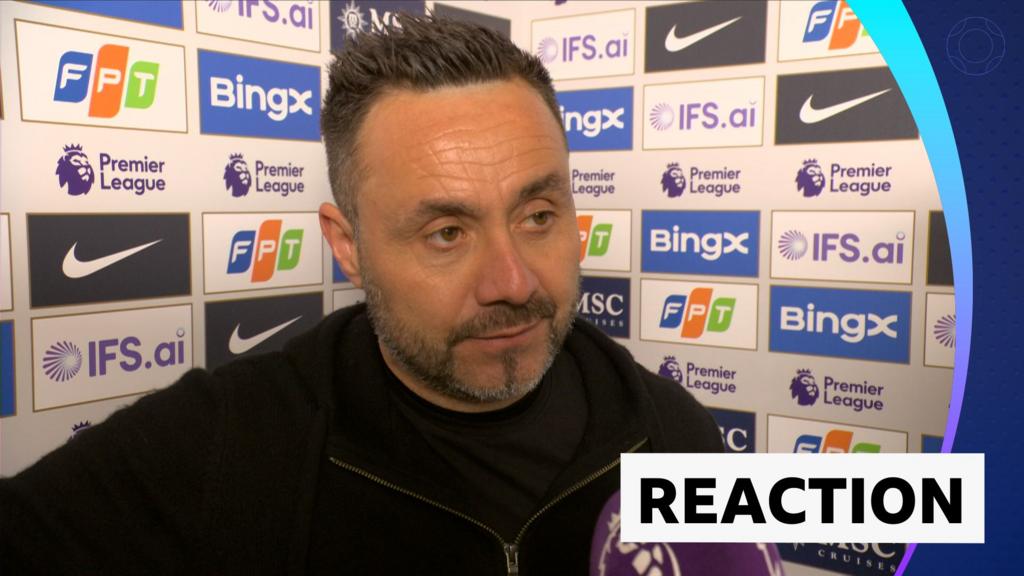
Roberto De Zerbi stood in the press room at Stamford Bridge and offered an assessment completely detached from the reality of the Premier League table. Tottenham Hotspur had just lost 2-1 to Chelsea. The defeat guaranteed their desperate scrap against relegation would go down to the final day of the season.
Yet the Italian manager was defiant. He told the assembled media he was pleased with his side's performance. He stated flatly,
"We can reach our target."
That target is mere survival. For a club with a state-of-the-art stadium in North London and a wage bill originally constructed for Champions League nights, simply existing in the top flight is a grim ambition. Spurs are staring directly at the abyss. How they arrived here is a fascinating, fatal collision of tactical stubbornness meeting a squad entirely ill-equipped for absolute dogmatism.
The illusion of control at Stamford Bridge
At Stamford Bridge, Tottenham did exactly what Roberto De Zerbi teams are programmed to do. They dominated the ball. They operated with a staggering 74% possession. They baited the Chelsea press. They strung together neat, rhythmic triangles in their own defensive third, daring the opposition forwards to jump out of shape.
None of it mattered. Chelsea did not press blindly. They set calculated traps.
The scoreline actually flattered Spurs. Chelsea allowed Tottenham's center-backs to put their studs on the ball. They let them wait. But the moment the ball progressed into the double pivot, Chelsea collapsed violently on the receiver. The passing lanes to the wingers were deliberately severed by aggressive, high starting positions from the Chelsea full-backs.
It was a predictable, painfully effective defensive blueprint. Every manager in the division has spent the last eight months figuring out how to short-circuit this specific buildup structure. You do not win the ball from the center-backs. You win it from the midfielders receiving with their backs to goal in the middle third.
Spurs repeatedly fell into the snare. They turned over possession in their own half relentlessly. Chelsea's transition goals came directly from these high-risk sequences. The center-backs played the ball into traffic, the midfielder lost the physical duel, and Chelsea were instantly bearing down on an exposed penalty area.
The mechanics of a broken system
De Zerbi's system requires absolute technical security and supreme spatial awareness. When he arrived at Tottenham, he inherited a squad built by previous managers for a hybrid of rapid counter-attacking and chaotic energy. He immediately asked those same players to play precise, high-stakes positional chess.
The mismatch has been excruciating.
When you are comfortably mid-table in November, playing out from the back under intense pressure is an exciting project. When you are fighting for your life in late May, it is borderline negligent. The tension in the stadium is transmitted directly to the pitch. Players hesitate. They take an extra touch to settle the ball. A half-second delay in this automated system is fatal.
The manager refuses to compromise. There is no alternative approach. There is no route-one option to bypass a high block late in the game to relieve pressure. If Spurs cannot pass their way through the center of the pitch, they simply circulate it in a U-shape around the backline until someone makes a catastrophic unforced error.
This inflexibility is Tottenham's most fatal flaw. De Zerbi would rather lose beautifully than win ugly. In a relegation fight, ugly points are the only currency that retains value.
Defensive transitions in disarray
The issues extend far beyond the buildup phase. Spurs' rest defense has been a shambles since the opening weeks of the campaign.
De Zerbi commits bodies forward with reckless abandon. He pushes the full-backs high and inverted, creating a fluid front five designed to pin the opposition backline deep in their own box. This works brilliantly if you can sustain the pressure and counter-press effectively the split-second the ball is lost.
Spurs fail at both. Their pressing triggers are hopelessly disjointed. One forward jumps out of phase, the midfield fails to back him up, and the trap is instantly broken. When they lose the ball, the midfield is routinely bypassed with a single, simple vertical pass.
Against Chelsea, the defensive transitions were brutal to watch. The first goal originated from a lost second ball on the edge of the Chelsea box. Within three passes, the ball was in the back of the Tottenham net.
That is not bad luck. That is a fundamental structural failure. The spacing is consistently wrong. The distances between the high defensive line and the retreating midfield are far too large. When you play a high line without applying intense pressure on the opposing ball carrier, you are begging to be punished by runners in behind. Chelsea happily accepted the invitation.
The psychological toll of dogmatism
You can see the fear etched on the faces of the Tottenham players. They are asked to execute high-wire circus routines without a safety net underneath them.
The home crowd groans audibly every time the goalkeeper puts his foot on the ball and waits motionless for the opposition striker to approach. It creates a deeply toxic, nervous atmosphere. The fans desperately want urgency and forward momentum. The manager demands extreme, almost unnatural patience. The players are caught entirely in the middle, paralyzed by conflicting demands.
This psychological burden cannot be ignored going into the final weekend. The pressure will be immense. Every backward pass will be met with anxiety from the stands. Every slightly loose touch will be amplified into a crisis.
De Zerbi claims he is pleased with the underlying metrics. He frequently points to expected goals data and possession dominance as proof the process is working. But football is not played on a spreadsheet. It is played by human beings who are currently buckling under the immense weight of an unyielding tactical system.
The final day reckoning
Tottenham now face a final 90 minutes to save their top-flight status. The mathematics are simple, even if the football remains needlessly complex. They must secure a result to avoid dropping into the second tier.
They will undoubtedly face an opponent perfectly happy to sit in a compact low block and let Spurs pass themselves to death. The opposition will defend the width of the penalty area, willingly concede the wide areas, and wait patiently for the inevitable mistake in the central zones.
Will the manager finally adapt? Absolutely not. He will send his team out to play the exact same way they played against Chelsea. He will ask his center-backs to stand on the ball. He will demand intricate, one-touch combinations in hopelessly congested spaces.
The margins are razor-thin. If they execute perfectly, they might carve out enough high-quality chances to survive. If they show the exact same hesitation and structural vulnerability they displayed at Stamford Bridge, they will be relegated.
Going down would be a financial and structural catastrophe. The television revenue drop-off, the inevitable player exodus, and the reality of navigating a gruelling 46-game Championship season with a squad composed of expensive technical specialists is a recipe for long-term ruin. Relegation used to be unthinkable for the modern Big Six. Now, thanks to an absolute refusal to adapt to the reality of a relegation dogfight, it is the most likely outcome. The warning signs have been flashing bright red since December. De Zerbi chose to close his eyes and trust the process.
My prediction is grim. The system will finally crack under the ultimate pressure. The anxiety is simply too high. You cannot play pure, unadulterated De Zerbi possession football with a squad utterly terrified of the drop. Spurs will dominate the ball, concede on a devastating counter-attack, and De Zerbi will complain in his final press conference that the players failed to execute his brilliant game plan. The Championship awaits.