
Don't let pre-tournament form fool you before the World Cup

Why early results are a statistical Mirage
As the international break dissolves into the rear-view mirror, the panic emanating from fan forums feels premature. With the World Cup kickoff just 70 days away, observers are obsessing over friendlies that essentially function as glorified training sessions. History instructs us to look elsewhere for predictive value.
Consider the United States historical run-in to their previous home tournament. Their results were objectively abysmal throughout the early months of the prep window. Yet, judging a squad based on experimental lineups and managed fitness loads in the spring is a fundamental misunderstanding of how elite managers operate.
The Anthony Barry variable and Tuchel’s influence
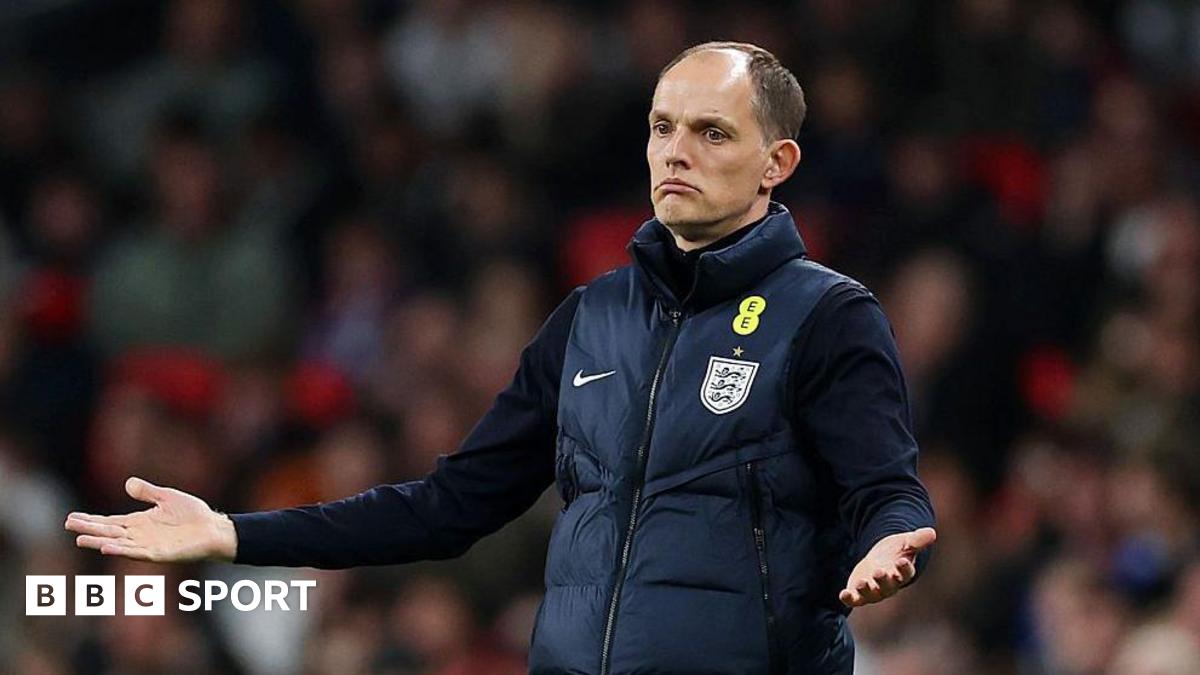
The discourse surrounding the England setup has centered on the theoretical starting eleven, but the actual intelligence operation lies in the backroom. As recent analysis suggests, the tactical transition under Thomas Tuchel hinges heavily on the integration of Anthony Barry. Barry is the specialized nerve center tasked with harmonizing the pragmatic requirements of international football with Tuchel’s preferred high-press intensity.
If Barry fails to calibrate the pressing triggers effectively, England will look vulnerable against mid-block transitions in the group stages. Tuchel is not known for tactical flexibility when his primary mechanism is disrupted. We have seen this before with his rigid structure at previous club stops where individual brilliance was required to bail out the system once the initial press was broken.
Statistical disconnects mirror past failures
We often romanticize past winners as coherent, well-oiled engines, but the data rarely reflects that smoothness. Look back at the 1998-99 Manchester United campaign. The chemistry between Andy Cole and Teddy Sheringham is treated as gospel today, yet internal match logs tell a story of profound friction.
Cole played 3,248 minutes while Sheringham was relegated to a rotation role that often left the frontline disjointed. The attacking output was not a result of fluid partnership dynamics, but rather the sheer overwhelming quality that forced results despite a lack of cohesion. If the current England squad relies on similar gaps in tactical understanding, they are banking on tournament luck rather than systematic superiority.
The danger of over-analyzing the March window
Managers treat these final months as a laboratory. They test defensive contingencies and check if fringe players can survive in high-tempo transition sequences. If a manager is playing for a result in a March friendly, they are likely behind in their development plan rather than ahead of it.
A critical observation remains: the defensive transition speed in the current England squad is worrying. Against top-tier counter-attacking sides, the space between the midfield pivot and the back four expanded significantly in recent outings. This is not a matter of personnel but of discipline. If the defensive line pushes up to support the attack, the cover must be perfect.
Looking ahead to the quarter-finals
While we obsess over the national team, the upcoming club calendar will serve as the true barometer for player sharpness. The UCL quarter-final first leg on April 07, 2026, will act as the crucible for the players who will eventually head to the World Cup. Those who struggle under the intensity of a European knockout tie are unlikely to find their form in the tournament environment.
We are watching for those specific markers of decline: lost duels, failed tracking runs, and the reluctance to engage in high-intensity sprints after the 75th minute. These are the details that matter. Everything else is just noise generated by folks who think a friendly scoreline carries the weight of a knockout fixture.
Keep your eyes on the tactical structure in Paris or Madrid next week. That will tell you more about the summer than any international result from last month could ever hope to reveal.
Nike Academy Team Soccer Backpack
Keep your gear organized and dry with this rain-ready bag designed for serious b
Frequently Asked Questions
Why are results in pre-tournament friendlies often misleading?
What role does Anthony Barry play in England's current tactical setup?
What is the biggest tactical risk for England under Thomas Tuchel?
What can the 1999 Manchester United campaign teach us about team cohesion?
What defensive issue has been observed in recent England performances?
More Coverage
Lincoln City just entered the weirdest experiment in League One history
3 hours ago
Arsenal’s title win has changed the math for London football
6 hours ago
Arsenal and England breathe sigh of relief as Bukayo Saka manages training load
10 hours ago
Emily Cassap represents a shift in Northern Ireland's tactics
10 hours ago
Why United must prioritize Ederson to reclaim their midfield
10 hours ago
World Sevens enters the furnace as tactics shift for day two
13 hours agoMore Analysis
Thomas Tuchel has a major England problem before the World Cup
1 month, 4 weeks ago
Why Tuchel's tactical rigidity will doom England at the World Cup
1 week, 2 days ago
Tuchel needs to stop overthinking England before the World Cup starts in June
1 month, 4 weeks ago
Thomas Tuchel’s 35-man England squad is a mathematical nightmare
2 months ago
Thomas Tuchel has 51 days to cure England's tactical paralysis
1 month, 1 week ago