The Worst Possible Timing
The international break rarely arrives without a casualty, and this camp is no different. England's preparations for their upcoming Women's World Cup qualifiers have been thrown a massive curveball. The news broke early this morning that Godfrey has been forced to withdraw from the squad due to injury. The exact nature and severity of the setback remain strictly under wraps by the medical staff. The immediate consequence, however, is glaringly obvious: a gaping hole in the squad just days before facing two wildly different, but equally dangerous, opponents.
Losing an established player right before a defining window alters the entire dynamic of the training camp. Managers build their tactical frameworks weeks in advance. Set-piece routines are memorized. Defensive shapes are rigorously drilled on the training ground. When a core player drops out, that carefully constructed geometry breaks down instantly. The coaching staff now has to scramble. They must patch over the cracks while simultaneously trying to integrate a brand-new face into a complex system.
And that new face belongs to Keira Barry. The Bay FC forward has officially received her very first call-up to the senior squad. It is undoubtedly a monumental moment for the player, but she is stepping directly into a pressure cooker. Making your international debut is challenging enough. Making it when the team is scrambling to cover an injury crisis against top-tier opposition is entirely another beast.
The NWSL Pathway Pays Off
Barry’s inclusion is not just a feel-good story for the press. It is a direct, undeniable result of her blistering form stateside. Playing for Bay FC in the National Women's Soccer League has clearly elevated her profile and hardened her game. The American league is notoriously physical, heavily reliant on fast transitions, and unapologetically demanding. Thriving in that environment requires a relentless level of athletic resilience and sharp tactical awareness.
England's scouting network has clearly been monitoring her progress in California with serious intent. Bringing a player across the Atlantic for a high-stakes qualifying window isn't done on a whim or for mere experience. The coaching staff firmly believes she offers something they currently lack. At the very least, they view her as providing the necessary attacking depth to navigate the grueling, unforgiving schedule ahead.
However, throwing an uncapped forward into the mix against a team like Spain remains a massive, undeniable gamble. The transition from club football to the international stage is famously jarring for any player. The game is demonstrably faster, the margins for error are microscopic, and the tactical discipline required is absolute. Barry will have a matter of days to learn the playbook. She must develop chemistry with teammates she has never played with at this elite level. It is a steep learning curve, and the gradient just got significantly sharper.
The Tactical Ripple Effect
While Barry brings fresh energy and a point to prove, the focus inevitably shifts back to what England loses with Godfrey’s abrupt absence. The specific tactical tweaks will heavily depend on the manager's final setup, but the underlying disruption is a cold reality. Injuries to core squad members force uncomfortable compromises all over the pitch. You lose a known, reliable quantity. You lose a vocal presence in the dressing room. You lose a specific set of physical attributes that cannot be simply copy-pasted onto a replacement player.
This is exactly where the sharpest criticism needs to be leveled at the current setup. England's squad depth is frequently touted by pundits as a major, defining strength. Yet, structural vulnerabilities consistently appear the moment the primary game plan falls apart. The heavy reliance on a specific core group of players means that when one gear slips, the entire machine stutters noticeably. The lack of a seamless, plug-and-play system for every position is a lingering concern. Top-tier teams will ruthlessly expose this exact type of tactical friction.
Against lesser opposition, you can often paper over these systemic cracks with sheer individual quality and brute force. Against the absolute elite, those tiny cracks become gaping chasms. The tactical reshuffle required to accommodate Barry and adequately cover for Godfrey will be the defining narrative of this entire camp. It is a severe test of managerial agility as much as it is of player adaptability.
The Spanish Inquisition
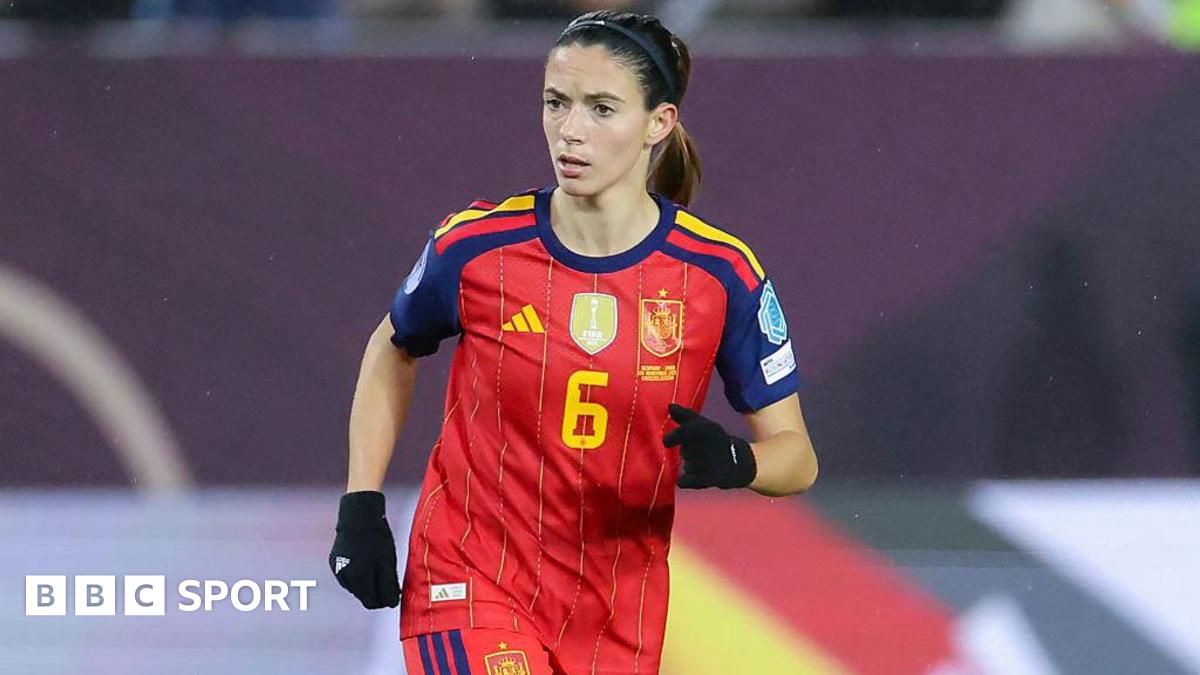
The timing of this squad reshuffle could not be worse, entirely because of the first massive name on the fixture list: Spain. Facing the Spanish national team is an exhausting exercise in suffering without the ball. They are the undisputed, ruthless masters of possession. They dictate the tempo from the first whistle and suffocate opponents with relentless, intricate, exhausting passing networks.
You do not beat Spain by playing open, expansive, chaotic football. You beat them through flawless defensive organization and razor-sharp, punishing counter-attacks. Every single player on the pitch must know exactly when to press, when to drop back, and when to break forward. A single, momentary misstep in positioning is routinely and violently punished. Integrating a brand-new forward into this hyper-specific tactical plan with minimal training time is an absurdly massive ask.
If Barry sees the pitch in this fixture, her off-the-ball work will be scrutinized far more intensely than her attacking output. Against Spain, the forwards are effectively the first line of defense. If the press is disjointed because a debutant misses a pressing trigger, the Spanish midfield will bypass them entirely with a single pass. It is a terrifying baptism by fire, and the risk of getting burned on the international stage is incredibly high.
Don't Forget Iceland
While the looming shadow of Spain dominates the headlines and the tactical meetings, the subsequent fixture against Iceland presents a completely different, yet equally frustrating, challenge. If Spain is a delicate surgical scalpel, Iceland is a heavy, blunt instrument. They are physically imposing, defensively rigid, and exceptional at turning matches into a grueling, ugly slog.
This is the harsh, unglamorous reality of World Cup qualifiers. You transition from chasing shadows against the world's most technical team to trying to break down a stubborn low block in a deeply physical encounter just days later. The physical and mental whiplash is intense and exhausting. This is the exact moment where true squad depth is actually tested.
If the Spain match completely drains the squad's energy reserves, the Iceland game becomes a highly dangerous trap. Dropping points here due to heavy legs, fatigue, or a sudden lack of attacking cohesion could have disastrous, long-lasting consequences for the entire qualification campaign. Barry’s introduction might actually prove to be far more vital in this specific match. She offers a fresh pair of legs and a completely different attacking profile to potentially unlock a highly stubborn defense.
The Relentless Calendar
Godfrey’s untimely injury is just the latest, frustrating data point in a deeply troubling, industry-wide trend. The fixture list across domestic and international women's football has become entirely, undeniably unsustainable. Players are being pushed well beyond their physiological limits on a weekly basis. They are constantly bouncing between high-intensity club matches and high-stakes international tournaments with virtually zero meaningful off-season recovery time.
This is not a new or particularly groundbreaking observation. Yet, the governing bodies seem willfully, stubbornly blind to the obvious consequences playing out on the pitch. We are witnessing a terrifying, constant accumulation of soft-tissue injuries and devastating long-term layoffs. The actual product on the pitch ultimately suffers immensely when the best players in the world are perpetually residing in the treatment room. The current system is actively breaking the very athletes it completely relies on for its existence.
Until there is a serious, sweeping structural overhaul of the footballing calendar, these sudden emergency call-ups will become the standard norm rather than a rare exception. For Keira Barry, this week represents the absolute opportunity of a lifetime. For England, it is simply another crisis to manage in an endlessly demanding cycle. The whistle blows against Spain in a matter of days. Ready or not, the frantically reshuffled squad will have to find a way to survive the test.
Read Next
- Trent Alexander-Arnold's Madrid struggles highlight massive risk for Liverpool
- Aaron Ramsey calls it a day as the body finally wins the war
- Harry Maguire’s new Manchester United contract is the ultimate test of your sanity
- Antonio Conte is back to his favorite hobby of lowering the bar at Napoli
- 🏴 England World Cup 2026 — Three Lions Hub