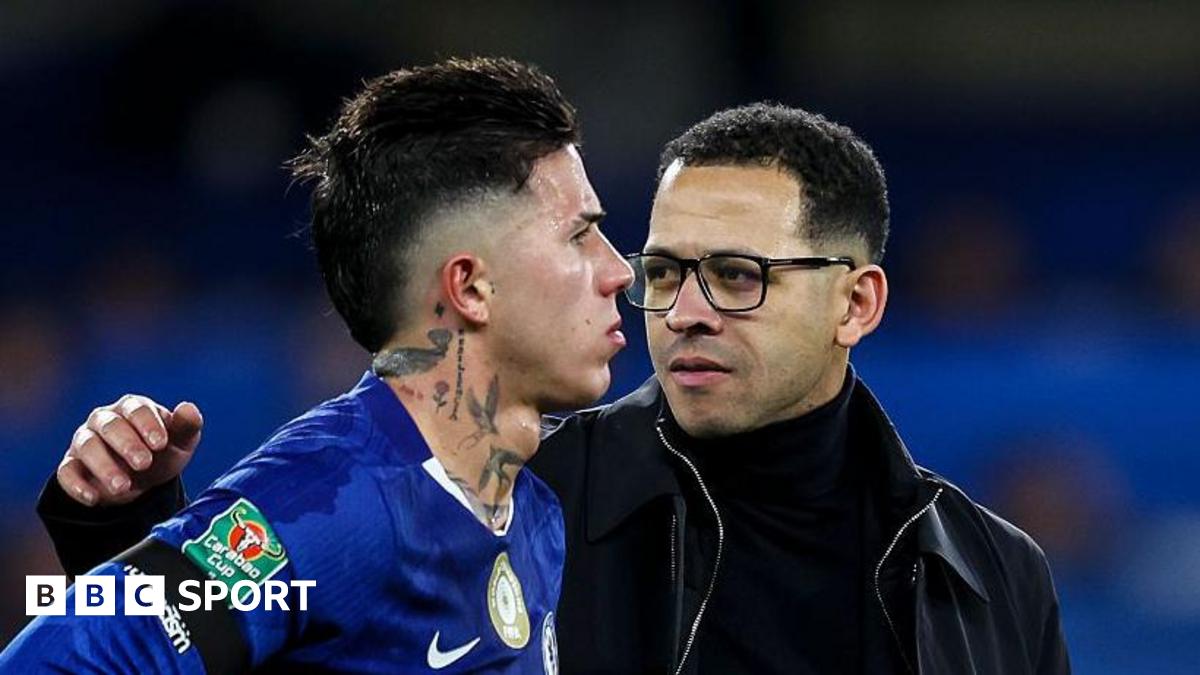
Enzo Fernandez steps back onto the Stamford Bridge turf this weekend. When a nine-figure midfielder returns to the starting lineup for a clash against Manchester United, the narrative usually writes itself. The anchor returns to steady the ship. The missing piece of the tactical puzzle is finally located.
But for Chelsea in the spring of 2026, the reality is far more complicated and considerably less romantic. Fernandez’s return from his recent spell on the sidelines solves one obvious problem while violently illuminating several others. Chelsea's midfield hasn't just been missing a key player. It has been completely devoid of an identity.
The issue isn't Fernandez's individual quality. We know exactly what he does when he is fit and firing. He dictates the tempo, he breaks opposition lines with raking diagonal passes, and he possesses a weight of pass that very few deep-lying playmakers in Europe can match. The fundamental issue is the chaotic, disorganized structure he is stepping back into.
The Structural Void in West London
Watch Chelsea’s shape in transition over the last three weeks of his absence. It is genuinely alarming for a team with high aspirations. When they lose the ball in the middle third of the pitch, the gap between the defensive line and the midfield double-pivot routinely stretches to 20 or 25 yards.
That is an ocean of space in the modern Premier League. You simply cannot survive leaving that much green grass in the center of the park.
Without Fernandez available to dictate the play, Moises Caicedo has been asked to cover an absolutely impossible amount of ground. Caicedo is an elite defensive midfielder, fantastic at putting out fires and winning individual duels. But he cannot be in three places at once. He has repeatedly been dragged out of position, forced to engage the ball high up the pitch, leaving the center-backs horribly exposed to late runners arriving from deep.
Take a closer look at the positioning of the full-backs over the past month. Marc Cucurella has frequently been asked to invert, stepping into the midfield to offer a passing option. In theory, this creates an overload and helps bypass the first line of the opposition's press. In practice, without Fernandez pulling the strings and organizing the shape, it has simply created massive, exploitable pockets of space in the wide defensive areas.
When possession is turned over, Cucurella is caught stranded in the center circle. The opposing right winger suddenly has 40 yards of uncontested grass ahead of him. The right-sided center-back is forced to slide across to cover the gaping hole, which subsequently stretches the entire defensive line to breaking point. It is a domino effect of terrible spacing, and it stems directly from a midfield that lacks the positional discipline to cover for its advancing full-backs.
Fernandez’s return theoretically helps balance this equation. In possession, his presence allows Caicedo to sit a little deeper and anchor the midfield. But out of possession, Fernandez has never been an elite ball-winner. He is a progressor, a creator, not a physical destroyer. If Chelsea attempt to press high and the first line of pressure is bypassed, Fernandez often struggles to track back with the necessary urgency to plug those glaring gaps in front of the defense.
This is the glaring flaw in their current setup. You can have all the possession you want, but if your central midfield pairing cannot secure the transition zones, you are playing with fire.
Manchester United's Perfect Scenario
This brings us directly to Manchester United. If you were to sit down at a tactical board and design an opponent perfectly suited to exploit a disjointed, expansive, and defensively suspect midfield, it would look exactly like the current iteration of United.
They do not want to dominate the ball at Stamford Bridge. They will gladly cede possession. They want to absorb pressure, force turnovers in dangerous areas, transition rapidly, and strike before the defense can set.
Bruno Fernandes thrives in exactly the pockets of space Chelsea have been routinely vacating all season. The Portuguese playmaker doesn't need three or four touches to find a runner; he only needs one. When United turn the ball over, Fernandes is immediately scanning, looking for the channels between Chelsea's full-backs and center-backs.
Consider the specific dynamic between Alejandro Garnacho and whoever starts at right-back for Chelsea. Garnacho is not a player who needs elaborate build-up play to isolate his fullback. He thrives on early, direct service. If Fernandez loses the ball under pressure in the center circle, the first pass from United will bypass the midfield entirely. It will be a raking ball over the top, dropping perfectly into Garnacho’s stride.
Garnacho's ability to carry the ball at high speed terrifies disorganized defenses. He doesn't just run down the line; he drives diagonally towards the penalty area, forcing multiple defenders to commit to him. This is exactly how United create secondary chances for the likes of Rasmus Hojlund or the trailing run of Mainoo. If Chelsea's midfield is out of position, Garnacho will look like a world-class winger for 90 minutes.
Then there is the sheer pace out wide. United's wingers will be instructed to stay chalk-on-the-boots wide during the initial defensive phase, stretching Chelsea’s block as much as possible. When the ball is won, they dart inside with terrifying speed. If Caicedo is caught too high up the pitch, and Fernandez fails to track the late, driving run of Kobbie Mainoo through the center of the pitch, United will have a clear numerical superiority in the final third. Chelsea's defense will be completely overwhelmed before they even have a chance to organize themselves.
The Cold Hard Numbers
Let's look at the underlying metrics, because they strip away the emotion and tell the real story. In the matches Fernandez has missed this season, Chelsea's passes into the final third drop by a massive 14%. They become visibly sluggish. Their build-up play becomes predictable, overly reliant on isolated one-versus-one situations on the wings rather than intelligently playing through the lines.
So, yes, from an attacking standpoint, they absolutely need him on the ball. He is their primary engine for progression.
But defensively, the metrics tell a starkly different and concerning story. Chelsea actually concede fewer high-quality chances when they deploy a more rudimentary, physically imposing midfield pairing. Fernandez's inclusion makes them a significantly better footballing side, but an undeniably more vulnerable defensive unit.
It is the great tactical paradox that has defined his expensive stint in West London. How do you balance the undeniable elite creation with the obvious defensive trade-offs?
United know all of this. Their coaching staff will have highlighted it all week. Their pressing triggers on Saturday will be entirely focused on the specific moments Fernandez receives the ball with his back to goal in his own half. They will try to swarm him, suffocate his passing angles, force the turnover deep in Chelsea territory, and immediately spring into the acres of space left behind his deeper positioning.
The Tactical Compromise Required
To survive this weekend and take three points, Chelsea cannot stubbornly play their usual expansive, open game. They need to dramatically shrink the pitch.
The defensive line has to push up at least 10 yards higher to compress the space Caicedo and Fernandez are expected to cover. The wingers cannot simply function as attacking outlets waiting for the ball; they have to drop deep and form a narrow, compact bank of four out of possession. This forces United to play wide and swing crosses into the box, rather than slicing through the center.
There is also the question of game management. Chelsea have displayed a shocking inability to kill off games or manage the tempo when the momentum shifts against them. They play the 85th minute with the exact same frantic energy as the 5th minute. This is precisely where a player of Fernandez's caliber must step up and assert his authority.
He needs to recognize when the game is becoming too stretched and actively put his foot on the ball. He has to draw fouls, slow down the restarts, and force his teammates to reset their defensive shape. The problem is that Fernandez himself often gets caught up in the emotional tide of the match. He is prone to forcing a Hollywood pass when a simple five-yard completion is what the team desperately needs to regain control. Against United, those forced passes are exactly what their opponents will be praying for.
It requires a level of intense tactical discipline and concentration that Chelsea have rarely shown this season. They are entirely too prone to wild emotional swings within the context of a 90-minute match. A bad tackle, a missed opportunity, a questionable refereeing decision, and suddenly their structural shape completely disintegrates.
Against a mid-table side lacking cutting edge, you might get away with a chaotic 15-minute spell. Against United's ruthless transition machine, a 15-minute lapse in concentration means fishing the ball out of your own net twice.
The Inevitable Chaos
This particular fixture, regardless of the managers in charge or the players on the pitch, almost always devolves into pure chaos. Neither of these teams currently possesses the requisite technical control or defensive solidity to completely suffocate the other for a full 90 minutes.
It will be end-to-end. It will be frantic. It will be structurally broken by the 60th minute.
Fernandez will likely be the most technically gifted player on the pitch when the ball is securely at his feet. He will dictate the first phase of Chelsea's build-up with ease and will probably create two or three genuinely high-quality chances that his forwards simply have to convert.
But football demands more than just possession. At this elite level, the spaces you leave when you lose the ball matter more than the passes you complete. United are simply too well-equipped, too fast, and too ruthless to ignore those spaces.
Chelsea will almost certainly find the back of the net, driven by Fernandez's return and their home advantage. But they will not be able to contain the inevitable waves of counter-attacks. They lack the defensive discipline to shut the door once it has been opened.
Manchester United to win 3-1, with at least two of those goals coming from rapid, devastating transitions directly exploiting the glaring gaps behind Chelsea's returning marquee midfielder.
Read Next
- Enzo Fernandez returns to a Chelsea squad that still makes no sense
- Man United's search for Casemiro's replacement is already getting complicated
- Man City wanting JJ Gabriel has United fans absolutely spiraling
- Caicedo's new Chelsea deal proves the £115m gamble actually worked
- 🇦🇷 Argentina World Cup 2026 — Defending Champions Hub