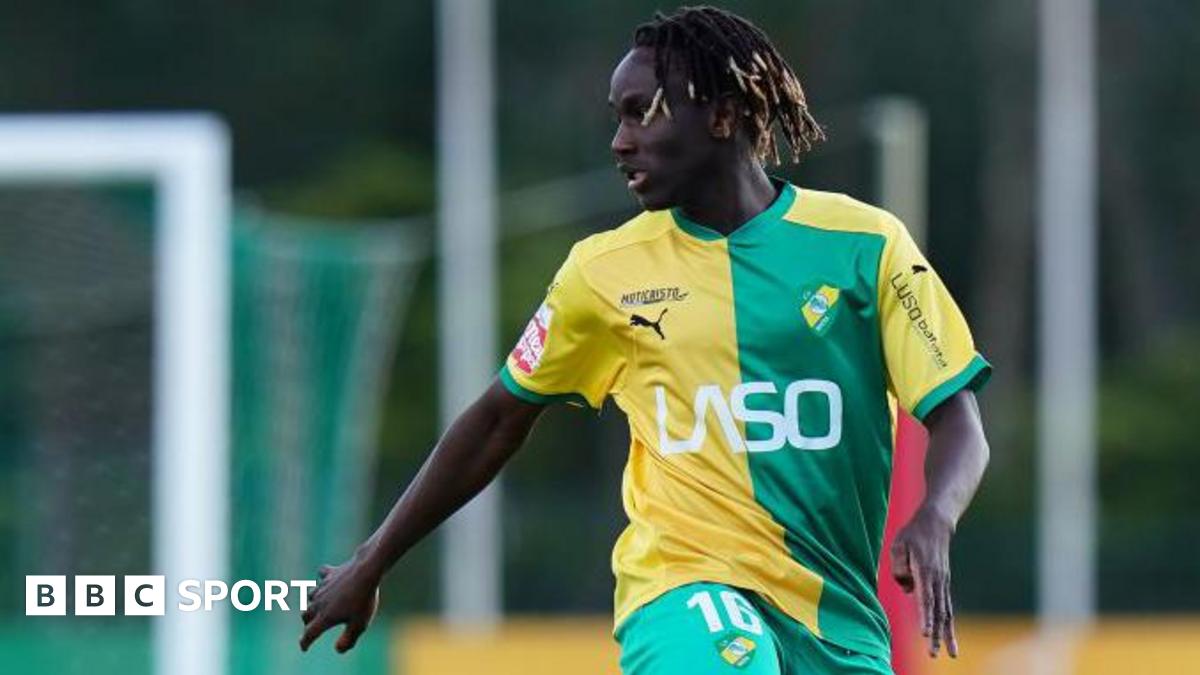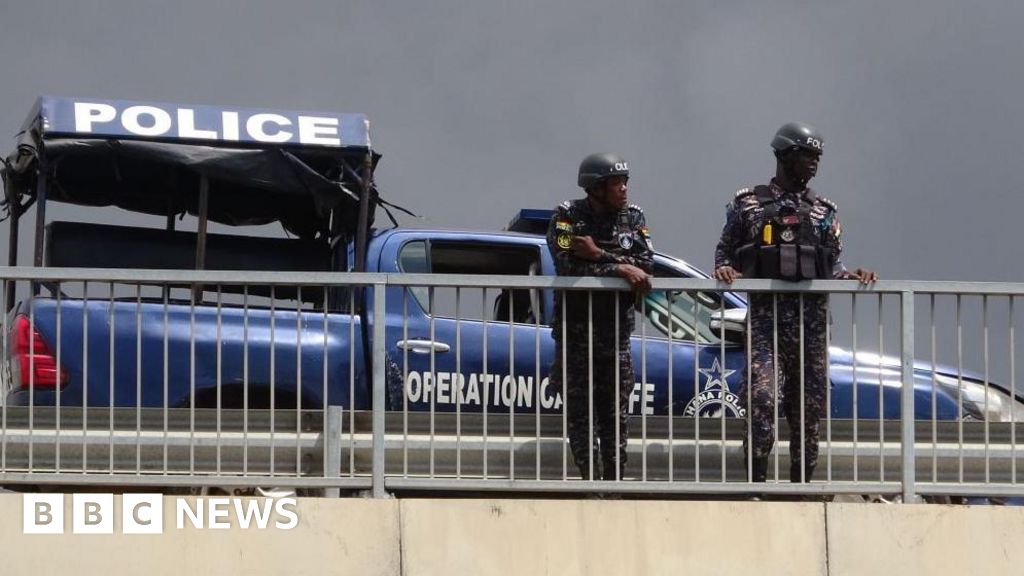
The news filtering out is as grim as it gets. A Ghanaian footballer was killed in an armed attack on his team while they were travelling back from a scheduled fixture, according to officials speaking to the BBC.
This is the absolute worst-case scenario for any domestic league. When we talk about player welfare, the conversation usually revolves around fixture congestion, hamstring tears, and the mental toll of constant public scrutiny. But in various regions across the global footballing map, the most basic foundational requirement—getting players to and from a stadium alive—remains a terrifyingly unprotected logistical blind spot.
The identity of the player and the specific club have not yet been fully released as authorities manage the immediate fallout and family notifications. What is confirmed is that a football team, operating in the standard capacity of fulfilling a league obligation, was violently ambushed.
The terrifying vulnerability of team transit
A team bus is inherently a soft target. It travels on predictable schedules, along predictable routes, carrying highly recognizable individuals.
When you board a coach after 90 minutes of professional football, the expectation is physical recovery. Players are icing joints, reviewing match footage on tablets, or trying to sleep. They are physically exhausted, completely defenseless, and entirely reliant on the security protocols provided by their club and the local authorities.
An armed attack in this setting shatters the fundamental illusion of safety that athletes operate under. This is not a situation where sports science or medical staff can intervene. The trauma inflicted here goes far beyond the immediate physical injuries; it embeds a deep psychological scar on the surviving squad members that will dictate the rest of their lives, let alone their playing careers.
We have seen governing bodies pour millions into stadium security, fan segregation, and anti-hooliganism measures inside the grounds. Yet, the moment a team leaves the stadium perimeter, they are often entirely at the mercy of local agencies and private security arrangements that are frequently underfunded and ill-equipped to handle organized armed threats.
A history of institutional negligence
This is not an isolated phenomenon in the broader context of global sports, and the failure to learn from the past is infuriating.
The immediate parallel that haunts the African football community is the 2010 attack on the Togo national team bus in Cabinda, Angola, just days before the Africa Cup of Nations. Armed rebels opened fire on the convoy, killing three people and injuring several others. International players hid under seats for nearly 30 minutes in a state of absolute terror.
Following that 2010 tragedy, there were sweeping promises from regional federations and global governing bodies about securing transport corridors for professional teams. Protocols were supposedly rewritten. Security budgets were allegedly increased. Yet, here we are again, reading reports of a player losing their life simply because they were a passenger on a team coach.
There is a glaring disparity in how player safety is treated globally. If this happened in a top-tier European league, the entire sporting calendar would grind to a halt. There would be emergency summits at UEFA headquarters and immediate, massive deployments of state security to ensure the safety of every single professional athlete in the country.
But when domestic players in less globally broadcast leagues face these exact threats, the response from global footballing bodies is often relegated to a standard press release offering condolences before the machinery of the sport quietly grinds on. This is a massive failure of governance. Local football associations cannot be left to handle armed bandit threats alone; there needs to be a universal minimum standard of transit security enforced and funded by the governing bodies that profit off the sport.
Even in the heavily sanitized environments of elite European competition, governing bodies have shown a shocking disregard for player trauma in the aftermath of violence. When the Borussia Dortmund team bus was targeted by bomb blasts in 2017, shattering the windows and sending defender Marc Bartra to the hospital with severe wrist injuries, UEFA incredibly mandated that the Champions League quarter-final against AS Monaco be played less than 24 hours later.
Players were essentially forced onto the pitch while still processing a near-death experience. Former Dortmund manager Thomas Tuchel was visibly furious, stating they felt completely ignored by the decision-makers in Switzerland. If that is how the highest governing body in European football treats its premier athletes after a targeted attack, the grim reality for domestic players in less lucrative leagues is even bleaker. They are often expected to simply absorb the trauma and fulfill their broadcast obligations.
The physiological reality of surviving an ambush
As a reporter who usually focuses on physical fitness and medical recovery, the protocol for returning from an ACL tear or a fractured metatarsal is clear. There is a precise timeline, a specialized surgery, a linear rehab schedule, and a targeted return-to-play date.
There is no established timeline for returning to the pitch after watching a teammate murdered in the seat next to you.
The surviving players of this Ghanaian squad are now facing acute trauma. The medical focus immediately shifts from physical recovery to intensive psychiatric intervention. Post-traumatic stress disorder in athletes who survive these events often manifests in hyper-vigilance, severe anxiety, and a complete inability to travel.
From a strictly medical perspective, the physical fallout of an ambush like this is entirely debilitating, even for those who sustained no ballistic injuries. When the human body experiences a sudden, catastrophic threat to life, the sympathetic nervous system triggers a massive release of adrenaline and cortisol.
In the immediate aftermath, athletes will experience extreme hyper-arousal. Their baseline resting heart rates will spike dramatically. Sleep architecture—the absolute foundation of all physical recovery in professional sports—is completely destroyed by night terrors and insomnia. An athlete cannot train, let alone compete, when their central nervous system is locked in a prolonged threat-response state.
Attempting to put these surviving players through standard physical conditioning right now would lead to immediate soft-tissue breakdowns. The elevated cortisol actively impedes muscle repair and immune function. The medical staff's job now is not fitness; it is sheer survival. They must shield these players from any demands of the sport until acute psychiatric assessments can be completed.
Historically, domestic clubs are entirely unequipped to handle this level of specialized care. Team doctors are trained to diagnose concussions and muscle strains, not to guide a squad of young men through the trauma of an armed ambush. The immediate mandate for the local football association must be to suspend all fixtures for the affected club indefinitely and bring in specialized trauma counselors.
Forcing these players back onto a bus, or back onto a pitch, anytime in the near future would be an act of gross medical negligence.
Demanding more than empty statements
The footballing world will undoubtedly see statements of solidarity over the next 48 hours. Black armbands will be worn. Minutes of silence will be observed before kickoffs across various leagues.
None of that prevents the next attack. None of that brings back a player who just wanted to play the game and go home.
If professional football is to be played in regions with known security risks, the logistical blueprint must fundamentally change. Teams cannot be allowed to travel late at night through unsecured corridors. If air travel is not financially viable for domestic leagues, then state-level security escorts must be mandated for all professional fixtures.
This tragedy is a direct result of treating players as invincible assets rather than vulnerable human beings. A player went to work, played a match, and was killed on the way home. The industry's governing bodies owe his family, and every other player boarding a bus this weekend, a massive structural overhaul in how transit security is handled.
Until those structural changes are made, the governing bodies are rolling the dice with players' lives every time a team pulls out of a stadium parking lot.
Read Next
- Why the fatal attack in Ghana will force a football shutdown
- Tottenham's season is dying and Wolves are coming to bury it
- Brian Brobbey and Cristian Romero are turning the Premier League into a UFC prelim
- Brobbey shoving Romero is peak Premier League nonsense
- 🇬🇭 Ghana World Cup 2026 — Black Stars Hub
- 🏴 WC 2026 Group L — England, Croatia, Ghana, Panama