The sudden silence in Nigerian football
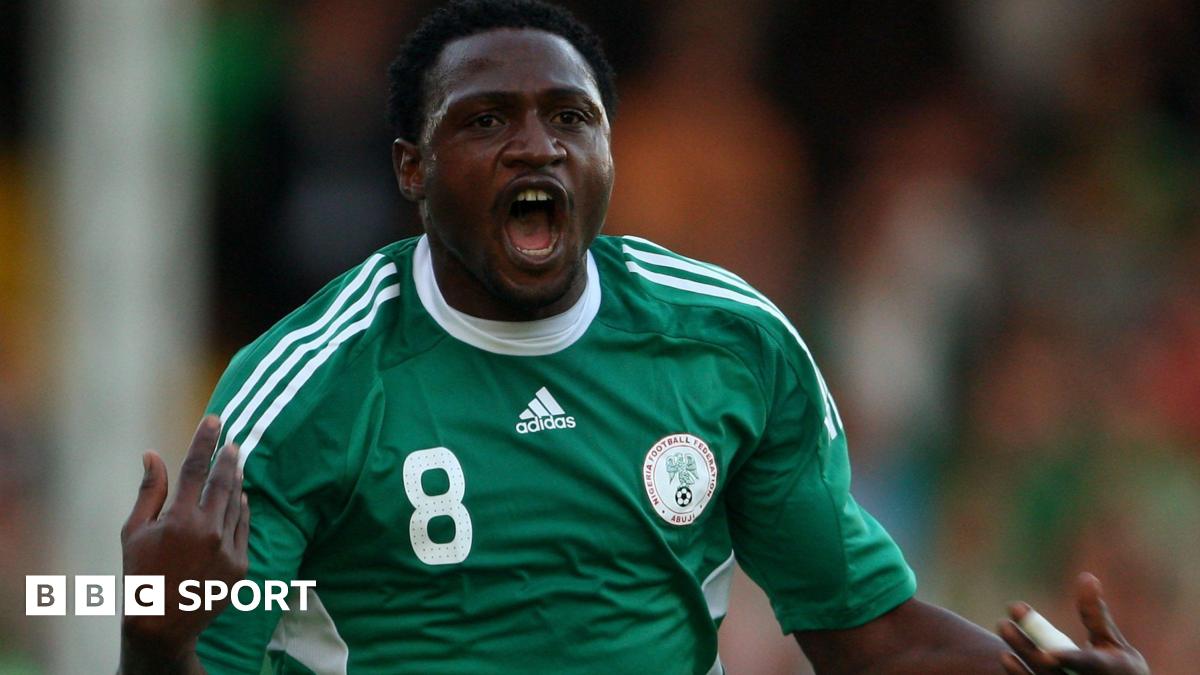
The news out of Nigeria today is grim. Michael Eneramo, a name synonymous with power during his stint in the Tunisian league with Espérance, is dead at **40**. The suspected cause is a cardiac arrest suffered during a friendly match. This is not just a tragedy for the Super Eagles family; it is a clinical wake-up call for the medical protocols surrounding aging athletes and the logistics of veteran matches.
Eneramo was a physical force in his prime. He earned **10 caps** for Nigeria and became a legend in Tunis, but the transition from professional intensity to 'friendly' environments is where the danger often hides. When a former pro collapses in a non-competitive setting, the first question is always about the equipment on the sidelines. In this case, the silence is telling.
Reports indicate the collapse happened without contact. This is the classic hallmark of Sudden Cardiac Death (SCD). In the high-stakes world of elite football, these events are rare because of the brutal screening cycles. But once a player retires, those medical safety nets vanish. We are seeing a pattern where former stars return for friendlies without the necessary cardiovascular vetting required for such explosive exertion.
The mechanics of sudden cardiac death at 40
To understand what happened to Eneramo, we have to look at the pathophysiology of the athletic heart. In players under 35, the primary culprit is usually Hypertrophic Cardiomyopathy (HCM) or other genetic structural issues. Once a player hits the 40-year mark, the risk profile shifts toward coronary artery disease. The heart muscle has spent decades operating at a high ceiling, and the sudden re-introduction of match-level stress can trigger a fatal arrhythmia.
A cardiac arrest is an electrical problem. The heart simply stops pumping because the rhythm becomes chaotic. In a professional stadium, medical staff aim to deliver a shock within **three minutes** of collapse. Every minute of delay reduces the survival probability by roughly 10 percent. If this friendly match lacked a pitch-side Automated External Defibrillator (AED), Eneramo never stood a chance.
The physical demands of football are unique. It is a sport of intermittent high-intensity sprints followed by brief recovery periods. This creates a massive 'oxygen debt' and puts immense pressure on the left ventricle. For a 40-year-old whose fitness may have fluctuated since his professional peak, this sudden spike in heart rate can be a trigger for plaque rupture or a lethal skip in the electrical signal.
Lessons from a history of Nigerian heartbreak
Nigeria has a painful relationship with cardiac events on the pitch. The ghost of Samuel Okwaraji still haunts the National Stadium in Lagos. Okwaraji collapsed and died during a World Cup qualifier against Angola in **1989**. He was just 25. That event was supposed to change how the Nigeria Football Federation (NFF) handled player health, but the progress has been uneven at best.
We saw similar scenes with Marc-Vivien Foé during the 2003 Confederations Cup. That tragedy forced FIFA to mandate AEDs at all sanctioned matches. The problem is that these mandates rarely trickle down to the veteran or friendly circuit. The industry treats retired players as if their athletic history makes them immune to cardiac failure, when in reality, it may make them more vulnerable.
Compare this to the 2021 recovery of Christian Eriksen. That was a success of proximity and planning. Eriksen survived because the medical team was on the grass in seconds. Eneramo’s death suggests that the 'friendly' label on a match is being used as an excuse to bypass these life-saving requirements. It is a negligent distinction that continues to cost lives.
The medical protocol failure in veteran matches
There is a critical failure in how we manage the 'afterlife' of a professional footballer. When Eneramo stepped onto that pitch today, he likely felt like the same striker who bullied defenders in the 2000s. The brain remembers the movement, but the cardiovascular system has different ideas. There is currently no global standard requiring veteran players to undergo EKG or stress tests before participating in exhibition games.
This is a policy gap that the NFF and CAF need to address. If a match is organized under any official or semi-official banner, the medical requirements should be identical to a professional league game. You cannot have a high-intensity sport being played by middle-aged men without a medic standing five yards from the touchline. The cost of an AED is negligible compared to the loss of a national icon.
Furthermore, the culture of 'playing through the pain' persists long after the boots are hung up. Many former players ignore early warning signs—shortness of breath, chest tightness, or unusual fatigue—because they don't want to look weak in front of their peers. This machismo is a silent killer in the veteran community. We need to normalize medical screening for the 'legends' circuit just as much as we do for the academy level.
Strategic implications for the African game
The death of Michael Eneramo will likely trigger a wave of insurance reviews for exhibition matches across the continent. Organizers are going to find it increasingly difficult to secure permits without proving they have advanced life support on-site. This is a necessary hurdle. The days of 'just showing up for a kickabout' are over for high-profile former players.
We also need to look at the frequency of these events in the region. There is some evidence suggesting a higher prevalence of certain cardiac markers in West African populations that might predispose athletes to these events. If the data supports this, then the screening protocols in Nigeria and Ghana should actually be more rigorous than those in Europe, not less.
Ultimately, Eneramo’s legacy should not just be his goals for Espérance or his caps for the Super Eagles. It should be the catalyst for a mandatory 'AED in Every Arena' rule across Nigeria. If the federation fails to implement this after yet another high-profile death, it will be a betrayal of every player who ever wore the green and white.
Final analysis of the clinical response
The immediate aftermath of this collapse will focus on the response time. In the **2026** footballing world, there is zero excuse for a cardiac death on a pitch during a planned event. If the ambulance wasn't already there, or if the defib was locked in a storage room, someone is liable. This isn't just a 'sad day'; it is a potential case of professional negligence.
The football world has become very good at mourning and very bad at auditing. We post the tributes and the highlight reels, but we rarely look at the minutes between the collapse and the declaration of death. Eneramo was 40. He was healthy enough to play. He should have been healthy enough to be saved.
The Super Eagles have lost a striker, but the sport has lost another chance to prove it cares about player safety beyond the ninety minutes of a televised broadcast. The medical gap between the elite level and the veteran level is a canyon, and Michael Eneramo just fell right into the middle of it. We have to stop treating retired players like they are indestructible artifacts of their former selves.