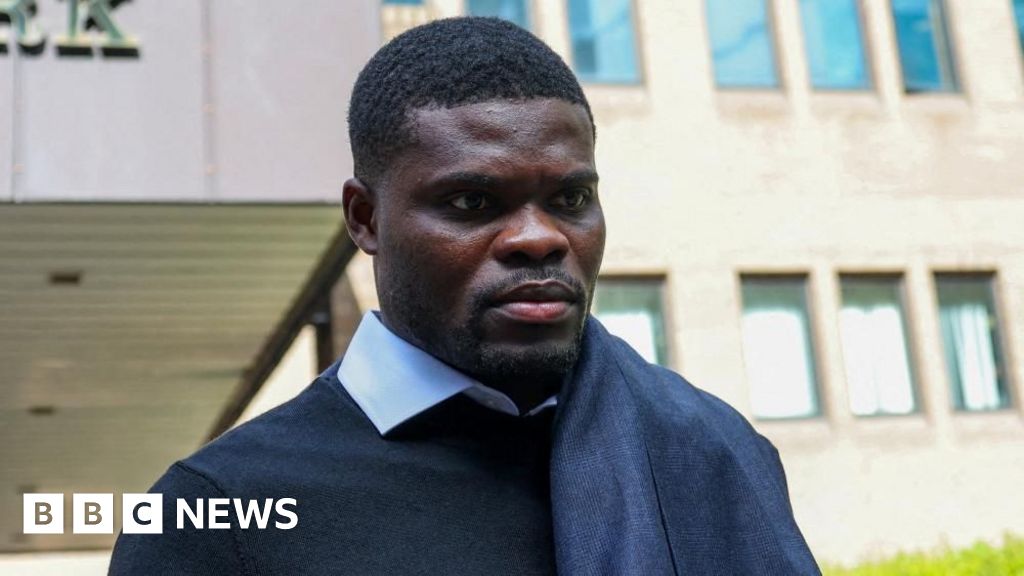
The seven-charge reality at Southwark
Monday morning at Southwark Crown Court did not offer the usual tactical debates we expect from a high-profile midfielder. Thomas Partey, the man who anchored the Arsenal engine room for five years, stood in a different kind of spotlight. He pleaded not guilty to two new allegations of rape, a development that brings the total count against him to seven charges.
At 32, the Ghana international is at an age where most midfielders are looking for one last major contract or a shift into a deeper, more cerebral role. Instead, Partey is looking at a calendar that has nothing to do with training camps or international breaks. A judge indicated on Monday that the trial itself may be delayed until early next year. That timeline is a death sentence for a top-flight career.
The technical decline of a professional athlete is usually measured in lost half-seconds or a failing hamstring. For Partey, the decline is being measured in court dates and mounting allegations. The former Arsenal star, who moved to London with such high expectations in 2020, now faces a legal fixture list that extends well into his 33rd year. By the time a jury hears this case in 2027, his days at the elite level will be a distant memory.
The math of a career in limbo
To understand the gravity of today's hearing, you have to look at the numbers. Seven charges. Two new allegations from a new alleged victim. A trial date pushed into another calendar year. This is not a distraction that a player simply "manages" while maintaining Champions League standards. It is a total shutdown of professional viability.
Partey spent five years at Arsenal, a period defined by glimpses of world-class talent frequently interrupted by injury. Now, the interruption is absolute. No club at the highest level will touch a 32-year-old with this specific legal baggage, especially with the trial date drifting further into the future. The sheer volume of the allegations—now seven in total—creates a weight that no PR department can spin.
The delay to early 2027 is the most brutal technical detail from today’s proceedings. The UK legal system is notorious for these backlogs, but for an athlete, time is the only resource that cannot be recovered. If the trial concludes in mid-2027, Partey will be 34. He will have spent the better part of three seasons in a state of competitive atrophy. Even if he were to be cleared of every single charge, the physical toll of that layoff is irreversible.
A system failing to provide clarity
There is a cynical observation to be made about how these high-profile cases are handled by the sport at large. The slow-motion nature of the proceedings allows everyone to look away. Arsenal moved on, Ghana moved on, and the player remains in a strange sort of professional purgatory. The fact that it has taken this long to reach a point where seven charges are active is a failure of the pace of justice.
We often talk about "player management" in terms of rotation and workload. But the management of Partey’s situation has been a series of awkward silences and procedural delays. Today’s appearance was just another chapter in a story that has dragged on since 2022. The addition of two new charges involving a new alleged victim suggests this case is growing in complexity just as it should be reaching a resolution.
The court heard that the allegations involve incidents in London, and the not guilty pleas were entered firmly. But in the court of professional sports, the verdict often arrives before the trial even starts. The technical reality is that Partey is finished at the top level. No amount of ball progression or defensive coverage can outweigh the atmospheric cost of seven rape charges.
The final whistle for a top-flight legacy
When Partey arrived from Atletico Madrid for £45 million, he was supposed to be the final piece of the Arsenal puzzle. He was the physical presence they had lacked since Patrick Vieira. Today, that legacy is buried under the weight of Southwark Crown Court's docket. The contrast between the Emirates Stadium and the dock at Southwark is the most jarring image in modern English football.
We should be critical of how long this has taken. The victims, the player, and the fans deserve a resolution that doesn't take five years to arrive. The fact that we are looking at 2027 for a trial is an indictment of the system's ability to handle high-stakes cases with any sense of urgency. It leaves everyone in a state of permanent, agonizing uncertainty.
My prediction is straightforward and grim. Thomas Partey will never play another minute of high-level European football. The legal marathon he is currently running will sap his remaining athletic prime, and the nature of the charges makes any return to a major league impossible. He is facing his most difficult fixture, and the result won't be known until his career is already over.
Read Next
- The legal shadow hanging over football's quiet news cycle
- Arsenal title bid requires emergency surgery after Bournemouth collapse
- Arsenal should be terrified of the Manchester City team that showed up at the Bridge
- Arsenal just got clocked in the jaw and Man City are laughing
- 🇬🇭 Ghana World Cup 2026 — Black Stars Hub