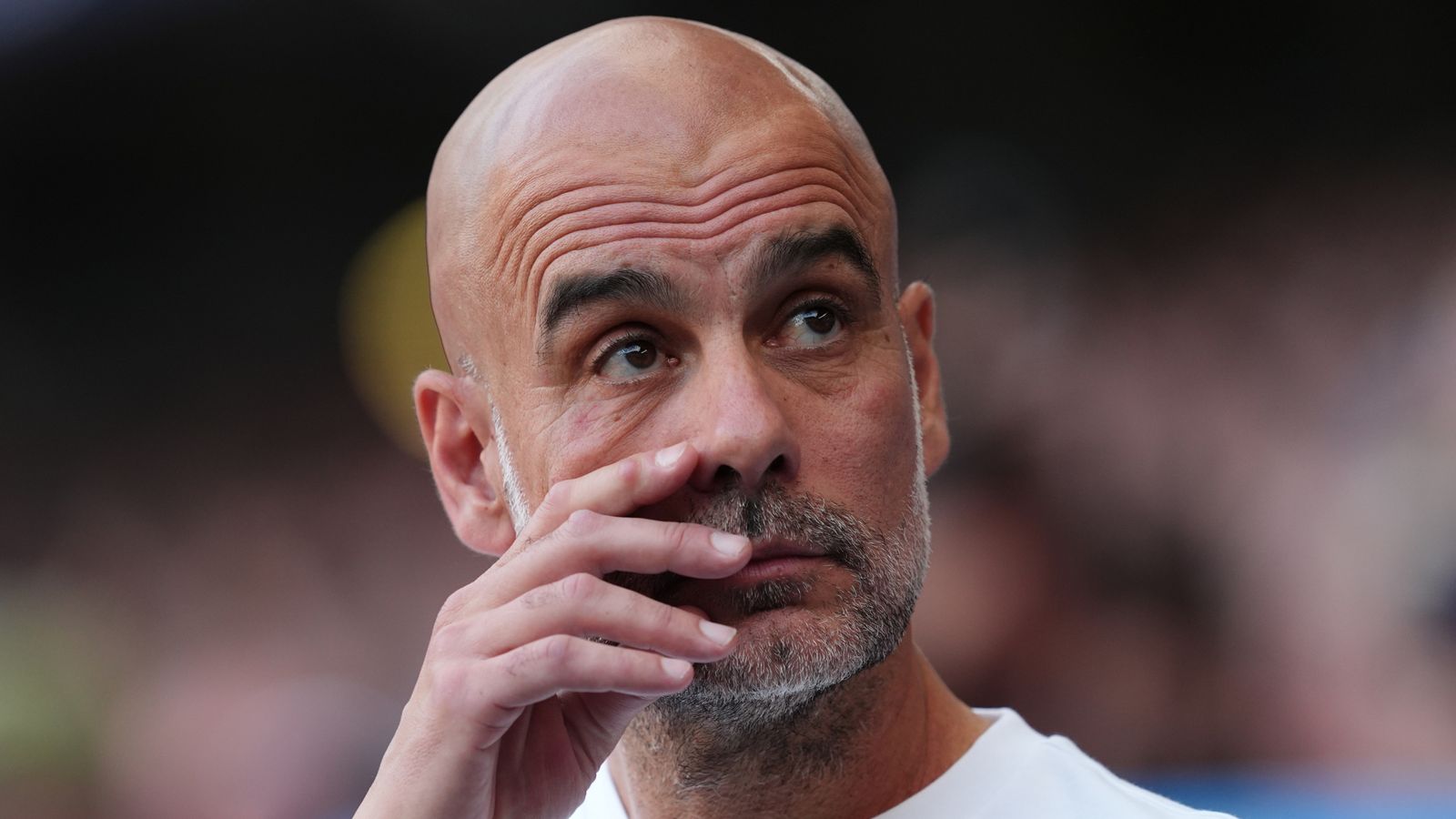
Guardiola's ticking clock means Man City's tactical machine must evolve
The Countdown Begins
"I've been fun... but I have one more year on my contract."
Pep Guardiola knows exactly what he is doing. He always does. When he dropped that casual comment to Sky Sports, it wasn’t a slip of the tongue. It was a calculated release of pressure, a public acknowledgement of the timeline that has been quietly ticking away inside the Etihad.
Manchester City are entering a phase they haven't experienced in nearly a decade. Genuine, structural uncertainty has arrived. Guardiola is the architect of the modern Premier League, but even architects eventually leave the building.
His remark about having "been fun" feels like a nostalgic look in the rearview mirror. It is a fascinating word choice. The reality on the pitch right now is far more mechanical than fun. City have traded the chaotic, freewheeling brilliance of their earlier years for a suffocating, clinical level of control.
This isn't a criticism of the results. The trophy cabinet speaks for itself. It is an observation of the method. The question now isn't whether City can win under Guardiola — we know they can. The question is what happens to a hyper-specialized squad when the specialist starts packing his bags.
Guardiola’s City currently operate less like a traditional football team and more like a sequential logic puzzle. The automation is breathtaking, but it demands constant calibration. Without the chief engineer on the touchline every week, the risk of systemic failure rises exponentially.
The Evolution of Control
To understand where City are going in this final year, you have to look closely at how they set up right now. The 3-2-4-1 that won them the treble has evolved again, forced to adapt because the rest of the league caught up. Opponents figured out how to block central progression by aggressively man-marking Rodri and the inverted fullback.
Guardiola's response was to push his structure even higher up the pitch. We are frequently seeing a shape in possession that resembles a 2-3-5, with the wingers pinned so high and wide their heels are on the chalk. It is an aggressive attempt to stretch defensive blocks horizontally.
The goal is to pry open the opposing back five — because almost everyone defaults to a back five against City now — to the breaking point. But it comes at a steep cost. The vertical distances between the attacking quintet and the midfield trio have grown significantly.
This creates tactical friction. City are passing the ball brilliantly in the middle third, but the final action is often static. They probe and probe, waiting for a defensive error rather than actively forcing one through dynamic movement.
The lack of a pure, touchline-hugging speedster like the Leroy Sane of 2018 is glaring. Jeremy Doku provides bursts of chaos, and Jack Grealish offers ball retention, but neither provides the relentless off-the-ball diagonal runs that used to tear defensive lines to shreds.
The Rest-Defence Flaws
Here is where we find a glaring weakness in Guardiola's current setup. The rest-defence structure is built entirely on the assumption that City will win the ball back within five seconds of losing it. When that initial counter-press fails, genuine panic sets in.
Look at how they defend transitions this season. Manuel Akanji and Ruben Dias are often left completely isolated against rapid wingers. The central channel is supposed to be protected by the double pivot, but the secondary midfielder is frequently tasked with pushing up to support the penalty box occupation.
When Rodri steps up and City lose the ball, the gap between the midfield line and the center backs is terrifying. Smart teams are exploiting this by ignoring the wide areas entirely and playing blind, vertical passes directly into that central void.
City are conceding higher quality chances in transition than they have in years. They are relying on Ederson to make aggressive sweeping actions outside his box far too often for a team that prides itself on defensive solidity through monopolising possession.
There is a mechanical stiffness to their transition tracking. When a team breaks the press, City’s defenders retreat in straight lines rather than angling their runs to force attackers wide. It is a subtle flaw, but at the elite level, it is easily punished.
The Foden Pivot
Kevin De Bruyne is no longer the undisputed engine of this team. The physical reality of his age and injury history has forced a change. That baton has been firmly passed to Phil Foden, and the tactical shift here is massive.
De Bruyne was a volume creator. He operated primarily in the right half-space, whipping in early, terrifying crosses that bypassed defensive lines entirely. Foden does not play that way. He wants the ball to feet, often receiving on the half-turn in incredibly tight central pockets.
This slows down City's progression. It makes them more precise, but significantly less threatening on the break. Opposing teams are perfectly happy to let City pass horizontally in front of a low block for 80 minutes if it means avoiding those early De Bruyne deliveries.
Foden's brilliance is undeniable. His close control is elite. But relying on him to thread a needle through ten men every week is a high-variance strategy. When he finds himself crowded out, City look blunt. They lack a Plan B that doesn't involve just throwing more bodies forward and hoping for a deflection.
The reliance on Foden also changes the pressing triggers for the opposition. Teams know that if they can deny Foden the ball on the half-turn, City will be forced to recycle the ball out wide to Grealish or Bernardo Silva, slowing the attack down to a walking pace.
The Erling Haaland Conundrum
We cannot discuss City's tactical evolution without addressing Erling Haaland. His goalscoring record remains absurd, but his role in the buildup play is still a noticeable point of friction. In Guardiola's idealized system, the striker isn't just a finisher; he is a key reference point for the midfield.
When City are struggling to break down a low block, Haaland is often totally isolated. He makes sharp, angled runs that are routinely ignored because the midfield prioritizes ball retention over risk-taking.
This creates a jarring tactical disconnect. You have the most lethal transition striker in world football playing for a team that actively refuses to play in transition. It is a marriage of convenience that works brilliantly against mid-table teams but stutters badly in tight, high-stakes games.
Guardiola has tried dropping him deeper to link play, but that simply isn't his game. He isn't Harry Kane. Forcing Haaland to play like a false nine dulls his sharpest edges and clutters the zones Foden wants to operate in.
Against elite center backs who are comfortable dropping off and denying space in behind, Haaland’s touch count plummets. He becomes a passenger in a team that desperately needs all eleven players functioning as a cohesive unit.
The Midfield Engine Room
When Ilkay Gundogan departed, City lost the glue that held their midfield together. The attempts to replace him have been tactically fascinating but practically flawed. Mateo Kovacic is a brilliant ball-carrier, an elite press-resistant midfielder who can glide out of trouble in the defensive third.
But Kovacic completely lacks Gundogan’s instinct for arriving late in the penalty area. When City pin a team back, Kovacic tends to hover on the edge of the final third, recycling the ball safely but rarely threatening the defensive line with a penetrating run.
Matheus Nunes, meanwhile, remains an unresolved puzzle. He has the physical profile of a classic Premier League box-to-box midfielder, but he frequently looks lost within Guardiola’s rigid positional grid. He makes runs into zones that are already occupied, crowding the space rather than creating it.
This lack of a true, goal-scoring number eight places an unbearable burden on Foden and Haaland. It means opposing defenses can completely ignore City’s deeper midfielders when the ball reaches the final third, allowing them to double-team the actual threats. It is a structural flaw that Guardiola has tried to patch over, but the seams are showing.
The Goalkeeping Dynamic
The tactical differences between Ederson and Stefan Ortega have also become a significant talking point. Ederson is essentially a deep-lying playmaker with gloves. His ability to hit a 60-yard diagonal pass on a flat trajectory completely bypasses high-pressing schemes.
However, as City’s rest-defence has become more brittle, Ederson’s shot-stopping vulnerabilities have been exposed. When teams counter-attack and generate high-quality one-on-one situations, Ederson frequently gets beaten. He is proactive to a fault, sometimes rushing out and making the attacker's decision easier.
Ortega, by contrast, is a more traditional, reactive shot-stopper. When he plays, City look undeniably more secure against the counter. He holds his ground longer and forces attackers into errors.
But playing Ortega sacrifices a large portion of City’s build-up fluidity. Opponents are far more willing to aggressively press Ortega, knowing he lacks Ederson’s supernatural distribution range. It is a fascinating tactical trade-off for Guardiola. Do you prioritize the build-up phase or the defensive transition? For years, the answer was always the build-up. Now, the math is starting to change.
The Market Implications
A manager entering his final year fundamentally changes how a club operates in the transfer market. Txiki Begiristain faces an impossible task this summer. How do you pitch a long-term project to elite targets when the architect is leaving in 12 months?
Players sign for Manchester City to work with Guardiola. Without the guarantee of his presence, the calculus changes. We will likely see a shift in City’s recruitment strategy, moving away from developmental projects and towards established, plug-and-play veterans who can contribute immediately.
This short-termism contradicts the model that built City’s dominance. The squad is already aging in key areas. Replacing players like De Bruyne, Kyle Walker, and Bernardo Silva is difficult enough. Doing it while transitioning to a new manager is a recipe for severe instability.
City’s rivals know this. Arsenal and Liverpool are building for the next five years. City are entirely focused on surviving the next season. It is a subtle shift in power dynamics, but a major one.
The Psychological Toll
Knowing your manager has an expiration date inevitably changes the dynamic inside the dressing room. Players are inherently self-interested. When the manager's authority is inherently capped by his departure date, they start looking at their own contracts, their own playing time, and their own futures.
Guardiola has always demanded absolute, unwavering commitment to his tactical dogmas. If a player steps out of line or fails to execute a specific pressing trigger, they are benched. That threat loses a fraction of its bite when the manager won't be there to enforce it next season.
We are already seeing tiny cracks in their tactical discipline. A fullback overlapping when the system demands he inverts. A midfielder taking a low-percentage shot from distance instead of recycling possession. These are minor infractions, but in Guardiola's machine, a single loose cog can ruin the entire mechanism.
The mental fatigue of playing this intense, high-stakes football is real. To sustain it for another full season, knowing the era is drawing to a close, requires a level of collective motivation that is incredibly hard to manufacture.
The Final Act
So how does Guardiola approach this final lap? Does he stick to the suffocating control that has defined his recent seasons, or does he let the handbrake off in search of that "fun" he casually referenced to Sky Sports?
Guardiola is a pragmatist masked as a romantic. He won't sacrifice points for entertainment. The core philosophy won't change. City will still dominate the ball, press high, and look to suffocate teams in their own half.
But expect to see subtle tactical tweaks. Perhaps a return to a more traditional 4-3-3 against certain opponents to generate genuine width. Maybe giving Foden even more structural freedom to drift out of his designated zone and overload the flanks.
The reality is that the clock is ticking loudly. Every game, every tactical adjustment, and every press conference will be heavily scrutinized through the lens of his impending exit. The final act has officially begun.
The rest of the Premier League has exactly one year to figure out how to definitively dismantle this machine, or Guardiola will walk away with another title in his pocket. He rarely leaves anything to chance, and he certainly won't start now.
Adidas World Cup 2026 Trionda Training Ball
Bring the spirit of the 2026 World Cup to your local pitch.
More Coverage
Premier League summer transfer window 2026: Everything you need to know
3 hours ago
Top 10: The Defining Moments of the 2025/26 English Football Season
12 hours ago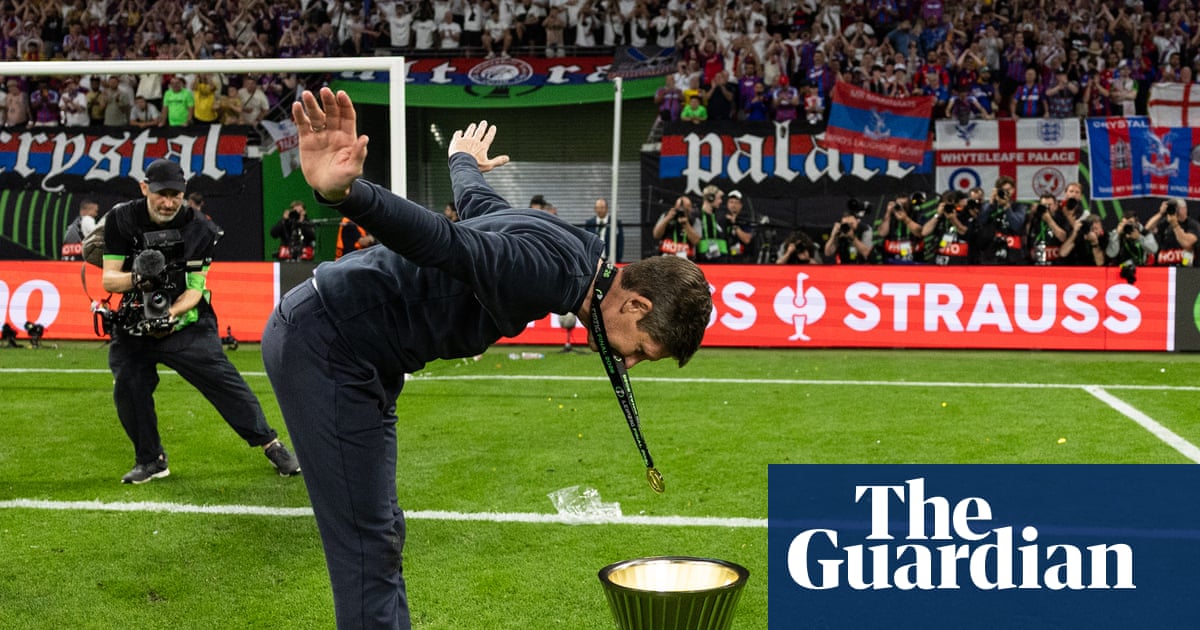
Crystal Palace's unlikely European title exposes the modern speed gap
21 hours ago
Why the new BBC awards feel like a Participation Trophy
1 day, 7 hours agoThe World Cup knockout bracket is a total minefield
1 day, 14 hours agoThe World Cup bracket is a house of cards waiting to collapse
1 day, 14 hours agoMore Analysis
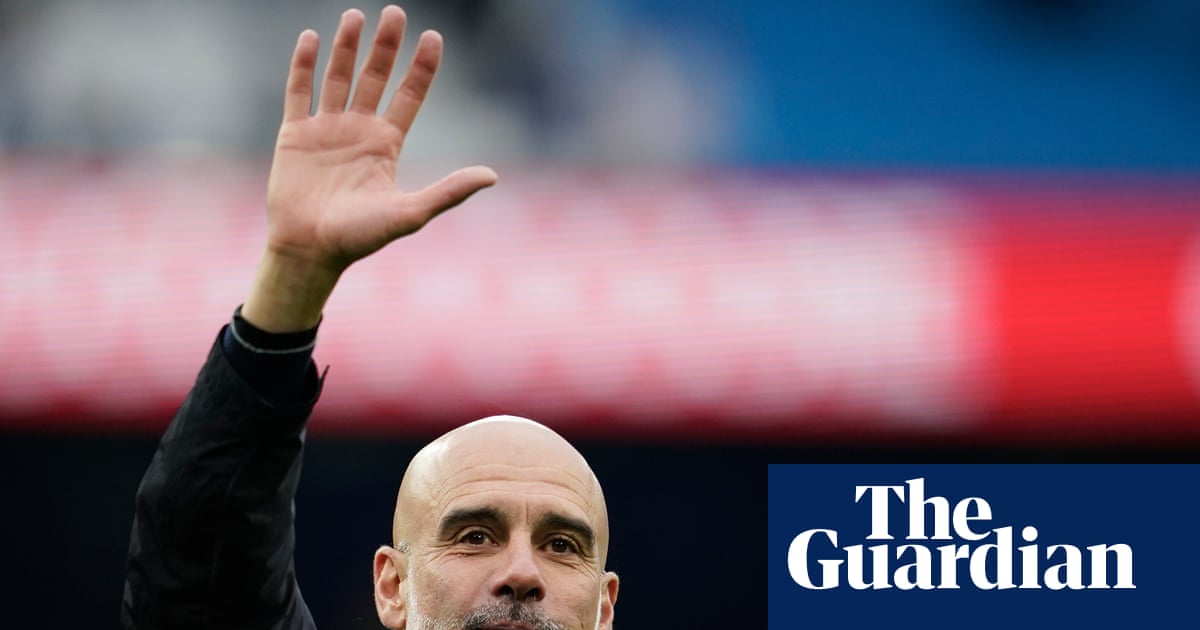
Pep Guardiola is leaving Manchester City, and his next move is already obvious
6 days, 7 hours ago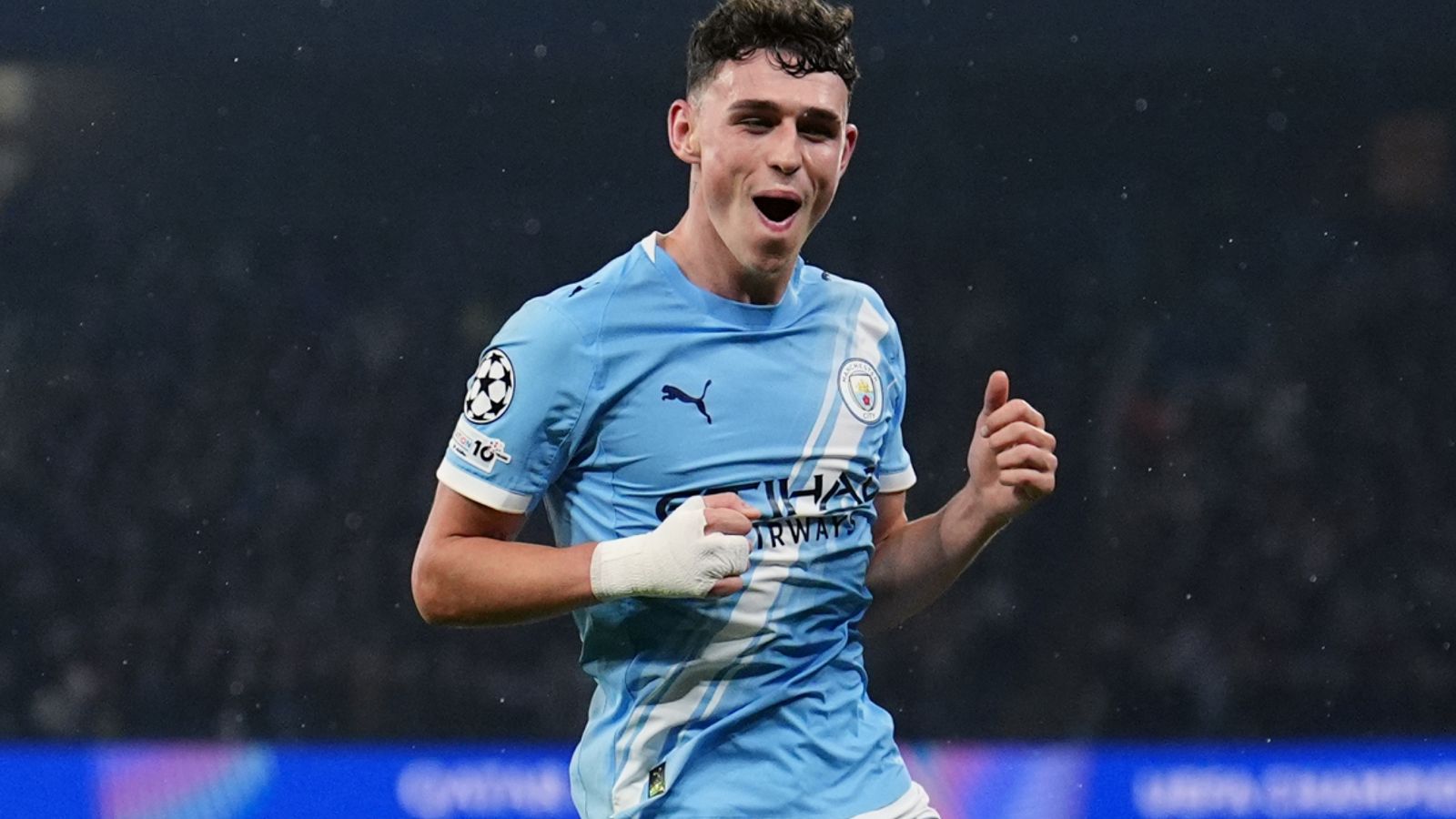
Phil Foden's new contract is bad news for the rest of the Premier League
3 weeks, 3 days ago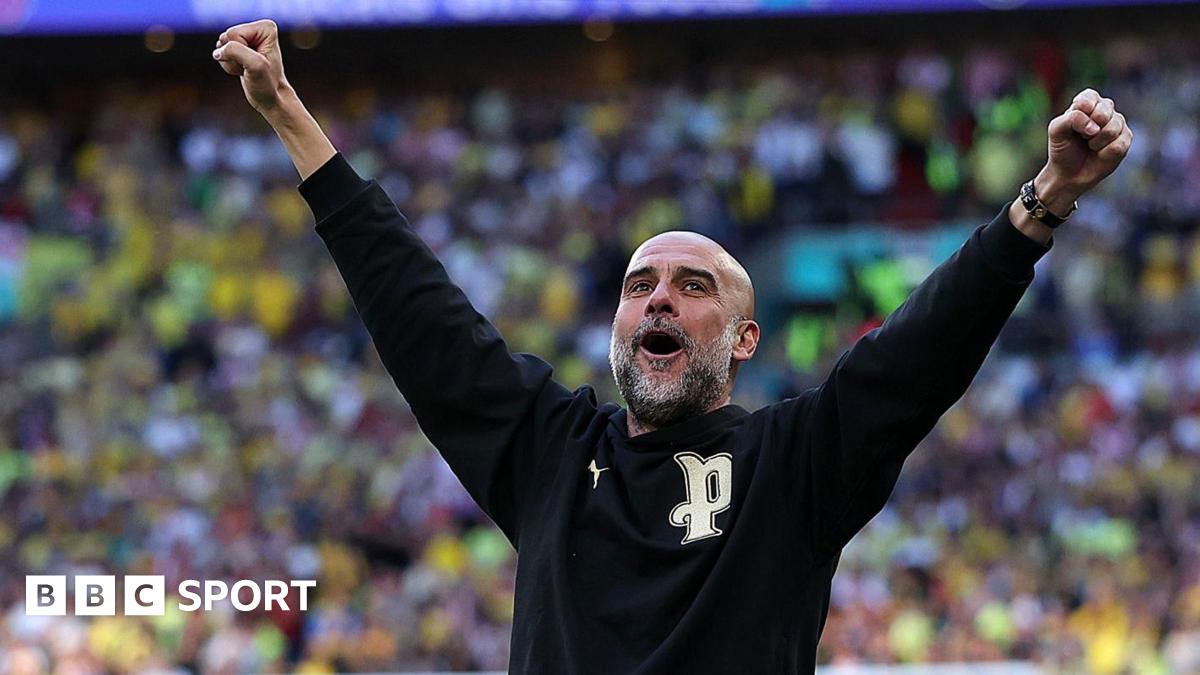
Pep Guardiola says he has one more year but City look like a team in transition
2 weeks ago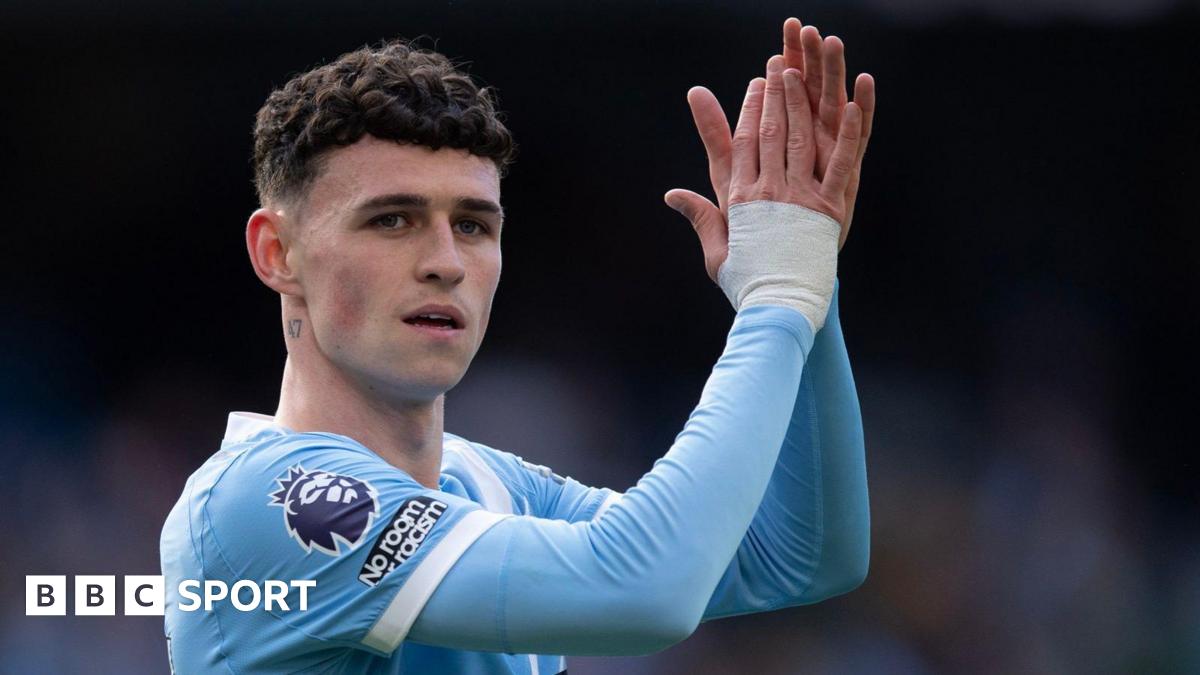
Manchester City's European ambitions rest on Phil Foden
3 weeks, 3 days ago
Man City's season is hanging by a single defensive thread
1 week ago