Measuring a legacy in the wake of tragedy
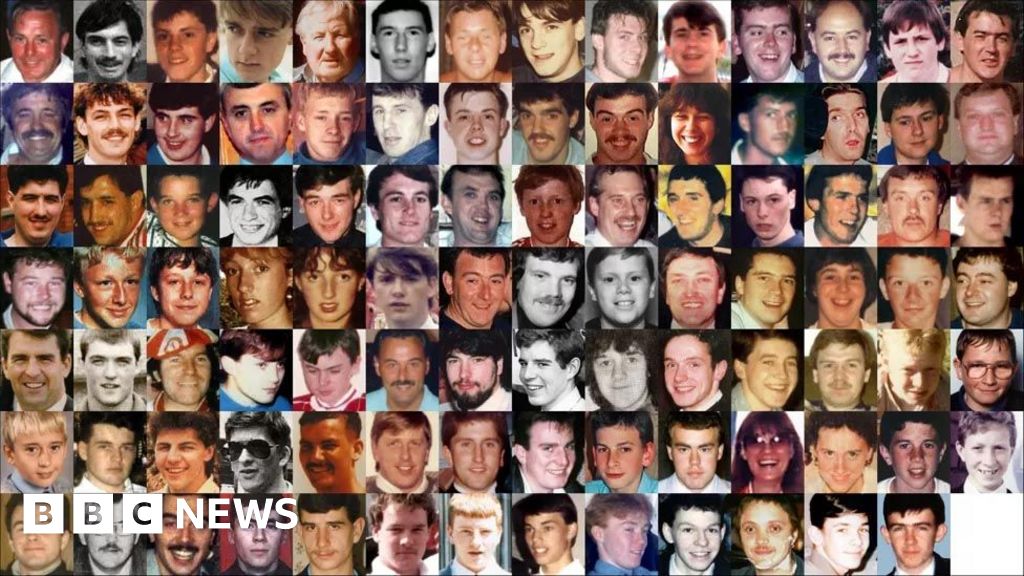
The Hillsborough disaster remains the most critical marker for modern crowd safety, yet the personal data—lives saved by strangers—rarely makes its way into mainstream archives. On this date in 2026, 37 years after the event, we are reminded that statistics for major sporting disasters often focus on the headcount of victims rather than the individuals who provided life-saving intervention. History typically records the 97 lives lost, a number that sits as a permanent 0.00% margin for error regarding stadium crowd management standards.
The search currently being conducted by a survivor, who was only 13 at the time, highlights the incomplete record of that afternoon. Official reports, such as the Taylor Report published in 1990, provided 104 specific recommendations for ground safety, yet the granular reality of survival is rarely tracked with the same rigor as fan attendance or stadium capacity. While we spend hours analyzing passing completion rates and xG, the logistical movements of people within packed enclosures are often reduced to abstract safety regulations.
The evolution of stadium safety standards
Before the 1989 disaster, standing terraces were standard in English football. Today, they are essentially relics reformed by mandatory all-seater policies derived directly from those safety failures. The transformation of stadiums like Anfield—where capacity adjusted from over 50,000 in the 1980s to the current layout designed to optimize egress efficiency—represents a direct statistical response to the structural hazards of the past.
We have moved toward a model where every ticketed seat has a timestamp and a location, yet finding the individuals who performed grassroots medical intervention remains a challenge. The appeal launched by the survivor is an attempt to recover data lost to time, specifically the action of a stranger who pulled someone from the crush. It underlines a 100% failure rate of the match-day safety protocols existing at that stage, which were superseded by the current 2026 standards of electronic ticketing and stewarding.
Why we track the wrong metrics
Football analysis often leans toward the tactical evolution of the game, like the shift toward high-pressing systems or the rise of hybrid fullbacks. However, the true metric for the sport's quality is its accessibility and safety for, as noted by the recent appeal published in the Mirror, the fans who were present that day. If the industry prioritizes revenue through stadium expansions, it must acknowledge that these structures were built upon the necessity of learning from collective grief.
The survivor's search for his rescuer is an individual attempt to reconcile a life extended by a chance intersection of two lives inside a stadium. When we look at crowd density numbers today—often tracked via heat maps and turnstile metadata—we have vastly more data than the stewards had in 1989. The irony is that while we optimize for seat occupancy, the human history attached to those seats remains an overlooked variable in modern football discourse.