Real life doesn't care about the fixture list
I spend an unhealthy amount of my life yelling about football. I yell about terrible VAR decisions that ruin my weekend. I yell about stubborn managers who refuse to make tactical adjustments before the 80th minute.
I yell about the absolute state of the modern international calendar that treats players like disposable batteries. It is so incredibly easy to get entirely lost in the bubble of the sport. It is easy to look down at the pitch from the stands, or glare at your television screen, and just see twenty-two chess pieces running around for our personal entertainment.
Then, out of absolutely nowhere, something happens that completely shatters that comfortable little illusion. You get a reality check that hits you right in the chest, knocking the wind out of all the trivial debates we waste our time on.
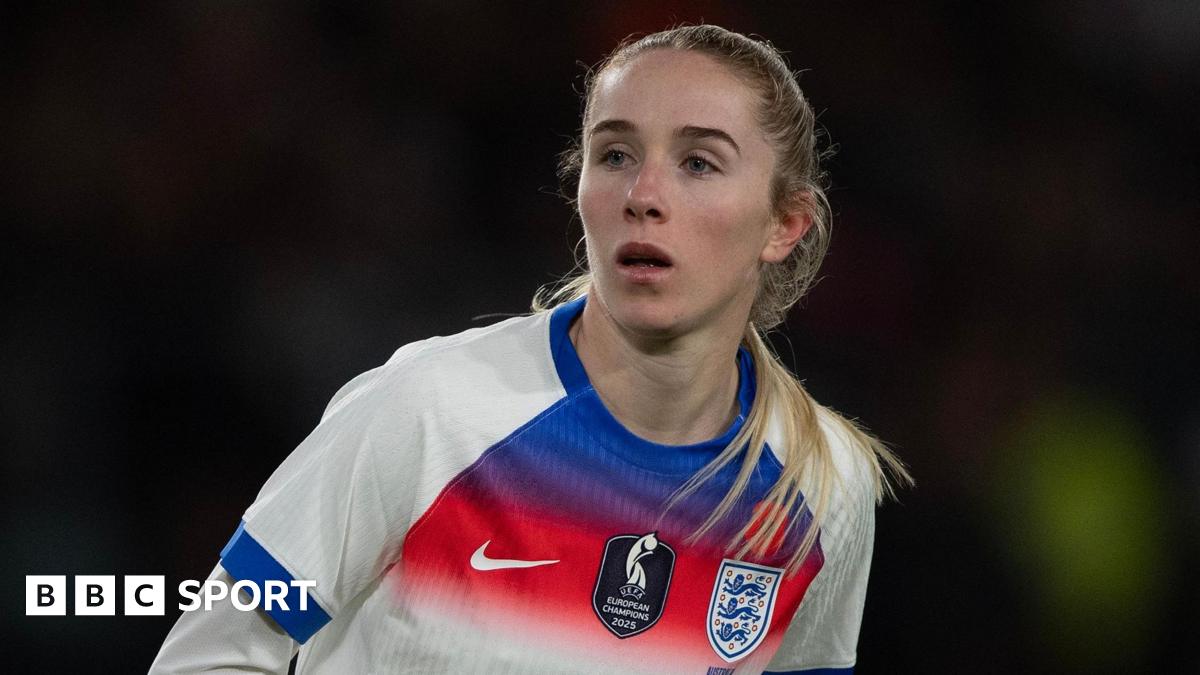
That happened this week. The news broke, and suddenly, arguing about offside lines felt incredibly stupid. England international Missy Bo Kearns shared some intensely personal, devastating news with the world. She revealed that she has recently suffered a miscarriage.
There is absolutely no smooth transition here. There is no clever tactical breakdown or witty pop-culture metaphor that fits the gravity of the situation. Sometimes the sport we obsess over just has to shut up and take a backseat to the brutal, heartbreaking realities of human life.
The weight of the unsaid
Kearns put out a statement, and there is one line in particular that just stops you dead in your tracks. It strips away all the noise of the sport and leaves you with nothing but raw humanity.
"The past weeks have been filled with a kind of sadness that's hard to explain."
Read that again. Really think about what it takes to type those words out. Think about doing that while knowing millions of strangers, fans, and critics are going to read them and react to them.
Think about the sheer, unadulterated courage required to take a deeply private, agonizingly painful experience and put it out into the unforgiving public sphere of modern football.
We demand a ridiculous amount from our athletes. We expect them to be indestructible gladiators. We expect them to show up on Saturday afternoon, run themselves completely into the ground for our amusement, do the mandatory post-match media obligations, and smile for the flashing cameras.
We ruthlessly dissect their body language if they look slightly off during a pre-match warm-up. We jump on social media to furiously complain if their passing accuracy drops by five percent.
But we have absolutely no idea what heavy, crushing burdens they are carrying when they walk out of that tunnel.
The relentless sporting machine
Here is my biggest, loudest problem with modern football culture right now. The machine is completely and utterly relentless. The schedule is a literal meat grinder designed to extract every ounce of value from these players.
The expectations placed on their shoulders are astronomical. Meanwhile, the baseline empathy from the outside world is basically nonexistent.
We are sitting here on March 29, 2026. The global football calendar is an absolute joke right now. We are staring down the barrel of a chaotic, high-pressure run-in across every single major league.
The Champions League quarter-finals are looming large next month. The men's World Cup is exactly 74 days away. The entire football world is spinning at a million miles an hour, obsessed with trophies, coefficients, and transfer rumors.
In the middle of all that deafening noise, athletes are simply expected to perform. They are expected to compartmentalize everything perfectly. If your personal life is completely falling apart behind the scenes, the general attitude from the aggressive sections of the stands and the out-of-touch studio pundits is usually a dismissive, "leave it in the dressing room."
That is complete and utter garbage. It is a toxic, desperately outdated mindset that needs to be fired directly into the sun. It assumes that pulling on a brightly colored polyester shirt somehow turns off your human emotions.
When a player is visibly struggling on the pitch, how often do we actually stop and ask if they are okay? Almost never. The default reaction is to jump straight to heavily criticizing their work rate.
We demand they get dropped to the bench or sold to the highest bidder in the very next transfer window. We treat them like broken, malfunctioning video game characters instead of young people dealing with the exact same unpredictable, life-altering events that the rest of us face.
The isolation of the dressing room
Think about the culture of a professional dressing room for a second. It is an incredibly unique, highly pressurized environment. You are surrounded by teammates every single day, yet it can be the loneliest place on earth if you are struggling.
There is a constant, unspoken expectation to be tough. You are supposed to shake off knocks, play through physical pain, and never show any signs of emotional weakness. That brutal mentality inevitably bleeds into how players handle severe psychological trauma.
For decades, the standard operating procedure in football was simply to bury your feelings deep down. Managers would blatantly tell players to just man up or focus entirely on the next fixture. We are thankfully moving away from that dark age, but the lingering ghosts of that toxic culture still haunt the modern game.
When a player steps onto the training pitch, they are expected to leave their personal baggage at the gate. But grief does not work like that. Sadness does not magically pause just because the whistle blows for a basic passing drill.
Kearns revealing this is a stark reminder that the uniform does not act as emotional armor. The people we blindly idolize on the weekends are just as vulnerable to life's cruelest twists as any person sitting in the stands.
Changing a broken conversation
What Kearns did by speaking out loudly and clearly is massive. It goes far beyond the boundaries of the sport. Miscarriage is an incredibly common tragedy that affects countless families, yet it remains bizarrely, frustratingly taboo in our society.
People genuinely do not know how to talk about it. They get awkward. They stare at the floor. They offer hollow, meaningless platitudes and desperately try to change the subject back to something safe, like the weather or the weekend's fixtures.
By putting her undeniable truth out there for everyone to see, Kearns is forcing the heavily insulated football world to acknowledge reality. She is loudly reminding every single fan, pundit, and armchair manager that the women wearing those international shirts are humans first and professional footballers a distant second.
The women's game has grown exponentially over the last few years. The spotlight is brighter than it has ever been. The financial pressure is heavier.
The media scrutiny is incredibly intense right now. But the fundamental support systems within the broader sport are often still playing a desperate game of catch-up.
Players need time. They need grace. They need the physical and mental space to heal without constantly worrying about their spot in the starting eleven, or stressing about what the vicious tabloids are going to write on a Sunday morning.
A massive failure of empathy
Let's be brutally honest for a second, because someone has to say it. The modern football media machine is fundamentally terrible at handling nuance. We are completely obsessed with building neat narratives, forced hero arcs, and convenient villain origin stories.
We want everything wrapped up in a tidy bow before the post-match show ends. We are definitely not good at handling grief. When something like this happens, you immediately see the ugly cracks in the system.
You see exactly how ill-equipped the sport is to deal with genuine, messy human trauma. Clubs are slowly getting better at providing internal mental health support, sure. That is a step forward.
But the external noise? The anonymous fans on social media? The hot-take commentators desperate for engagement? We still have a terrifyingly long way to go before we can call ourselves a supportive community.
It is genuinely embarrassing how quickly a talented player can be completely written off by the fanbase if their form takes a slight dip. We do it constantly, without anyone bothering to check if they are quietly navigating a personal nightmare behind closed doors.
We demand absolute perfection on the pitch while refusing to offer basic human decency off it.
Some things actually matter
I do not know when Missy Bo Kearns will be back on a football pitch. Frankly, it does not matter even a little bit. It shouldn't matter to anyone reading this.
Football is, at the end of the day, just a silly game played on grass by twenty-two people chasing a sphere. It is the most important of the least important things in life, but it is not life and death.
She owes us absolutely nothing. She does not owe the impatient fans an explanation. She does not owe the demanding media a timeline for her return.
She certainly does not owe the sport her immediate attention or focus. She needs to take whatever time she requires to navigate this sadness.
The next time you are sitting freezing in the stands, or you are screaming until your throat hurts at your television because a player misplaced a simple five-yard pass, maybe take a deep breath. Stop and remember this moment.
Remember that you are watching real, flawed, fragile people. They are living real lives, fighting real battles, and sometimes, dealing with very real pain that has nothing to do with the sport.
Missy Bo Kearns showed more genuine strength and bravery in that one short, heartbreaking statement than you will ever see in a crunching midfield tackle. The football world needs to shut up, step back, and wish her nothing but the absolute best as she takes the time she needs.