
How Everton exposed Man City's defensive structure with one controversial goal

The mechanics of spatial denial
Everton did not just steal a point against Manchester City. They engineered a highly repeatable tactical sequence that broke Pep Guardiola's rhythm. The headline might be the controversial equaliser, but the real story is the underlying structural battle.
Sean Dyche set up a block so low it practically merged with the Gwladys Street End. City held the ball and passed it side to side. They waited for an opening that never materialized.
Guardiola's side arrived expecting the pitch to eventually tilt in their favour. It did not. Dyche deployed a mid-to-low block entirely uninterested in winning the ball high up the pitch.
Instead, Everton focused entirely on spatial denial. Dwight McNeil and Jack Harrison tucked in so tightly they occasionally played as auxiliary central midfielders. This precise movement forced City wide repeatedly.
When the ball went wide to Jeremy Doku or Bernardo Silva, Everton immediately doubled up. Vitaliy Mykolenko never found himself isolated on the flank. There was always a covering midfielder dropping into the half-space to cut off the cut-back lane.
The European shadow hanging over the Etihad
We must contextualise this performance given the immediate calendar. Tomorrow night, Manchester City face the second leg of their UEFA Champions League semi-final. The shadow of that massive European tie loomed visibly over this domestic fixture.
It is impossible to separate the tactical lethargy from the psychological burden of chasing multiple trophies. Guardiola rotated his squad, but more importantly, he seemed to rotate their mental focus. You could see it in the pressing triggers.
Usually, when Bernardo Silva loses the ball, he is a blur of motion attempting to win it back within three seconds. Here, there was a noticeable hesitation. A fraction of a second where players glanced around, almost preserving their energy.
Everton sensed this hesitation immediately. They realized early on that the usual sky-blue swarm was operating at a reduced intensity. This lack of aggression allowed James Garner to dictate the tempo during Everton's rare spells of possession.
The right flank malfunction
Let us examine the right side of City's attack. Kyle Walker and Phil Foden were tasked with breaking down the Mykolenko-McNeil axis. It failed completely from the opening whistle.
Walker, usually a terrifying overlapping threat, was strangely subdued. He rarely ventured beyond the final third, which left Foden isolated against two aggressive defenders. Foden relies on quick combinations to unlock stubborn defenses.
Without Walker providing the overlapping run to drag a defender away, Foden was repeatedly forced to check back onto his left foot. He had to recycle possession endlessly. It was sterile domination at its worst.
The ball moved in a predictable U-shape around the Everton penalty area. From left to right, then back again, without ever penetrating the box. When the wide overloads fail, City lack a secondary plan to force the issue centrally.
The weaponization of the dead ball
We cannot discuss a Sean Dyche masterclass without examining the weaponization of the dead ball. Everton did not just defend set-pieces; they used them as isolated attacking platforms to disrupt City's rhythm. Every throw-in the attacking half was treated with the reverence of a corner kick.
City struggle with the sheer physicality of these situations. When Ashley Young positioned himself to deliver an in-swinging free-kick, the panic in the Manchester City penalty area was visible. They retreated too deeply, allowing Tarkowski a running jump.
Guardiola's zonal marking system relies on aggressive first contacts. But against a team designed to bully opponents in the air, zonal marking simply offers free momentum to the attackers. Everton exploited this geometric flaw repeatedly throughout the afternoon.
Even Jordan Pickford's goal kicks were choreographed to bypass the press and initiate second-ball battles. Pickford deliberately aimed for the channel between Josko Gvardiol and Ruben Dias. He knew Calvert-Lewin could pin the smaller full-back and win the initial header.
The anatomy of the controversial equaliser
Then came the moment that defined the match and forced an official response. Late in the game, Everton struck back with a brutal counter-punch. The build-up was classic, unadulterated direct football.
Jordan Pickford bypassed the entire midfield third with a raking ball towards Dominic Calvert-Lewin. Manuel Akanji misjudged the flight of the pass. What followed was a sequence of chaotic brilliance and officiating drama.
The knockdown fell to the edge of the area. A shot came flying in, taking a deflection and looping past Ederson to make it 1-1. The Manchester City players immediately surrounded the referee in furious protest.
They claimed an Everton player was in an offside position, actively interfering with Ederson's line of sight. The VAR review felt entirely agonizing for both dugouts. Eventually, the goal stood.
Why the explanation misses the tactical failure
The decision left the visitors enraged. As reported by the Mirror, the Premier League later had to explain the decision to allow the goal. They clarified the highly subjective interpretation of the offside rule.
The explanation centered on the concept of active involvement. The attacking player in question was deemed not to be directly obstructing the goalkeeper's vision of the ball. While pundits will debate the minutiae of the rule, the real issue lies elsewhere.
The officiating debate masks a glaring defensive vulnerability in Guardiola's setup. Why was City so exposed to a simple long ball in the 82nd minute? This brings us to a significant critical observation of City's structure.
City's rest-defence was entirely inadequate for a team chasing a title in May. When Pickford launched the ball forward, City had pushed both full-backs incredibly high. They left a vulnerable two-versus-two situation at the back.
The failure of the defensive transition
Akanji and Ruben Dias were left totally exposed against Calvert-Lewin and Abdoulaye Doucoure. It was tactically reckless. Guardiola often relies on professional fouls to stop transitions, but Pickford's direct distribution bypassed the area where City usually commit them.
You cannot foul a player if the ball flies fifty yards over your head. City's defensive line was horribly disjointed. They failed to drop quickly enough to compress the space behind them.
The goal was controversial in its execution, but entirely logical in its conception. Everton recognized the structural flaw and exploited it ruthlessly. City committed too many bodies forward for a wide free-kick moments earlier.
They aimed to kill the game with a second goal, a noble but ultimately fatal pursuit. When the cross was cleared, it fell perfectly to Amadou Onana. He instantly drove forward into the gaping hole left by City's advanced midfield.
The midfield battleground
To fully appreciate the context of the equaliser, one must analyze the grueling defensive work that preceded it. The midfield was where the game was truly contested. Rodri was subjected to a relentless marking job.
Everton recognized that stopping Rodri is the key to slowing down the entire Manchester City operation. Instead of assigning one player to man-mark him, Everton passed him off zonally. When Rodri dropped deep, Calvert-Lewin dropped with him.
When he drifted slightly higher, Onana or Garner took over the responsibility. This constant handover meant Rodri was never comfortable receiving the ball. He was repeatedly forced to play backwards or sideways.
Guardiola attempted to counter this by pushing John Stones higher into the midfield. He hoped to overload the central areas and force Everton into a broken shape. But Dyche’s men held their nerve and maintained their narrow block.
The psychological toll of sterile possession
This match highlighted a growing issue for Manchester City under pressure. When their possession game fails to yield early goals, they become susceptible to emotional and tactical frustration. The passing becomes slightly slower and more deliberate.
The off-the-ball movements become a fraction less explosive. Everton fed on this growing lethargy throughout the second half. City's passing accuracy in the final third dropped significantly as the clock ticked down.
They resorted to hopeful crosses from deep areas. For a team designed to engineer perfect tap-ins, hitting aimless balls into a penalty box marshalled by James Tarkowski is an admission of tactical defeat. It played perfectly into Everton's hands.
The home side cleared everything that entered their airspace. Every clearance won them another minute on the clock. Every minute amplified City's desperation, eventually leading to the chaotic sequence that produced the equaliser.
Guardiola's reluctance to adapt
One must also question Guardiola's in-game management during this specific fixture. As the game wore on and Everton's block grew more resolute, City required a different profile of attacker. Yet, the substitutions felt entirely predictable.
Bringing on Mateo Kovacic for midfield control made little sense when City already had massive amounts of the ball. They needed a chaotic element, someone willing to make unorthodox runs beyond the defensive line.
Erling Haaland spent the entire afternoon wrestling with Jarrad Branthwaite, a physical battle the young defender clearly relished. By refusing to alter the attacking geometry, Guardiola essentially asked his players to keep running headfirst into a brick wall.
Everton earned their luck on the day. They built a defensive structure designed to manufacture exactly that kind of chaotic, controversial moment at the death. They dragged City into the mud, and in the mud, Dyche's men were entirely comfortable.
A blueprint for the title run-in
What does this mean for the rest of the Premier League? As we head deeper into May, the blueprint for frustrating the champions has been updated. You do not need to out-pass them to take points off them.
You need extreme discipline, a willingness to pack the center of the pitch, and a direct outlet that bypasses their midfield press. Everton proved that City can be unsettled when the stakes are at their absolute highest.
The Premier League's explanation of the goal will dominate the talk radio phone-ins. But rival managers will be watching the tape of the first eighty minutes. They will notice the massive space left behind City's high line.
This match was a tactical triumph for Sean Dyche. He completely outmaneuvered Pep Guardiola in the defensive phases. The controversy over the goal provides a convenient excuse for the dropped points, but it obscures the uncomfortable truth for Manchester City.
EA SPORTS FC 24 - Standard Edition
The definitive football gaming experience to build your dream squad.
Frequently Asked Questions
How did Everton set up defensively against Manchester City?
Why was Manchester City's pressing less intense than usual?
What caused Manchester City's right flank to struggle?
How did Everton defend against Jeremy Doku and Bernardo Silva?
Why was Phil Foden unable to create chances in the match?
More Coverage

Top 10: Defining Football Moments of the 2025-26 Season
2 hours ago
Top 10: The Defining Moments of the 2025/26 English Football Season
3 hours ago
The post-football career pivot is the smartest move a veteran can make
9 hours ago
Top 10: The Most Audacious Moments in Modern Football
11 hours ago
Crystal Palace's unlikely European title exposes the modern speed gap
12 hours ago
Why the new BBC awards feel like a Participation Trophy
22 hours agoMore Analysis
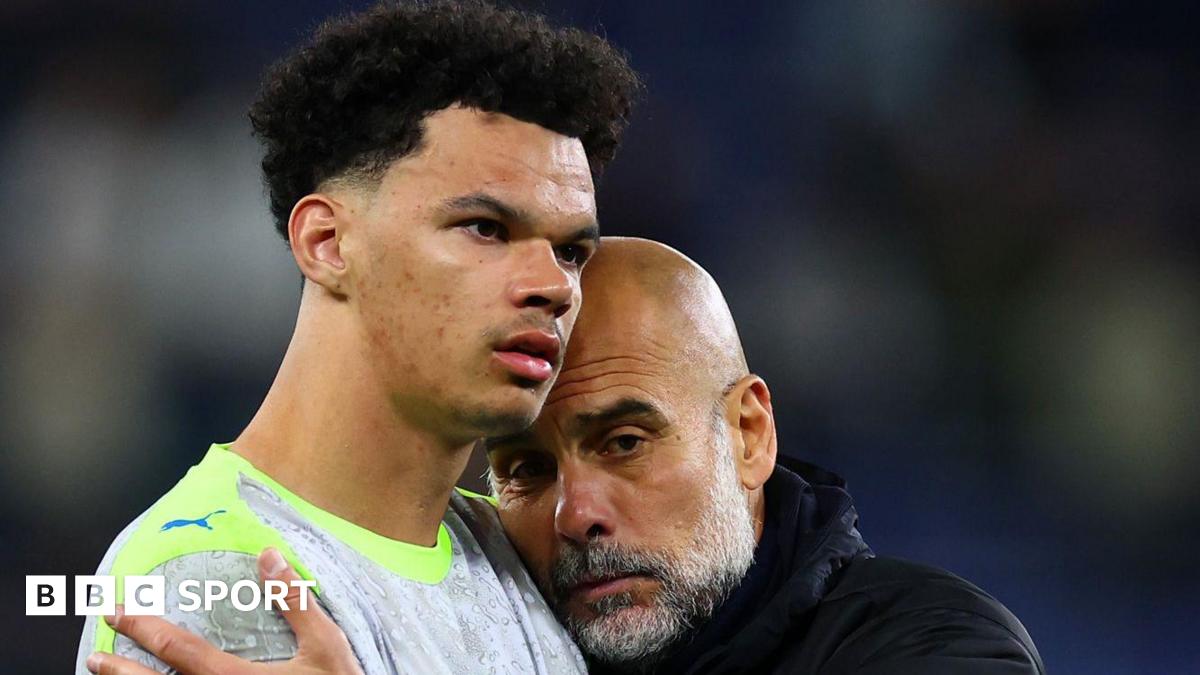
Why Man City's chaotic 13 minutes at Everton might end their title defense
3 weeks, 3 days agoEverton are running out of time to fix their leaky backline
1 month ago
City's title hopes rest entirely on Rodri's fitness against Everton
4 weeks agoEverton are staring down the barrel of a absolute wrecking ball at Goodison
3 weeks, 4 days ago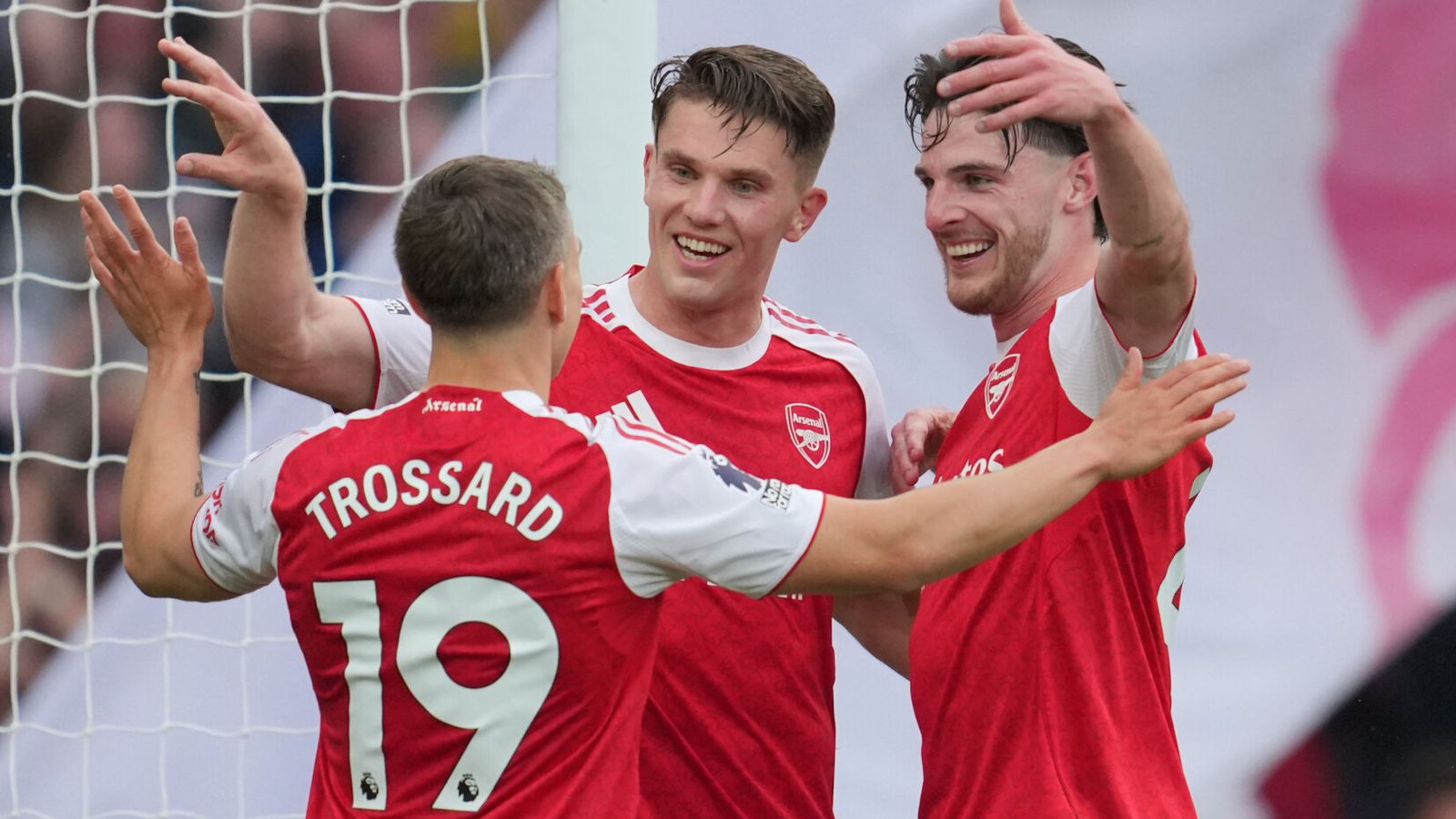
Manchester City's defensive collapse has opened the door for Arsenal
3 weeks, 3 days ago