
Inter's Double Is No Accident. It's A Blueprint.
The Deceptive Coronation
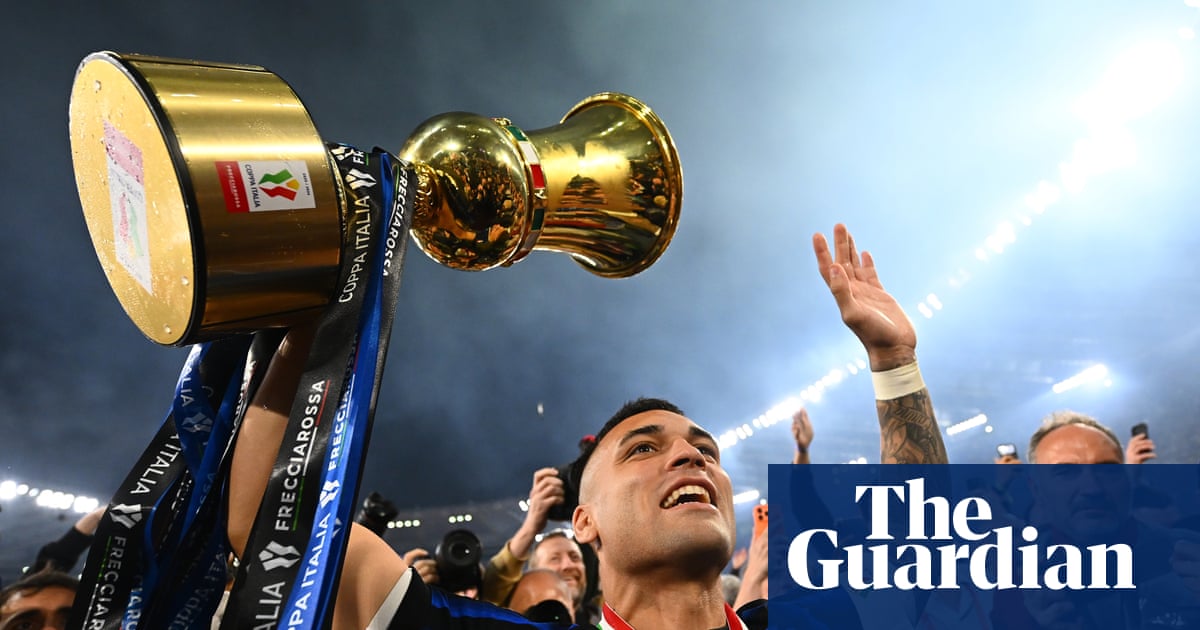
The confetti fell on a scene of inevitability. Inter, clad in their triumphant colours, hoisted the Coppa Italia trophy after dispatching a weary Lazio. To the casual observer, it was a coronation, not a contest. A mismatch, as many called it. The final, logical step for a team that had already sewn up the Scudetto weeks prior. The ‘double’ felt less like an achievement and more like an administrative task being checked off.
This is a dangerously simplistic reading of the situation. It misunderstands not only the anatomy of this victory but the very nature of what Cristian Chivu has built at the San Siro. The story of Inter’s 2025-26 season isn't the ease of its final conquest. It’s the brutal, meticulous, and intelligent work that made that final conquest look so easy. As Nicky Bandini aptly noted in her analysis for The Guardian, this success was never a given. It was earned in the planning, on the training ground, and in the difficult moments that long preceded the final whistle against Lazio.
When the celebrations were in full swing, Chivu finally allowed himself a moment. The Romanian, so often a stoic figure on the touchline, a man seemingly allergic to the spotlight, stepped forward. He absorbed the roar of the crowd, a brief acknowledgment of his role as the architect of this machine. That single moment was more telling than any lopsided scoreline. It was the quiet admission of a project completed, of a blueprint successfully executed.
Chivu’s Architecture of Dominance
To appreciate this Inter side is to appreciate the granular detail of its construction. Chivu did not inherit a perfect squad and simply let it run. He inherited potential and pathologies, and systematically engineered a system that amplified the former while mitigating the latter. This wasn't about a revolutionary new tactic or a radical formation. It was about principles. It was about building an identity rooted in defensive solidity, intelligent movement, and ruthless efficiency.
The ‘sound planning’ mentioned by observers isn't just about transfer targets. It’s about the daily grind of coaching. It's the relentless drilling of positional awareness until it becomes instinct. It’s the cultivation of a squad mentality where the collective is so strong that individual egos are subsumed into the greater whole. We saw this not in the spectacular goals, but in the unseen work: the third-man runs, the covering defenders, the immediate pressure when possession was lost. These are not happy accidents; they are the rehearsed and perfected building blocks of a Chivu team.
His influence is total. He has demanded and received complete buy-in from a squad of established stars and hungry young players. Think of the veterans, players who have seen and won it all. It is a testament to Chivu’s vision and communication that they have committed so completely to his methods. He has convinced them that his way is the path back to glory, and the twin trophies now sitting in the club’s cabinet are the ultimate validation.
This is not the wild, almost chaotic energy of past Inter teams. This is something colder, more calculated. It is a team that understands how to win in multiple ways: by dominating possession, by striking on the counter, or by grinding out a 1-0 victory when the game is ugly. This tactical flexibility is perhaps Chivu’s greatest gift to his team. He has given them a toolbox, not just a single hammer.
The Necessary Flaw
However, no victory is without its asterisks. To ignore the context of this double would be to engage in the same simplistic thinking that Chivu’s work refutes. While Inter’s planning has been superb, it has been executed in a Serie A landscape that is, frankly, in a state of flux. Their traditional rivals are in various stages of rebuilding or financial recovery. Lazio, their Coppa Italia final opponent, arrived at the Stadio Olimpico looking less like a challenger and more like a team that was simply happy to have made it that far.
This is not to diminish Inter’s achievement, but to contextualize it. The domestic dominance was built on a foundation of genuine excellence, but it was aided by a lack of a truly elite, consistent challenger this season. The real test for Chivu’s blueprint will come not from a demoralized domestic opponent, but from the Champions League knockout stages next season. Can this meticulously planned system hold up against the controlled chaos of a Real Madrid, the high-press of a Premier League giant, or the star power of PSG?
Furthermore, the reliance on a core group of experienced, senior players is a double-edged sword. Their intelligence and game-management have been crucial this season. But age remains undefeated. The planning for this season was impeccable, but the club's greatest challenge is just beginning: the managed evolution of a winning squad. How do you replace foundational pieces without losing the identity that made you successful? This is the question that will define the next phase of the Chivu project.
Beyond the Double
The true success of this season, then, should not be measured in the number of trophies, but in the establishment of a new standard. Chivu has reinstalled a culture of excellence and expectation at Inter. The double is not the destination; it is the baseline. It is the proof of concept for a philosophy that prioritizes intelligence over impulse, and system over individual.
For years, Italian football has been searching for a new identity in the modern European game. It has wrestled with financial disparity and tactical evolution. In Chivu’s Inter, we see a possible answer. A model based not on chasing the financial power of the Premier League, but on maximizing tactical and structural advantages. It is a return to the core principles that once made Serie A the world’s tactical laboratory.
The cheers for the Coppa Italia victory will fade. The Scudetto shield will gather dust. But the blueprint remains. Cristian Chivu stood on the pitch and allowed himself that brief moment of celebration because he knew the work was not finished, but the most difficult part was complete. He had built the machine. Now, the only task is to keep it running, to refine it, and to unleash it upon a continent. The mismatch in the final was not the story. It was the epilogue to a season of masterful, methodical construction.
PUMA Orbita 6 PL Thrill MS Soccer Ball
A budget-friendly piece of the Premier League.
Frequently Asked Questions
What trophies did Inter win during the 2025-26 season?
Who managed Inter to their Coppa Italia and league double?
How did Inter perform in the Coppa Italia final against Lazio?
Why is Inter's domestic success attributed to sound planning?
What tactical principles define Cristian Chivu's system at Inter?
More Coverage

Top 10: Defining Football Moments of the 2025-26 Season
3 hours ago
Top 10: The Defining Moments of the 2025/26 English Football Season
4 hours ago
The post-football career pivot is the smartest move a veteran can make
10 hours ago
Top 10: The Most Audacious Moments in Modern Football
12 hours ago
Crystal Palace's unlikely European title exposes the modern speed gap
13 hours ago
Bernardo Silva is effectively a cheat code on a free transfer
18 hours agoMore Analysis
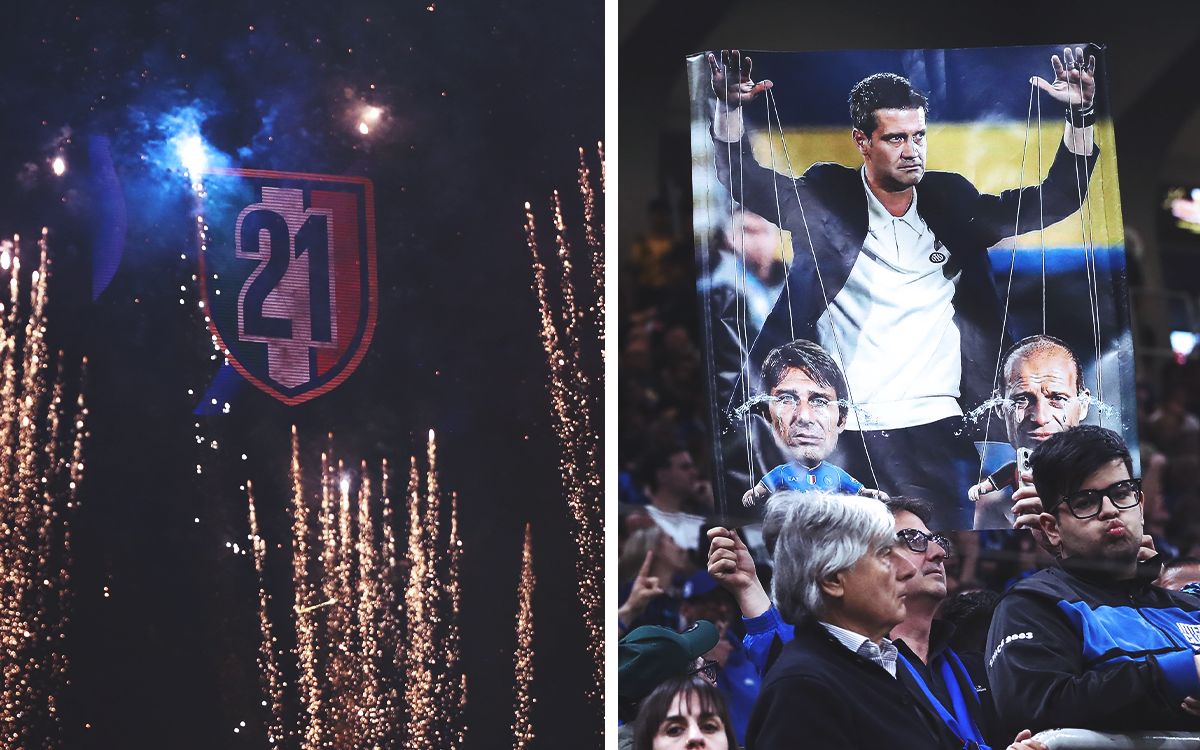
Inter Milan have finally ended the noise and reclaimed their throne
3 weeks, 4 days agoWhat live betting algorithms reveal about Europe's weekend finals
2 weeks, 1 day ago
Cesc Fabregas is turning Como into Serie A's most dangerous disruptors
2 months ago
Inter Milan are running away with Serie A and nobody is surprised
1 month, 2 weeks ago
Cesc Fàbregas is turning Como into a tactical nightmare for Serie A giants
2 months, 1 week ago