The End of a 42-Year Wait
For Aston Villa, a European final is not just another fixture on the calendar. It is a ghost from a glorious past, a story told in sepia tones. The last time the club contested a major European final was 1982, when a Peter Withe goal against Bayern Munich in Rotterdam etched their name onto the European Cup. That night defined a generation of supporters. For the 42 years that followed, it remained a high-water mark that felt increasingly unreachable.
The wilderness years were long. Relegation, Championship slogs, and false dawns became the norm. Europe was a distant dream. But football has a funny way of bending time. Under Unai Emery, the club has not just woken from its slumber; it has kicked the door down. The journey to this year's Europa League final has been a catharsis, a roaring release of decades of pent-up hope, culminating in a semi-final performance that will be spoken about at Villa Park for years to come.
The Emery Effect and McGinn's Defiance
To understand Villa's resurgence is to understand the transformative power of Unai Emery. The man is to the Europa League what a maestro is to a symphony orchestra. This is his competition. His arrival at Villa Park was seen as a coup, but few could have predicted the speed and scale of the turnaround. He has instilled a tactical discipline and a relentless, stubborn belief that has turned a talented squad into a European force.
The semi-final second leg against Nottingham Forest was the apotheosis of his reign. After a tense first leg, Villa produced a dominant 4-0 victory that was part tactical masterclass, part sheer force of will. At the heart of it all was John McGinn. The captain, a player who has lived the club's recent history from the Championship trenches to the Premier League's upper reaches, delivered a performance of raw, barnstorming intensity. His two goals were the output, but his energy was the engine. As FourFourTwo noted, whether it's an Emery masterclass or a minor miracle almost ceases to matter when the result is this profound.
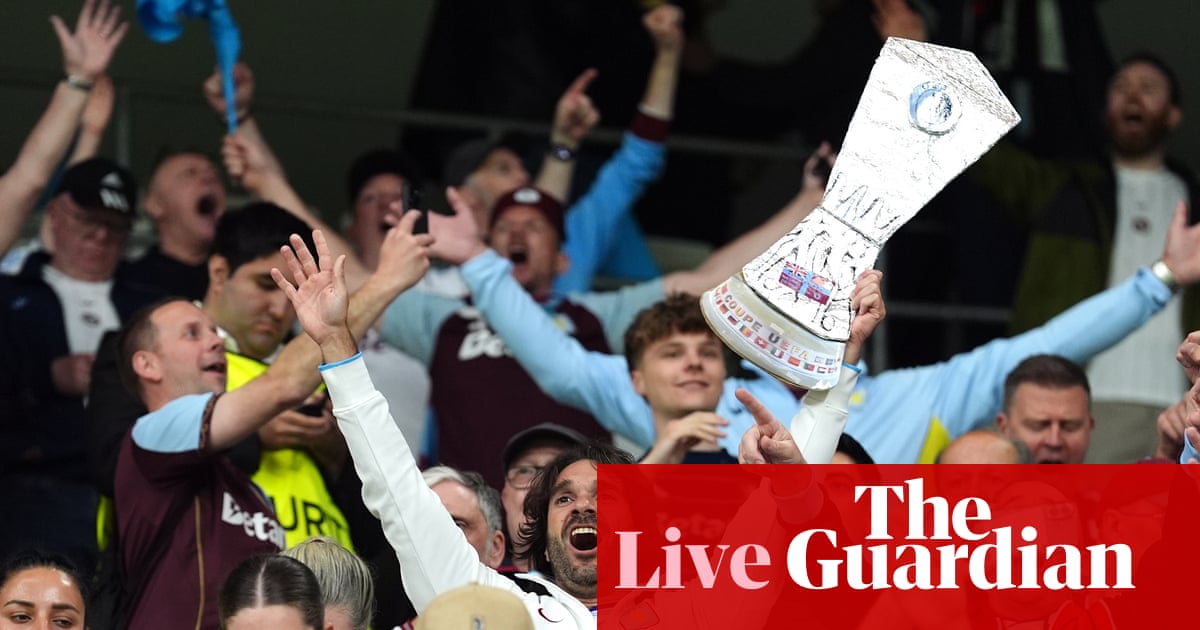
The atmosphere that night, with superfan Prince William celebrating wildly in the stands, felt like a dam breaking. This was more than a win; it was a statement. This is the new Aston Villa.
More Than a Trophy
The stakes of this final extend far beyond the silverware itself. For Villa, winning the Europa League is a golden ticket back to the absolute elite. It secures a place in next season's Champions League group stage, bypassing the frantic scramble of the Premier League's top-four race. The financial windfall and the prestige that come with it would accelerate the club's project by years, allowing for a higher calibre of recruitment and solidifying their position among the heavyweights.
It also carries weight for the rest of the league. As detailed by Sky Sports, a Villa victory would have significant knock-on effects for the European qualification spots of several other Premier League clubs, potentially benefiting teams like Bournemouth, Brentford, and Brighton. It's a testament to the interconnected ecosystem of modern football, where one club's triumph can reshape the fortunes of others.
But for the fans, it's simpler and far more emotional. It's about seeing their team on the biggest stage. It's about the kind of devotion that leads a fan, as the BBC reported, to sell his late father's diamond ring just to be there. It's a pilgrimage. The scramble for a public viewing space in Birmingham after the club ruled out a screen at Villa Park only underscores the desperation of a fanbase starved of this kind of success for too long.
The Final Hurdle
Awaiting them in the final is a German opponent, a representative of a league known for its tactical sophistication and punishing physicality. The Bundesliga produces teams that are organised, relentless in the press, and comfortable in transition. It represents the last and most difficult test for Emery's side. After the emotional, high-octane demolition of a domestic rival in Nottingham Forest, the challenge will be to recalibrate for a different kind of fight.
Herein lies the one, critical question for Aston Villa. The victory over Forest was a magnificent, cathartic explosion of energy. But such emotional peaks can be difficult to recover from. Was that their final, played a round too early? There is a danger that the sheer relief and joy of exorcising their semi-final demons could leave them emotionally spent or, worse, complacent. The structured, methodical approach of a top German team will punish any such lapse in concentration. They must prove they have the maturity not just to win a brawl, but to solve a complex tactical problem under the brightest lights.
Prediction
Finals are won by teams who manage moments, and no manager in modern football is better at managing the crucial moments of a Europa League final than Unai Emery. He has been here and done this with a consistency that borders on supernatural. While the German opposition will be disciplined and dangerous, Villa possesses a unique combination of factors: a squad brimming with confidence, a core of players like John McGinn and Ollie Watkins who can decide a match, and a manager who has a blueprint for this specific occasion. It will be tight, tense, and likely attritional, but Emery's quiet authority and big-game expertise will be the deciding factor. Aston Villa's long wait will end in triumph.
Read Next
- Ranked: Football's 10 Most Insane Final-Day Title Races
- Top 10: The Most Dramatic Late Moments in Modern Football
- When 'too good' becomes 'too much': Glasner's City admission and the death of hope
- Top 10 Defining Football Moments: From Classic Drama to Modern VAR Chaos
- 🏆 Europa League Final 2026 — Full Coverage Hub