A Bizarre Boardroom Distraction
Football management is largely an exercise in controlling variables. Kieran McKenna has built his entire reputation at Portman Road on meticulous preparation, intense video analysis, and absolute tactical rigidity. He demands total focus from his squad. Yet, as Ipswich Town prepare for a massive late-March fixture, the loudest noise is coming entirely from the executive boxes, completely unprompted and utterly avoidable.
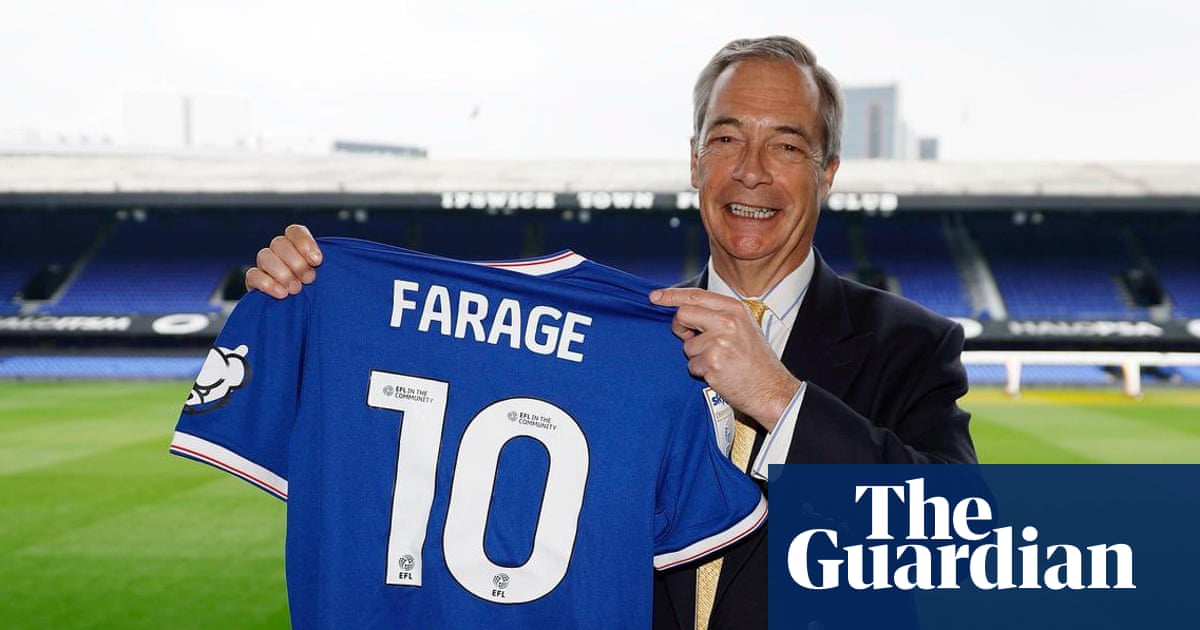
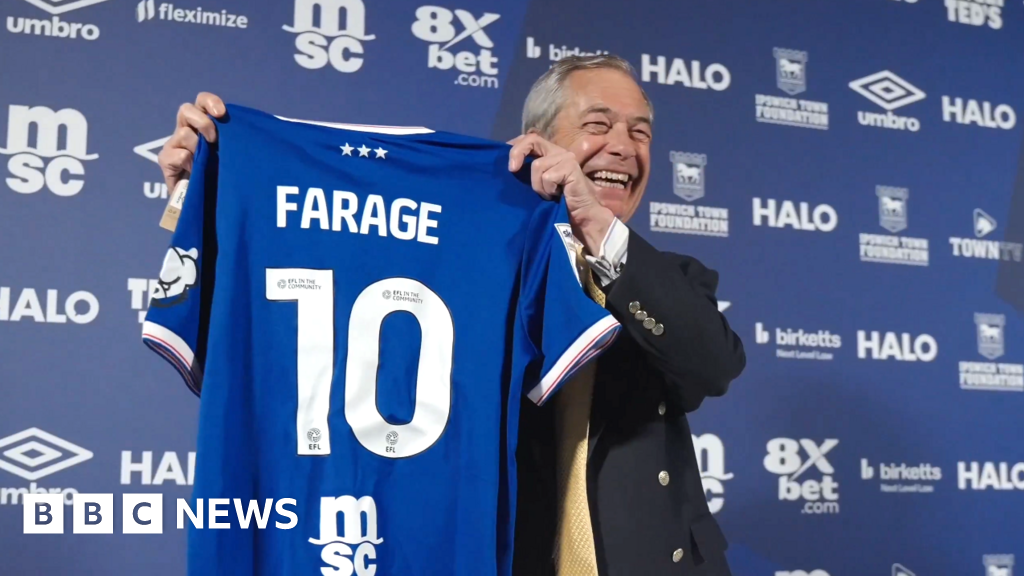
The timing of this administrative blunder is genuinely abysmal. According to a recent BBC report, Reform leader Nigel Farage was invited to a club meeting, a fact the BBC understands to be true despite the club's own clumsy denials. It is a completely unforced error. When you are fighting for points in the gruelling final stretch of the spring, the absolute last thing a manager needs is the local and national media analyzing political invitations instead of defensive shapes and passing networks.
This kind of off-field mess inevitably bleeds into the dressing room. Players read the news. The local press naturally shifts their line of questioning away from pressing triggers and onto public relations disasters. For a newly promoted team relying on intense psychological focus and a siege mentality to maintain their top-flight status, this administrative circus is a severe handicap imposed by their own leadership.
McKenna's Tactical Dilemma Against the Block
On the pitch, Ipswich face a fundamentally ugly stylistic matchup this weekend against Everton. Sean Dyche does not care about your possession stats. He does not care about your fluid passing triangles. He cares about second balls, structural integrity, and punishing mistakes in the defensive third. Dyche will look at the noise surrounding the club and smell blood.
Ipswich's default structure in possession morphs rapidly from a nominal back four into a 3-2-4-1. Leif Davis bombs forward on the left flank, essentially operating as a traditional, chalk-on-the-boots winger. This aggressive, high-risk positioning has been their primary creative outlet all season. Davis provides width, allows the left-sided attacker to invert, and generates necessary overloads.
But that exact movement leaves a gaping, terrifying hole on the left side of their defensive transition. Jacob Greaves has repeatedly found himself dragged violently out of the center to cover that channel. When Greaves moves left, the central defensive integrity fractures completely. The distances between the remaining center-backs become far too large to manage effectively against quick transitions.
Opponents have clearly recognized this trigger. Everton will not bother playing through the thirds. They will look to bypass the midfield entirely, dropping early, arcing balls into the exact space Davis vacates. It is a simple, brutal strategy that has repeatedly exposed McKenna's dogmatic commitment to expansive football.
The Counter-Press Vulnerability
This wide-open space is precisely where Ipswich have consistently bled goals since August. Their counter-press is aggressive but occasionally wildly disjointed. When captain Sam Morsy steps up to engage and misses the initial tackle, the backline is completely exposed to runners.
Morsy is currently carrying a heavy booking count, and his hesitation in decisive transitional moments has been noticeable since the turn of the year. You cannot play a high-wire defensive line without an elite sweeper in the midfield. Morsy is a warrior, but he is not a pure destroyer. When the first wave of pressure is broken, panic sets in immediately.
Look at the tape from their recent home fixtures. Savvy teams are bypassing the initial press with chipped passes to a physical target man. Dominic Calvert-Lewin is uniquely suited to exploit this exact vulnerability. He will back into the smaller defenders, win the initial flick-on header, and bring Dwight McNeil into play. Suddenly, Everton are attacking a disorganized back three with superior numbers.
The Wide Asymmetry
While the left flank is a highway for Davis, the right side operates entirely differently. Wes Burns provides a much more traditional, linear threat. He hugs the touchline and looks to beat his fullback on the outside. This asymmetry is designed to stretch the opposition defense, forcing them to defend the entire width of the pitch.
However, against Everton, Vitalii Mykolenko is highly adept at dealing with traditional wingers. He will not be easily beaten for pace, and he rarely dives into rash tackles. Burns will find his route to the byline severely congested. If Burns cannot deliver high-quality crosses, Ipswich's attack becomes entirely dependent on the left side, making them predictable and easy to compress into harmless areas.
McKenna might be tempted to swap Omari Hutchinson out to the right flank to provide a different kind of problem. Hutchinson wants to cut inside on his stronger left foot, which would drag Mykolenko out of his comfort zone and potentially open up space for an overlapping run. But doing so sacrifices Hutchinson's influence in the central playmaking zones, highlighting the severe lack of depth in Ipswich's creative ranks.
Key Battles in the Trenches
The match will likely be decided in the murky, physical central midfield zone. Morsy and his midfield partner are going to face a relentless physical battle. Everton's midfield unit operates with absolute synchronized aggression. They hunt in packs and they absolutely do not give opposing playmakers time to turn and survey the field.
Hutchinson has been the brightest spark for Ipswich, drifting inside from the right half-spaces to pick up the ball on the half-turn. His close control is elite. But Dyche will instruct James Tarkowski to step aggressively out of the defensive line to deny Hutchinson that turning space. Tarkowski will look to leave a physical marker early in the match.
If Tarkowski successfully bullies Hutchinson out of the game, Ipswich's central progression stalls completely. Hutchinson needs to drag Tarkowski out of position, lay the ball off quickly with one touch, and spin immediately into the space behind him. Liam Delap's movement will be vital here to occupy the remaining defenders and prevent the trap from closing.
Delap has to make unselfish, lateral, exhausting runs to occupy Jarrad Branthwaite. If Delap stays static, the Everton center-backs will easily double up on the ball carrier, suffocating the attack before it even reaches the penalty area.
The Set-Piece Disparity
Then there is the grim, unavoidable reality of set-pieces. Ipswich rank near the absolute bottom of the division for expected goals against from dead-ball situations. They defend with a passive hybrid zonal system that frequently looks confused when the delivery is driven with genuine pace and wicked whip.
This is a major negative mark on the recruitment team and the coaching staff. Relying purely on structural coaching to fix blatant physical mismatches in the penalty area is pure arrogance. Against a team explicitly built to exploit those mismatches, it borders on suicidal management.
Everton treat corners and wide free-kicks like penalty kicks. McNeil's delivery is consistently vicious and accurate. If Ipswich concede cheap fouls in their own defensive third—a terrible habit they have failed to shake—they will be punished severely. The lack of a commanding, dominant aerial presence outside of Greaves is a structural flaw McKenna has completely failed to adequately address over two transfer windows.
The Last Line of Defense
Much of the defensive anxiety stems from the instability between the posts. Arijanet Muric was brought in to play out from the back, functioning essentially as an eleventh outfield player in the build-up phase. His distribution is genuinely excellent, capable of breaking the first line of pressure with precise, driven passes into the midfield pivot.
But a goalkeeper's primary job remains keeping the ball out of the net, and Muric has demonstrated a terrifying tendency to make catastrophic individual errors. His shot-stopping metrics are average, but his decision-making when rushing out of his penalty area is erratic at best. Against a team that relies heavily on long, direct balls over the top, Muric's sweeping will be severely tested.
If he hesitates for a fraction of a second against a runner like Beto or Calvert-Lewin, he will be lobbed or rounded. Dyche will absolutely instruct his forwards to chase every seemingly lost cause, banking on Muric to eventually make a mistake under sustained pressure. It is a cynical strategy, but it is highly effective against a goalkeeper lacking absolute confidence.
Predicting the Weekend Fallout
This is a fixture that demands raw aggression, flawless concentration, and extreme tactical discipline. The off-field Farage distraction is exactly the kind of unneeded, energy-sapping pressure that fractures a fragile dressing room. McKenna will do his absolute best to shield the squad, but the atmosphere around the stadium will be tense, anxious, and deeply annoyed by the board's incompetence.
Everton will sit deep in a compact block, absorb the sterile possession without breaking a sweat, and wait for Davis to commit just five yards too far forward. The trap is incredibly obvious, but Ipswich's absolute, unwavering commitment to their passing principles means they will almost certainly walk straight into it anyway.
Expect Ipswich Town to dominate the ball, rack up hundreds of lateral passes, and comfortably win all the meaningless possession metrics. Expect Everton to win the actual football match. Dyche's men will score a scrappy goal from a wide free-kick in the first half, and add a second late on the counter-attack, ruthlessly exploiting the exact spaces Ipswich stubbornly refuse to protect.
The boardroom may currently be scrambling to manage a highly embarrassing, self-inflicted public relations crisis. By 5:00 PM on Saturday, Kieran McKenna and his management team will be scrambling to salvage a rapidly deteriorating league campaign on the pitch.