
Ipswich Town's Nigel Farage disaster is a massive unforced error

The Illusion of Corporate Control
Modern football operates under an illusion of absolute control. Premier League clubs monitor every tweet, scrutinize every Instagram story, and brief players extensively before they even look at a microphone. They employ sprawling communications departments to ensure the outward messaging remains pristine. That makes Monday's events at Portman Road genuinely baffling.
Ipswich Town allowed Reform UK leader Nigel Farage to visit the stadium. The backlash was immediate, fierce, and entirely predictable to anyone who actually understands match-going culture. It forced chairman Mark Ashton into a rapid, humiliating retreat.
As Mirror Football reported, Ashton had to issue a grovelling apology to the furious supporters. This was not a minor administrative misstep. It was a catastrophic failure of basic executive oversight that exposes a massive blind spot in the Ipswich boardroom.
The Mechanics of a PR Disaster
How does a visit like this actually happen? It is never accidental. It requires a lengthy chain of emails. It requires security clearance. It requires someone in the commercial or operations department to review an itinerary and sign off on it.
At every single stage of that bureaucratic process, an employee had the opportunity to ask a very simple question. Is this a good idea? Nobody did. That is the truly alarming part for Ipswich supporters who expect better governance from their club.
It suggests an executive suite that has lost touch with the reality of its own terraces. Ashton has built immense capital during his tenure in East Anglia. He helped drag the club out of a deep, miserable slumber.
They spent 22 years locked out of the top flight. The triumphant return to the Premier League was built on a foundation of absolute, unshakeable unity. Manager Kieran McKenna unified the dressing room, and Ashton unified the fan base.
But goodwill is not an infinite resource. It burns up remarkably fast when supporters feel their club is being used as a cheap prop for a political photo opportunity. Football stadiums are deeply tribal environments, but they are also the ultimate community hubs.
They belong to the people who buy the season tickets. They belong to the fans who buy the replica shirts and travel to away games on freezing Tuesday nights. They emphatically do not belong to transient politicians looking for an easy camera angle.
The Hypocrisy of Club Messaging
Farage's brand of politics is explicitly built on division. That is his established, deliberate strategy. Whatever your personal view on his specific policies, introducing that division into a football club is an act of spectacular self-sabotage.
A football club's primary job off the pitch is to make the entire community feel welcome. You simply cannot run slick corporate campaigns promoting inclusion on a Saturday, and then roll out the red carpet for a deeply polarizing political figure on a Monday.
The blatant hypocrisy is what rankles match-going supporters the most. Fans are constantly lectured about their behaviour by club authorities. They are told what they can and cannot chant. They are subjected to endless corporate messaging about progressive community values.
Then the executives turn around and facilitate this kind of visit. It treats the fanbase with thinly veiled contempt. It operates on the arrogant assumption that supporters will simply ignore the contradiction because the team is currently playing good football.
Ashton's apology was entirely necessary, but it does not magically erase the error. Releasing a statement of regret is the easy part. The incredibly hard part is fixing the broken internal culture that allowed the error to occur in the first place.
The Political Playbook
Someone inside Portman Road looked at the request and thought the visit was acceptable. They failed to read the room. They failed to understand the diverse demographic of the modern Ipswich Town fanbase.
This reflects a broader, systemic problem across English football. Executives frequently operate in an isolated vacuum. They view VIP stadium visits purely through the sterile lens of corporate hospitality and high-level networking.
They conveniently forget that the stadium is a sacred space for the regulars. When a politician walks onto the pitch or into the directors' box, they are attempting to borrow the club's cultural capital. They want the raw authenticity of the working-class game to rub off on their own brand.
Football clubs should fiercely protect that authenticity. Giving it away for free to a touring politician is a fundamental dereliction of duty. Look at the wider historical context. Politicians have a terrible track record of engaging with football.
They almost always get it wrong. They wear the wrong scarves. They forget the names of the star players. They leave the directors' box at half-time before the game is even decided.
They are tourists in a world that demands absolute, unwavering loyalty. The fans can spot the grift immediately from the stands. That is exactly why the reaction at Portman Road this week was so visceral and unforgiving.
Damage Control and Future Protocol
The Ipswich supporters knew exactly what was happening. They knew their beloved club was being utilized as a convenient backdrop for a political broadcast. And they correctly aimed their fury directly at the boardroom that allowed it to happen under their watch.
Ashton is a highly intelligent operator. His track record in the transfer market proves that. He knows he messed up here. The sheer speed of his apology indicates a man who suddenly realized he was standing on a public relations landmine.
But this incident undeniably leaves a scar. It fractures the carefully maintained illusion of perfect synergy between the owners and the fans. It serves as a stark, uncomfortable reminder that the people running the club do not always share the instincts of the people watching it.
Moving forward, Ipswich Town need to implement a ruthless vetting process for all non-football personnel entering the stadium. Every single VIP request needs to be filtered through one simple, uncompromising test. Does this visit actually serve the interests of the football club?
If the answer is no, the doors must remain firmly closed. It does not matter how famous or influential the individual claims to be. The integrity of the club's relationship with its local community must always be the ultimate, non-negotiable priority.
McKenna has done a genuinely miraculous job shielding his players from outside noise this season. The executive team owes it to him to stop creating completely unnecessary distractions. The Premier League is difficult enough without scoring massive unforced errors during the training week.
Rebuilding the Trust
The focus inside the building must immediately return to the pitch. The survival battle at the bottom of the table is grueling. Every single point requires total, undivided focus from every single employee at the club.
Ashton must ensure an oversight like this never happens again. He needs to leave the executive suite and walk the concourse. He needs to speak to the recognized fan groups directly, face to face. He needs to actively repair the bridge he carelessly set on fire.
The modern football fan is highly educated on corporate mechanics. They understand how these decisions are made. They cannot be fobbed off with a standard, sanitized PR statement written by a committee.
They demand genuine accountability and structural change to the approval process. Ipswich Town survived decades of horrific mismanagement before this current golden era began. They are a deeply resilient club with a hardened fanbase.
But that resilience should not be tested by amateur unforced errors from the highest levels of the executive suite. This was a harsh, entirely avoidable lesson in modern football governance.
You cannot separate the sport from the community it serves. You cannot divorce the boardroom decisions from the mood on the terraces. Nigel Farage got his desired publicity. That is all he ever wanted from the trip.
Ipswich Town were left behind to clean up the mess and deal with the furious season ticket holders. It is a terrible, losing trade for the football club. The next time a politician comes knocking on the doors of Portman Road, the answer must be swift and final.
The club must remember who actually pays the bills. It is not the VIPs in the hospitality suites. It is not the politicians looking for a photo. It is the fans who rightfully demanded the apology, and who ultimately hold the power to keep the executives accountable.
Franklin Sports Adjustable Soccer Rebounder
The perfect training partner for your backyard.
Frequently Asked Questions
Why did Mark Ashton apologize to Ipswich Town fans?
What happened during Nigel Farage's visit to Portman Road?
How did the Ipswich Town boardroom fail in this PR disaster?
Who is the manager of Ipswich Town?
Why are football stadiums considered community hubs?
More Coverage
Anthony Gordon to Barcelona is a high-stakes gamble for all involved
a minute ago
Anthony Gordon to Barcelona marks a high-stakes gamble
an hour ago
Arsenal's 104 million gamble on Julian Alvarez is pure chaos
an hour ago
Top 10: The Definitive Arsenal Moments of the 2025/26 Season
3 hours ago
Newcastle are burning the furniture to keep the house warm
3 hours ago
Manchester City's business model is frankly terrifying
3 hours agoMore Analysis
Ipswich Town just handed us the most avoidable PR disaster of the season
2 months ago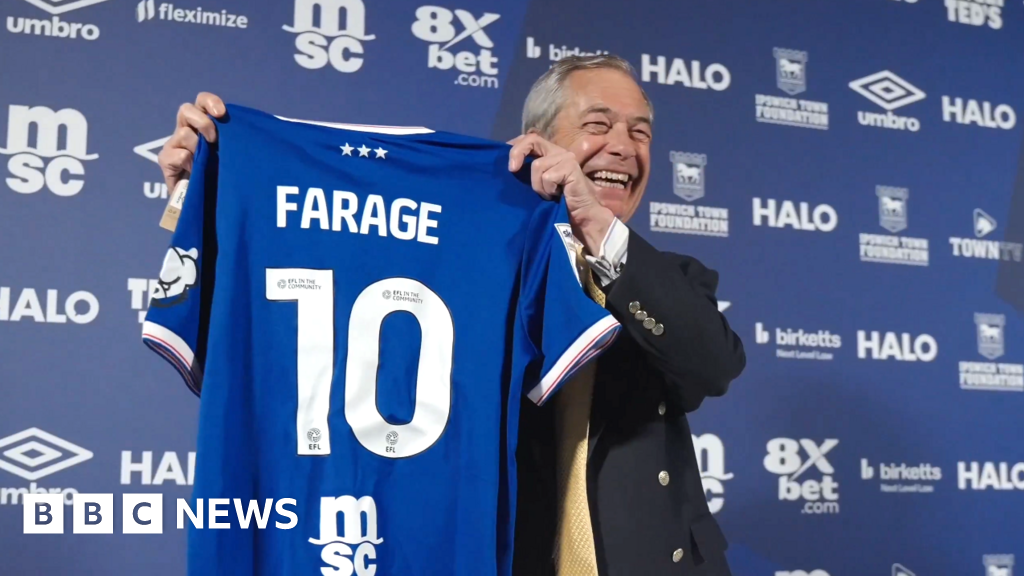
Ipswich Town's PR disaster over Nigel Farage is a massive own goal
2 months ago
Ipswich Town just committed the stupidest PR own goal of the year
2 months ago
Ipswich Town's Farage fiasco is a masterclass in PR suicide
2 months ago
Football's boardroom incompetence exposed by the Farage stadium tours
2 months ago