A defensive collapse in the boardroom
Modern football clubs are obsessed with control. Managers refuse to answer questions about injuries to maintain a tactical edge. Players are heavily trained to deliver nothing but empty platitudes in post-match interviews.
Training grounds are locked down like military installations to keep out prying eyes. Every single variable is micromanaged to protect the commercial brand. Yet, when it comes to the boardroom, that immense discipline routinely vanishes into thin air.
The recent saga involving Nigel Farage touring English football stadiums is a masterclass in off-pitch incompetence. It exposes a terrifying lack of awareness from the people running these clubs. They demand perfection on the grass, but operate like amateurs in the executive suites.
The Portman Road disaster class
This week, the Reform leader was photographed inside Portman Road. This was not a fan snapping a quick selfie in the stands with a pie. This was a highly choreographed VIP experience.
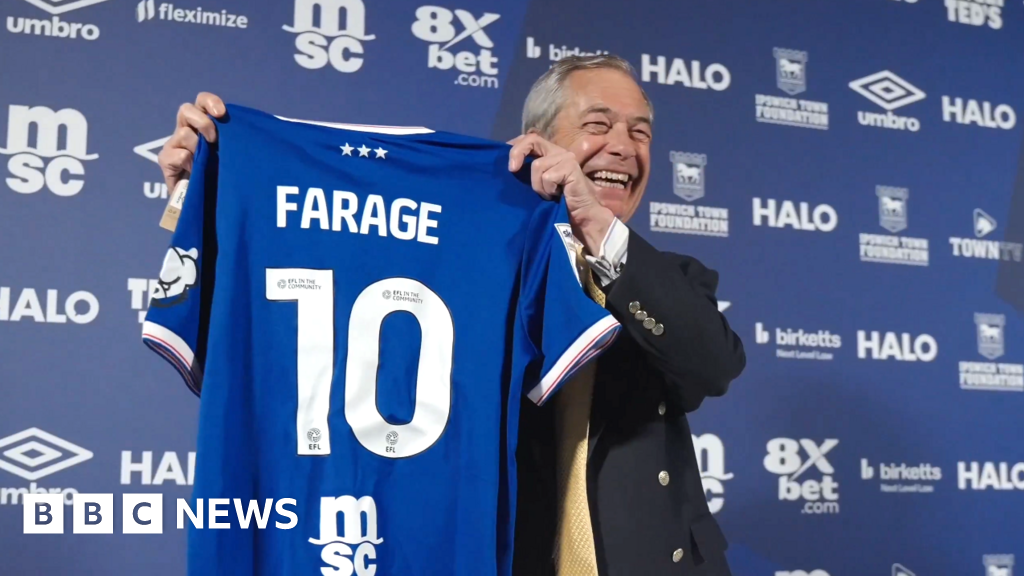
The former UKIP MEP was photographed on a stadium tour this week, posing with shirts emblazoned with 'FARAGE 10' and pretending to sign a contract in the press room.
Farage was handed a shirt printed with his name and the squad number 10 on the back. He was allowed into the official press room to stage a mock contract signing. It was a jarring visual that immediately alienated a significant portion of the match-going public.
Ipswich Town panicked as soon as the images surfaced. They released a statement heavily implying the visit was entirely unofficial, painting it as a sort of rogue walkabout. It was a terrible piece of PR defense that lacked structural integrity.
The narrative immediately fell apart under basic journalistic scrutiny. As the BBC quickly established, a club associate confirmed Farage was, in fact, officially invited. The club tried to play an offside trap when the opposing striker was already standing on the penalty spot.
The mechanics of a VIP blunder
Let us break down the harsh logistics of what actually happened at Ipswich. A stadium tour of that scale does not happen by accident. It requires a clear chain of command and multiple deliberate approvals.
Someone in the ticketing or hospitality department had to clear the date and time. Someone in the club megastore had to authorize the printing of a custom jersey. You cannot just wander into a professional football club's press room, sit in the manager's chair, and stage a photoshoot without a member of staff unlocking the door.
This is exactly why the club's initial denial becomes deeply insulting to the intelligence of the supporters. Fans know exactly how strict stadium security is on a non-matchday. If a regular season-ticket holder tried to cross the touchline to take a picture in the dugout, they would be tackled by stewards and handed a lengthy ban.
When the backlash hit, the executives retreated to their offices. They abandoned their defensive shape and left their front-facing media staff to deal with the angry replies on social media. It is the corporate equivalent of a center-half giving the ball away on the edge of his own box and then blaming the goalkeeper.
Sunderland inexplicably enters the fray
If you watch a rival team concede a comical goal from playing out of the back, your next tactical move is not to try the exact same routine. You adjust your shape. You learn from their catastrophic mistake.
Sunderland, apparently, missed that basic tactical briefing. Just days after the Ipswich debacle caught fire online, news broke that the Stadium of Light might be the next stop on this bizarre political tour. The executives on Wearside watched a PR disaster unfold in real time and voluntarily walked into the exact same trap.
According to Sky Sports, Farage himself claims a club director at Sunderland directly invited him to a game. This is staggering mismanagement. They saw the negative headlines and the Daily Mail detailing how the Ipswich tour stoked massive controversy. Their response was to actively seek out the same damage.
Sunderland is a club with a profound, deeply emotional connection to its working-class roots. To have a director unilaterally invite a politician who thrives on division shows a terrifying disconnect between the boardroom and the terraces. They view the club as a networking venue, rather than a community institution.
The death of basic scouting
In the modern transfer market, clubs employ dozens of elite data analysts. They track a player's sprint speed, their pass completion rate under pressure, and their injury history. They leave absolutely nothing to chance before committing millions of pounds in wages.
Why does this rigorous vetting process not apply to the boardroom? It takes five minutes of basic internet research to understand that hosting Nigel Farage for a publicized photo opportunity is going to cause a severe backlash. From a purely cynical, brand-management perspective, it is a guaranteed loss.
When you look at the fundamental errors made across both clubs, they fall into three distinct failures:
- The scouting failure: A complete refusal to screen VIP guests for potential brand damage before granting stadium access.
- The operational failure: Allowing political photo opportunities in secure, club-branded areas like the manager's press room.
- The communication failure: Issuing statements denying the official nature of the visit, only to be immediately contradicted by club insiders.
The manager's impossible position
Consider the collateral damage this inflicts on the footballing staff. The manager's job is to prepare his squad for 90 minutes of high-intensity competition. He spends his week analyzing video footage, running defensive drills, and monitoring player fatigue.
His reward for this obsessive preparation is walking into a pre-match press conference and being ambushed by questions about Nigel Farage. It is grossly unfair to the coaching staff. The board is supposed to protect the manager from off-pitch distractions.
Instead, the directors at Ipswich and Sunderland are actively generating media circuses. If a player was caught out late at a nightclub, the manager would fine them for unprofessional behavior. But when the board invites controversy into the stadium, the manager just has to sit there and take the bullets from the press.
Tactical arrogance off the pitch
Modern football executives often suffer from an unbearable arrogance. They believe that because they hold the pursestrings, they understand the soul of the club better than the fans who have been attending games for three generations.
They treat the stadium like their personal fiefdom. They hand out VIP passes like party favors to anyone they deem important. They completely ignore the cultural context and history of the team they represent.
The Ipswich and Sunderland incidents are not isolated mistakes. They are symptoms of a wider disease in the English game. The people in the directors' boxes simply do not speak the same language as the people in the stands. They view a football match as a corporate networking event, while the fans view it as a religion.
This is where the game is quietly breaking down. We analyze the high press and debate the merits of inverted full-backs. But the real structural flaws in these clubs are not happening on the grass. They are happening in the executive suites.
Predicting the fallout
Looking ahead, it is hard to see how either club comes out of this looking competent. Ipswich will likely try to bury the story by refusing further comment. They will pray a decent result this weekend acts as a smokescreen for their administrative failure.
But the trust between the fans and the administration has been fractured. You cannot lie to your supporters about something so visibly obvious and expect them to forget it by Saturday afternoon. The damage to the club's credibility is already locked in.
Sunderland, meanwhile, still have a narrow window to pull the plug. If they have any tactical sense left in that boardroom, they will rescind the alleged invitation immediately. They will release a terse statement claiming a scheduling conflict.
My prediction is simple. Sunderland will quietly cancel the visit, fearing the toxic atmosphere it would create at the Stadium of Light. Ipswich will issue a cowardly non-apology behind closed doors to a supporters' trust. Both clubs have conclusively proved that when it comes to defending their own culture, their backline is completely missing in action.
Read Next
- Ipswich Town's Nigel Farage disaster is a massive unforced error
- Huddersfield Town's Farage PR disaster is a tactical masterclass in self-sabotage
- Ipswich are drowning in boardroom noise just when they need points most
- The collective breath we all just let out over Sammie Szmodics
- 🏟 EFL Championship 2025-26 — Promotion Race & Play-Off Final Hub