The eternal optimist speaks again
Jurgen Klopp has never been a man to let reality get in the way of a good romance. The German manager spent nearly a decade at Anfield turning doubters into believers, largely by refusing to accept the normal limitations of human biology.
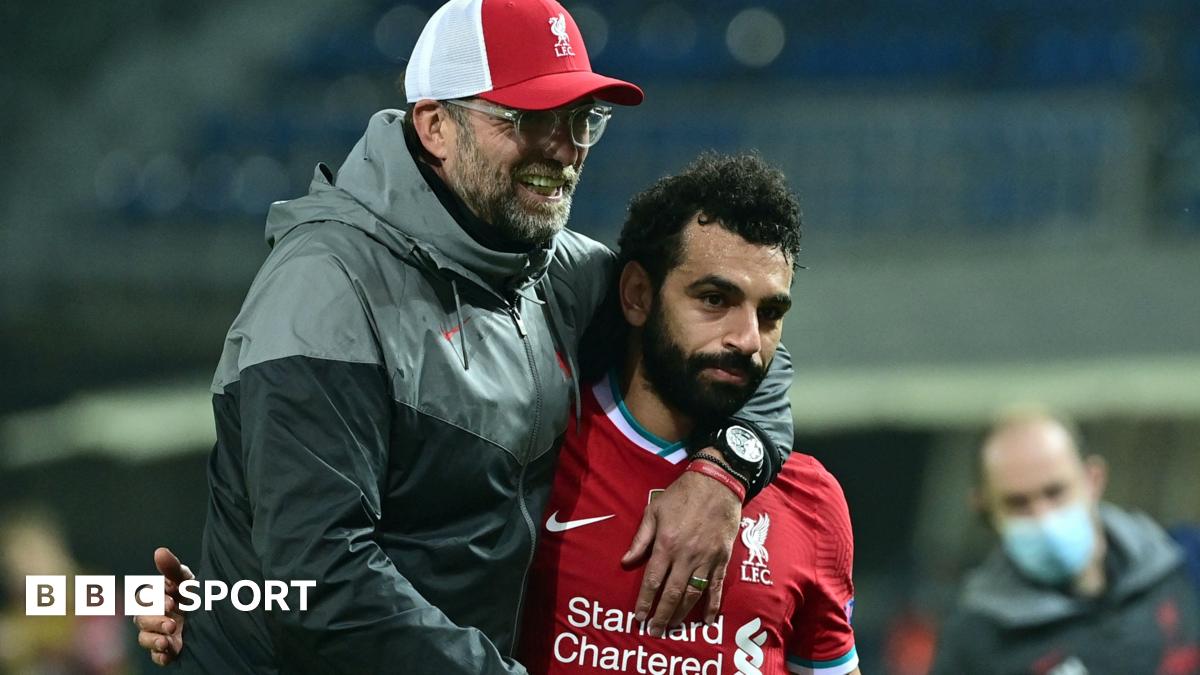
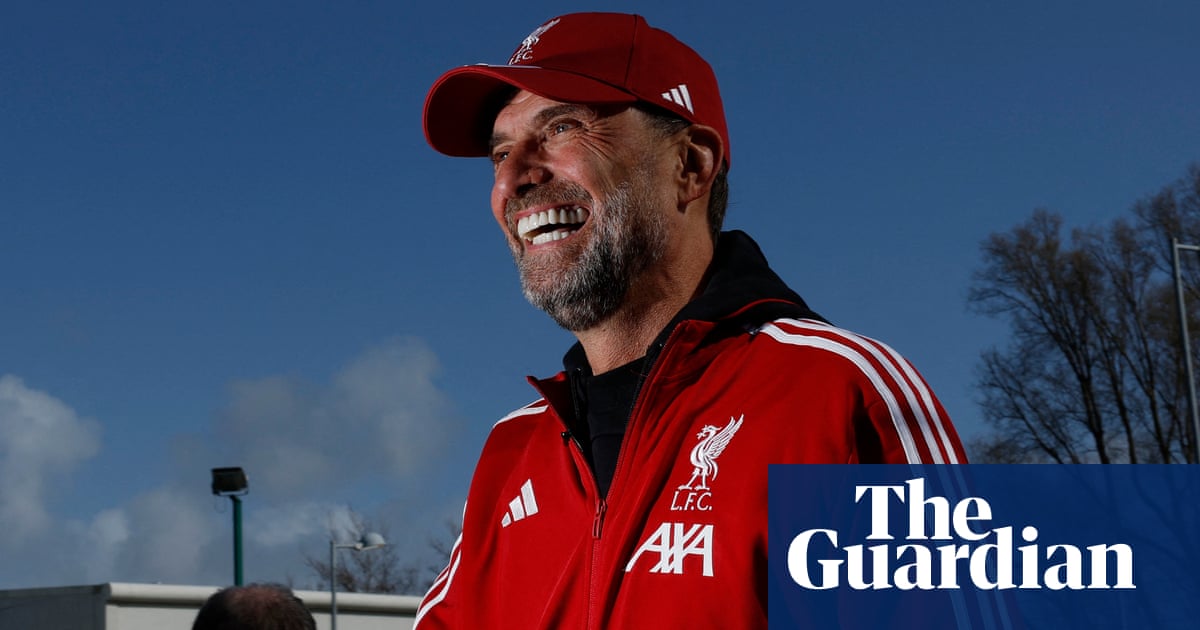
So when he pops up this week to declare that Mohamed Salah is "irreplaceable" and will "play for another six or seven years," you have to smile. It is classic Klopp.
Jurgen Klopp says 'irreplaceable' Mohamed Salah's incredible Liverpool career will never be matched - and gives two reasons why he backs 33-year-old star to 'play for another six or seven years'.
He is half right. The first part of that statement is bulletproof. Salah is irreplaceable. You could give Liverpool a blank checkbook, the scouting department of Brighton, and a time machine, and they still would not find another player who can replicate what the Egyptian has done on the right wing since 2017.
His legacy in the Premier League is entirely secure. No one is touching those numbers. But the second part? The idea that a 33-year-old winger whose entire game was built on explosive acceleration and razor-sharp cutting inside is going to be doing this until he is pushing 40? That is absolute madness.
Let us take a step back and look at the reality of the situation in 2026. Because while Klopp might be talking up his old talisman, the truth on the pitch tells a far more complicated story.
The graveyard of Premier League wingers
Football history is brutally unkind to wide players in their thirties. The Premier League is a meat grinder. It does not respect your past achievements, and it certainly does not care about your body fat percentage. When you lose that half-step, you are entirely finished as an elite wide threat.
Think about the guys who were supposed to be Salah's peers. Eden Hazard was the most naturally gifted player in the league for a five-year stretch. He went to Real Madrid, his ankles turned to dust, and he retired quietly. Gareth Bale was a physical freak of nature. By the time he was Salah's current age, he was essentially playing part-time and thinking about his golf handicap.
Sadio Mane, Salah's partner in crime during those glorious Champions League runs, burned out his engine completely. He had to leave top-flight European football entirely because his legs simply could not handle the relentless demands anymore.
Wingers do not age like Andrea Pirlo. You cannot just drop ten yards deeper and dictate the game while jogging around at walking pace. When you play out wide, you are constantly isolated against twenty-something fullbacks who have been trained in sports science laboratories since they were eight years old. They are fast, they are angry, and they want to kick you into the stands.
Klopp is backing Salah to defy all of this. He points to his incredible professionalism, which is undeniable. Salah is a machine. He practically lives in the gym. His diet is flawless. He probably has not looked at a carbohydrate since 2014. But muscles and tendons have an expiration date.
The slow but obvious decline
This brings us to the uncomfortable truth that Liverpool fans do not want to discuss at the pub. We are already seeing the cracks in the armor. If you watch Salah closely this season, the explosive burst that used to terrify defenders like Lisandro Martinez or Nathan Ake is fading fast.
He cannot simply knock the ball past a fullback and beat them in a footrace anymore. Three years ago, if Salah got you isolated on the edge of the box, you were completely dead. He would drop the shoulder, cut onto his left foot, and curl it into the top corner before the goalkeeper even realized what was happening.
Today? He needs an extra half-second. He gets bullied off the ball more frequently in tight spaces. When he comes up against elite, physical defenders—think William Saliba or Josko Gvardiol—he struggles to create separation. He is relying heavily on his football IQ rather than his raw physical tools.
This is the fatal flaw in Klopp's prediction. Playing at the top level is not just about staying fit. It is about maintaining that tiny fraction of a second advantage over the defender. Once that goes, you are relying entirely on the team structure to create space for you. Salah can still finish, absolutely. But creating his own shot from nothing? That party is slowly winding down.
The impossible math of playing until forty
If we want to understand the sheer absurdity of Klopp's timeline, just look at the short list of attackers who actually thrived in the Premier League past their 35th birthday:
- Teddy Sheringham - He moved at the speed of continental drift and relied entirely on being smarter than everyone else on the pitch.
- Zlatan Ibrahimovic - A martial artist who played as a static target man and still blew out his knee under the physical strain.
- Ryan Giggs - Converted into a central midfielder who barely broke a sprint in his final five seasons under Sir Alex Ferguson.
Notice a pattern? None of them were explosive wingers. You simply cannot play on the shoulder of the last defender when you are approaching forty. It is biologically impossible, no matter how many ice baths you take or how perfectly you balance your macronutrients.
The necessary evolution of the Egyptian King
To his credit, Salah knows this. He is not stubbornly trying to play like he is 25. We have watched him evolve from a relentless goal-scoring cyborg into something closer to a wide playmaker. It is fascinating to watch a great player adapt to his fading physical gifts.
His passing range over the last couple of seasons has been nothing short of spectacular. Those outside-of-the-boot crosses to the back post are a thing of absolute beauty. He has essentially taken over the creative burden that Trent Alexander-Arnold used to shoulder entirely on that right side.
He is drifting inside earlier, operating in the half-spaces, and looking to slide through balls into the box rather than taking on three defenders by himself. If you want to argue that Salah could play until he is 36 as a central attacking midfielder in a slower league, I might listen. The Italian Serie A is basically a retirement home for technically gifted veterans who do not want to run anymore.
But doing it in the Premier League? Under the relentless pressing structures that dominate modern football? It is a fantasy. The league simply moves too fast, and the tactical demands placed on a wide forward by modern managers are too punishing.
The impossible task of replacing the irreplaceable
This is why Klopp's comments, while overly optimistic about the timeline, strike a painful chord for the Anfield faithful. He knows how hard it is going to be for Liverpool to move on from this era. Whenever Salah does finally call it quits—whether that is next year or in 2028—the club faces an impossible task.
You can go out and spend £85 million on the next highly-rated winger from the Bundesliga or La Liga. You can buy all the potential in the world. But you are not buying a guy who guarantees you twenty goals a season without even breaking a sweat. You are not buying a player who is completely immune to the crushing pressure of Anfield.
Look at Manchester United post-Ferguson. They spent a decade throwing hundreds of millions of pounds at right wingers, from Angel Di Maria to Antony, trying to find someone who could lock down that position. It ruined their entire attacking structure for a generation. Liverpool are staring down the exact same barrel.
They have tried to plan for the future. They brought in Cody Gakpo. They spent big on Darwin Nunez. But none of them have that ruthless, ice-cold consistency that Salah possesses. On his worst day, playing terribly, Salah will still somehow bundle the ball over the line in the 89th minute to win the game 1-0. You cannot scout that kind of inevitability. You cannot train it.
Enjoy the final chapters before the hangover hits
Klopp is speaking from a place of deep affection. He built his greatest achievements on the back of Salah's goals. When you watch a player deliver miracle after miracle for years, it is dangerously easy to start believing they are completely immune to the laws of nature.
But the clock is ticking loudly. It is ticking for every player who laces up boots. The 2026 season is proving that even the Egyptian King has to respect Father Time eventually. The burst is going. The isolation dominance is fading. The physical toll of carrying an elite club's attack for nearly a decade is finally showing.
Instead of dreaming about Salah playing until the next decade, fans should be hyper-focused on what he is doing right now. Appreciate the playmaking. Appreciate the intelligence. Acknowledge the decline in pace, but marvel at how he is compensating for it with pure experience and vision. It is a masterclass in survival, but survival is temporary.
Jurgen Klopp is completely right that we will never see another Mohamed Salah at Anfield. His career there is a singular, unrepeatable phenomenon. The 32 goals he scored in his debut 38-game season still feel like a fever dream. But let us be brutally honest about the reality of his future.
The idea of a 39-year-old Salah tearing down the wing is a beautiful illusion designed to comfort fans who are terrified of what comes next. We do not have six or seven years left. We probably have two, maybe three, before the drop-off becomes too steep to ignore. It is a harsh reality, but ignoring it does not change the facts. Enjoy the man while he is still here, because the hangover when he leaves is going to be absolutely brutal.
Read Next
- Mohamed Salah's Liverpool exit faces sudden Saudi Arabia complication
- Mohamed Salah's pristine medical record is Liverpool's biggest impending crisis
- Klopp's Anfield return is the nostalgia trip Liverpool fans don't need
- Klopp is right about Salah, and Liverpool fans need to accept it right now
- 🇪🇬 Egypt World Cup 2026 — Salah's Last Dance