Japan expose the glaring tactical flaws Steve Clarke refuses to fix
The harsh reality of the March window
International friendlies in late March are rarely about the result. They are diagnostic tests. For Steve Clarke, facing Japan is the equivalent of a footballing stress echocardiogram.
The World Cup kicks off on June 11. That leaves exactly 75 days to iron out the structural flaws that have haunted Scotland in major tournaments. Facing Hajime Moriyasu's side is not a gentle tune-up. It is an examination of everything Scotland struggles against: aggressive pressing, fluid positional rotation, and rapid transitions.
Japan are not the same side that ambushed Germany and Spain in Qatar four years ago. They have evolved. Moriyasu has built a team that no longer relies solely on deep blocks and counter-attacks. They want the ball, but more importantly, they want to force you into mistakes in your own defensive third.
This presents a massive problem for a Scotland side that still looks deeply uncomfortable playing out from the back under pressure. The back three of Jack Hendry, Grant Hanley, and Kieran Tierney—when fit—has a clear ceiling when asked to break lines against elite pressing structures.
The midfield suffocation
You could see the warning signs early as the match unfolded live. Wataru Endo does not just sit in front of the Japanese defense; he dictates the geographic terms of the midfield battle. He pushes high, squeezing the space that Billy Gilmour needs to operate.
Gilmour is Scotland's metronome. When he is given time to turn, the entire system ticks. But international football at this level rarely affords you time. When Japan's attacking midfielders trigger the press, Gilmour is often left isolated, frantically searching for passing angles that simply do not exist.
Scott McTominay's role remains a persistent tactical puzzle. For his club, he is a penalty-box crasher. For his country, he is asked to be a hybrid eight, shuttling between defensive duties and late offensive arrivals. But against a midfield as technically secure as Japan's, his lack of elite distribution in tight spaces is magnified.
There is a stark contrast in how the two sides use the wide areas. Scotland rely heavily on Andy Robertson and Nathan Patterson to provide width. But against Japan, those wing-backs are pinned back relentlessly.
Kaoru Mitoma is a nightmare matchup for any isolated defender. He does not just run at you; he changes the rhythm of his dribble, freezing full-backs before exploding to the byline. When Patterson is forced into a one-on-one with Mitoma, the entire Scottish defensive block has to tilt to compensate.
The attacking disconnect
This lateral shifting leaves gaps centrally. Hidemasa Morita and Takefusa Kubo are experts at exploiting these half-spaces. When the Scottish midfield slides to help Patterson, the cutback lane opens up at the edge of the area. It is a mathematical problem that Clarke's 5-4-1 block has not yet solved.
Let us look at the attacking phase. Scotland's default mechanism for relieving pressure is to hit the striker. Che Adams works tirelessly, pinning center-backs and dropping to link play. But against Takehiro Tomiyasu and Ko Itakura, physical exertion is not enough.
Japan's central defenders are elite duelists. They are comfortable stepping into midfield to win the first ball. When Adams receives it with his back to goal, he is immediately enveloped. The secondary runners—usually John McGinn and McTominay—are forced to start their sprints from too deep to offer meaningful support.
This is where the clamor for Tommy Conway makes sense. Conway offers a different profile. He looks to spin in behind, dragging a center-back out of the defensive line. But a runner is useless without a passer who can spot the run early.
And here we return to the Gilmour problem. If Gilmour is suffocated by Endo, the ball over the top simply does not arrive. Scotland are caught in a tactical bind. To get the best out of a dynamic forward, they need sustained possession. To get sustained possession, they need to bypass the press with accurate long passing, which relies on the very players being marked out of the game.
Clarke's tactical stubbornness
Clarke's fundamental conservatism is part of the issue. His default instinct when the team is stretched is to drop the defensive line deeper. This is a survival mechanism honed during grueling UEFA qualifying campaigns.
But survival mechanisms do not win matches at a global tournament. Dropping deep against Japan simply invites wave after wave of sustained pressure. It turns the match into an exercise in penalty-box defense.
This is the glaring negative observation that Clarke’s defenders often ignore. The manager is incredibly slow to alter the shape of the team when the initial game plan fails. If the midfield is being overrun, the adjustment often comes ten minutes too late, usually in the form of a like-for-like substitution rather than a structural shift.
Why not switch to a 4-3-3? Sacrificing a center-back for an extra body in midfield could help Gilmour breathe. It would allow Callum McGregor or Ryan Christie to drop into the half-spaces and offer an out-ball.
But Clarke detests abandoning the back five. He views it as the foundational rock of his tenure. The argument is that moving to a back four exposes the center-backs to direct foot races, a scenario they rarely win against elite forwards.
Moriyasu faces no such dilemmas. His Japan side is terrifyingly adaptable. They can control possession against weaker opposition or play devastating transition football against the elite. They are a team built for the modern international game.
Notice how Japan manage defensive transitions. The moment they lose the ball, there is an immediate, coordinated counter-press. They do not sprint wildly; they cut off the immediate passing lanes, forcing the opponent to play a rushed, low-percentage long ball.
The stamina gap
Scotland, by contrast, tend to retreat into their block. The counter-press is sporadic, usually reliant on McGinn chasing a lost cause rather than a coordinated team movement. This allows opponents time to set their shape and launch structured attacks.
The contrast in physical conditioning is also apparent. International football is increasingly about repeat sprint ability. The capacity to close down, recover, and sprint again over ninety minutes.
Japan's squad is littered with players hardened in the Bundesliga and the Premier League. Their athletic baseline is incredibly high. They sustain their pressing intensity late into the second half.
Scotland often look fatigued around the 70-minute mark. The emotional energy spent defending deep takes a physical toll. Legs become heavy, passes are under-hit, and the gaps between the lines widen.
This drop-off is where games are lost. In a World Cup group stage, you cannot afford to switch off for a twenty-minute period. A lapse in concentration at this level is punished with brutal efficiency.
Consider the role of the goalkeeper in this tactical struggle. Angus Gunn has brought a sense of calm to the number one shirt, but his distribution under severe duress remains a vulnerability. When Japan’s front three jump aggressively on the center-backs, Gunn is forced to play long.
His long distribution tends to be floated rather than driven. A floated pass allows the Japanese midfield to read the flight path, set their feet, and win the aerial duel. It is a subtle detail, but it often dictates who controls the second ball.
The set-piece reliance
Let us examine the set-piece situation. Scotland have historically relied on set-pieces as a great equalizer. A well-delivered Robertson corner or a McGinn in-swinger is a genuine offensive weapon.
But Japan are meticulous in their defensive organization. They employ a hybrid marking system, aggressively attacking the ball in flight while locking down the primary target men. Getting a clean header against them requires near-perfect delivery and blocking routines.
When a team is struggling in open play, set-pieces become a lifeline. If that lifeline is neutralized, the path to goal looks remarkably bleak.
Clarke needs to find an alternative route of progression. One option is utilizing Tierney more aggressively as an overlapping center-back. When Tierney drives forward, he forces the opposition winger to track back, relieving the pressure on Robertson.
It creates a temporary overload on the left flank. But this requires flawless covering from the holding midfielders. If Tierney loses the ball high up the pitch, the space he leaves behind is a massive target for a quick counter.
Watching Moriyasu on the touchline is an exercise in calm control. He rarely panics. He trusts the system his players have internalized over years of rigorous coaching.
The technical floor
That internalization is what Scotland lacks. They still look like a team thinking about their positioning, rather than reacting instinctively. That split-second delay in thought process is all an opponent like Japan needs.
The development of Scottish youth football needs to look closely at the Japanese model. The technical floor of the average Japanese international is staggering. They trap the ball dead. They pass with the correct weight and to the correct foot.
Scottish players, historically, have relied on physical imposition to compensate for technical deficiencies. But the modern game has evolved entirely. Physicality is now a prerequisite, not an advantage. Everyone is strong. Everyone is fast.
The differentiator is what you do with the ball in tight spaces when three players are collapsing on you. That is where Endo thrives. That is where Gilmour needs to be protected, rather than left to fend for himself against coordinated pressing traps.
There is still time for Clarke to find a solution. But it requires an intellectual flexibility that he has rarely displayed during his tenure. He must be willing to sacrifice solidity for progression.
The fans traveling to North America deserve a team that goes out on its shield, not one that slowly suffocates in a deep block. The tactical cowardice of the past must be discarded.
The final warning
We must also address the lack of inverted full-back movements in Clarke's system. Modern football is dominated by full-backs who tuck into midfield to create numerical superiorities.
Scotland’s wing-backs are strictly orthodox. They hug the touchline. This makes them predictable. When Patterson receives the ball, his only realistic options are a straight ball down the line or a negative pass back to his center-half.
If Clarke were to instruct Tierney to invert alongside Gilmour, it would drastically alter the passing angles. It would force Japan’s pressing triggers to recalculate. But teaching such a complex rotational system in the span of a few international windows is a daunting task.
This brings us to the ultimate criticism of international management: time. Clarke simply does not have the hours on the training pitch to completely overhaul the tactical framework. He has to work with the tools available and the muscle memory the players have built.
This is why his reluctance to experiment with alternative formations against weaker opposition during qualifying was so frustrating. By rigidly adhering to the back five, he denied his team the opportunity to learn a Plan B in a low-stakes environment.
Now, forced to adapt against a high-caliber opponent like Japan, the players look uncertain. Uncertainty breeds hesitation. Hesitation breeds mistakes. And mistakes against Mitoma and Kubo inevitably end up in the back of the net.
There is also the psychological aspect of these fixtures. Friendly matches lack the visceral edge of competitive games. The tackles are a fraction of a second later, the defensive blocks slightly less desperate.
But Japan treat every phase of play as a competitive exercise. Their intensity does not drop because the match lacks tournament stakes. They use these ninety minutes as genuine preparation, a mindset Scotland desperately needs to adopt.
We are witnessing the harsh reality of global football. The UEFA bubble can be deceiving. The grind of European qualifying often rewards pragmatism over technical excellence. But international tournaments expose pragmatism that lacks a counter-punch.
Steve Clarke has done the heavy lifting of restoring national pride. That is undeniable. But the next step—competing with the tactical elite of Asia, South America, and Europe’s upper echelon—requires a shift in philosophy.
The Japan fixture is a gift, even if it feels like a punishment. It highlights every deficiency, every structural flaw, and every technical gap. It is exactly what the manager needed to see before June.
Whether he has the courage to act on what he has seen is the defining question of his tenure. The excuses are running out. Scotland must evolve, or they will be thoroughly exposed.
Read Next
- England's Friday disaster means the WSL derby carries the weekend
- The measurable anomaly of Mohamed Salah's reign at Liverpool
- Phil Foden's tactical stubbornness is writing him out of Tuchel's World Cup plans
- Manuel Ugarte's phantom red card changes everything for this weekend
- 🏆 World Cup 2026 — Full Coverage Hub
- 🇯🇵 Japan World Cup 2026 — Samurai Blue Hub
EA SPORTS FC 25
The quintessential football gaming experience to keep the hype alive.
Frequently Asked Questions
Why does Scotland struggle against Japan's pressing tactics?
How has Japan's tactical approach evolved under Hajime Moriyasu?
What problems does Kaoru Mitoma create for the Scottish defense?
Why is Scott McTominay's role a tactical puzzle for Scotland?
When does the World Cup start for Scotland?
More Coverage

Top 10: The Defining Moments of the 2025/26 English Football Season
12 hours ago
Crystal Palace's unlikely European title exposes the modern speed gap
21 hours agoThe World Cup knockout bracket is a total minefield
1 day, 14 hours agoThe World Cup bracket is a house of cards waiting to collapse
1 day, 14 hours agoThe World Cup knockout stage is a tactical disaster waiting to happen
1 day, 14 hours agoBrazil's Path to 2026 Glory Is Riddled With Traps
1 day, 14 hours agoMore Analysis
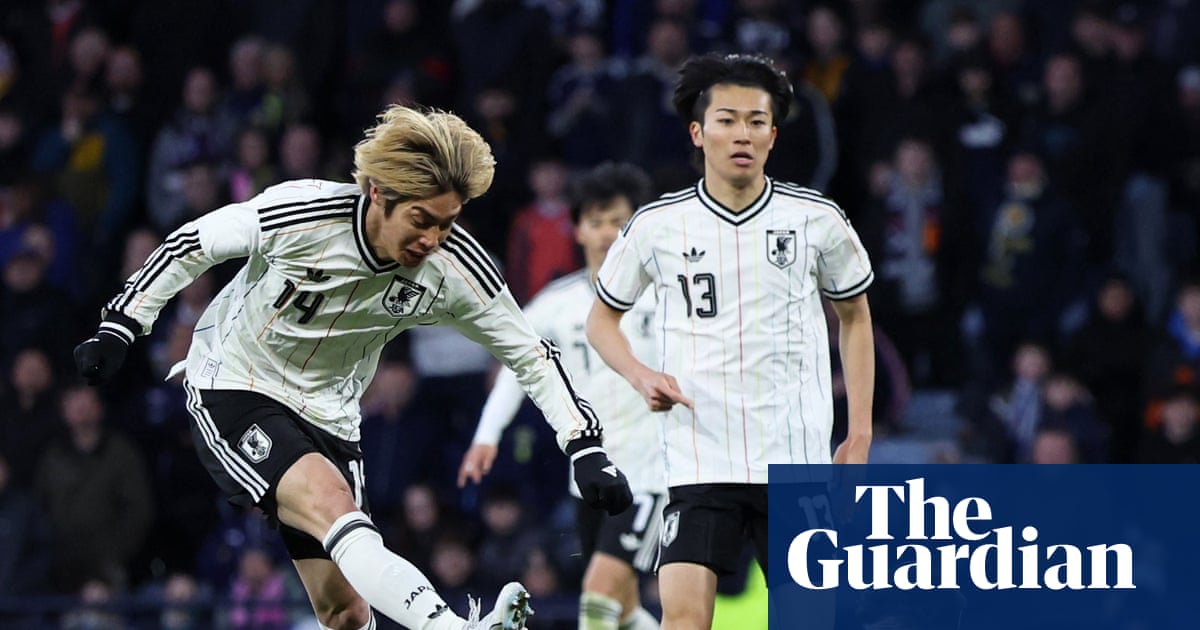
Why Scotland's tedious Japan defeat should worry Steve Clarke
2 months ago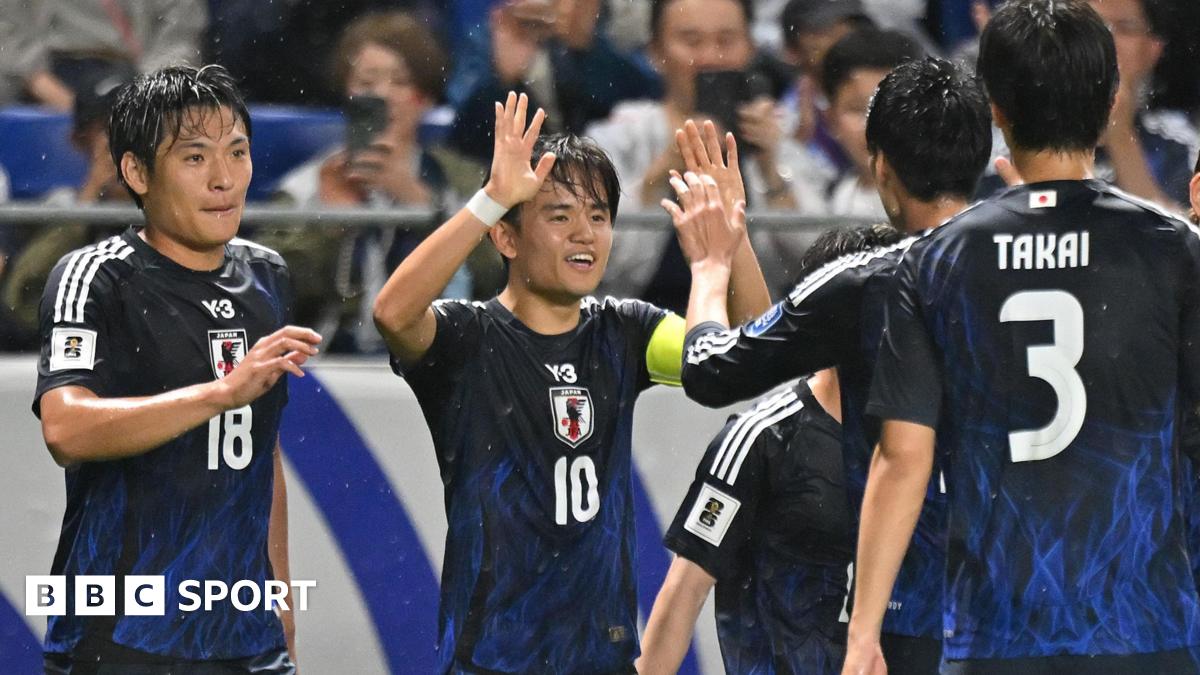
Scotland's grim reality check against a swaggering Japan
2 months ago
Steve Clarke just lost the Tartan Army and his sacking is inevitable
2 months ago
Scotland are sleepwalking into a World Cup disaster
2 months ago
Scotland fans are completely right to boo Steve Clarke's boring Japan defeat
2 months ago