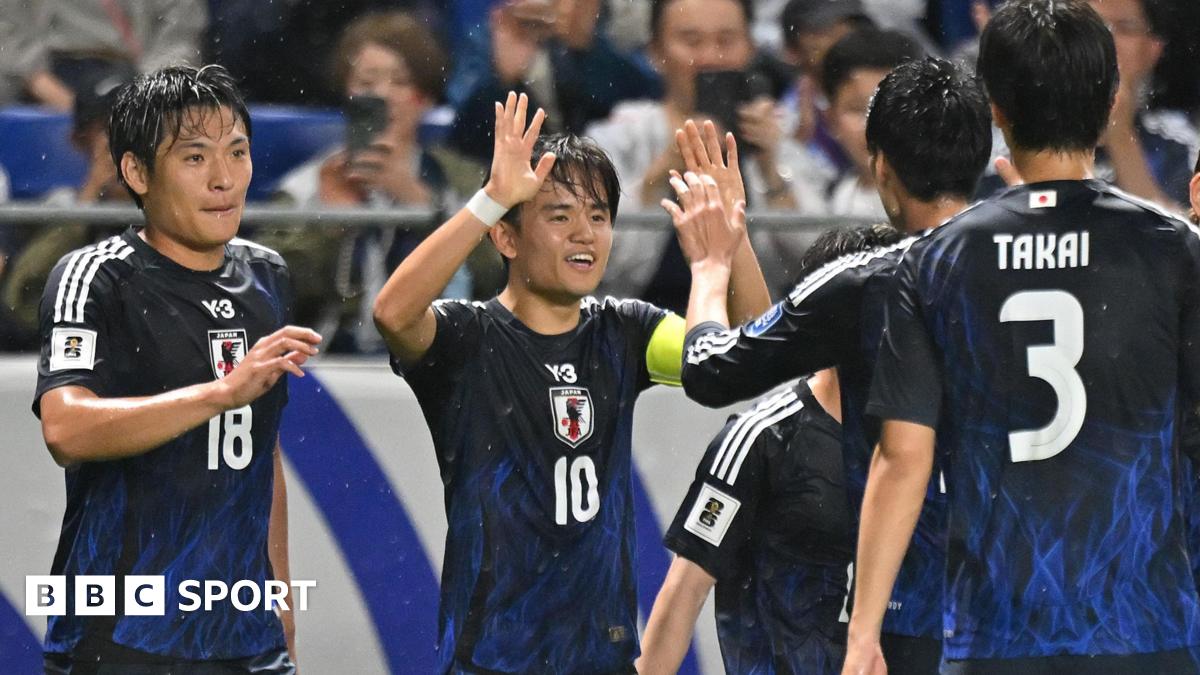
The clock is ticking. There are exactly 75 days until the 2026 FIFA World Cup kicks off across North America. Scotland have waited 28 years to return to football's biggest stage, but you wouldn't know it from the atmosphere at Hampden Park tonight. Instead of a celebration of a team heading to a global tournament, a passive 1-0 defeat to Japan ended with open hostility from the stands.
Steve Clarke was visibly irritated. Speaking to the BBC, the Scotland manager admitted he was "surprised and disappointed" that his team were booed off the pitch by the Tartan Army. He felt the reaction lacked perspective. The fans, shivering in the Glasgow cold after paying premium friendly prices, felt entirely differently.
The Guardian accurately described the 90 minutes as "sheer tedium". This wasn't just a bad night at the office. It was a tactical warning sign that Scotland's default setting might be fundamentally broken.
The Problem with Passivity
Steve Clarke built his Scotland revolution on a very strict foundation. His 5-4-1 mid-block is designed to frustrate superior opposition. It is the exact system that secured a famous victory over Spain in March 2023 with just 25% possession. When the opponent demands the ball, Scotland are brilliant at closing the spaces between the lines.
But Japan presented a completely different puzzle. Hajime Moriyasu's side are the ultimate tactical chameleons. Remember the 2022 World Cup? Japan beat Spain despite holding just 18% possession. They are perfectly comfortable dropping deep and daring the opposition to break them down. Tonight, they flipped the script on Scotland entirely.
When forced to dictate the tempo, Scotland looked bereft of ideas. The wing-backs, usually so vital for offensive width, were pinned back by intelligent pressing. The central midfield trio spent the evening passing sideways. Without space to counter-attack into, the forward line was completely isolated.
The Mechanics of a Broken Build-Up
To understand why Hampden reacted with such venom, you have to break down the severe inefficiency of Scotland's possession. An active low-block invites pressure to create artificial transitions. A passive low-block simply survives. Tonight, Scotland merely survived until they made an inevitable mistake.
Look at the tactical shape. In a functioning 3-4-2-1, the outside centre-backs must act as secondary playmakers. They have to step into midfield to create numerical overloads. Against Japan, Scotland's back three operated strictly within their own defensive third. The average passing distance between the defenders was risk-averse to the point of being totally sterile.
Japan recognised this instantly. Moriyasu deployed a sophisticated mid-block trigger. They allowed Scotland's central defenders to exchange the ball along the backline safely. But the moment a pass was played into the wide areas, two Japanese players swarmed the receiver. It was a tactical suffocating of Scotland's only real outlets.
The Midfield Dilemma
This pressing trap forced the midfield pivot to drop aggressively deep just to get touches. It created a massive chasm between the midfield and the lone striker. You cannot score goals if your number nine is isolated 40 yards away from the nearest supporting run.
In previous qualifying campaigns, John McGinn averaged nearly three progressive carries into the final third per 90 minutes. Against Japan, he spent the majority of his time tracking back to cover overlapping runs. When your most dangerous transition threat is playing as an auxiliary full-back, the system is malfunctioning.
Scotland's midfield relies entirely on the dynamic movements of its box-to-box players. When Billy Gilmour is pressed aggressively, the fallback option is usually a long diagonal ball to a willing runner. Japan simply cut off the angles for those diagonals, leaving Scotland to hit hopeful, aimless clearances.
A Misunderstanding of Expectations
This tactical dead-end is exactly where Clarke's post-match frustration stems from. He took aim at the supporters because he views these friendlies as rigorous defensive workouts. He wanted his team to practice suffering against a technically proficient, high-pressing Asian side. He got exactly the data points he wanted.
The fans, however, are not interested in isolated tactical data. They have discovered that there is a drawback to finally being a successful football nation. The baseline expectations permanently shift. You cannot ask fans to pay handsomely for a Friday night friendly and serve up zero attacking intent.
"I was surprised and disappointed." — Steve Clarke
Clarke is right to point to his historic success. Guiding this nation to an expanded 48-team World Cup is a massive managerial achievement. But resting on those laurels is a dangerous game when the tactical blueprint is looking increasingly stale. Gratitude always has an expiration date in international football.
Japan's Masterclass in Game Management
We should also credit the opposition. Japan are no longer just a plucky underdog story relying on set-pieces. They are a genuinely elite tactical unit. Their evolution over the last four years has been fascinating to watch.
They didn't dominate possession with pointless passing tonight; they dominated territory. They camped in Scotland's half, recycling the ball quickly and counter-pressing relentlessly the second they lost it. Their midfield trio controlled the half-spaces beautifully, making it impossible for Gilmour or Callum McGregor to turn and face forward.
Fluidity beats rigidity. Japan interchanged positions seamlessly. A winger would drop inside, a full-back would overlap, and a central midfielder would plug the vacated gap. Scotland, by contrast, looked like table football figures stuck permanently to their designated rods.
The 75-Day Deadline
June 11 is approaching rapidly. When Scotland land in North America, they will face teams fully prepared to sit deep and let them have the ball. If this passivity remains, group stage elimination is an absolute certainty.
Generations of Scottish fans grew up viewing major tournaments as something other nations did. Breaking that qualifying hoodoo was supposed to usher in a new era of confidence. Tonight's display felt like a hard regression to the fearful setups of the mid-2000s.
Friendlies are supposed to be the laboratory where a manager tests solutions. Instead, Clarke doubled down on a rigid shape that clearly wasn't working. He refused to shift to a back four when chasing the game. He kept the defensive midfield pivot intact even when Japan retreated to protect their late lead.
The boos at Hampden weren't just about losing a meaningless match to Japan. They were about the grim manner of the defeat. It was the sound of a fanbase realising that the tactical ceiling of this squad might have already been reached.
Clarke has less than three months to prove them wrong. He needs a functional Plan B. Defending your penalty area for 90 minutes is a survival tactic, not a tournament strategy.
Read Next
- Scotland fans are completely right to boo Steve Clarke's boring Japan defeat
- Why Steve Clarke is finally rolling the dice with Conway and Patterson
- Why England fans booing Ben White is a massive problem for Thomas Tuchel
- Argentina's tactical paralysis: The numbers behind Messi's indecision
- 🏆 World Cup 2026 — Full Coverage Hub
- 🇯🇵 Japan World Cup 2026 — Samurai Blue Hub