The inevitable goodbye we kept ignoring
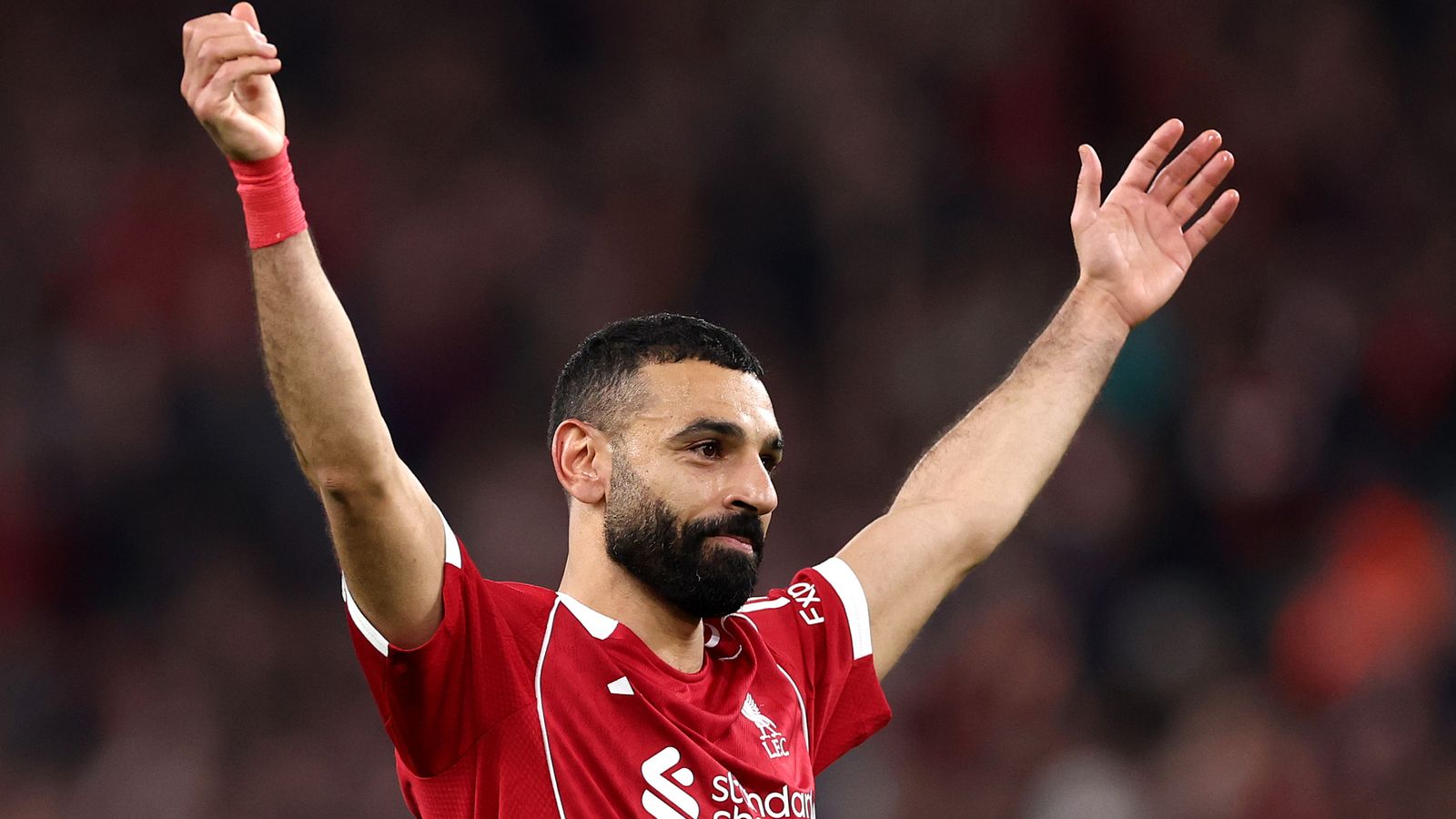
So, it is actually happening. After years of speculation, massive Saudi contract offers, and endless debate, Liverpool are finally staring down the barrel of life without Mohamed Salah. The modern era's most ruthless right winger is preparing his goodbye.
It feels bizarre even thinking about an Anfield without him. For the better part of a decade, Salah has been the one immutable truth of the Premier League. Midfielders age out. Defenders lose a yard of pace. Rival managers get fired. But the Egyptian King just keeps churning out absurd attacking returns like it is an automated bodily function.
According to The Mirror, the reality of his impending exit is finally setting in on Merseyside. And predictably, the moment the reality of his departure hit the timeline, the all-time rankings discourse flared up immediately. Because football fans cannot just appreciate a guy walking out the door. We have to violently argue about whether he is better than a guy who retired fifteen years ago.
So let us have the argument. Where does Salah actually rank in the grand pantheon of Premier League forwards? Because it is a much messier conversation than the raw data suggests.
The spreadsheet argument is terrifying
If you judge football entirely by Wikipedia pages and stat sheets, Salah is arguably the greatest attacking player in the history of the division. The numbers are simply comical. You look at his production during that initial 2017/18 campaign and it still does not look real.
He dropped 32 goals in a 38-game season right out of the gate. He didn't even need an adaptation period after arriving from Roma. He just showed up, started cutting inside onto his left foot, and broke the league in half.
But it wasn't just a flash in the pan. The real proof of his brilliance is the relentless consistency. Year after year, while Sadio Mane and Roberto Firmino saw their form fluctuate, Salah was an industrial machine. He guaranteed you twenty goals a season. Minimum.
He redefined what a wide forward is supposed to be in England. Before Salah, wingers were expected to beat a man and cross the ball. After Salah, if your right winger isn't your primary goal threat, your tactical setup is considered broken. He changed the geometry of how top teams attack.
The eye test and the Thierry Henry problem
But football is not played on a spreadsheet. And this is where the Salah debate gets incredibly toxic. If you suggest to a certain demographic of fans that Thierry Henry was a better player, they will immediately throw Salah's goal contributions per ninety minutes in your face.
Here is the brutal truth: Henry was a better football player. He just was. If you watched Arsenal in the early 2000s, Henry possessed a level of technical arrogance and aesthetic perfection that Salah has never quite reached. Henry gliding past defenders felt like high art. Salah cutting inside feels like brutal, efficient math.
Salah is not always fun to watch. In fact, he can be incredibly frustrating. He is arguably the most selfish elite forward the Premier League has ever seen. And yes, that selfishness is exactly what makes him so lethal. You need that tunnel vision to score that many goals.
But it also means watching him involves enduring long stretches of infuriating decisions. He will routinely ignore a wide-open teammate on the overlap to shoot directly into the shins of a low-block defender. He will try to dribble through three guys when a simple square pass would result in a tap-in. The sheer volume of his output often masks the sheer volume of his wastefulness.
The system player accusations and big games
Then there is the Jurgen Klopp factor. This is the other weapon used by Salah detractors. How much of his historic production was down to individual brilliance, and how much was down to playing in a bespoke system designed entirely to maximize his output?
For years, Firmino operated essentially as a false nine whose primary job was to drag center-backs out of position so Salah could run into the space. Trent Alexander-Arnold provided a level of playmaking from right-back that meant Salah rarely had to drop deep to progress the ball. The entire Liverpool machine was built to feed him.
Does that diminish his achievements? Not necessarily. You still have to put the ball in the net. You still have to make those relentless, lung-bursting runs in the 89th minute when your legs are burning. But it does provide heavily required context.
When you compare him to someone like Wayne Rooney, who constantly sacrificed his own goalscoring numbers to accommodate Cristiano Ronaldo, Robin van Persie, or Carlos Tevez, the context matters. Rooney adapted to whatever Manchester United needed. Salah demanded that Liverpool adapt to him. It worked brilliantly, but it is a different flavor of greatness.
The big game mentality and vanishing acts
We also have to talk about the big games. Salah's legacy is absolutely secured by his Champions League and Premier League titles. He scored the opening penalty in Madrid against Tottenham. He scored against Manchester United approximately four thousand times. He famously ripped Chelsea apart on a regular basis.
Yet, there have also been notable periods where he vanished when the lights were brightest. In several massive title deciders against Manchester City over the years, he was completely marshaled out of the game by Nathan Ake or Josko Gvardiol. When the rest of the team was struggling to break down a resilient defense, Salah was rarely the guy to drop deep, grab the game by the scruff of the neck, and orchestrate a win from midfield.
If the service was cut off, Salah was often cut off. He is a pure finisher, an executioner at the end of a well-oiled assembly line. He is not a one-man attack in the way prime Eden Hazard was for Chelsea. Hazard could take the ball on his own penalty box and drag his team up the pitch. Salah waits for the ball to arrive in the final third.
He is a volume shooter. A brilliant, historic volume shooter, but a volume shooter nonetheless. If he doesn't get five chances a game, his impact diminishes significantly. He rarely controls the tempo of a match.
The moments that defined the run
When the dust settles, the arguments about expected goals and shot conversion rates will fade away. What fans will actually remember are the moments. The sheer, terrifying visceral impact of seeing him isolate a defender one-on-one.
Think back to that goal against Manchester City at Anfield in 2021. The way he spun Bernardo Silva like a top, danced through Aymeric Laporte, and smashed it past Ederson with his weak foot. It was a goal of such staggering technical quality that it temporarily silenced the critics who claimed he was just a pace merchant who benefitted from a great system.
Or the goal against Chelsea in 2019, where he cut inside from the right and hit a missile into the top corner from twenty-five yards out. The stadium erupted, the title race swung, and Salah just stood there in his iconic yoga pose, completely unbothered by the chaos he had just caused.
These are the flashes of pure, unadulterated genius that elevate him from a great statistical anomaly to a true Premier League icon. He did not just score tap-ins. He scored goals that broke the collective spirit of opposing fanbases.
Ranking the unrankable void
So where does that leave him? If we are being brutally honest, he sits in a weird tier of his own. He does not have the sheer magical aura of Henry. He does not have the complete, all-around footballing brain of Rooney. He does not have the traditional striker pedigree of Alan Shearer.
But he has the numbers. And he has the trophies. And he has the longevity. He survived the physical meat grinder of the English top flight for nearly a decade without ever suffering a massive drop in production. That alone is staggering.
He is comfortably a top-five forward in the history of the league. You put Henry at one. Shearer at two simply out of respect for the unbreakable record. Rooney at three. And then Salah is right there, fighting with Sergio Aguero for the fourth spot. Some people will put him higher. Some will put him lower just to be contrarian.
The real issue for Liverpool is not figuring out where he ranks on a historical list. The real issue is trying to replace him. You cannot buy twenty-five goals a season on the transfer market anymore unless you have unlimited state funding. The scouting department can find another rapid right winger, but they cannot find another Mo Salah.
His departure will force a complete tactical reset at Anfield. The team will have to find a new way to score goals. They will have to spread the burden across three or four players instead of just funneling everything to the right side of the box and waiting for the inevitable.
It is going to be ugly for a while. Liverpool fans have grown so accustomed to his brilliance that they have taken it for granted. They complain when he misses a chance, forgetting that most wingers would not even have the anticipation to be in that position in the first place.
When he finally packs his bags, takes his massive final payday, and walks out of the training ground for the last time, the Premier League will be a far less terrifying place for left-backs. The debate over his legacy will rage on Twitter for another decade. But the sheer volume of his brilliance is undeniable. He was frustrating, selfish, and absolutely incredible. We will not see another one like him.
Read Next