The anatomy of a defensive collapse
You can spend all week drilling defensive shapes in training. You can map out pressing triggers, work on maintaining a compact mid-block, and instruct your holding midfielders to track runners.
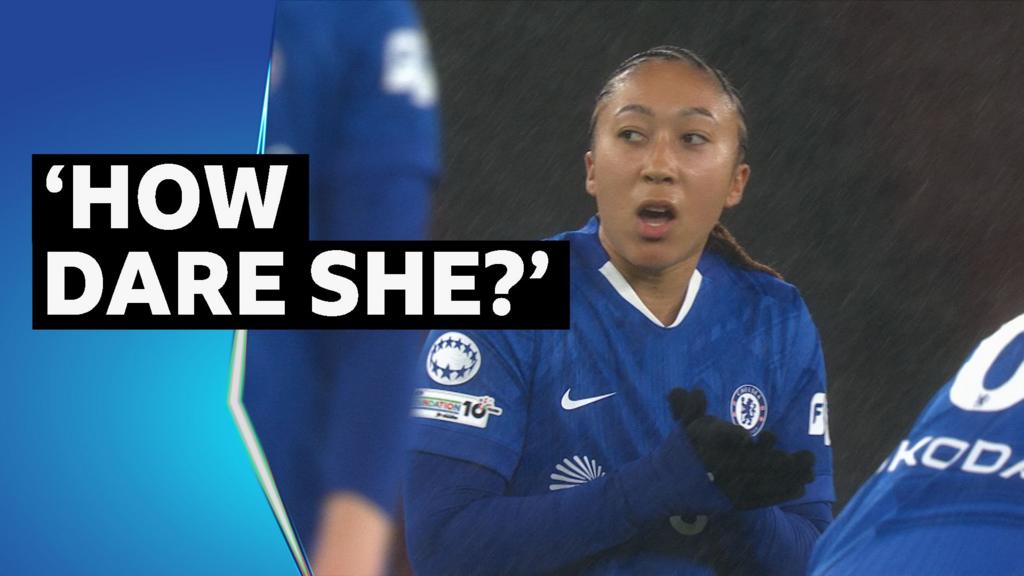
None of it matters when Lauren James decides she wants to run at you. Her solo strike against Aston Villa was the defining moment of a match that felt less like a contest and more like an execution.
Chelsea didn't just beat Villa. They dismantled them structurally, exploiting spaces that frankly should never have existed at this level of professional football.
This is the harsh reality of the Women's Super League in late March. The serious title contenders find a completely different gear. The rest of the pack simply tries to survive the 90 minutes.
As Sky Sports covered live, the opening exchanges suggested a slightly tighter affair. Villa looked temporarily organized. But defensive organization without any legitimate transition threat is just a waiting game. Eventually, the dam breaks.
Breaking down the solo strike
Let's look exactly at how James scored. It wasn't just a moment of individual brilliance; it was a systemic failure by Aston Villa's entire right-sided defensive unit.
James picked the ball up deep in the left half-space. Villa's right-back was caught completely out of position, having pushed up to engage a phantom run that never materialized.
This left a massive channel for James to drive into. The nearest defensive midfielder was caught ball-watching, reacting a full second too late to close the angle.
By the time James reached the edge of the penalty area, she had three defenders backpedaling. Nobody wanted to step up and commit the tactical foul.
She dropped her shoulder, shifted the ball onto her stronger foot, and drove it past the keeper. It looked effortless, but the foundation was laid by terrible defensive spacing.
You cannot give elite forwards a fifteen-yard runway. Doing so is practically an invitation to concede.
Where Villa's shape failed
Aston Villa's broader setup was deeply flawed from the opening whistle. They committed to a passive mid-block but utterly failed to apply pressure on Chelsea's double pivot.
When you give world-class midfielders time to lift their heads and pick passes, you are asking to be punished. Chelsea bypassed the initial press with embarrassing ease.
The vertical gap between Villa's midfield line and their defensive line was frequently stretching to twenty yards. That is a tactical death sentence.
Villa's fullbacks were consistently caught in two minds. If they stepped up, they risked getting beaten in behind. If they dropped off, they surrendered the wide areas entirely.
They mostly chose the latter. Chelsea happily overloaded the flanks, created numerical superiorities at will, and rained crosses into the box.
It was a tactical mismatch. Villa looked like a team hoping for a 0-0 draw without any actual mechanism to secure one.
The glaring flaw in Chelsea's armor
Yet, it wasn't a completely flawless performance from the league leaders. If we are being brutally honest, Chelsea's defensive transition remains a massive vulnerability.
When they commit bodies forward in attack, their rest-defense structure occasionally looks entirely disorganized. They leave massive, exploitable gaps in the half-spaces.
A more clinical team than Aston Villa would have punished them on the counter-attack. Arsenal or Manchester City absolutely will if this isn't corrected before the season ends.
There was a highly specific sequence in the 42nd minute where Villa finally managed to break through the center. Chelsea's center-backs were left totally isolated two-on-two.
Only a dreadfully poor final ball from the Villa winger saved Chelsea from conceding a completely avoidable equalizer. It is a recurring theme that gets masked by their overwhelming attacking output.
You cannot win the Champions League giving up those kinds of high-quality transition chances. Domestic dominance is one thing, but European glory demands tighter operational control.
The underlying metrics of dominance
Let's look at the underlying numbers. Chelsea controlled well over 65 percent of possession, but sterile possession means nothing. Their field tilt was the real story.
They played the vast majority of the game camped inside Villa's defensive third. They essentially turned the match into a half-court attacking drill, as noted in the live match coverage.
When you map out the pass networks, Chelsea's shape is heavily skewed towards the left channel. That is where the numerical overloads were most severe and where Villa suffered the most.
Villa managed zero shots on target in the first half. Zero. That isn't just poor execution; it is a fundamental failure of attacking design.
They couldn't string three coordinated passes together when attempting to escape their own half. The out-ball was usually a hopeful long punt that Chelsea's center-backs swallowed up effortlessly.
It is genuinely difficult to see what Villa's actual attacking plan was. If you are going to concede possession against a superior team, you must have a reliable mechanism to relieve pressure.
The midfield suffocation
The game was ultimately won and lost in the center of the park. Chelsea's midfield trio operated with a level of fluidity that left Villa chasing shadows for 90 minutes.
They utilized a classic box midfield in possession, dropping one player deep while the advanced eights pinned Villa's holding midfielders back.
This constant rotation meant Villa never knew who to mark. If they tracked the runner, space opened up centrally. If they held their zone, Chelsea just passed around them.
It was a masterclass in positional play. Every time a Villa player jumped out of structure to press, a Chelsea player immediately occupied the vacated space.
This is the hallmark of a brilliantly coached team. The players aren't just reacting; they understand the geometric implications of every single movement.
The psychological weight of the title race
We also need to talk about the psychological aspect of these fixtures. Late March is when the mental fatigue starts to compound the physical exhaustion.
Chelsea step onto the pitch with an aura of absolute inevitability. They expect to win, and more importantly, their opponents expect them to win.
You could see the belief drain out of Aston Villa the moment the first goal went in. The body language dropped, the pressing became half-hearted, and the communication broke down.
That psychological edge is worth an extra ten points a season. It forces opponents into rushed decisions and unforced errors.
When you are chasing Chelsea, you have to be perfect. When you are playing against them, you know that one mistake will be punished instantly.
Villa made half a dozen mistakes in the first half alone. They were frankly lucky to escape without conceding four or five.
This is what separates the elite from the mid-table. It isn't just technical ability; it is the ruthless, unrelenting application of pressure.
Final Prediction
I don't see anyone stopping Chelsea domestically this season. Their attacking firepower is simply too overwhelming for 90 percent of the league.
They have players capable of breaking open a stubborn, entrenched defense with a single touch. They have a coaching staff that understands exactly how to navigate the relentless spring schedule.
This match against Villa was a perfect microcosm of their season. They were breathtaking going forward, occasionally suspect at the back, but ultimately far too good for the opposition.
My prediction for the rest of their domestic campaign is entirely straightforward. They will win the league by at least a five-point margin.
They might drop points somewhere, likely away against a Manchester City or Arsenal, but their sheer week-to-week consistency will easily carry them through.
As for their upcoming fixtures, expect exactly more of the same. Teams will sit deep, Chelsea will relentlessly probe, and eventually, someone will unlock the door.
The real test comes in the Champions League. That is exactly where those glaring defensive transition flaws will be brutally exposed if they aren't fixed immediately.
Until then, sit back and enjoy the attacking football. It is genuinely frightening to watch when all the pieces finally click together.