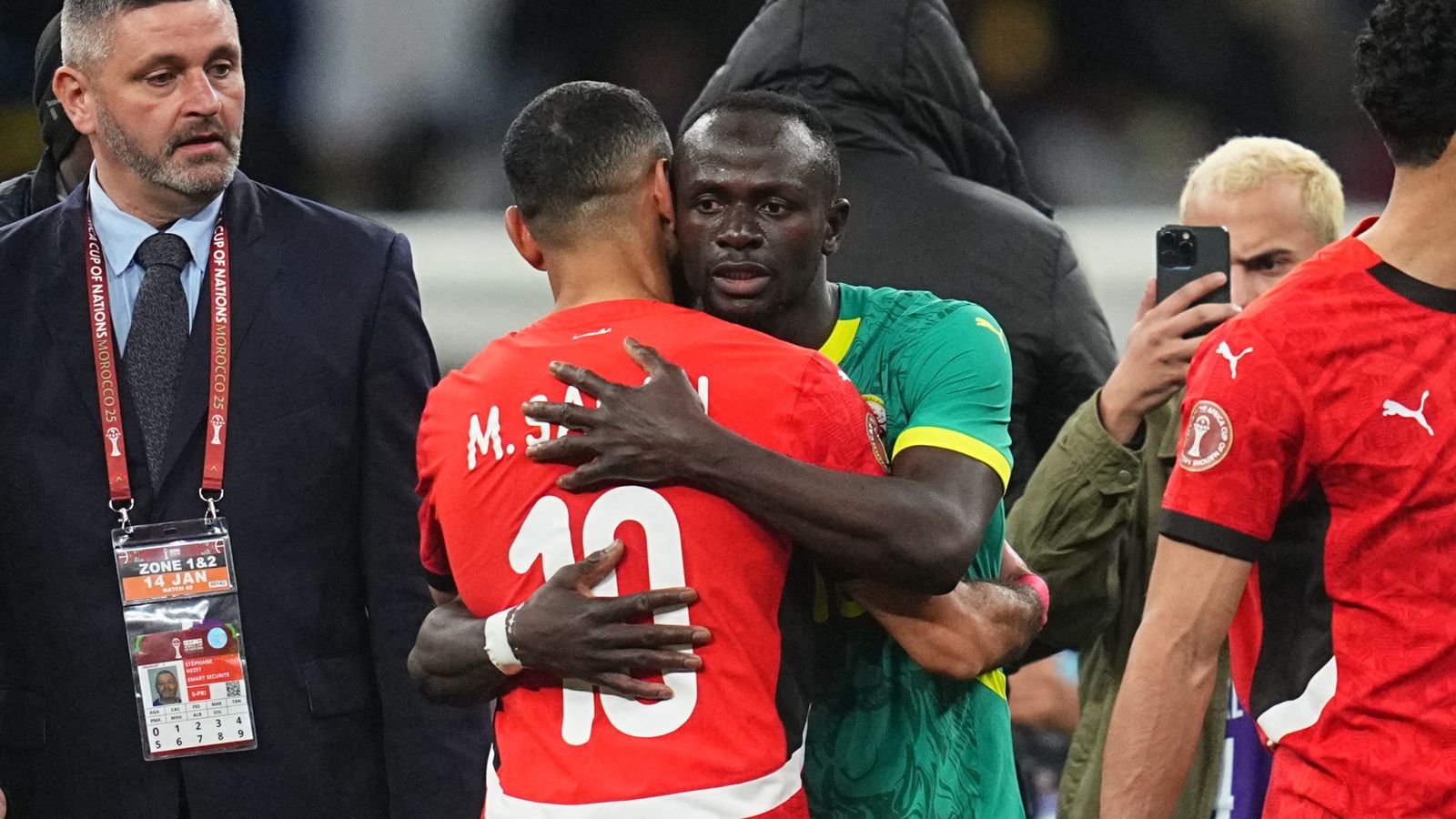
Manchester City's tactical rigidity just got dismantled by Ancelotti's chaos

The Tactical Autopsy: Why City’s Control Failed Against Madrid’s Volatility
The 5-1 aggregate scoreline in the Champions League Round of 16 is not merely a statistical anomaly; it is a profound indictment of Manchester City’s inability to adapt when their primary structural rhythm is disrupted. Pep Guardiola’s side, typically the masters of controlled possession and positional superiority, found themselves suffocated by Carlo Ancelotti’s fluid, counter-attacking masterclass. While the discourse focuses on Vinicius Jr.’s provocative celebrations or the looming uncertainty regarding Guardiola’s future, the real story lies in the tactical chasm that opened up at the Etihad.
The Structural Breakdown: Midfield Overload vs. Defensive Transition
City’s setup, traditionally a 3-2-4-1 in possession, relies on the 'box' midfield to dictate tempo and prevent transitions. However, Real Madrid’s hybrid 4-4-2/4-3-3 shape neutralized this by effectively isolating Rodri. By deploying Jude Bellingham as a free-roaming pivot between City’s defensive line and their midfield screen, Madrid forced City’s center-backs into uncomfortable 1v1 situations. The data from the second leg shows a staggering disparity in transition speed: Madrid averaged 3.2 seconds to move from defensive recovery to a shot-creating action, while City’s counter-press was consistently bypassed by vertical balls into the channels.
- The Rodri Problem: With Madrid flooding the half-spaces, Rodri was forced to cover an impossible amount of ground. Without a secondary pivot to share the defensive burden, the space between the midfield and the backline became an open highway for Vinicius and Rodrygo.
- The Inverted Fullback Dilemma: Guardiola’s insistence on inverting fullbacks left the wide areas vulnerable. When possession was lost, the recovery distance for City’s wide defenders was too great, allowing Madrid to exploit the space behind the high line with surgical precision.
Individual Roles and the Failure of Control
The individual performances at the Etihad highlighted a lack of tactical flexibility. City’s buildup play, while technically proficient, became predictable. The reliance on Erling Haaland to act as a target man against Antonio Rüdiger proved futile, as the German defender utilized a physical, man-marking approach that effectively removed Haaland from the game’s primary buildup phases. Conversely, Vinicius Jr.’s role was the antithesis of this rigidity. By drifting into the 'left-half space' rather than hugging the touchline, he forced City’s right-sided defender into a constant state of indecision—stay narrow to help the center-backs or stay wide to track the run.
The Ancelotti Paradox: Chaos as a Strategy
Ancelotti’s approach was a masterclass in 'organized chaos.' By allowing his front three to operate with minimal defensive structure, he ensured that City’s defensive unit could never settle into a rhythm. Every time City attempted to reset their formation, a Madrid player was already positioned in a transition-ready zone. This is the antithesis of Guardiola’s philosophy, which demands total control. When a team built on control meets a team built on individual brilliance and verticality, the result is often a collapse of the former’s structural integrity.
What Comes Next: The Post-Guardiola Shadow
The speculation surrounding Guardiola’s future is no longer a peripheral distraction; it is becoming a tactical weight. When a manager’s tenure is questioned, the squad’s commitment to high-risk, high-reward tactical systems often wavers. If City is to pivot toward a new era, the focus must shift from pure positional dominance to a more robust, transition-resistant setup. The 'City model' is currently facing its most significant existential crisis since the arrival of the Abu Dhabi ownership, and the solution won't be found in the transfer market, but in a fundamental recalibration of how they handle high-intensity European nights.
Ultimately, City were not just outplayed; they were out-thought. Madrid’s ability to turn the game into a series of individual duels rather than a collective tactical exercise exposed the flaws in City’s rigid, system-first approach. Until Guardiola finds a way to balance his obsession with control against the chaotic reality of modern knockout football, these European exits will continue to haunt the Etihad.
Read Next
- Arsenal and Man City's Wembley showdown is the final we all deserved
- Real Madrid and City are on a collision course that nobody is ready for
- The 2026 Champions League semi-finals are a tactical nightmare for the old guard
- The 2026 Champions League Quarter-Finals are a total minefield
- ⭐ UCL 2026 — Champions League Quarter-Finals Hub
Sport Squad FX40 40 inch Compact Mini Tabletop Foosball Table
Bring the pub classic directly to your coffee table.
Frequently Asked Questions
Why did Manchester City's 3-2-4-1 formation fail against Real Madrid?
How did Jude Bellingham contribute to Real Madrid's tactical success?
What role did inverted fullbacks play in City's defensive struggles?
Why was Erling Haaland ineffective against Real Madrid?
How did Vinicius Jr. exploit Manchester City's defensive structure?
More Coverage

Arsenal’s Champions League luck is running thin
28 minutes ago
Arsenal’s Champions League heartbreak is a systemic failure of nerve
29 minutes ago
PSG just won back-to-back Champions Leagues and nobody knows how to react
33 minutes ago
Top 10: The Definitive Football Moments of the 2025-26 Season
33 minutes ago
Arsenal’s Champions League final injury crisis hits ahead of PSG clash
an hour agoArsenal and PSG are locked in a tactical stalemate at the Allianz Arena
an hour agoMore Analysis
Pep Guardiola's control freakery is a disease, and Real Madrid is the cure
1 week agoStop complaining about tactics because Real Madrid just did it again
1 week ago
Real Madrid and City are on a collision course that nobody is ready for
2 months, 1 week ago
Real Madrid vs Manchester City is a tactical nightmare
1 month agoMan City and Real Madrid are about to break football again
1 month, 1 week ago