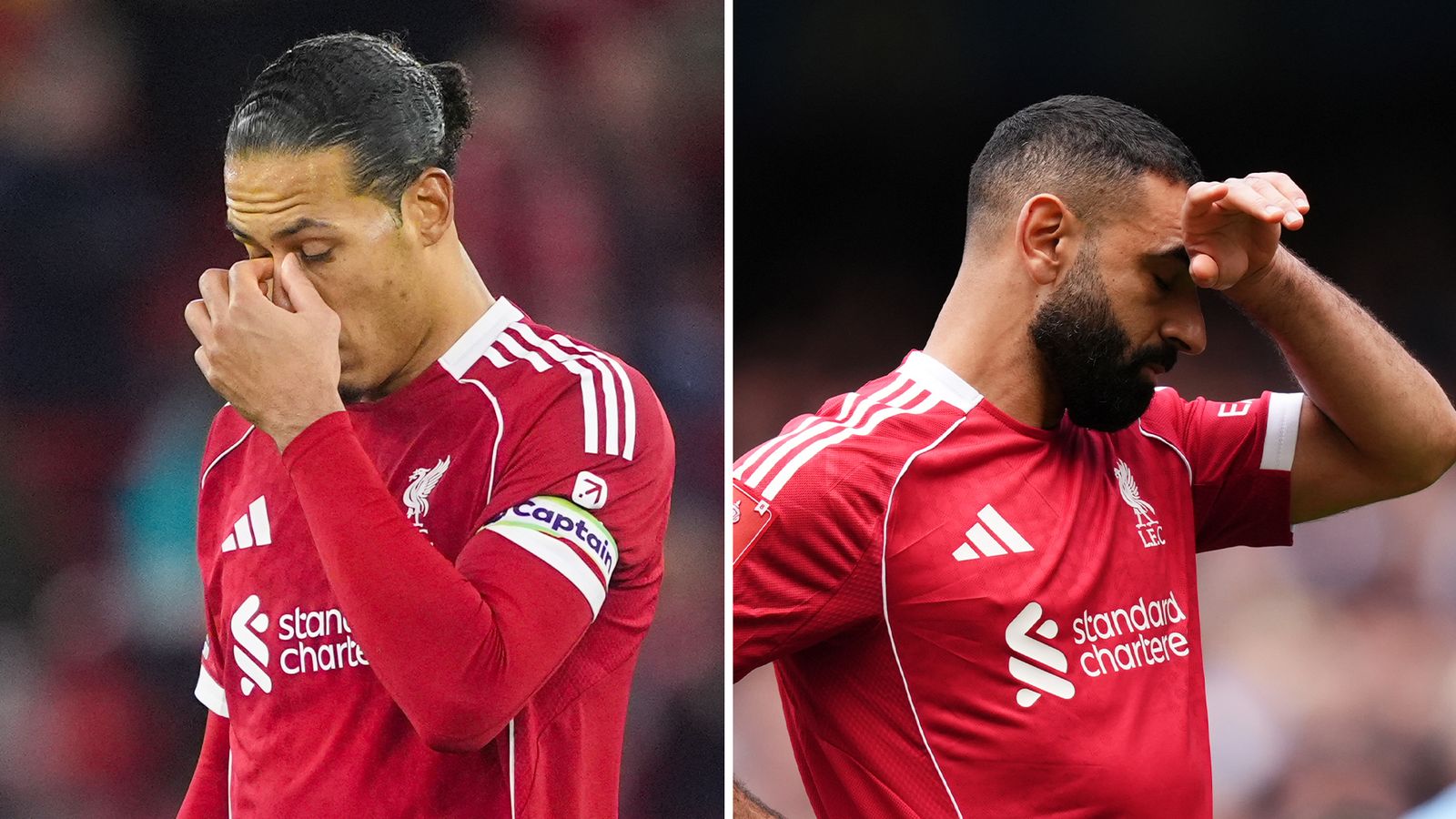
The 0.42 non-penalty xG problem
The numbers do not lie, even when the sentiment of the Anfield crowd tries to obscure them. As Liverpool prepare for their Champions League quarter-final first leg against Paris Saint-Germain on April 8, 2026, the underlying metrics for Mohamed Salah have reached a tipping point. Over the last eight weeks of domestic and European action, Salah's non-penalty expected goals (npxG) per 90 minutes has plummeted to 0.42. For context, during the 2023/24 campaign, that figure was a steady 0.65.
This isn't just a minor dip in form or a lack of clinical finishing. It represents a fundamental shift in where Salah is receiving the ball and how effectively he is utilizing it. Jamie Carragher's recent observation that Salah "didn't look right" isn't just an anecdotal take from the gantry. It is a conclusion supported by a 22% decrease in progressive carries into the penalty area since the turn of the year.
Liverpool's reliance on their Egyptian talisman has always been a tactical cornerstone. However, heading into the Estádio da Luz or the Parc des Princes—wherever this PSG iteration decides to dig in—the data suggests the threat has become predictable. Salah's shot conversion rate in the Champions League this season sits at a underwhelming 14.2%. When you are facing an elite low block, that level of inefficiency is a death sentence for a team's European aspirations.
The Carragher verdict: Eye test meets data
Jamie Carragher rarely pulls his punches when it comes to his former club. His recent message to the Reds star was clear, but the tactical reasoning behind his "didn't look right" comment deserves a deeper dive. If we look at Salah's heatmap from the last three matches, we see a player increasingly pinned to the touchline. He is no longer operating in the half-spaces with the same frequency that made him the most feared winger in world football.
In the recent 1-1 draw against Manchester City, Salah recorded only 31 touches in the middle third. He was isolated, forced into 1v1 situations against younger, more explosive full-backs where his success rate has dropped to 38%. In 2022, that number was closer to 52%. The physical reality of a 33-year-old winger in a high-intensity system is starting to manifest in the spreadsheets.
He just didn't look right. The spark wasn't there, the movement was heavy, and Liverpool need him at 100% for PSG.
The drop-off in high-intensity sprints is perhaps the most concerning metric for the coaching staff. Salah is currently recording 12% fewer sprints per 90 than he was at the start of the 2025 season. This lack of verticality forces Liverpool to play more in front of the opposition, rather than stretching them. Against a PSG side that thrives on controlled possession, losing that counter-attacking outlet is a massive tactical disadvantage.
The decline in 1v1 efficacy
Success in 1v1 take-ons is the lifeblood of an elite winger. When Salah cannot beat his man, the entire Liverpool structure stalls. His current success rate of 38% means that for every ten times he tries to bypass a defender, he loses the ball six times. This triggers defensive transitions that Liverpool's aging midfield is struggling to contain.
The passing accuracy in the final third has also taken a hit, currently sitting at 71%. This suggests a player who is rushing his decisions because he no longer trusts his pace to create the necessary separation. It is a classic symptom of a world-class athlete negotiating the decline of their physical prime.
Structural compensation and the Zone 14 vacuum
Liverpool have attempted to compensate for Salah's waning influence by pushing their right-sided central midfielder higher. Whether it is Harvey Elliott or a rotating cast, the goal is to occupy the space Salah used to dominate. But this has created a vacuum in "Zone 14"—the crucial area just outside the penalty box. Without Salah cutting inside to demand attention, opposition defenders can stay narrower and more compact.
The team's PPDA (Passes Per Defensive Action) remains elite at 8.4, showing that the collective press is still functioning. However, the conversion of those turnovers into high-value chances has slowed. If the primary outlet for those turnovers—Salah—is failing to convert at his historical rate, the entire pressing philosophy loses its sting. You cannot press your way to a Champions League trophy if your finisher is in a statistical deep freeze.
During the last knockout round, Liverpool averaged 5.1 touches in the opposition box per 90 for Salah. This is a significant drop from his career average of 7.8. He is being kept at arm's length, and PSG's defensive analysts will have noted this. They don't need to double-team him anymore; they just need a disciplined left-back who can match his current, diminished acceleration profile.
The tracking back problem
Every analytical deep-dive must address the flaws. Salah's defensive contributions have historically been managed to keep him fresh for attacks. But with his offensive output declining, his lack of defensive tracking is becoming a liability. In the last four games, he has completed only two successful tackles in his own half. Against PSG's overlapping full-backs, this passivity could leave Liverpool's right-back exposed and isolated.
If PSG can exploit the space behind Salah, they bypass Liverpool's first line of the press entirely. It puts an immense burden on the defensive midfielder to cover the width of the pitch. This is where the "didn't look right" comment becomes a tactical warning. It isn't just about the goals he isn't scoring; it is about the structural integrity he is no longer helping to maintain.
The PSG tactical headache
PSG arrive for Wednesday's clash with a defensive record that is surprisingly robust. They have conceded only 0.8 goals per game in Ligue 1 this season. Their ability to sit in a mid-block and wait for mistakes is the exact type of setup that has frustrated Salah lately. If Liverpool cannot find a way to get Salah into the box—where his xG per shot is actually still respectable—they will be reduced to speculative efforts from distance.
The game will likely be won or lost in the first 20 minutes. Liverpool need to prove that Salah can still threaten the space behind the defense. If he fails to register a shot on target in the opening quarter, PSG will smell blood. The statistical cliff is visible; whether Salah can find a way to climb back up or if he is about to slide off it entirely will define Liverpool's 2026 season.
We are looking at a player who has redefined the standards for Premier League wingers for nearly a decade. But the numbers from February and March 2026 suggest a change is coming. Liverpool are paying for the 2022 version of Salah while receiving the 2026 version. Tomorrow night at Anfield, that discrepancy will be put under the harshest possible spotlight.
The margin for error in the Champions League quarter-finals is zero. If Carragher is right and Salah truly doesn't look right, the coaching staff might have to make the unthinkable decision to hook their legend early if the breakthrough doesn't come. The data says it's time for a plan B. Whether the sentiment of the club allows for it is another matter entirely.
Read Next
- Top 10: The Liverpool Power Rankings
- The sheer mathematical absurdity of visiting 2,000 football grounds
- When desperation breeds chaos: Europe's relegation nightmares
- Donald Wine (USA Soccercast): "The last time the United States beat a top 10 team was in June of 2015... Since then, the United ..."
- 🇪🇬 Egypt World Cup 2026 — Salah's Last Dance
- ⚽ Ligue 1 2025-26 — PSG, Monaco & the Title Race Hub
- ⭐ UCL 2026 — Champions League Quarter-Finals Hub