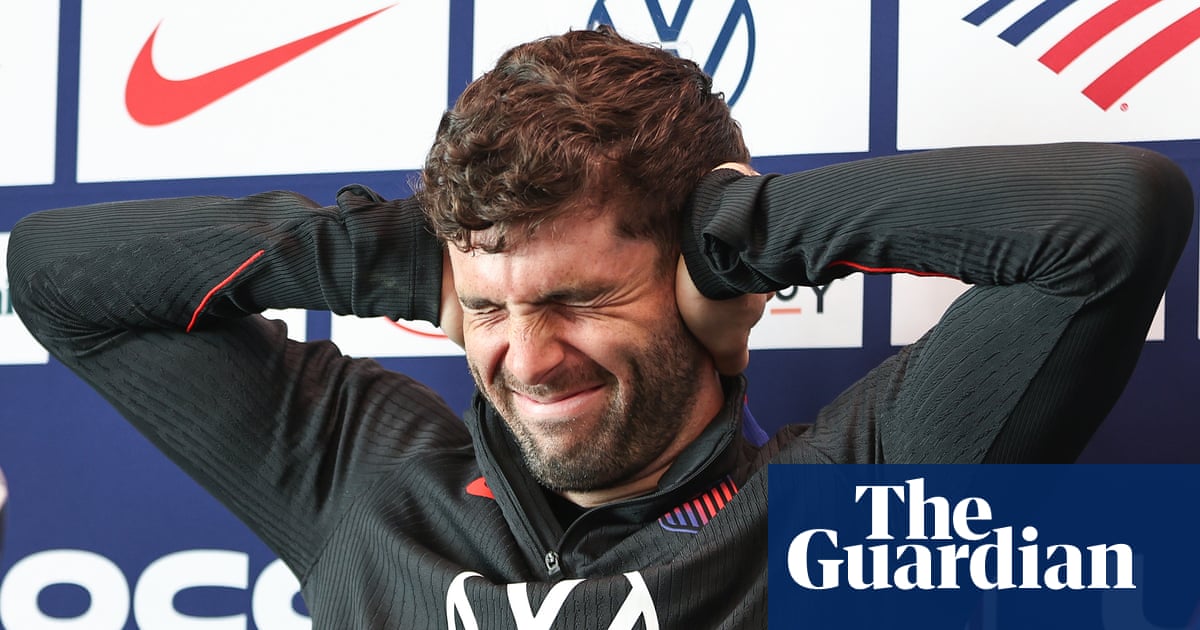
It's creeping up on them. We are exactly 75 days out from the kickoff of the 2026 World Cup. The billboards are up across North America. The television promos are running on an endless, inescapable loop. Yet, around the US men’s national team, there is a distinct sense of unease. A creeping realization that the clock has simply run out.
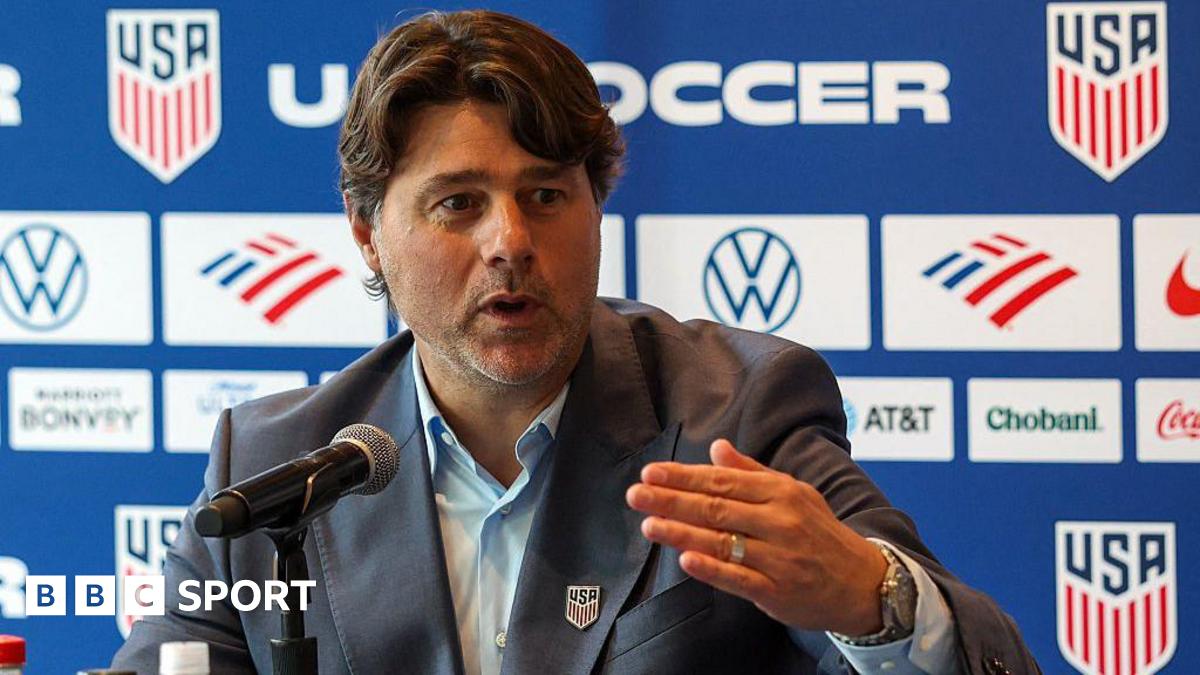
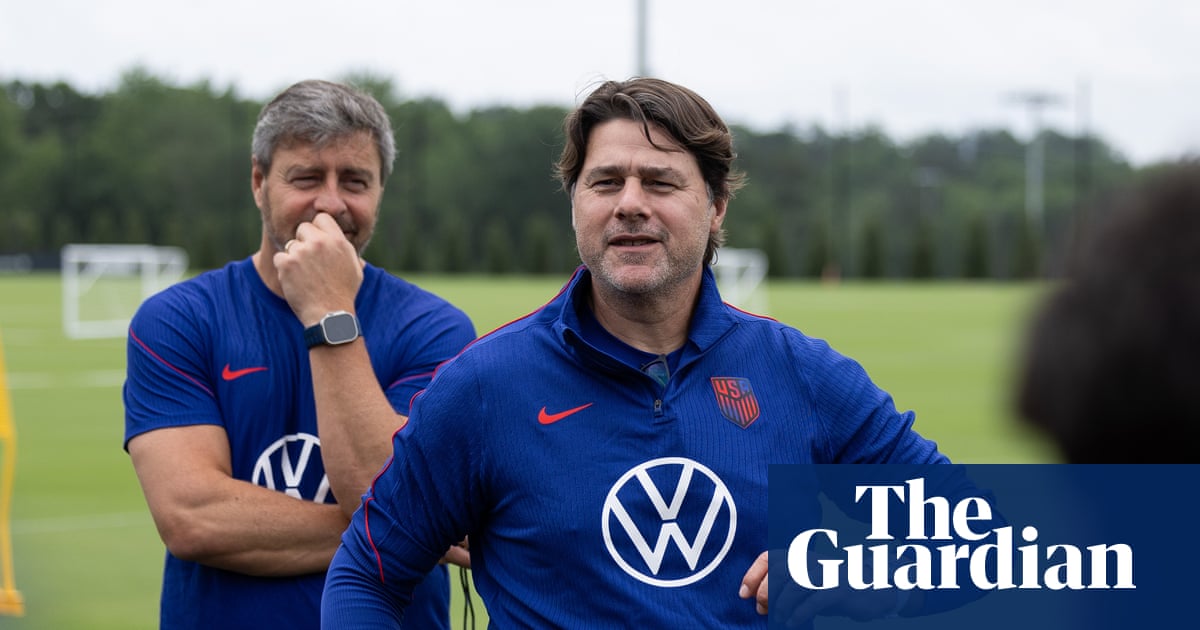
Mauricio Pochettino was brought in to elevate this group from plucky underdogs to legitimate contenders on home soil. He was the splashy hire, the elite tactician who could finally unlock the so-called "Golden Generation." But as The Guardian noted this morning, the Argentine is currently battling something far more stubborn than tactical deficiencies. He is fighting the crushing weight of expectation.
Pochettino knows this feeling. He felt it in his bones in 2002. Back then, Marcelo Bielsa’s Argentina arrived in Japan and South Korea as absolute tournament favorites, only to crash out in the group stage. The pressure suffocated them. Their legs turned to lead. Now, Pochettino looks at Christian Pulisic and sees a captain bearing a remarkably similar burden.
The Tactical Disconnect in Midfield
Let's strip away the psychological narrative for a second and look purely at the pitch. The USMNT has a glaring structural problem in the middle of the park.
Under Gregg Berhalter, the team relied heavily on wing play, overlapping fullbacks, and isolated moments of individual brilliance. It was functional, if unspectacular. Pochettino has tried to install a much more sophisticated, possession-based approach. He wants his fullbacks inverted to create numerical overloads centrally. He wants his number eights operating high in the half-spaces, pinning back the opposition defense.
It sounds fantastic in a whiteboard session. In practice against top-tier international opposition, it has been a disjointed, frustrating mess.
When pressed aggressively in the middle third, the American midfield pivot repeatedly fractures. Tyler Adams covers an astonishing amount of ground, but his progressive passing under duress remains a glaring weakness. Opposing teams know this. They set traps specifically for Adams, forcing him to receive the ball facing his own goal. Weston McKennie thrives on chaos and late box arrivals, but Pochettino’s system demands rigid positional discipline. McKennie often vacates his zone prematurely, leaving gaping holes in transition.
The result? A staggering drop in ball progression metrics through the central channel. The USMNT is forced to funnel the ball wide, completely neutralizing the intricate central overloads Pochettino is trying to build.
The Pulisic Conundrum and the Final Third
Then we have the Pulisic problem. The AC Milan forward is enjoying a fine club season, but put him in a national team shirt right now, and he looks like a man trying to win games entirely on his own. It is a noble instinct, born of desperation and leadership, but it is a tactically ruinous one.
Pochettino has deployed Pulisic primarily off the left wing, asking him to drift inside and operate as a secondary playmaker. This role requires rapid, one-touch combinations to break lines. But without a dominant true number nine to physically occupy opposing center-backs and push the defensive line deep, Pulisic is routinely swarmed by double teams the moment he receives the ball.
Folarin Balogun was supposed to be the answer to the striker problem. Yet, Balogun looks entirely disconnected from the rest of the attacking unit. He wants balls played into space behind the defense, but the USMNT’s sluggish buildup play rarely creates those transitional moments. Instead, Balogun is left wrestling with massive center-backs in a crowded penalty area, a battle he rarely wins.
The numbers are frankly damning. Over their last four fixtures against quality opposition, the USMNT has managed an average xG (expected goals) of just 0.84 per 90 minutes. They are completely sterile in the final third. They recycle possession harmlessly in a U-shape around the penalty area before settling for low-percentage, easily cleared crosses.
This isn't just a temporary blip in form. It is a chronic inability to break down organized low blocks, a flaw that tournament football ruthlessly exposes.
Defensive Frailties Exposed by the High Line
If the attack is blunt, the defense is openly fragile.
Pochettino demands a high defensive line. It is non-negotiable in his footballing philosophy. He wants to compress the pitch and win the ball back high up the field. But to play a high line effectively at the international level, you need center-backs with elite recovery pace and flawless reading of the game.
Chris Richards possesses the physical tools, but he is prone to catastrophic lapses in concentration when defending long balls over the top. Tim Ream is brilliant on the ball and organizes the defense beautifully, but asking a 38-year-old veteran to turn and sprint toward his own goal against the likes of Vinícius Júnior, Kylian Mbappé, or Bukayo Saka is borderline managerial negligence.
Opposing managers have already figured out the blueprint. The tactical instructions to beat the USMNT are painfully simple. Sit deep in a compact low block. Absorb the slow, predictable American buildup. Wait patiently for a misplaced pass from the midfield pivot or an overhit cross. Then, launch a rapid counter-attack directly into the acres of space behind the American backline.
We saw it happen against Germany. We watched Colombia exploit it relentlessly. It will absolutely happen again in June if Pochettino doesn't adjust his principles to match the personnel at his disposal.
The Reyna Question and Set Pieces
If open play is broken, set pieces should be the great equalizer. Historically, American soccer has treated dead-ball situations as prime scoring opportunities. Yet, the current iteration of the USMNT is shockingly wasteful from corners and wide free-kicks.
The delivery is wildly inconsistent, and the movement inside the penalty area is static. When you are struggling to create high-quality chances from open play, you cannot afford to waste five corners a game. Pochettino needs to hire a specialist, and he needs to do it yesterday. The margins in tournament football are razor-thin; a single well-worked corner routine can be the difference between advancing and going home in tears.
Then there is the great enigma: Gio Reyna. In terms of pure technical ability and vision, Reyna is arguably the most gifted player in the American pool. He sees passing angles that others simply don't. But his injury record is horrific, and his work rate off the ball is a massive liability in Pochettino’s high-pressing system.
When Reyna plays, the USMNT looks significantly more dangerous in possession. They can actually pick the lock of a low block. But they also become incredibly soft through the middle defensively. Pochettino faces an agonizing choice: does he sacrifice defensive solidity to get his most creative player on the pitch, or does he leave Reyna on the bench and pray that Pulisic can produce a moment of magic?
The Goalkeeping Void
Complicating matters further is the instability between the posts. For three decades, the USMNT could rely on world-class shot-stopping. From Brad Friedel to Kasey Keller to Tim Howard, the goalkeeper was the undisputed rock of the team.
Today, the situation is murky at best. Matt Turner’s disastrous club situation has completely eroded his confidence. You can see the hesitation every time he is asked to play out from the back — a core requirement of Pochettino’s system. Turner’s distribution is erratic, frequently putting his center-backs under immediate pressure.
The alternatives are incredibly raw. Gabriel Slonina has massive potential but lacks the reps in high-stakes senior internationals. Throwing a 21-year-old into the cauldron of a home World Cup is a massive gamble. Pochettino has to make a definitive decision in the next few weeks and stick with it, giving his chosen keeper time to build some semblance of chemistry with the back four.
The Clock is Ticking: A Prediction
We are looking at a squad caught painfully between two worlds. They are no longer the gritty, counter-attacking disruptors of the past. They have outgrown that identity. Yet, they lack the technical refinement and collective tactical IQ to execute Pochettino’s expansive, dominant vision against elite international teams.
The Argentine manager has exactly 75 days to find a working compromise. He needs to swallow his pride and simplify the buildup phase. Drop the inverted fullback experiment and allow Antonee Robinson to overlap naturally on the left, providing width that stretches the opposition. Put Pulisic closer to goal, perhaps even operating as a traditional number ten or a false nine, to overload the central areas and create space for Timothy Weah’s direct running on the right.
More importantly, he needs to fix the collective mentality. The pressure of hosting a World Cup is a unique, suffocating beast. It can carry a mediocre team to the semi-finals on a wave of national hysteria, or it can paralyze a talented group before they even step out of the tunnel for the opening match.
Pochettino is a brilliant, meticulous coach. But time is the one commodity he simply does not have. He cannot teach a complex, possession-heavy positional system in two fragmented international windows. He has to become a ruthless pragmatist.
If the USMNT tries to stubbornly out-pass the European and South American heavyweights this summer, they will be carved open and humiliated on their own soil. They need to embrace a slightly uglier, more direct, and far more cynical style of football to protect their glaring defensive weaknesses.
My prediction? They will manage to escape their group purely on adrenaline, sheer physical effort, and overwhelming crowd support. But the moment they face a top-tier, tactically disciplined side in the knockout rounds, the structural flaws will be ruthlessly exposed. A painful Round of 16 exit beckons. When it happens, the post-mortem on this so-called golden generation will be absolutely brutal.
Read Next
- Mauricio Pochettino ditching the USMNT for Spurs is peak football chaos
- Ben White just gave England 90 minutes of pure tactical chaos
- Top 10: The USMNT Defensive Blueprint
- Why Uruguay's chaotic press will expose the flaws in Tuchel's England
- 🏆 World Cup 2026 — Full Coverage Hub
- 🇺🇸 USMNT World Cup 2026 — Team USA Coverage Hub
- ⚽ MLS 2026 Season Hub — World Cup Year Guide