
Rochdale and York City are about to deliver the season's best title decider

The cruelty of the single spot
There is nothing quite like the National League promotion race. In the Premier League, or even the Championship, the safety net of multiple automatic promotion places or European spots alters the math. Down in the fifth tier, the margins are utterly unforgiving.
Only one team goes up automatically. The rest are condemned to the chaos of the playoff system, a structural nightmare that has broken better squads than Rochdale or York City.
As reported by The Mirror, Rochdale and York City head into this weekend separated by just two points at the top of the fifth tier. The tension isn't just about the points tally. It is about the tactical compromises both managers will be forced to make as the clock ticks down.
When you are chasing a two-point deficit on the final day, game state dictates everything. The chasing team cannot afford patience. The leading team cannot afford passivity. This dynamic creates a sharp tactical tension that usually results in either a cagey, error-strewn stalemate or a chaotic, unstructured basketball match.
Game state and the double-pivot
The fundamental issue for the team leading the table is managing the midfield space. When a draw is enough to secure the title, the natural human instinct is to drop five yards deeper. The defensive line retreats. The double-pivot sags closer to the center-backs.
This is where the tactical analysis gets interesting. Retreating too early invites a relentless wave of pressure. If your midfield pivot drops too deep, you surrender the zones just outside the penalty area.
That space is known as Zone 14. If York City or Rochdale concede that territory without a fight, they are asking to be punished by cut-backs and second balls.
I have watched hours of fifth-tier footage this season, and the most common flaw is the inability to maintain a high mid-block under pressure. Teams panic. They abandon their pressing triggers. Instead of engaging the opposition full-backs near the halfway line, they retreat into a low block.
But a low block only works if your center-backs are dominant in the air and your midfield is disciplined enough to track late runners. In the National League, the physical toll of a 46-game season means legs are heavy. Mental fatigue leads to missed assignments. A low block under these conditions is a recipe for disaster.
The art of the high press under pressure
Conversely, the team chasing the title must take calculated risks. If you are trailing in the standings, you need a victory. The clock is your enemy.
This means pushing your full-backs higher up the pitch and committing your number eight to the aggressive press. The tactical risk here is obvious. By committing bodies forward, you leave your center-backs isolated in 1v1 situations.
You are relying entirely on your rest-defence to stop counter-attacks. Rest-defence is the structure a team maintains behind the ball while they are attacking. It usually consists of the two center-backs and a holding midfielder forming a triangle.
If that triangle is broken, the counter-attack is lethal. The chasing team must use aggressive counter-pressing to win the ball back immediately after losing it. This requires intense physical exertion.
You cannot counter-press effectively for ninety minutes. The manager must choose specific moments to trigger the press. Do you press high from the opening whistle to force an early error? Or do you wait until the second half, hoping the opposition tires?
This is the chess match that will define the National League title race. A poorly timed press will be bypassed by a single vertical pass, leaving the backline completely exposed.
The goalkeeper as a tactical weapon
One of the most underrated aspects of a tense title decider is the role of the goalkeeper in possession. When the opposition employs a high press to chase a result, the goalkeeper becomes the spare man.
If the goalkeeper is comfortable on the ball, he can bait the pressing forwards. By holding onto the ball for an extra second, he draws the opposition striker out of his shape. This creates a passing lane to a dropping central midfielder.
Once that first line of pressure is broken, the attacking team suddenly has numerical superiority in the middle of the pitch. However, if the goalkeeper lacks composure, the high press becomes terrifyingly effective.
Forced long balls into wide channels are exactly what the pressing team wants. They use the touchline as an extra defender, trapping the receiving full-back and winning the ball back in dangerous areas. Both Rochdale and York City will have scrutinized their opponent's distribution under pressure.
The flaw in the system
For all the tactical evolution in the lower leagues, there is a glaring negative that cannot be ignored. Both Rochdale and York City have shown a disturbing tendency to abandon their passing principles when the stakes get high.
I have noted multiple instances this season where both sides resorted to aimless long balls in the final fifteen minutes of tight matches. It is a frustrating regression.
You spend eight months building a cohesive, possession-based system, only to discard it for hopeful punts towards a target man when the pressure hits. This tactical cowardice is exactly what costs teams titles.
When you bypass the midfield, you turn the game into a lottery of second balls. You surrender control. The team that holds its nerve and continues to play through the thirds, even when trailing, will likely emerge victorious.
The psychological weight of the scoreboard
Tactics do not exist in a vacuum. They are executed by human beings who are acutely aware of the shifting narratives on the final day. If these teams are playing parallel fixtures, the news filtering through the stadium changes everything.
A goal for the chasing team instantly shifts the burden of proof. Suddenly, the leading team must abandon their defensive posture. The manager on the touchline must scream instructions over the crowd noise, trying to implement a Plan B that might not have been rehearsed all week.
This is where the structure of a team is truly tested. Can they seamlessly transition from a 4-2-3-1 low block into a 4-3-3 high press without leaving massive gaps between the lines?
Historically, the answer in the fifth tier is no. Transitions in structure usually lead to transitional chaos on the pitch. The spaces between the defense and midfield stretch, allowing opposing playmakers to turn and drive at the back four.
Exploiting the half-spaces
Let's look at how the decisive goal might actually be manufactured. The key battleground will be the half-spaces. These are the vertical channels between the wing and the center of the pitch.
When a defense is sitting deep to protect a lead, they naturally condense the center. The center-backs stay narrow. The defensive midfielders clog the middle.
This forces the attacking team wide. But simple crosses from the touchline are easy to defend. The elite tactical approach is to overload the half-space.
You push a winger high and wide to pin the opposing full-back. Then you instruct your number eight or an inverted full-back to drive into the channel between the center-back and the full-back. This movement creates hesitation.
Who marks the runner? Does the center-back step out, leaving a gap in the middle? Does the holding midfielder track back, abandoning his zone? That split-second of indecision is all it takes.
A well-timed run into the half-space, followed by a cut-back to the penalty spot, is the most devastating weapon in modern football. This requires precise timing and coordinated movements that have been drilled repeatedly on the training ground.
The role of the target man in defensive transitions
We also need to discuss what happens when the ball is cleared. In a game where one team is heavily favored to dominate possession due to the points deficit, the defending team's striker plays a massive role.
He cannot simply wait up top. The modern target man must be a nuisance in transition. When the ball is cleared, his job is not necessarily to win the header, but to ensure the opposition center-backs cannot recycle possession cleanly.
He has to jump early, bump the defender, and chase the loose ball into the channels. If the striker fails to hold the ball up or win a cheap foul, the attacking wave simply restarts.
The defense gets zero respite. This relentless pressure eventually cracks even the most resolute back lines. The physical demands on the lone forward are immense, and his hold-up play often dictates whether his team can survive the late onslaught.
The impact of the bench
The rule allowing five substitutions has fundamentally altered how managers approach the final quarter of a match. It allows for aggressive tactical shifts without exhausting the starting eleven.
If you are chasing the game, bringing on two fresh wingers and a second striker at the hour mark completely changes the dynamic. It forces the defending full-backs, who have already been sprinting for sixty minutes, to deal with fresh, explosive pace.
Conversely, the defending manager can introduce a third center-back, shifting to a back five to secure the penalty box. But this is a dangerous game.
Adding a defender usually means sacrificing a midfielder, which hands complete control of the center of the pitch to the opposition. It invites sustained pressure and essentially tells the opponent that you have no intention of attacking. It is a white flag waved in the name of pragmatism, and it rarely works against a desperate team. The managers must perfectly time these changes, reading the physiological state of their players while anticipating the opposition's next move. Too early, and you run out of options. Too late, and the damage is already done.
The final execution
As we approach kickoff, the tactical plans are already finalized. The video sessions are done. The whiteboards have been wiped clean.
Every pressing trigger, every set-piece routine, and every defensive shape has been drilled to the point of exhaustion. What remains is the execution.
The margin for error in these deciders is non-existent. You can dominate the possession metrics and control the expected goals, but a single missed assignment on a set-piece renders all that data meaningless. This is not just a game of passion or desire. It is a ruthless, unforgiving test of tactical discipline under the highest psychological duress.
The team that manages the space between their lines, controls the tempo through their midfield pivot, and refuses to succumb to the temptation of the long ball will lift the trophy. A mistake in the 89th minute is fatal.
The team that blinks first will face the agonizing lottery of the playoffs. The team that stays true to its structural principles will be playing in the Football League next season. The tactical blueprint is set. Now we see who has the courage to follow it.
Official Manchester City FC Fan Scarf - Sky Blue/White
Show your Cityzens pride during the title race or at the pub.
Frequently Asked Questions
What is the point gap between Rochdale and York City before the final weekend?
How many teams earn automatic promotion from the National League?
Why is dropping into a low block risky for the team leading the table?
How does the chasing team adjust their tactics to secure a needed victory?
What is the main vulnerability of an aggressive high press in this scenario?
More Coverage

Scotland’s path through group stage hinges on the Haiti opener
3 hours ago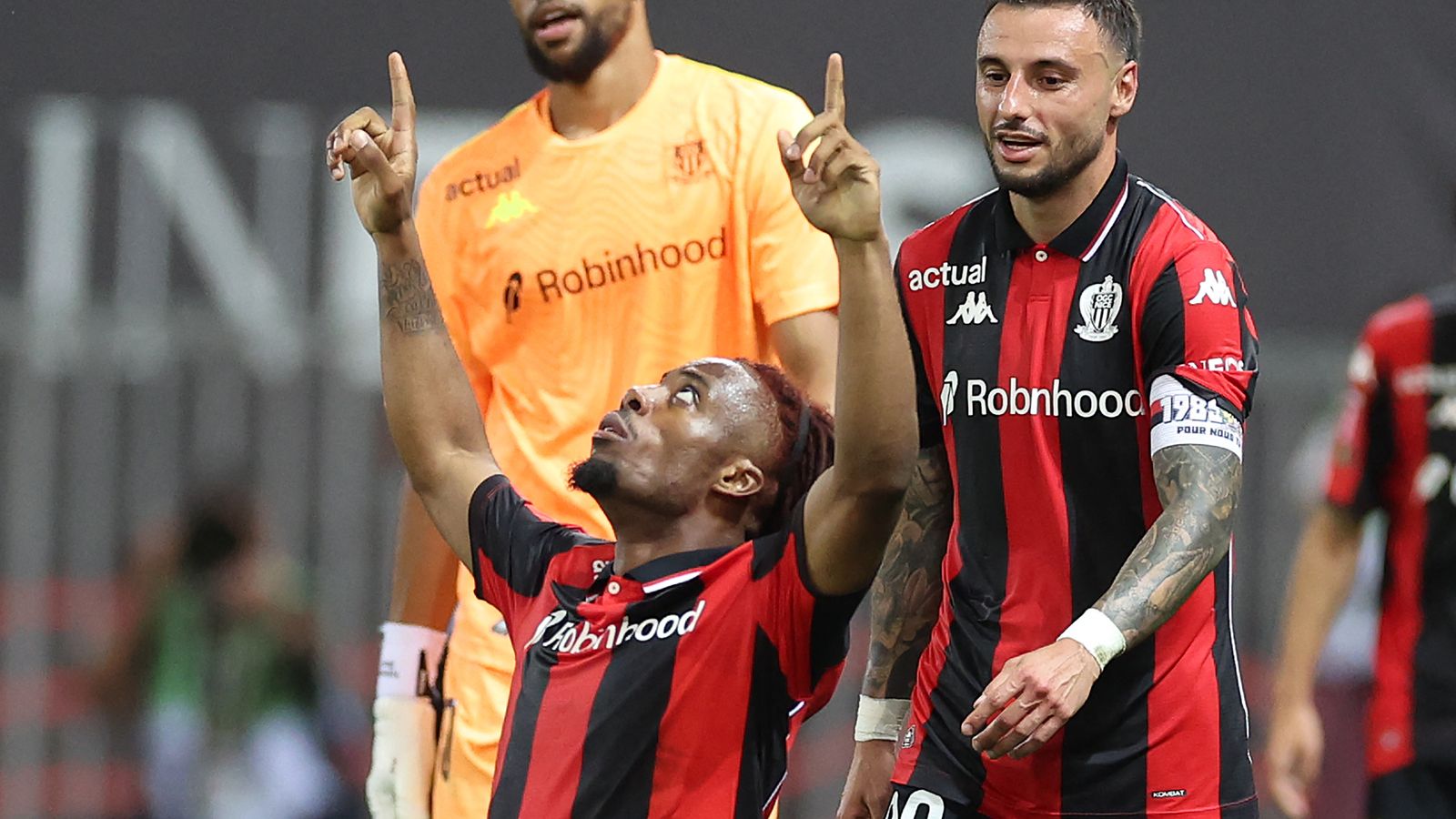
Nice saved their season, but 2026 demands a complete tactical reboot
4 hours ago
Michael Skubala takes the hot seat at Ashton Gate
9 hours ago
World Sevens brings high-octane chaos before the World Cup fever hits
9 hours ago
Why Manchester United’s pursuit of Ederson makes tactical sense
17 hours ago
Arsenal must reconcile their tactical past with this final hurdle
19 hours agoMore Analysis

Rochdale's late chaos against Sutton exposes a brutal promotion race
2 months ago
York City and Rochdale hit peak fitness for 212-point title decider
1 month ago
Tactical paralysis will define the EFL final day
3 weeks, 6 days ago
York City's promotion pitch invasion is a security failure, not a celebration
1 month ago
Wrexham and Hull City face a chaotic final day for the last playoff spot
4 weeks, 1 day ago