The Loch Ness Drogba gets his Hollywood ending
There are football fairy tales, and then there is whatever the hell is going on with Ross Stewart. If you pitched this script to a studio executive, they would laugh you out of the room for being entirely unrealistic.
We are talking about a guy who, a decade ago, was playing in the Scottish junior leagues. Now? He's on the verge of dragging Southampton back to the promised land and booking a ticket to North America for the 2026 World Cup.
Seriously, take a second to process the sheer absurdity of that trajectory. When most future internationals are in pristine academies getting their boots cleaned, Stewart was turning out for Ardeer Thistle and Kilwinning Rangers.
That is the absolute deepest, darkest trench of Scottish football. You don't just magically bounce from there to the grandest stage in world sports without a few bumps, bruises, and completely unhinged plot twists along the way.
We love comparing everyone to Jamie Vardy when they come from non-league, but Vardy was playing in England. The English non-league system has money, decent pitches, and actual scouting networks.
The Scottish juniors? That's a different universe of pain. It is an environment where survival is prioritized over step-overs. To go from that to facing international defenders is a massive glitch in the matrix.
From a £1,500 transfer to the big leagues
Let's rewind the tape because the timeline of his career is frankly ridiculous. It was only a decade ago that Albion Rovers decided to take a punt on him for the grand sum of £1,500.
Think about that figure for a minute. In modern football, £1,500 barely covers the catering budget for a Premier League under-23s match. It's less than what some top-flight players drop on a bad weekend in Dubai.
But that tiny transfer fee was all it took to get Stewart into the senior ranks. From there, it was an absolute grind.
He had a stint at St Mirren that didn't immediately set the world on fire. He was shipped out on loan to Alloa Athletic, where he had to prove he could mix it up physically in the Scottish Championship.
It wasn't glamorous, and there were no YouTube highlight reels being made about him. Then came the move to Ross County, where people finally started to wake up.
Fans and pundits began to realize this giant Scottish kid could actually play a bit. He had pace, he had an engine, and he was absolutely fearless in the air.
He wasn't just a big lump up top. He had genuine technical ability that had been forged in the mud of Ayrshire.
Birth of a legendary nickname
The real explosion happened when he moved south to Sunderland. The Stadium of Light is a notorious pressure cooker that has swallowed much more established strikers whole.
The fanbase demands blood, sweat, and goals, and they will turn on you instantly if you don't provide all three. Stewart somehow thrived in the chaos.
This is where he was blessed with the "Loch Ness Drogba" moniker. Let's be clear: this remains one of the single greatest nicknames in the history of the sport.
It's perfectly stupid, totally accurate, and absolutely iconic. He bagged 26 goals in League One during that promotion season, completely carrying the Black Cats on his back.
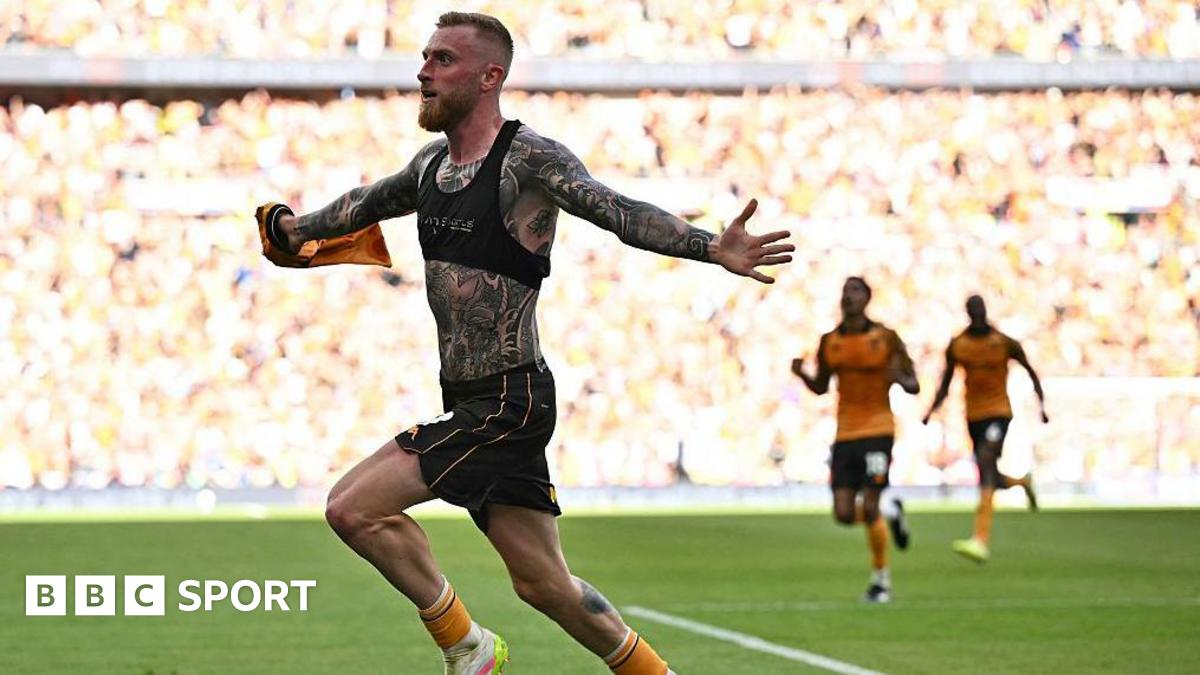
That was the exact moment he went from being a fun Scottish curiosity to a terrifying menace for opposition defenders. He dominated Wembley in the playoff final.
He proved he could handle the pressure of 40,000 Mackems expecting him to deliver. He looked completely unstoppable, and a massive money move was inevitably going to happen.
The brutal reality of the Championship grind
Of course, this isn't a cartoon, so we have to talk about the dark times. The big money move to Southampton was supposed to be his coronation as a top-tier striker, but his Achilles had other ideas.
Injuries are the absolute worst, most depressing part of this sport. One minute you're the hottest property outside the Premier League, the next you're spending agonizing months doing calf raises and questioning your entire existence.
Stewart missed a massive chunk of time. It wasn't just a knock; it was the kind of long-term injury that ruins careers.
The critics were out in full force immediately. They wrote him off as a classic Championship one-season wonder whose body simply couldn't handle the step up in intensity.
You could see the doubt creeping in around St Mary's. When a club invests heavily in a striker to get them promoted, the fanbase demands instant gratification.
Instead, they got depressing medical updates. It was a bleak period, and honestly, a lot of players would have mentally checked out right then and there.
The Ayrshire mentality kicks in
But that's exactly where the Scottish junior league mentality separates the men from the boys. You don't survive playing against angry, hungover plumbers on freezing Wednesday nights without developing severely thick skin.
Stewart put his head down, did the miserable, unglamorous rehab work in the shadows, and slowly clawed his way back onto the pitch.
Now, as we sit here in May 2026, he is the missing piece of the puzzle. According to a brilliant recent feature by BBC Scotland, his decade-long rise is culminating in exactly the way everyone hoped it would.
He is fit, he is firing, and he is trying to drag Southampton across the finish line and into the Premier League.
There is a massive negative observation to make here, though. Southampton's reliance on a guy who has spent more time with the medical staff than the first team over the last two years is a massive indictment of their recruitment strategy.
They burned millions on attackers who couldn't find the net with a map. That left them entirely dependent on a patched-up Stewart to save their season. It's brilliant for his personal narrative, but it's an awful look for the Southampton board.
Steve Clarke's masterstroke or desperation?
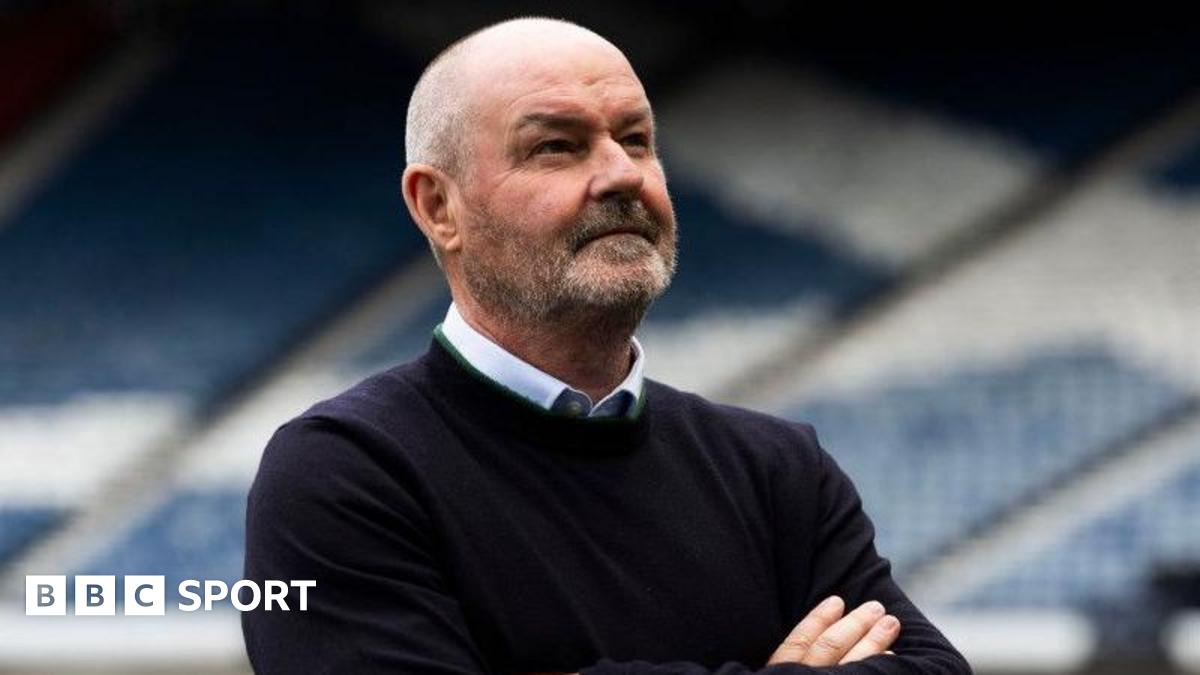
Which brings us to the ultimate prize. We are barely three weeks away from the kickoff of the 2026 FIFA World Cup, and Steve Clarke is looking at his attacking options for Scotland.
Historically, Scotland's striking department has been an absolute joke. We have seen everything from converted defensive midfielders to guys who can barely get a game for mid-table EFL sides leading the line at Hampden Park.
Looking at a fully fit Ross Stewart right now is like finding a cold beer in the middle of the Sahara. The timing could not possibly be more perfect.
Clarke knows exactly what he gets with the big man. Firing Southampton to the Premier League is an unbelievable achievement, but doing it right before pulling on the dark blue shirt at an expanded 48-team World Cup? That is a completely different stratosphere of success.
Is he going to start against the elite center-backs of world football in North America? Who knows.
Clarke loves his tactical rigidity, and Scotland is still going to play like Scotland. They will sit deep, suffer, and try to nick a goal on the break.
But throwing the Loch Ness Drogba onto the pitch with 20 minutes left when you desperately need a goal? That is a terrifying prospect for any tired international defense.
He is an absolute nightmare to defend against when he gets a running start. He is a weirdly graceful battering ram who simply refuses to stop running, and international football rarely sees players like him anymore.
Why the modern game desperately needs players like Stewart
If you look at the tactical evolution of football over the last five years, everything has become obsessed with false nines and inverted wingers. Managers want strikers who drop deep, link play, and essentially act as extra midfielders.
That is all well and good when you are Manchester City playing perfectly manicured football. But when you are scrapping in a playoff final or trying to survive a brutal World Cup group stage, you don't need a false nine. You need a battering ram.
Stewart provides genuine, unapologetic chaos. When he is on the pitch, opposition defenders cannot relax for a single second. They know they are going to be in a physical war for 90 minutes.
He isn't going to drop into the number ten pocket and play cute little through balls. He is going to pin his center-back, elbow them in the ribs when the referee isn't looking, and attack crosses like his life depends on it.
Football is fundamentally an entertainment product, and there is nothing more entertaining than watching a giant striker terrorize a nervous backline. We have lost so much of that physical edge in the modern era.
That is exactly why the BBC Scotland article about his rise to prominence has captured so much attention. Fans are desperate for an old-school hero.
The ultimate middle finger to the academy system
Let's be brutally honest for a second. The modern football academy system is a sterile, over-coached, joyless factory.
We are producing a massive generation of technically perfect robots who have great first touches but don't know what to do when an opponent actually kicks them. Ross Stewart is the ultimate antidote to that nonsense.
He wasn't polished in a multi-million-pound training facility with pristine grass. He didn't have dedicated sports scientists analyzing his sleep patterns and diet at age 14.
He learned how to play football the hard way, on terrible pitches, against grown men who wanted to hurt him. And that is exactly why this incredible story resonates so much with regular fans.
It proves that there is still a backdoor into the absolute elite level of the sport. You just have to be willing to suffer for years to find it.
The fact that we are sitting here talking about Ross Stewart as a World Cup wildcard is utterly insane. It's a massive slap in the face to every lazy scout who ignored him, and every Twitter critic who wrote him off.
If Southampton secure promotion this month, Stewart will be immortalized on the south coast. But the real victory is just making it this far.
Whatever happens in June, the guy has already won football. Now, somebody get Netflix on the phone, because I want casting ideas by Monday.
Read Next
- Why Ross Stewart's World Cup recall completely changes his summer market
- Ross Stewart is the only reason Southampton survive Russell Martin's system
- Why Steve Clarke is betting everything on Ross Stewart's hamstrings
- Scotland's World Cup squad is a glorious, terrifying gamble
- 🏆 World Cup 2026 — Full Coverage Hub
- 🇩🇪 Germany World Cup 2026 — Die Mannschaft Hub
- 🏴 Scotland World Cup 2026 — Tartan Army Hub
- 🇧🇷 WC 2026 Group C — Brazil, Morocco, Scotland, Haiti