The brutal cost of following the dream
The 2026 World Cup was sold as a continental celebration, a sprawling festival of football across three nations. With only two months until the opening whistle, the reality for the traveling supporter looks less like a festival and more like a financial shakedown. The logistics of North American travel are beginning to bite, and they are biting hard.
Fans planning to base themselves in the Northeast corridor are facing a logistical pincer movement. As FourFourTwo reports, the closure of New York's Penn Station is set to turn standard commutes into endurance tests. We are looking at 27-mile train journeys that were already tedious becoming nearly impossible during match weeks.
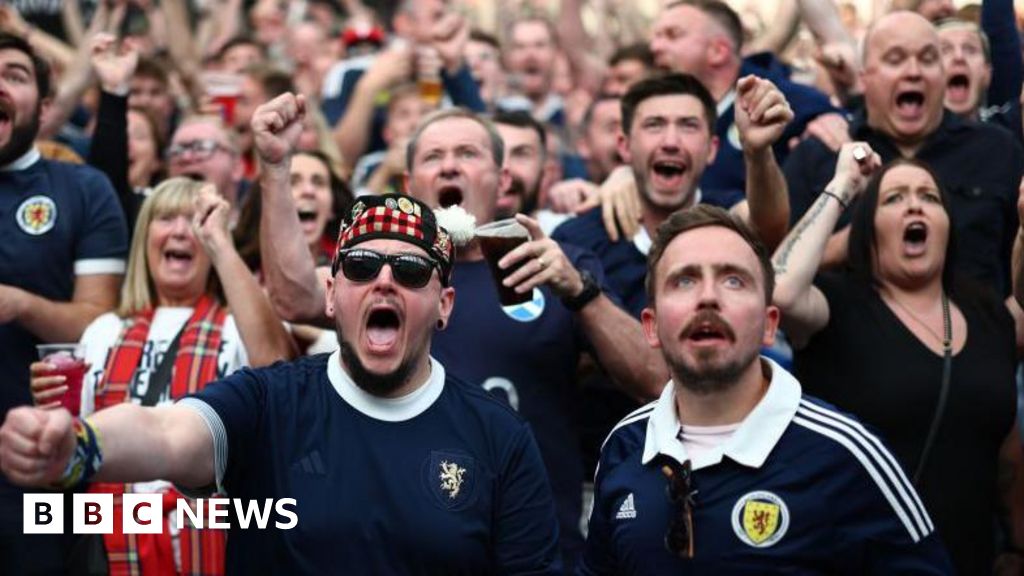
Then there is the naked opportunism of the pricing. In Boston, where Scotland and England are scheduled to play group stage matches, train fares are projected to skyrocket. We aren't talking about a standard holiday surcharge. Reports indicate price hikes as high as 450% for certain routes. For the Tartan Army or the Three Lions faithful, the cost of getting to the stadium might soon eclipse the cost of the flight across the Atlantic.
The resale market is a moral failure
FIFA’s official resale platform was supposed to protect fans from the predatory nature of secondary markets. Instead, it has become a theater of the absurd. Seeing a top-category ticket for the final listed for nearly £140,000 is not just a statistical outlier; it is a sign that the governing body has lost control of its own inventory. It makes the £100,000 security boost for the England squad look like pocket change.
While the US police are spending that extra cash on new equipment to keep the squad safe in their base camp, the average fan is left to navigate a market that treats them like a walking ATM. The 'air of electricity' mentioned by visitors to Los Angeles is real, but for many, it feels like the static shock of a bill they can't afford to pay. Real football culture isn't built by people who can drop six figures on a seat; it's built by the people currently being priced out of the Boston rail network.
Graham Potter and the Swedish redemption
While fans worry about their bank balances, Graham Potter is busy rebuilding a reputation that was left in tatters in East London. His tenure at West Ham was, by any objective measure, a nightmare. Yet, six months later, he is being hailed as a tactical genius in Stockholm. His Sweden side didn't just stumble into the World Cup; they kicked the door down in the playoffs.
The tactical shift Potter has implemented centered on maximizing Viktor Gyokeres. In the playoff semi-final against Ukraine, Sweden looked structured and patient, securing a 3-1 win. But it was the final against Poland that truly showed the 'Potter-ball' evolution. A dramatic 3-2 victory, sealed by a late Gyokeres strike, proved that Potter has rediscovered how to coach a high-functioning attacking unit.
Potter’s Sweden operates with a fluidity that was entirely absent during his final months at West Ham. He has moved away from the rigid positional play that stifled his creative players in the Premier League. Instead, he is using Gyokeres as a high-volume transition threat, allowing the striker to drift into channels and pull central defenders out of their comfort zones. Swedish fans are so enamored they are reportedly calling for him to be made a citizen.
The critical flaw in the Swedish system
However, we shouldn't ignore the defensive lapses that saw Poland claw back into that final. Sweden’s high line remains a gamble, especially when faced with elite counter-attacking sides. Against a team like France or even a disciplined England, the space left behind their full-backs will be a hunting ground. Potter has found his offensive groove, but he hasn't yet solved the problem of defensive structural integrity under pressure.
The Loch Ness Drogba and Scotland’s selection headache
Steve Clarke has a different kind of problem. With FIFA allowing an initial pool of 55 players for World Cup squads, the competition for a seat on the plane to the States has turned into a scrap. The headlines are being grabbed by the man fans have affectionately dubbed the 'Loch Ness Drogba'—Oli McBurnie.
McBurnie is fighting for his place alongside younger talents like Kieron Bowie and Luke Graham. As The Daily Mail notes, time is running out. Clarke’s system relies heavily on a focal point who can hold the ball up and allow the likes of John McGinn to make late runs into the box. McBurnie offers that physical presence, but his lack of top-flight goals remains a persistent concern.
The debate isn't just about who is the better striker; it's about tactical utility. Bowie offers more pace in behind, which would be essential if Scotland plan to play on the counter in the heat of a North American summer. Graham represents the future, a more technical option who fits the modern profile of a roaming forward. Clarke is a loyalist, but loyalty won't win points in a group containing England and a host city that is actively trying to bankrupt his supporters.
Trent Alexander-Arnold and the Southgate dilemma
For England, the tactical debate remains stuck on the same pivot: how to use Trent Alexander-Arnold. Stephen Warnock’s recent comments about Trent’s impact in the Champions League quarter-final against Real Madrid highlight the absurdity of the situation. While Harry Kane continues to be the undisputed spearhead, the use of Trent as a hybrid playmaker remains a point of contention.
Against Real Madrid, Trent showed exactly why he is a unicorn in world football. His ability to switch play with a single pass bypasses even the most sophisticated mid-block. If England are to navigate the deep defenses they will inevitably face in the group stages, leaving that level of passing range on the bench would be a form of coaching malpractice. Yet, the defensive concerns linger, fueled by the memory of previous tournament exits where tactical rigidity trumped individual brilliance.
Channeled pain and the Italian ghost
Riccardo Calafiori’s recent performances for Arsenal suggest a man playing with a specific kind of fury. The Italy defender is still reeling from the national team’s failure to secure their own path comfortably, channeling that misery into his club form. His assist for Kai Havertz in the Champions League win over Sporting was a moment of pure technical class, but it's his defensive aggression that stands out.
Calafiori represents the new breed of Italian defender—comfortable on the ball, willing to step into midfield, but still possessing that old-school cynicism when the ball is in the air. For Italy, his development is a silver lining in a dark period. For Arsenal, he is the fuel for a trophy push that could define their season before he turns his attention back to the international stage. He knows that in a tournament like the World Cup, one mistake is permanent. He is playing like a man who has already seen the worst and refused to let it happen again.
Final prediction for the summer
The 2026 World Cup will be won by the team that handles the logistics as well as the tactics. The heat, the travel distances, and the sheer scale of the event will favor squads with deep rotations and versatile systems. While everyone is looking at Brazil or France, keep an eye on Potter’s Sweden as a dark horse—provided they don't concede three every time they score four.
As for the fans, my prediction is grimmer. Expect more headlines about canceled trains, stranded supporters, and astronomical bills. We are heading for a tournament of incredible football and inexcusable greed. Own the fact that this World Cup is being built on the backs of fans who are being squeezed for every penny they have. On the pitch, it will be spectacular. Off the pitch, it’s already a mess.
Read Next
- Top 10: Top Moments
- World Cup 2026 is shaping up to be a logistical nightmare for fans
- Enzo Fernandez to Real Madrid: Unpacking the Chelsea Midfield Saga
- Arsenal found their grit in Lisbon but the Raya debate refuses to die
- 🏆 World Cup 2026 — Full Coverage Hub
- 🏴 Scotland World Cup 2026 — Tartan Army Hub
- 🇧🇷 WC 2026 Group C — Brazil, Morocco, Scotland, Haiti