
Scotland's World Cup shutdown masks Steve Clarke's attacking problem
The bureaucracy of a national shutdown
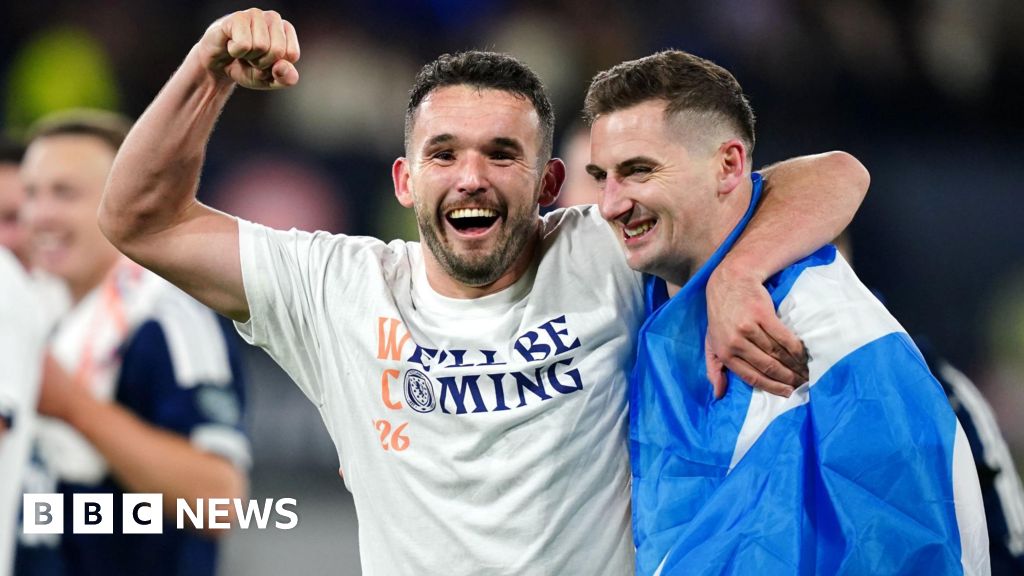
You know a football tournament has completely taken over the public consciousness when it becomes a matter of civic planning. Across Scotland, local councils are currently locked in administrative debates over whether to officially close schools during the national team's group stage matches this June. As the BBC reported this week, the logistical gymnastics of accommodating a North American World Cup have forced local governments into a corner.
They are weighing educational requirements against the reality that, frankly, nobody is going to be paying attention to algebra when John McGinn is lining up in a midfield block. The time difference is the immediate catalyst for this administrative headache. With the tournament scattered across the United States, Canada, and Mexico, kick-off times are aggressive for European viewers.
A midday match in Los Angeles translates to late afternoon or early evening in Glasgow. For the afternoon fixtures, schools face mass truancy; for the late-night fixtures, they face a zombie student population the following morning. The proposed holiday is a pragmatic concession to human nature rather than an act of pure patriotism. Determining which Scottish councils are taking the day off in June has become a regional sport in itself.
But the fascinating part isn't the council meetings. It is what this level of national investment demands of the eleven men on the pitch. Scotland hasn't merely scraped into an expanded 48-team tournament to make up the numbers. The expectation is progression.
The public assumes that the tactical evolution under Steve Clarke has reached a point where exiting at the group stage is no longer an acceptable baseline. That creates a massive disconnect between the emotional fever pitch at home and the cold, calculated pragmatism required to actually win football matches at this level.
The fans want swashbuckling attacks and memorable goals to justify the time off work and school. Clarke, however, knows that playing expansive football against superior opposition is a fast track to an early flight home. He will not compromise his defensive shape just to entertain a domestic audience watching at 4 PM on a Tuesday.
Steve Clarke's low-block reality
If you strip away the bagpipes and the Tartan Army narratives, Scotland is a fascinating tactical case study. Clarke has built this team on a foundation of extreme suffering out of possession. This is not an insult. It is a highly effective, rigidly enforced system designed to neutralize superior athletes.
They do not press high with reckless abandon. Instead, they drop into a compact 5-4-1 or a 5-3-2 out of possession, compressing the space between the midfield and defensive lines to less than twelve yards. The triggers are specific and drilled relentlessly. Scotland will allow opposition center-backs to circulate the ball near the halfway line indefinitely.
The trap is sprung the moment a pass is forced into the central channels. Callum McGregor is usually the instigator here, stepping out slightly to close the angle while Scott McTominay and John McGinn collapse inward. It is a suffocating web designed to deny any progression through the middle third.
When it works, it turns dynamic attacking teams into frustrated, horseshoe-passing possession hoarders who eventually resort to low-percentage crosses from deep areas. Against teams that rely heavily on central playmakers, this mid-block can completely dismantle their rhythm. The opposition full-backs are often left unmarked, deliberately invited to carry the ball forward, only to find themselves isolated and aggressively pressed against the touchline by the wing-backs.
It is a trap built on patience and positional discipline. But this system requires absolute physical perfection. The demands on the wing-backs—Andy Robertson on the left, and whoever is fit between Aaron Hickey and Nathan Patterson on the right—are bordering on the absurd.
They must simultaneously act as the primary width in attack and form a watertight back five in defense. In the grueling heat of a North American June, asking Robertson to sprint seventy yards in transition, forty times a match, is a massive risk. The sports science departments will be working overtime, but tactics cannot outrun physiology forever.
The reliance on the wing-backs creates another subtle vulnerability. When Robertson commits forward, he leaves a channel of space that the left-sided center-back must cover. Against elite wingers, asking a defender to repeatedly slide across and defend massive patches of open grass is dangerous.
The defensive rotation requires the central midfielders to drop back and fill the gaps seamlessly. Any slight hesitation in that rotation, or a turnover while Robertson is caught upfield, results in an immediate numerical disadvantage in transition. It is a high-wire act of stamina and tactical awareness.
The persistent final-third problem
This brings us to the uncomfortable truth that local councils aren't discussing. Scotland's progression from the group stage hinges entirely on an attacking phase that remains alarmingly blunt. Defending well is only half the equation.
At some point, you have to score, and Scotland's reliance on late midfield runners is a known variable that international managers have completely figured out. The attacking blueprint is obvious to anyone who has watched them over the last two years.
When Scotland transitions from defense to attack, the ball almost always goes wide. The wing-back pushes high, the central striker pins the center-backs, and McTominay makes a late, trailing run into the box. It worked brilliantly in the Euro 2024 qualifying campaign, catching out defenses that were too focused on the initial wide threat.
But at the World Cup, against top-tier analytical departments, that specific movement is scouted and neutralized. If an opposition holding midfielder is disciplined enough to stay tight to McTominay, Scotland's primary goal threat vanishes instantly. They lack a secondary trigger.
The moment the late run is cut off, the attacking sequence usually ends with a recycled pass backward or a hopeful, floating cross into a crowded penalty area. Which leads directly to the striker dilemma. Whether it is Che Adams, Lyndon Dykes, or Lawrence Shankland, the role of the Scottish number nine under Clarke is essentially a sacrificial lamb.
They are asked to chase lost causes, hold up the ball against isolated odds, and win fouls to relieve pressure. They are rarely presented with high-quality chances inside the six-yard box. Scotland consistently generates less than 1.00 expected goals from open play against seeded opposition.
You simply cannot grind out 1-0 victories in a major tournament if your transition game lacks a clinical edge. The absence of a forward who can create his own shot off the dribble means Scotland must execute perfectly drawn-up patterns every single time. That is a brutal margin for error when the physical toll of the match starts to accumulate in the second half.
Look at how they handle dead-ball situations. Set-pieces account for an unusually high percentage of their overall threat. When you have a player like McTominay, who attacks the ball with the violence of a vintage target man, winning corners becomes a primary tactical objective rather than a fortunate byproduct of an attack.
But banking on set-pieces in tournament football introduces a massive element of variance. If a referee is particularly strict on penalty-box grappling, or if the delivery from out wide is slightly off, that entire avenue of scoring is shut down. A team with true top-tier aspirations cannot rely so heavily on dead-ball variance to bail them out of stale attacking phases.
Managing the emotional load
The juxtaposition is striking. Back in Edinburgh and Glasgow, politicians are clearing the civic calendar. The country is preparing for a three-week carnival. Yet, the team they are watching will be playing some of the most attritional, high-stress football of the entire tournament.
The tension in those group stage matches will be unbearable because Clarke's system guarantees tight scorelines. There will be no relaxing three-goal victories. Every point will be extracted through sheer willpower and rigid tactical discipline.
There is also the glaring question of in-game adaptation. What happens if Scotland concedes first? The 5-4-1 block is perfectly designed to hold a 0-0 draw or protect a narrow 1-0 lead.
When forced to chase a game, however, the structure often looks disjointed and heavy-legged. The center-backs are historically reluctant to step into midfield with the ball, leaving massive structural gaps when the wing-backs are forced to push too high in search of an equalizer.
The transition from a reactive, counter-punching unit to a proactive, possession-based one is not seamless. If an opponent scores early, the entire tactical script is shredded. Clarke has historically struggled to engineer dramatic tactical shifts mid-match without completely destabilizing the defense.
Bringing on an extra attacker usually means sacrificing the midfield solidity that keeps them in the game in the first place. The school closures and the anticipated national holiday speak to a country that firmly believes it belongs on this stage. They are right to believe that.
The squad depth is better than it has been in two decades, and the midfield rotation is genuinely Champions League caliber. But tournaments are ruthless exposing mechanisms. They find your one glaring weakness and exploit it relentlessly until you are forced to find a solution.
The reality of the group stage
When the first whistle blows in mid-June, the administrative chaos back home won't matter. The students sitting in front of televisions instead of whiteboards won't care about the logistics of council meetings. They will care about whether Robertson can find space on the overlap, and whether McGinn can roll his defender on the edge of the box to win a dangerous set-piece.
Scotland has the structural integrity to frustrate anyone in the world. They have the midfield engine to compete with elite nations in tight spaces. But they are walking a tactical tightrope. Relying on perfect defensive shape and set-piece headers is a dangerous way to navigate a World Cup group.
The local councils have done their part to clear the schedule and let the country watch. Now, Steve Clarke has to prove he has a plan B for when the low block isn't quite enough to secure three points. If he doesn't, the national holiday might end up feeling like a very long, very frustrating afternoon.
Read Next
- Scotland's World Cup school holiday debate is peak football
- Top 10: Defining Moments in the 2026 Football Season
- Why the Premier League relegation race is finally turning into a frenzy
- Chelsea are finally weaponizing their toxicity
- 🏆 World Cup 2026 — Full Coverage Hub
- 🏴 Scotland World Cup 2026 — Tartan Army Hub
- 🇧🇷 WC 2026 Group C — Brazil, Morocco, Scotland, Haiti
G-Form Pro-S Vento Soccer Shin Guards
Revolutionary shin guards that feel exactly like a second skin.
More Coverage

Scotland’s path through group stage hinges on the Haiti opener
43 minutes ago
Nice saved their season, but 2026 demands a complete tactical reboot
2 hours ago
Michael Skubala takes the hot seat at Ashton Gate
6 hours ago
World Sevens brings high-octane chaos before the World Cup fever hits
6 hours ago
Why Manchester United’s pursuit of Ederson makes tactical sense
14 hours ago
Arsenal must reconcile their tactical past with this final hurdle
16 hours agoMore Analysis

Steve Clarke's Scotland gamble is a dangerous game
1 month, 4 weeks ago
Scotland are sleepwalking into a World Cup disaster
1 month, 4 weeks ago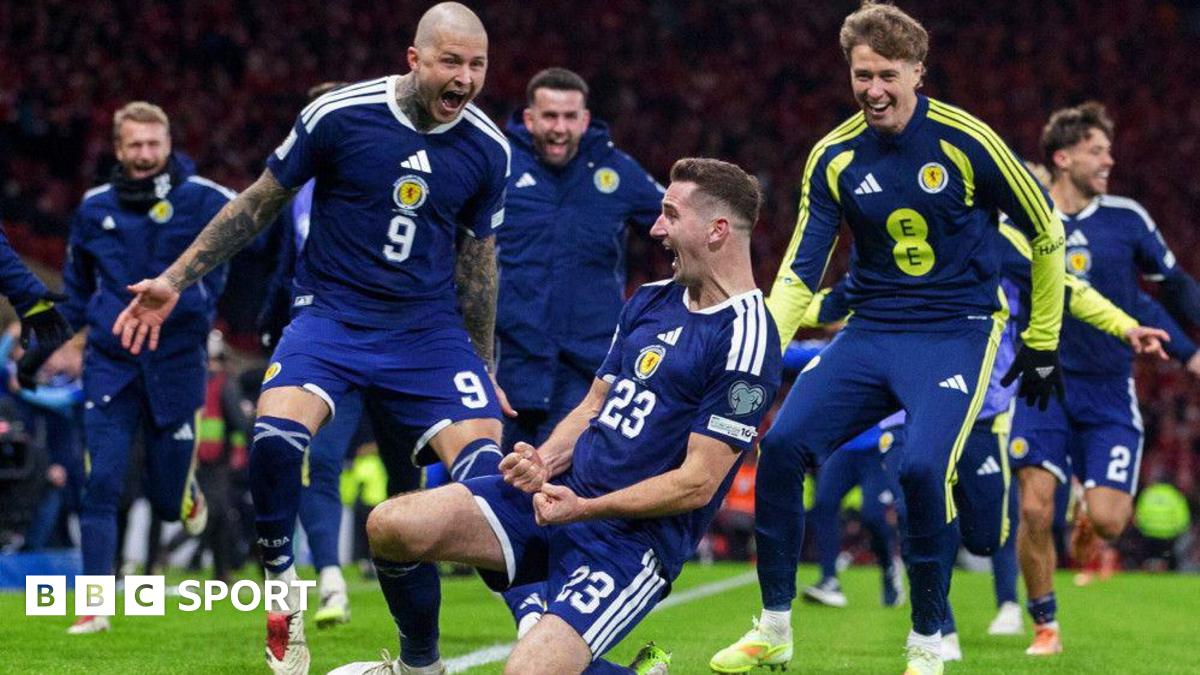
Steve Clarke's tactical masterclass that dragged Scotland to the World Cup
2 months ago
Why Scotland's tedious Japan defeat should worry Steve Clarke
2 months ago
Scotland's grim reality check against a swaggering Japan
2 months ago