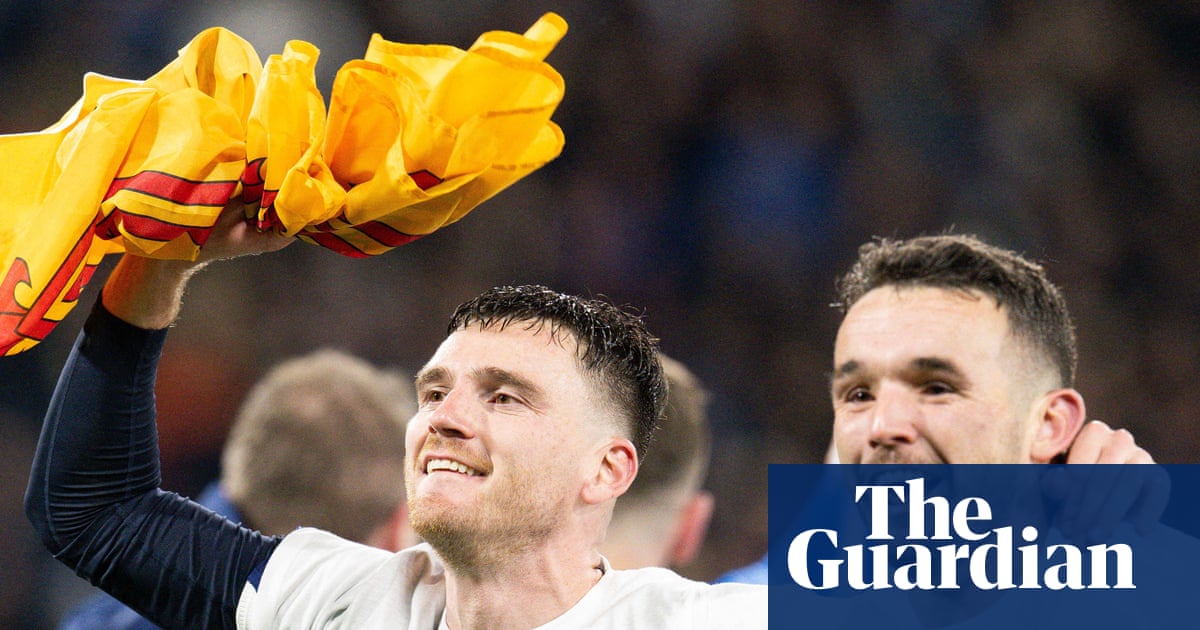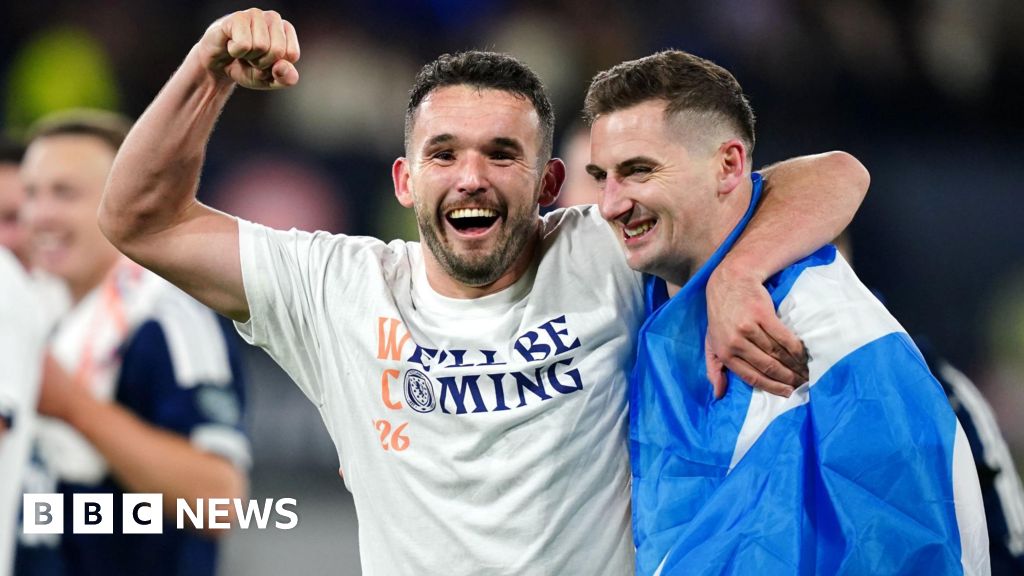
28 years. That is the number hanging over Scottish football. Since Craig Brown took a squad to France in 1998, generations of fans have watched World Cups as neutrals.
That changes in exactly 76 days. When the 2026 World Cup kicks off in North America, Scotland will be there. The qualification wasn't a fluke or a product of an expanded tournament format.
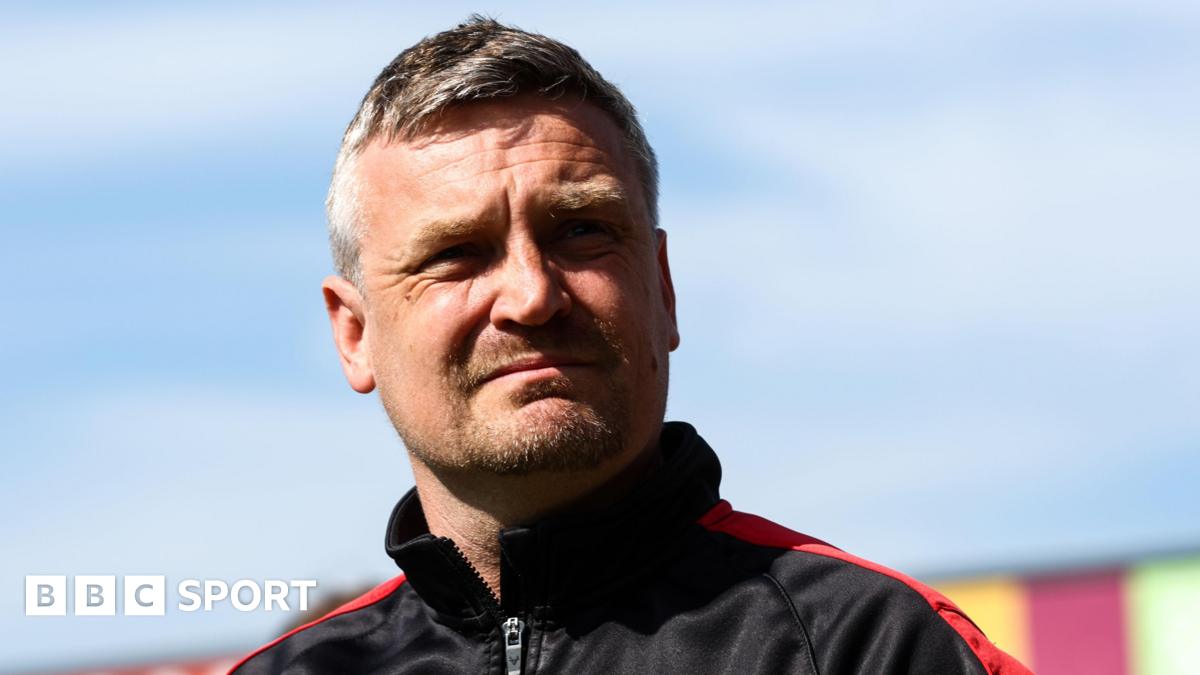
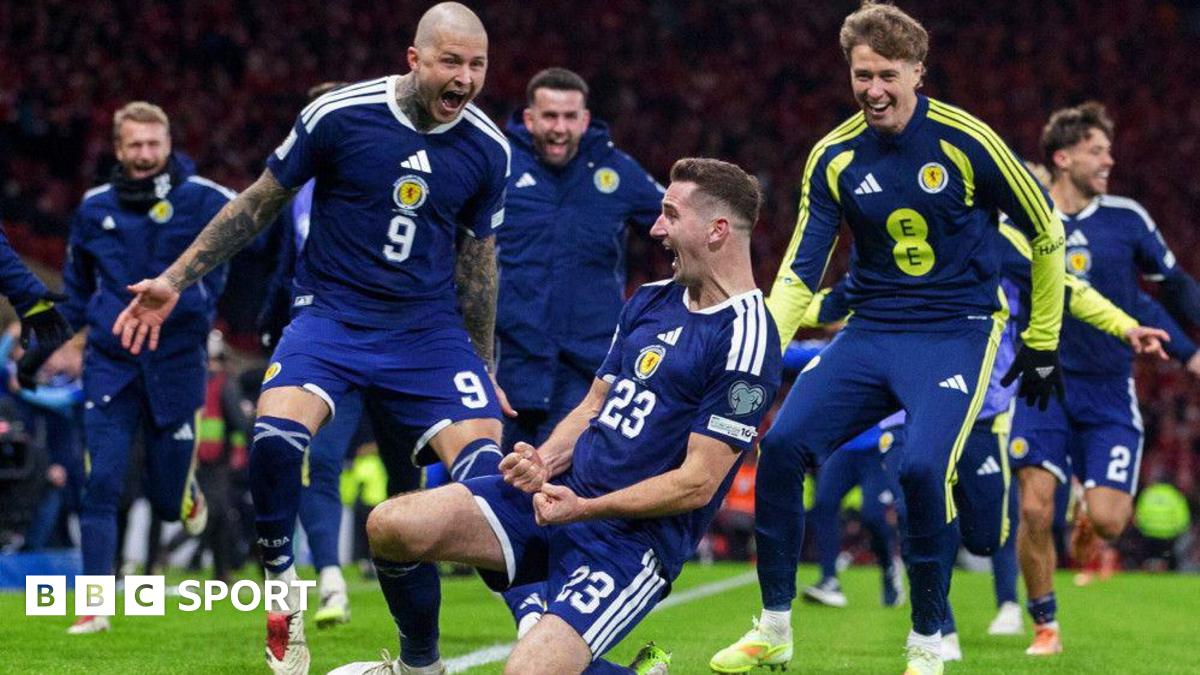
It was built on a gritty, tactically astute foundation laid down by Steve Clarke. The defining moment was the victory over Denmark.
As the BBC collects memories of that night, fans naturally focus on the noise and the relief. But the reality on the pitch was a calculated dismantling of a superior European side.
The Tactical Blueprint
Clarke has completely rewired expectations. He abandoned the naive ambition of trying to out-pass elite nations. Instead, he leaned into the specific profiles of his best players.
Scotland plays a variation of a 3-4-2-1. It is designed to mask their deficiencies at center-forward and maximize their surplus of central midfielders and left-sided defenders.
Against Denmark, this system wasn't just functional. It was actively hostile to the Danish build-up.
Billy Gilmour was the fulcrum. While Scott McTominay gets the headlines for his chaotic, late-arriving goals, Gilmour dictates the tempo. He takes the ball in tight spaces, absorbs the press, and breaks lines.
Against a Danish midfield that usually controls possession, Gilmour’s composure was the difference. He stopped the game from becoming a track meet.
The Asymmetric Threat
Then there is the left side. For years, the debate was how to fit Andy Robertson and Kieran Tierney into the same starting eleven.
Clarke’s solution—Tierney as the left-sided center-back, Robertson as the wing-back—is now the defining tactical hallmark of this era. Tierney essentially plays as an overlapping center-back.
When Scotland has the ball, he pushes high, allowing Robertson to either tuck inside or provide extreme width. This overloads the opposition's right flank. Denmark struggled to track these rotations.
When Tierney drives forward, Callum McGregor drops in to cover the space. It is a synchronized movement practiced relentlessly at Oriam. It forced the Danish wing-backs to make impossible decisions.
Step to Robertson, and Tierney underlaps. Drop off, and Robertson whips a cross into the corridor of uncertainty.
The Midfield Battlefield
Let's look deeper into the specifics of that Denmark match. The Danes came to Hampden Park with a formidable record. They had essentially coasted through their group.
They had a tactical identity built around the intelligent movement of their forwards and the aggressive pressing of Pierre-Emile Hojbjerg and Thomas Delaney.
Scotland's answer was not to match them pass for pass. It was to bypass the midfield press entirely when necessary. This is where the long diagonals from Scott McKenna became a weapon.
Instead of trying to play through Gilmour every single time—which Denmark anticipated—McKenna would hit raking passes toward the right channel.
This isolated Denmark's left-back. It forced them to constantly adjust their defensive line. It was a subtle tweak from Clarke, but it disrupted the Danish pressing triggers.
They couldn't just hunt in packs because the ball was suddenly 40 yards away.
John McGinn also deserves his own analysis. He operates in the half-spaces, functioning more as a second striker out of possession than a traditional midfielder.
His ability to back into defenders, use his frame, and win cheap fouls is vital. It breaks the rhythm of the game. When Denmark started to build momentum, McGinn would inevitably draw a foul near the halfway line.
It is ugly, cynical, and absolutely necessary for a team trying to survive against technically superior squads. They do not let you play your game.
They drag you into a disjointed, physical battle. In this system, second balls are infinitely more important than sequence possession.
Let us also examine the anomaly that is Scott McTominay. At club level, his role has fluctuated wildly. But for Scotland, Clarke has weaponized him in a highly specific way.
He is not asked to be a metronome. He is deployed almost as a classic late-arriving number ten. When Scotland builds down the left with Tierney and Robertson, McTominay drifts blindly on the weak side.
He recognizes that opposition defenses are naturally drawn to the overload. When the ball is finally recycled to the center or crossed deep, McTominay is arriving at the edge of the box completely unmarked.
The Glaring Flaws
But it isn't all perfect. Not even close. If you look at the underlying numbers from the qualifying campaign, a massive red flag emerges.
Scotland simply does not have a top-tier striker. Che Adams works tirelessly, pressing from the front and holding up the ball. Lyndon Dykes offers an aerial outlet when they need to bypass the midfield.
Neither is a clinical finisher at the international level. Against elite opposition in the World Cup, you do not get six clear-cut chances. You get one or two.
Relying on McTominay or McGinn to constantly bail them out with long-range strikes is unsustainable. Denmark eventually figured out how to sit deep and block the cut-backs.
If a team at the World Cup forces Scotland to break down a low block without relying on transitions, Clarke’s side looks entirely toothless.
The goalkeeping situation also demands scrutiny. Angus Gunn stepped into a void that threatened to derail the entire campaign following Craig Gordon's devastating injury.
Gunn is not a spectacular shot-stopper, but his starting position is excellent. He sweeps effectively behind a backline that occasionally struggles with the offside trap.
However, his handling on crosses remains suspect. Denmark targeted him repeatedly with in-swinging corners, packing the six-yard box and challenging him physically.
World Cup opponents with dominant aerial threats will have noticed this flaw. They will crowd Gunn and test his nerve.
The Final Verdict
The physical output of this system has a severe cost. The drop-off in intensity after the 70th minute is a recurring theme.
The wing-backs cover enormous distances. By the final quarter of the match, the gaps between the midfield and the defense start to widen. The clearance distances get shorter.
If Clarke doesn't manage his substitutions perfectly, Scotland gets penned in. A tired mistake against a pot-one team in North America means going home early.
Playing at 2 PM in Dallas or Miami requires a different kind of endurance. It requires a slow, possession-based approach to conserve energy. Scotland does not have that club in their bag.
They cannot kill a game with 50 sideways passes. They only know how to play at one speed. Relentless.
Yet, there is a defiance about this group. They have internalized Clarke's siege mentality. They know they are not the most talented squad.
They know the media doubts their ability to break down stubborn defenses. But as the tournament approaches, that chip on the shoulder becomes their biggest asset.
They operate like a club team playing international football. The cohesion, the shared suffering in qualifying, the tactical clarity—these are things that star-studded national teams struggle to replicate.
Steve Clarke will not change his approach in June. He will set them up to be compact, aggressive in the middle third, and heavily reliant on set-pieces.
It will not be pretty. There will be long stretches where Scotland has less than 40 percent possession. Fans will be watching through their fingers.
But my prediction? They are getting out of the group. The midfield trio of Gilmour, McGregor, and McTominay is too robust, and the tactical discipline is too ingrained.
They will grind out a nasty 1-0 win, scrape a draw, and advance. Just don't expect them to score three goals in a game.
Read Next
- Scotland's grim reality check against a swaggering Japan
- Why Garner and Foden starting together is exactly the chaos England needs
- Why Andy Robertson's Liverpool exile changes everything for the run-in
- World Cup 2026 travel chaos: Boston train tickets set to quadruple for UK fans
- 🏆 World Cup 2026 — Full Coverage Hub
- 🏴 Scotland World Cup 2026 — Tartan Army Hub
- 🇧🇷 WC 2026 Group C — Brazil, Morocco, Scotland, Haiti