The Pivot Dilemma
International football management is mostly about compromise. You rarely get the exact profile of player you need for a specific system, so you adapt your tactical framework to fit the pieces available. But right now, Spain manager Luis de la Fuente has the complete opposite problem. He has a surplus of elite talent in the most complex position on the pitch.
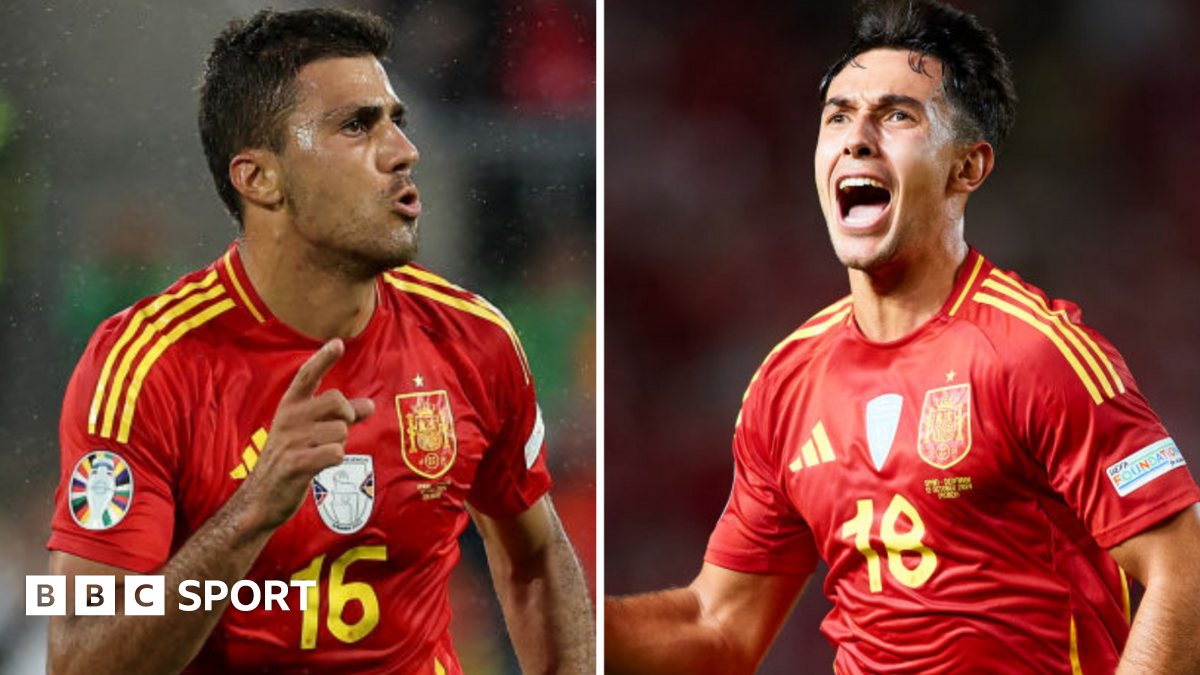
He has Rodri. And he has Martin Zubimendi. According to the BBC's recent tactical breakdown, the battle for the deepest midfield role is the defining structural question for La Roja ahead of the World Cup.
Having the two best number sixes on the planet sounds like an incredible luxury. On the actual pitch, it is a genuine structural headache. Spain has always defined itself by midfield control, but how you achieve that control dictates the entire rhythm of the team.
It is a fascinating problem. Most international managers are scrambling to find one functional defensive midfielder who can receive the ball under pressure. De la Fuente has to figure out what to do with two generational talents who play the exact same role.
The Seduction of the Double Pivot
The immediate reaction from fans and pundits is usually the simplest one: just play them both. Stick them in a 4-2-3-1 double pivot and let them suffocate the opposition. It sounds brilliant in theory.
But that fundamentally misunderstands what makes both of these players elite. Rodri is a dictator of tempo. He operates best when he is the sole reference point at the base of midfield, receiving the ball directly off the centre-backs and mapping the pitch in front of him. At Manchester City, he occasionally pushes up into the half-spaces, but he is always the structural anchor of the entire system.
Zubimendi is cut from the exact same cloth at Real Sociedad. He thrives on scanning his surroundings, receiving on the half-turn, and threading progressive passes through the opponent's first line of pressure. If you put them side-by-side, they step on each other's toes. They end up occupying the exact same passing lanes and making redundant movements to demand the ball.
Spain tried something similar years ago with Xabi Alonso and Sergio Busquets. Vicente del Bosque ultimately made it work, winning major tournaments with that pairing. But that was a drastically different era of international football. The game is faster now. Elite pressing structures are significantly more aggressive, and playing two deep controllers often invites pressure rather than bypassing it.
The Case for the Incumbent
Rodri is the established starter, and rightly so. He is arguably the most important player in Pep Guardiola's system in Manchester, which is saying something in a squad built on heavy, relentless rotation.
His physical presence gives Spain something they traditionally lack in central areas. When knockout games become chaotic and broken, Rodri brings a level of physical dominance in the middle third. He wins defensive aerial duels at an elite rate. He breaks up dangerous transitions with perfectly timed tactical fouls.
More importantly, his passing range is unmatched. He can hit the 40-yard diagonal to Nico Williams or Lamine Yamal with terrifying consistency. When Spain need to switch the point of attack to break a stubborn low block, Rodri is the mechanism that makes it happen seamlessly.
There is also the goal threat. Rodri has developed an uncanny knack for arriving late at the edge of the penalty area and striking the ball cleanly. In tight, low-scoring international fixtures, having a holding midfielder who can suddenly produce a goal from distance is an invaluable asset.
The Zubimendi Alternative
So why even discuss Zubimendi? Because there are specific tactical matchups where his specific profile is arguably better suited to Spain's immediate needs in possession.
Zubimendi is slightly more agile in tight spaces. When facing a high, aggressive man-to-man press, his ability to wriggle out of trouble using subtle body feints is exceptional. He is a pure La Real product — heavily influenced by Xabi Alonso's coaching during his time in the B team in San Sebastián.
The criticism of De la Fuente, and it is a perfectly valid negative observation, is that he has been far too rigid in his rotation. By insisting on a system that almost exclusively relies on Rodri as a single pivot, he risks burning his star player out entirely. We saw the heavy physical toll it took on Rodri during the back end of the domestic season. He looked visibly exhausted in several key fixtures, his reactions slowing by a fraction of a second.
Zubimendi offers absolute control. He rarely forces the ball into dangerous areas, preferring to maintain possession and shift the opposition block from side to side until a gap naturally appears.
The Mathematical Reality of Midfield Shapes
If De la Fuente opts to force both players into the starting eleven, something else in the team has to break. Playing a double pivot means sacrificing an advanced midfielder. Spain would have to drop either Pedri or Fabian Ruiz.
That completely changes the geometry of their attack. Pedri operates between the lines, picking up pockets of space behind the opposition midfield and turning to face the defence. Ruiz offers late, driving runs into the penalty area and a genuine goal threat from distance. Neither Rodri nor Zubimendi provides those specific attacking movements.
Without a natural number eight crashing the box, Spain's attacking play becomes entirely dependent on their wide players creating magic in isolation. It makes them predictable. It makes them far easier to defend against in a compact low block.
The modern game demands five attacking players and five defensive players in possession. Playing two deep-lying playmakers skews that balance too far toward control at the expense of attacking penetration.
The Defensive Transition Problem
There is also a defensive cost to consider. While both players are excellent readers of the game, neither is a pure destroyer in the mould of an N'Golo Kante or a Casemiro. They defend primarily through positioning and interception rather than raw tackling volume.
If you play them together, the midfield can suddenly look quite slow in transition. When the ball is turned over high up the pitch, you need athletes who can sprint back and recover defensive shape instantly. Having two deep controllers means you lack that explosive recovery pace in the center of the park.
This is where De la Fuente's tactical stubbornness might actually be an advantage. By sticking to a single pivot, he ensures there are always dynamic athletes playing ahead of the number six, ready to counter-press aggressively as soon as possession is lost.
The Final Verdict
Spain simply cannot play both. It breaks the fluidity of their attacking shape, slows down their ball circulation, and leaves them noticeably short of the attacking runners they desperately need against deep defences.
Rodri has to start the biggest matches. That much is entirely non-negotiable for a team with serious ambitions. But Zubimendi is not just a high-quality backup sitting on the bench; he is a highly specific tactical variant. If Spain are chasing a game and need pure ball progression, or if they need to rest their most important player in the exhausting group stages, they have a world-class alternative ready to step in without dropping the overall level.
De la Fuente has exactly 78 days until the World Cup kicks off to finalize his plans. My prediction? He will stick with Rodri as the lone anchor for the defining knockout ties, keeping Zubimendi as a luxury closer to see out tight games. Figuring out how to utilize his two midfield generals without compromising his attacking structure is his biggest managerial test. I fully expect Spain to reach the semi-finals on the back of this midfield dominance, with their strict adherence to a single pivot ultimately being vindicated.
Read Next