The 29 minutes that broke the Paraguayan season
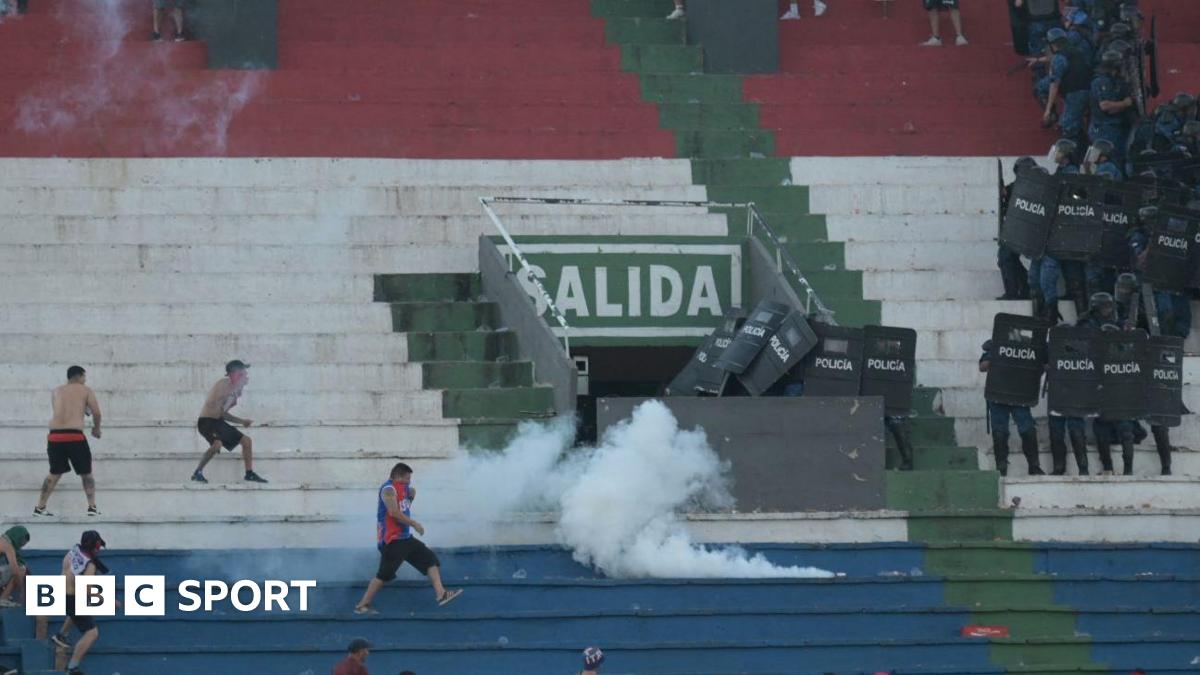
As we sit here on Monday, April 20, the smoke has yet to truly clear from the Defensores del Chaco. What was supposed to be the crown jewel of the Paraguayan Primera División, the Superclásico between Cerro Porteño and Olimpia, disintegrated into a scene of urban warfare. The match was officially abandoned after just 29 minutes of play, a statistic that will haunt the league for the rest of the 2026 Apertura. It was not a tactical shift or a tactical foul that ended the afternoon, but the sound of rubber bullets.
The BBC report confirms a grim reality: six police officers were hurt and dozens of fans were detained. This was not 'passion' boiling over. It was a systemic failure of security and a reminder that the perimeter around Paraguayan football is currently non-existent. While we should be talking about the 4-1-4-1 block employed by Cerro, we are forced to discuss the hospitalizations of state officials.
A tactical autopsy of a half-hour stalemate
Before the rubber bullets began to fly, there was actually a football match happening. For those 29 minutes, we saw a fascinating, if stagnant, tactical battle. Cerro Porteño looked to dominate the central progression, using their double-pivot to bait Olimpia's front two into an aggressive press. It worked for the first ten minutes, creating a numerical advantage in the half-spaces that Olimpia struggled to track.
Olimpia, however, responded by dropping into a surprisingly disciplined low block. They weren't interested in the ball. They were interested in the space behind Cerro's high-line, which looked vulnerable every time a transition was triggered. The few passages of play we saw suggested that Cerro’s lack of lateral coverage was going to be the story of the game. Instead, the story became the dozens of detainees hauled out of the northern stand.
The impossible logistics of the 61-minute replay
The league now faces a nightmare. When do you play the remaining 61 minutes? In the modern calendar, finding a gap for a high-risk fixture is like trying to find space in a Jose Mourinho defensive line. The most likely scenario is a behind-closed-doors restart on a Tuesday morning, a move that strips the fixture of its commercial value and its soul. But after the violence we witnessed, playing in front of fans would be an act of gross negligence by the APF.
Managers now have to prepare for a 'mini-game'. You don't approach a 61-minute match the same way you approach a 90-minute one. The physical loading changes. The substitution strategy shifts. Do you start with the same XI that left the pitch in a state of panic? Tactically, this favor's Olimpia. They have the more experienced roster, players who can settle into a rhythm faster and exploit the weird, disjointed energy that will surely define the replay.
The critical failure of the Paraguayan authorities
Let's be blunt: the decision to allow this match to proceed under the current security protocols was a disaster. The 'barras bravas' in Paraguay have long held a level of influence that would be unthinkable in the Premier League or even the Bundesliga. They aren't just fans; they are organized entities that the clubs seem terrified to confront. The fact that six officers are now in the hospital is a direct result of this cowardice.
The league's image is in the dirt. At a time when South American football is trying to modernize and attract global investment, these scenes look like a transmission from a darker era. There is no tactical innovation that can mask the smell of tear gas. If the APF doesn't issue a points deduction or a season-long stadium ban, they are essentially telling the world that this behavior is part of the 'matchday experience'. It is a pathetic state of affairs.
What to watch for in the (inevitable) empty stadium
When the whistle finally blows to resume at the 29:01 mark, watch the wing-backs. In the first half-hour, Cerro's wing-backs were playing effectively as inverted midfielders, trying to overload the central zones. This left massive gaps on the flanks. If Olimpia has any tactical sense, they will instruct their wide men to hug the touchline and force Cerro's center-backs to cover more ground than they are comfortable with.
The lack of a crowd will also change the officiating. Without 40,000 people screaming for every challenge, the referee might actually be able to focus on the game. We saw three yellow cards in those first 29 minutes—all of them for persistent infringement. Expect a much more technical, sterile game once the restart happens. The visceral heat of the derby is gone, replaced by the clinical, echoing sounds of a training ground exercise.
The prediction for the 'Second Start'
My prediction for the remaining 61 minutes is a grim, goalless draw. The psychological toll of the abandonment is too high for either side to play with real fluidity. Cerro Porteño will likely revert to a safer, more conservative shape to avoid another embarrassing transition goal. Olimpia, knowing a point away from home is a decent result in these circumstances, will be happy to sit deep and let the clock run down.
The game will finish 0-0, and nobody will be happy. The real losers are the genuine fans who just wanted to see a football match and instead had to dodge projectiles. Paraguayan football needs a hard reset, not just a rescheduled fixture. Until the league deals with the 'barras', the Superclásico will remain a gamble where the house—and the fans—always lose.
Read Next
- Six police injured as rubber bullets halt Paraguay derby after 29 minutes
- Haaland's refusal to dive is costing City more than goals
- The yellow card trap that's about to wreck your team's season
- Bayern won the league, but their midfield is begging to be destroyed in Europe
- 🇵🇾 Paraguay World Cup 2026 — La Albirroja Hub
- 🇺🇸 WC 2026 Group D — USA, Paraguay, Australia
- 🔶 Argentine Superliga 2025-26 — Boca, River & the Superclásico