Tier 1 Confirmation: The Tuesday Deadline
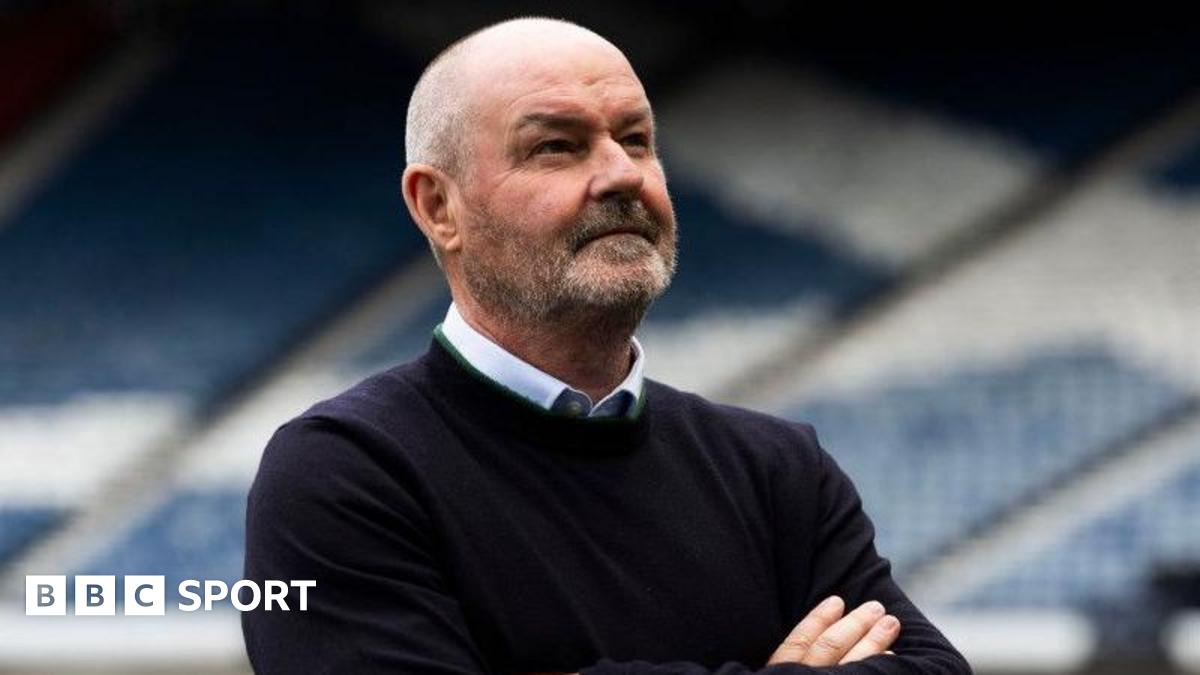
The BBC has firmly established the timeline. Scotland manager Steve Clarke will name his squad for the 2026 World Cup this Tuesday. The entire announcement hinges on one major variable.
Tommy Conway is locked in a race against time. The forward's fitness is being assessed daily. Clarke expects a definitive medical green light before finalizing his roster. This extends far beyond national pride. Club recruitment departments across the continent are closely monitoring the situation.
Major international tournaments act as a shop window. A strong showing in North America this summer could drastically alter Conway's valuation. Conversely, missing the plane entirely changes his market dynamics. The BBC's update is strictly international, but the underlying tension is massive for anyone tracking his potential summer movement.
We are exactly 29 days away from the kickoff of the expanded 48-team tournament. Time is a luxury Scotland simply does not have. Clarke is known for his loyalty. Taking a half-fit striker across the Atlantic, however, is a risk that rarely pays off.
The geography of this tournament adds another layer of complication. Traveling across the United States, Canada, and Mexico involves significant air miles. For a player carrying a muscle issue, the constant altitude changes and endless flights are an absolute nightmare for recovery. This isn't a tightly packed tournament in a single European country. The logistics demand peak physical condition.
Clarke and his medical team are weighing all of this right now. They know that a rushed return could result in a breakdown during the group stages. That leaves Scotland a man down. It also completely infuriates his domestic employers. It is a massive political and medical tightrope.
The Player Profile: Why Conway Matters
To understand the panic surrounding his fitness, you have to look at what Conway actually provides. He isn't a traditional target man. He operates with a modern, high-energy pressing trigger that disrupts opposition build-up.
Scotland's tactical setup under Clarke relies heavily on defensive solidity paired with rapid transitions. You need a forward who can isolate defenders. You need someone to run the channels and create something out of isolated long balls. Conway fits that profile perfectly. He drags center-backs out of position, creating space for late midfield runners.
But there is a negative side to this. Conway's aggressive style of play naturally leads to physical wear and tear. His current fitness struggle isn't an isolated stroke of bad luck. It is the direct result of the sheer mileage he puts into his legs during the domestic season.
Clarke has to ask himself a difficult question. Can a player whose entire game relies on explosive sprints be trusted if his hamstrings or calves are operating at eighty percent? The history of the World Cup is littered with half-fit stars dragging themselves around the pitch. They actively hurt their team's fluidity.
When you look at the underlying metrics of Conway's domestic campaign, his pressing intensity is his standout attribute. Take that away, and he becomes a vastly less effective player. He doesn't have the sheer physical bulk to pin giant international defenders with his back to goal. He needs his pace. If the medical staff can't guarantee that pace, his inclusion becomes highly questionable.
There is also the psychological aspect. An injured player often subconsciously protects the vulnerable muscle. In the unforgiving environment of a World Cup group stage, hesitation gets you punished. Conway needs to be flying into tackles and aggressively closing down passing lanes. If he is second-guessing his own body, he becomes a liability.
The Transfer Market Ripple Effect
This is where the club perspective comes into play. The BBC report focuses strictly on international duty. It completely omits any mention of fees, wages, or specific club destinations. That silence is telling.
Right now, any club circling Conway is holding their breath. Purchasing a player immediately before a major tournament is a massive gamble. If he goes to the USA and tears it up, his asking price doubles overnight. If a club waits, they risk being priced out by a sudden bidding war.
However, if he fails Tuesday's fitness test, the entire narrative shifts. A summer of rest and rehabilitation makes him a safer domestic investment. The premium added by international tournament exposure disappears.
Scouts want to see how he handles elite international center-backs. They want data on his decision-making under intense pressure. Missing the tournament deprives analyzing departments of that essential sample size. It forces clubs to rely entirely on his domestic output. While impressive, that leaves lingering questions about his ceiling.
There is a well-documented phenomenon known as the World Cup tax. Players who score a couple of dramatic goals on the global stage suddenly see massive inflation applied to their valuation. Recruitment directors are terrified of this. They prefer to conduct their business early. But with Conway's medical status up in the air, pulling the trigger now is impossible.
No sporting director is going to authorize a multi-million pound transfer for a player who might tear a hamstring in a meaningless warm-up friendly. The risk assessment simply doesn't allow for it. Everything is on ice until Steve Clarke reads those names out on Tuesday afternoon.
Tactical Fit: The Scotland Vacuum
If Conway is ruled out, Scotland's attacking blueprint takes a significant hit. The alternatives do not offer the same dynamic movement. You are looking at more static options who require service directly to their feet or head.
Clarke's system would have to adapt. Instead of stretching the opposition backline, Scotland might be forced to play an even deeper block. The reliance on set-pieces would increase exponentially. It turns a functional, counter-attacking threat into a heavily restricted side.
This is the harsh reality of international management. You cannot buy a replacement. You cannot dip into the loan market. You simply have to shuffle a very limited deck. Clarke's rigid loyalty to his core group means he rarely integrates wildcards at the last minute.
The failure to develop a wider pool of striking options is a legitimate criticism of the current setup. Scotland shouldn't be sweating this much over one player's fitness. The lack of depth is alarming. It exposes a structural flaw in their talent pipeline.
When an entire tactical game plan hinges on the medical report of a single forward, the underlying foundation is fragile. It suggests an over-reliance on a specific profile that simply hasn't been replicated within the squad. If Scotland are forced to play without him, the midfield will have to push much higher to compensate. That leaves them highly vulnerable to counter-attacks. It is a tactical domino effect.
Furthermore, international football heavily punishes one-dimensional attacks. Defenses at the World Cup level are too smart and too well-drilled. If Scotland cannot threaten the space in behind, opposing defensive lines will simply push up. They will compress the pitch and strangle the midfield. Conway is the pressure release valve. Without him, the engine overheats.
Assessing the Probability
Predicting medical outcomes without direct access to the physio room is always speculative. But reading between the lines of the BBC report offers some clues. The fact that the decision is being pushed right up to the Tuesday deadline suggests it is genuinely borderline.
If he was completely broken, the call would have been made already. If he was fully fit, there would be no story. He is lingering in the gray area. From a probability standpoint, this feels like a coin flip. The medical staff are likely waiting to see how his body reacts to a final, high-intensity training load.
Club managers absolutely hate this scenario. They watch their valuable assets being pushed to the absolute limit in training sessions thousands of miles away. If Conway is selected, expect his club management to be holding their breath every time he breaks into a sprint during the group stages.
There is also the player's own ambition to consider. No player wants to miss a World Cup. Conway will be pushing himself to prove his fitness. He will potentially mask pain or discomfort to secure his seat on the plane. The medical staff have to cut through that optimism and look at the cold, hard data. It is a ruthless process, but entirely necessary.
I would place the probability of him making the squad at around sixty percent. Managers tend to take a gamble on their favored attacking outlets, reasoning that they can manage his minutes during the group stages. But it is a massive risk. If he breaks down in the opening game, Clarke will face intense scrutiny for taking a compromised asset.
The Expected Timeline and Final Impact
Everything crystallizes on Tuesday. When Clarke sits in front of the microphones, the dominoes will fall. A green light sends Conway to the biggest stage in global football. That instantly elevates his profile and potential transfer value.
A red light signals a quiet summer of recovery. It stabilizes his market value but robs him of a career-defining opportunity. For the clubs monitoring his situation, Tuesday provides clarity. The holding pattern will end.
Regardless of the outcome, the fact that Scotland's World Cup hopes are so heavily tied to Conway's medical chart is telling. He has become an indispensable part of their machinery. That alone tells prospective buyers everything they need to know about his character and importance on the pitch.
The transfer window is a waiting game, and right now, Tommy Conway is controlling the clock. Tuesday's announcement is technically about a national squad. In reality, it is the opening bell for his summer market activity. Every scout, sporting director, and agent involved in his orbit will be refreshing their feeds. The World Cup is calling, but the transfer market is listening closely.
Read Next
- FIFA's half-time show plan is a disaster waiting to happen
- The tactical disaster waiting to ruin the 2026 World Cup final
- Why FIFA's halftime show plan will completely ruin the 2026 final
- Why Dick Advocaat's return to Curacao is the wildest signing of the summer
- 🏆 World Cup 2026 — Full Coverage Hub
- 🏴 Scotland World Cup 2026 — Tartan Army Hub
- 🇧🇷 WC 2026 Group C — Brazil, Morocco, Scotland, Haiti