Seventy-four days. That is the entirety of the runway Mauricio Pochettino has left before the 2026 World Cup kicks off on home soil this June 11. It is a terrifyingly tight window for a manager who is currently watching his defensive structure disintegrate in real-time. Saturday afternoon at Mercedes-Benz Stadium was supposed to be a vital building block. Instead, it became a glaring exposure of fundamental flaws.
The 5-2 humiliation against Belgium was not just a bad day at the office. It was a structural failure of the highest order. The US men’s national team entered the matchup riding a wave of manufactured momentum. They needed a solid performance to validate the hype surrounding this generational squad. What they got was a second-half dismantling that leaves more questions than answers as they prepare to face Portugal in the very same stadium on Tuesday night.
The anatomy of a second-half collapse
International football is inherently a game of managed moments. You suffer, you stabilize, you strike. The USMNT completely forgot how to stabilize against Belgium. Going into the locker room, there was a fragile sense of parity. Coming out of it, there was only chaos. Conceding four goals in a single half is an anomaly for a serious contender; for a team aiming to make a deep run as hosts, it is a glaring red flag.
The primary issue was the spacing between the midfield pivot and the center-backs. Whenever a Belgian player dropped between the lines, the US defense faced an impossible choice. Step up and leave space behind, or drop off and allow uncontested possession in zone 14. They consistently chose poorly.
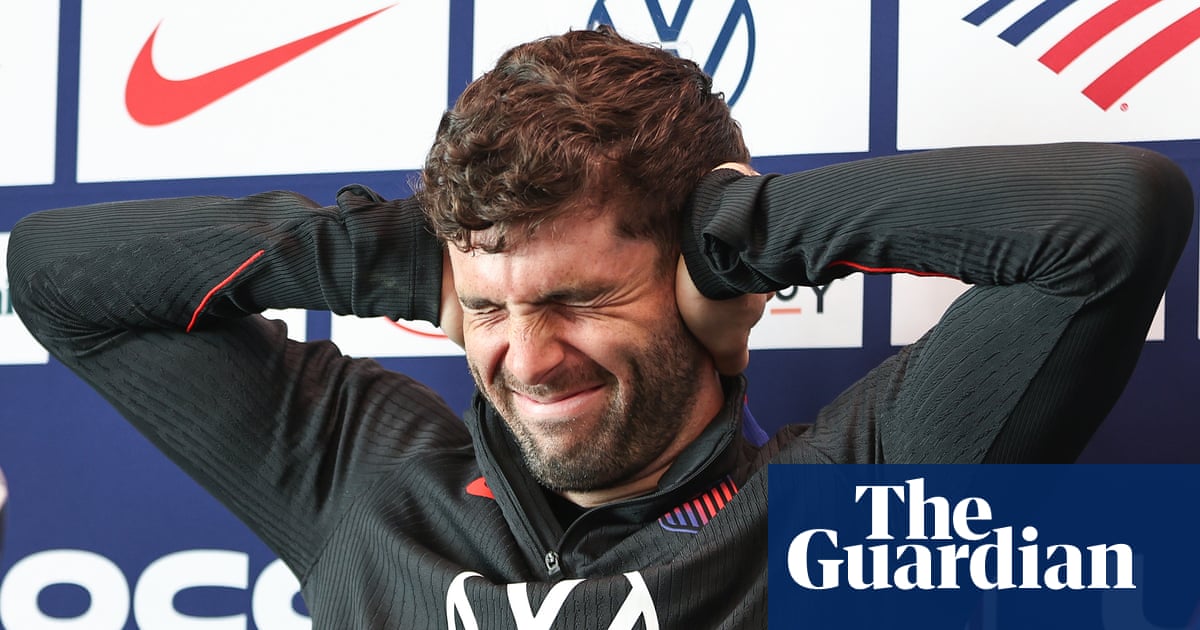
Dodi Lukebakio did not just score a double; he operated with terrifying freedom in those half-spaces. As The Guardian bluntly summarized the embarrassment, the rampant Belgian side simply overran a passive US setup. There was no midfield destroyer willing to take a tactical foul to break the rhythm. There was no defensive leader organizing the line height. It was eleven individuals reacting a second too late to every trigger.
A harsh lesson in transition defense
Pochettino's philosophy has always relied on aggressive pressing and high energy. But when the initial press is broken, the recovery run must be immediate and coordinated. Against Belgium, the recovery runs were disjointed. Fullbacks were caught high up the pitch, leaving the center-backs isolated in sprawling acres of space. You cannot play expansive football against elite European opposition if your transition defense resembles a sieve.
Contrast this chaotic approach with how other top nations are utilizing this vital March window to solidify their defensive identities. In London, Thomas Tuchel is ruthlessly outlining his World Cup hierarchy. The England manager is openly warning an established name like Harry Maguire that he sits firmly down the pecking order, favoring the ball-playing ability of John Stones despite his injury record.
Tuchel’s side ground out a 1-1 draw against Uruguay at Wembley this week. It was not pretty. It was described as a fairly meaningless fixture by some, but it showcased a team prioritizing defensive shape over attacking flair when the system demands it. Tuchel understands tournament football requires suffering. Pochettino’s side currently looks incapable of suffering without conceding.
Even Scotland, dealing with a passive 84th-minute defeat to Japan courtesy of Junya Ito, are learning harsh realities about the concentration required at this level. You switch off for a second, and the game is gone. The US switched off for an entire forty-five minutes.
The post-Ronaldo fluidity problem
Now comes Tuesday night. Portugal arrives in Atlanta, and they present an entirely different, perhaps more complex, tactical problem than Belgium. The headline news is the absence of their talisman. Cristiano Ronaldo is not involved for his country during this international break, with his ban suspended for the upcoming World Cup.
You might think this offers a reprieve for the battered US defense. It does not. Without Ronaldo occupying the central channels and demanding service, Portugal becomes a far more fluid, unpredictable attacking entity. The attacking players interchange constantly. The wide men tuck inside, the fullbacks provide the width, and the movement in the final third is suffocating.
They are using this window specifically to test themselves against North American opposition, ramping up their preparations with a concurrent focus on Mexico. They are not coming to Atlanta to fulfill a commercial obligation. They are coming to fine-tune a relentless, possession-heavy system designed to pull disorganized defenses apart.
If the US midfield allows the same gaps to appear against Portugal that they did against Belgium, the scoreline could be equally punishing. Portugal’s ball circulation is arguably faster and more precise than Belgium’s. They will not need counter-attacks to score; they will simply pass through the stationary American block.
Pochettino’s shrinking window
The manager has a massive decision to make regarding his setup for Tuesday. Does he stubbornly stick to his principles, demanding a higher press and better execution? Or does he accept the limitations of his current personnel and drop the defensive line ten yards deeper?
Dropping deeper feels like an admission of defeat for a team that wants to dominate. But pragmatic survival must trump ideological purity right now. The US needs to prove they can defend a penalty area. They needs to show they can absorb sustained pressure, clear their lines, and maintain a compact shape.
The absence of a dominant vocal leader at the back is glaring. When the game state shifted against Belgium, nobody grabbed the game by the scruff of the neck and demanded a reset. The body language slumped. That is a psychological fragility that tactics alone cannot fix, but a more conservative tactical approach can help mask it.
This is the reality of hosting a World Cup. The friendly matches are not friendlies. They are public stress tests broadcast to a fanbase expecting a semi-final run. The noise surrounding the program is only going to amplify as June 11 creeps closer.
Pochettino needs a response. Not necessarily a fluid, attacking masterclass, but a gritty, ugly, disciplined defensive performance. He needs his players to show they understand the assignment of tournament football.
They must close the gaps. They must track the runners. They must foul when necessary. If they attempt to go toe-to-toe with a fluid Portuguese side in an open, expansive game, they will be carved open again. The blueprint for beating this US team is currently out in the open. It involves drawing the press, bypassing the midfield, and exploiting the massive spaces behind the fullbacks.
Portugal’s manager will have watched the Belgium tape with immense interest. The structural flaws are obvious. The solutions are entirely up to Pochettino. He was hired for his tactical acumen and his ability to elevate talented squads. Right now, he is presiding over a group that looks tactically naive against elite opposition.
Tuesday night is not about winning a friendly. It is about proving that the collapse against Belgium was an aberration, not a baseline. Unfortunately, the evidence suggests the tactical issues are deeply rooted.
Prediction: USA 1-3 Portugal. The US will show more fight early on, but Portugal’s superior midfield rotation will eventually pull the disjointed American structure out of position. Without the ball, Pochettino's men simply look lost.
Read Next
- Pochettino's USMNT faces a brutal reality check against Portugal
- USMNT face Belgium's midfield trap while Anfield chases nostalgic ghosts
- Belgium just humiliated the USMNT and Tuchel is finally dropping Maguire
- Belgium just wrote the tactical blueprint for beating the USMNT
- 🏆 World Cup 2026 — Full Coverage Hub
- 🇺🇸 USMNT World Cup 2026 — Team USA Coverage Hub
- 🇵🇹 Portugal World Cup 2026 — A Seleção Hub
- ⚽ MLS 2026 Season Hub — World Cup Year Guide